AI orchestration is quickly becoming the backbone of modern enterprise workflows. Instead of using isolated AI tools, organizations now need systems that can connect models, automate decisions, manage data flow, and coordinate actions across multiple platforms.
In simple terms, AI orchestration tools allow you to design, execute, and optimize workflows where AI doesn’t just assist—but actively drives outcomes.
For US-based businesses and teams in 2026, the demand is clear: scalable, secure, and intelligent orchestration platforms that can operate across departments, tools, and data environments.
This guide covers the best-rated AI orchestration tools in 2026, based on real-world usability, scalability, integrations, AI capabilities, and enterprise readiness.
Table of Contents
What Makes the Best AI Orchestration Tool?
AI orchestration goes beyond automation. The best platforms typically provide:
End-to-end workflow control
The ability to design workflows that include triggers, actions, decision logic, and AI-driven steps.
Multi-model and multi-tool integration
Support for multiple AI models, APIs, SaaS tools, databases, and internal systems.
AI-native capabilities
Features like natural language workflow creation, AI agents, and decision-making logic.
Governance and scalability
Role-based access, audit logs, compliance (SOC 2, GDPR), and enterprise-grade security.
Ease of use with flexibility
Low-code or no-code interfaces for business users, with deeper customization for developers.
READ MORE – What are the Best Tools for AI Orchestration?
The Best-Rated AI Orchestration Tools at a Glance
| Tool | Best For | Key Strength | Pricing |
|---|---|---|---|
| Zapier | Cross-app AI orchestration | 8,000+ integrations | Free; paid from $19.99/month |
| Make (Integromat) | Visual automation workflows | Advanced logic builder | Free; paid from $10.59/month |
| n8n | Open-source orchestration | Full control & customization | Free self-hosted; cloud plans available |
| Microsoft Power Automate | Microsoft ecosystem | Deep Office/Teams integration | From $15/user/month |
| Peltarion (or similar AI ops tools) | AI model orchestration | Model lifecycle management | Custom pricing |
| Tray.io | Enterprise automation | API-first orchestration | Custom pricing |
| Workato | Enterprise-grade workflows | Scalable automation + AI | Custom pricing |
Best AI Orchestration Tool for Cross-App Automation
Zapier
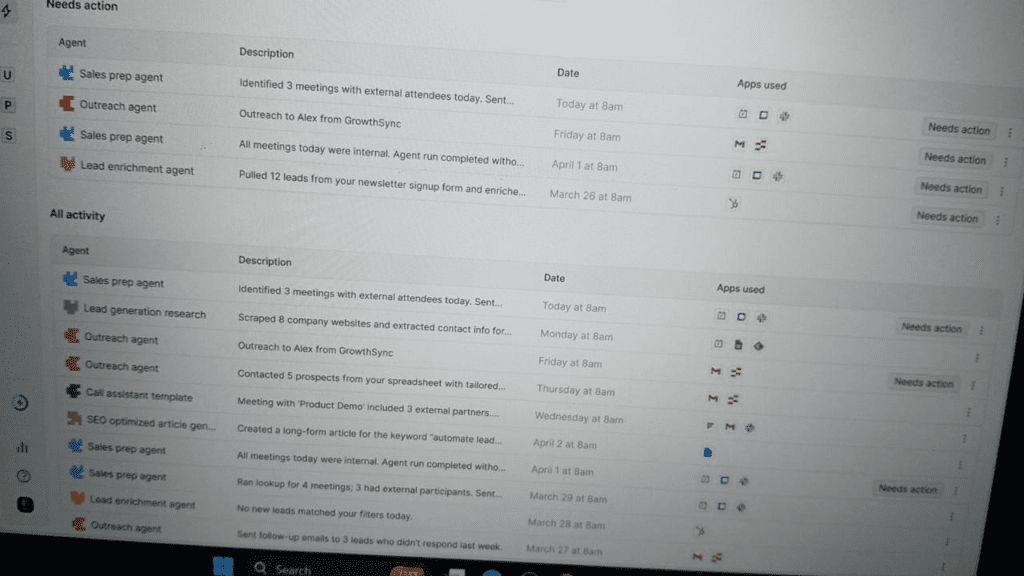
Zapier is one of the most widely used orchestration platforms, especially for teams that rely on multiple SaaS tools. It allows you to connect over 8,000 applications and create automated workflows—known as “Zaps”—without writing code.
What makes Zapier stand out in 2026 is its evolution into an AI orchestration layer. With features like AI-powered agents, natural language workflow creation, and built-in tools such as forms, databases, and chatbots, Zapier enables teams to build complete AI-driven systems.
For example, a marketing team can automatically capture leads, enrich them using AI, route them to a CRM, and trigger personalized follow-ups—all within one workflow.
Zapier also maintains strong governance features, including role-based access, audit logs, and enterprise-grade security compliance. This makes it suitable not just for small teams, but also for large organizations looking to scale automation responsibly.
Pros:
- Extremely large integration ecosystem
- No-code workflow builder with AI capabilities
- Fast setup and deployment
Cons:
- Can become expensive at scale
- Limited deep customization compared to developer tools
Pricing: Free plan available; paid plans start at $19.99/month
READ MORE – The Best AI Tools in Germany for Businesses and Enterprises
Best AI Orchestration Tool for Visual Workflow Control
Make (Integromat)
Make offers a more visual and flexible approach to AI orchestration. Its drag-and-drop interface allows users to build complex workflows with branching logic, conditions, and multi-step automation.
Unlike simpler tools, Make provides deeper control over how data flows between systems. This makes it ideal for teams that need more advanced logic without moving fully into code-based solutions.
In 2026, Make has integrated AI features that allow users to process data, generate outputs, and automate decision-making within workflows. Designers and developers can visually map out entire systems, making it easier to understand and optimize processes.
Pros:
- Highly visual workflow builder
- Advanced logic and branching capabilities
- More control over data handling
Cons:
- Learning curve for beginners
- Interface can feel complex for simple tasks
Pricing: Free plan available; paid plans start around $10.59/month
Best Open-Source AI Orchestration Tool
n8n
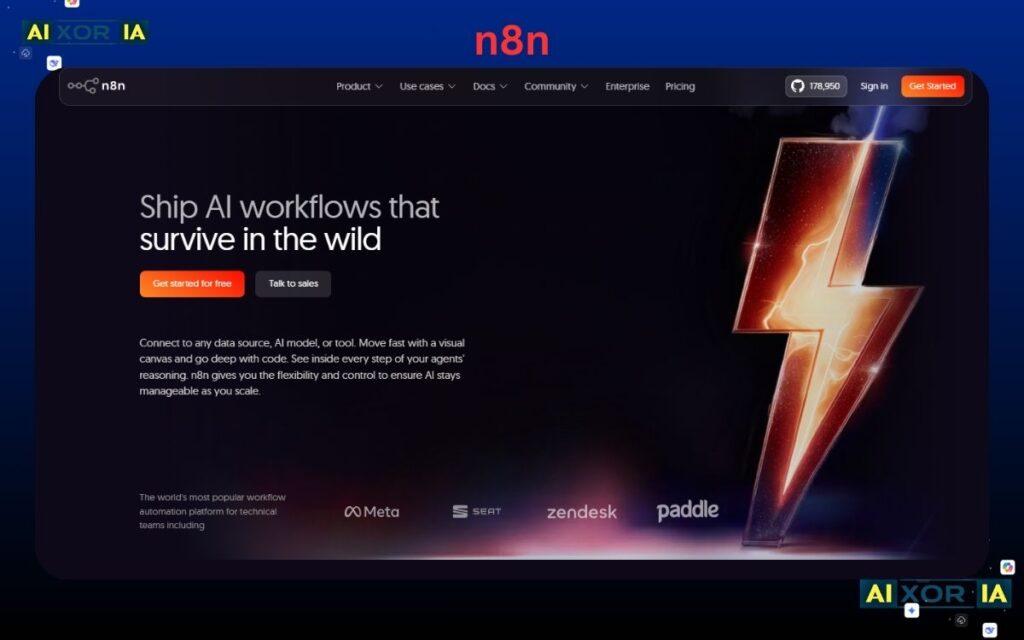
n8n is an open-source orchestration platform designed for teams that want full control over their workflows and data. It allows you to build custom automations and integrate with both cloud and on-prem systems.
One of n8n’s biggest advantages is flexibility. You can self-host it, customize workflows extensively, and integrate with AI models and APIs directly. This makes it particularly attractive for developers and organizations with strict data privacy requirements.
In 2026, n8n has expanded its AI capabilities, allowing users to orchestrate LLMs, APIs, and internal systems into unified workflows.
Pros:
- Open-source and highly customizable
- Self-hosting for full data control
- Strong developer flexibility
Cons:
- Requires technical knowledge
- Setup and maintenance effort
Pricing: Free (self-hosted); cloud pricing varies
Best AI Orchestration Tool for Microsoft Ecosystem
Microsoft Power Automate
Microsoft Power Automate is the go-to orchestration tool for organizations deeply integrated into the Microsoft ecosystem. It connects seamlessly with tools like Outlook, Teams, SharePoint, and Excel.
Its AI capabilities have expanded significantly with built-in copilots, allowing users to create workflows using natural language. It also supports document processing, approvals, and enterprise automation scenarios.
For US enterprises already using Microsoft 365, Power Automate provides a familiar environment with strong governance and compliance features.
Pros:
- Deep integration with Microsoft tools
- Strong enterprise security and compliance
- AI-assisted workflow creation
Cons:
- Less flexible outside Microsoft ecosystem
- Can feel restrictive for mixed-tool environments
Pricing: Starts at $15/user/month
Best AI Orchestration Tool for Enterprise Automation
Workato
Workato is designed for large enterprises that need scalable, secure, and highly reliable orchestration. It combines automation, integration, and AI into a single platform.
Workato supports complex workflows across departments—finance, HR, marketing, and operations—while maintaining strong governance and compliance standards.
Its AI features allow organizations to automate decision-making processes and build intelligent workflows that adapt based on data inputs.
Pros:
- Enterprise-grade scalability
- Strong governance and compliance features
- Advanced automation capabilities
Cons:
- Expensive for smaller teams
- Requires onboarding and setup
Pricing: Custom enterprise pricing
Best AI Orchestration Tool for API-First Workflows
Tray.io
Tray.io is built for organizations that rely heavily on APIs and need flexible orchestration across systems. It offers a powerful low-code platform with deep API integration capabilities.
It’s particularly useful for engineering teams and enterprises that want to build custom workflows without managing everything from scratch.
Tray.io also integrates AI capabilities into workflows, allowing for intelligent automation and data processing.
Pros:
- Strong API-first approach
- Flexible and scalable
- Suitable for complex systems
Cons:
- Requires technical understanding
- Higher cost
Pricing: Custom pricing
Best AI Orchestration Tool for AI Model Management
Peltarion
Peltarion focuses on orchestrating AI models themselves, rather than just workflows. It allows teams to manage the lifecycle of machine learning models—from training to deployment.
This makes it ideal for organizations building AI-driven products or systems that rely heavily on custom models.
Pros:
- Strong focus on AI model lifecycle
- Useful for AI-driven applications
- Scalable infrastructure
Cons:
- Not a general-purpose automation tool
- Requires ML knowledge
Pricing: Custom pricing
READ MORE – Top AI Orchestration Tools for Enterprises in 2026
How to Choose the Right AI Orchestration Tool
Your choice depends on your use case:
- For no-code, cross-app automation → Zapier
- For visual, logic-heavy workflows → Make
- For full control and customization → n8n
- For Microsoft-based environments → Power Automate
- For enterprise-scale automation → Workato
- For API-driven workflows → Tray.io
- For AI model management → Peltarion
In many cases, organizations combine tools—for example, using Workato for internal automation and Zapier for external integrations.
The Role of AI in Orchestration (2026)
AI orchestration tools are evolving rapidly. In 2026, they are no longer just automation platforms—they are becoming decision-making systems.
Modern platforms can:
- Generate workflows from natural language
- Use AI agents to perform tasks autonomously
- Analyze data and trigger actions in real time
- Continuously optimize workflows
This shift is transforming how businesses operate, reducing manual effort and increasing efficiency across teams.
Final Thoughts
The best-rated AI orchestration tools in 2026 are defined by their ability to connect systems, automate decisions, and scale across organizations.
There is no single “best” tool for every use case. The right choice depends on your workflow, technical requirements, and ecosystem.
For most teams, the future lies in combining orchestration tools with AI capabilities—creating systems that are not just automated, but intelligent and adaptive.
1 thought on “The 7 Best-Rated AI Orchestration Tools in 2026”