Building an eCommerce website in 2026 is no longer just about launching a store—it’s about creating a scalable, automated, and conversion-focused system that can handle traffic, personalize experiences, and streamline operations.
Modern eCommerce platforms go far beyond basic store builders. They now include AI-powered product management, automated marketing workflows, advanced analytics, and seamless integrations with payment, shipping, and customer systems. For businesses targeting the US market, performance, compliance, and user experience are critical factors.
The right platform depends on your business model, technical resources, and growth goals. Some tools prioritize simplicity and speed, while others offer deep customization and enterprise-grade control.
This guide covers the best eCommerce website building platforms for online stores in 2026, with detailed insights, AI capabilities, pricing, and real-world use cases.
Table of Contents
What Makes the Best eCommerce Website Builder in 2026?
Not all platforms are built the same. The best solutions today offer:
Scalability and performance
Your platform should handle increasing traffic, products, and transactions without slowing down.
Ease of use with flexibility
You should be able to launch quickly while still having the option to customize deeply as your store grows.
Built-in AI capabilities
AI is now central to eCommerce—helping with product descriptions, personalization, recommendations, and automation.
Payment and shipping integrations
Support for US payment gateways, tax handling, and logistics is essential.
Marketing and conversion tools
Email automation, SEO features, upselling, and analytics should be built in or easily integrated.
READ MORE – Best AI Tools for Ecommerce in 2026
The Best eCommerce Website Building Platforms at a Glance
| Platform | Best For | Key Strength | Pricing |
|---|---|---|---|
| Shopify | All-in-one eCommerce | Ease of use + AI tools | From $39/month |
| WooCommerce | WordPress users | Full customization | Free (hosting extra) |
| Wix eCommerce | Beginners | Simplicity + design | From $27/month |
| BigCommerce | Scaling businesses | Built-in enterprise features | From $39/month |
| Squarespace | Design-focused brands | Visual storefronts | From $36/month |
| Adobe Commerce | Enterprise | Deep customization | Custom pricing |
| Webflow eCommerce | Designers | Visual control + CMS | From $29/month |
Best All-in-One eCommerce Platform
Shopify
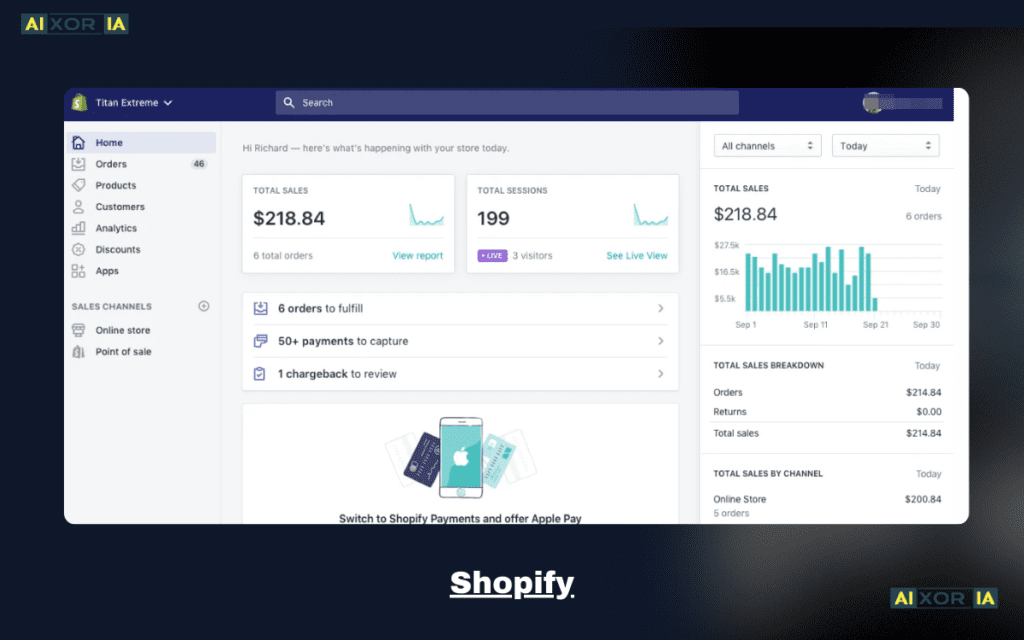
Shopify remains one of the most widely used eCommerce platforms in the US due to its balance of simplicity, scalability, and powerful built-in features. It allows businesses to launch a fully functional online store without technical expertise, while still supporting advanced customization through apps and APIs.
What sets Shopify apart in 2026 is its deep integration of AI. Shopify Magic and AI assistants help generate product descriptions, email campaigns, and even marketing copy based on your store data. This reduces manual workload and speeds up store setup significantly. AI-driven insights also help merchants optimize pricing, inventory, and customer targeting.
The platform includes everything needed to run an online store: hosting, payment processing, inventory management, and marketing tools. Its app ecosystem extends functionality further, allowing integration with logistics, CRM systems, and analytics tools.
Pricing: Starts at $39/month (Basic plan)
Pros:
- Easy to use and launch quickly
- Strong AI automation features
- Large app ecosystem
- Reliable performance and security
Cons:
- Monthly costs increase with apps
- Limited customization without apps or code
Best eCommerce Platform for Full Control
WooCommerce
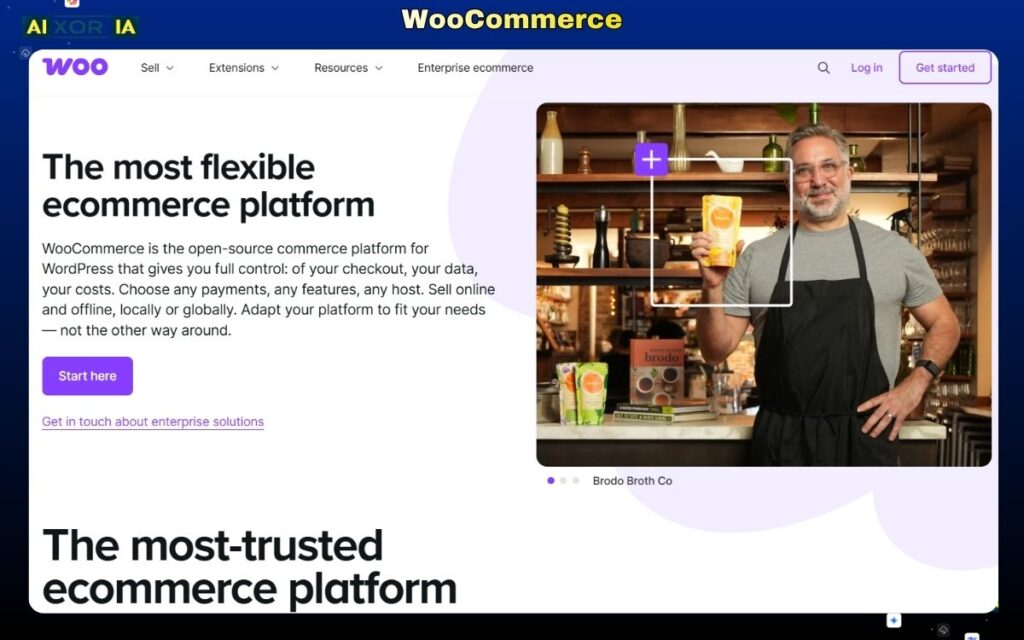
WooCommerce is an open-source eCommerce plugin built for WordPress, offering unmatched flexibility and control. It’s ideal for businesses that want full ownership of their store and the ability to customize every aspect.
In 2026, WooCommerce benefits from a growing ecosystem of AI plugins. These tools can generate product descriptions, optimize SEO, automate customer segmentation, and even provide predictive analytics. However, unlike fully hosted platforms, AI functionality depends on the plugins you choose and how you configure them.
Because WooCommerce is self-hosted, you control everything—from hosting performance to security and integrations. This makes it powerful but also requires more technical involvement compared to plug-and-play platforms.
Pricing: Free (additional costs for hosting, themes, plugins)
Pros:
- पूर्ण customization control
- No platform lock-in
- विशाल plugin ecosystem
- Strong SEO capabilities
Cons:
- Requires technical setup and maintenance
- Performance depends on hosting
- AI features are not built-in by default
Best eCommerce Platform for Beginners
Wix
Wix eCommerce is designed for users who want to build an online store quickly with minimal effort. Its drag-and-drop interface makes it easy to design pages without coding knowledge.
Wix has integrated AI through its website builder and content generation tools. Users can create a complete website by answering a few questions, and the AI will generate layouts, product pages, and content automatically. This is particularly useful for beginners or small businesses entering eCommerce for the first time.
While Wix offers solid features for small to mid-sized stores, it may not scale as effectively as more advanced platforms.
Pricing: Starts at $27/month
Pros:
- Extremely beginner-friendly
- AI-assisted website creation
- Attractive templates
- All-in-one hosting solution
Cons:
- Limited scalability for large stores
- Fewer advanced integrations
Best eCommerce Platform for Scaling Businesses
BigCommerce
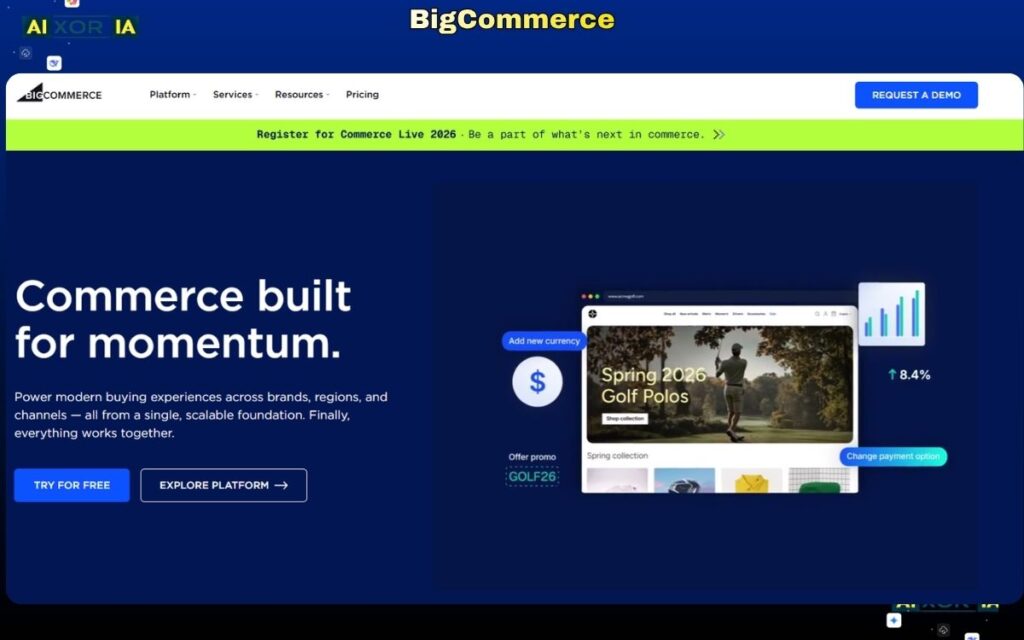
BigCommerce is built for growing businesses that need more advanced features without relying heavily on third-party apps. It offers strong built-in functionality for SEO, multi-channel selling, and performance optimization.
AI in BigCommerce focuses on analytics, personalization, and product recommendations. Businesses can use AI-driven insights to improve conversion rates, manage inventory efficiently, and optimize customer experiences.
It also supports selling across multiple channels, including marketplaces and social platforms, making it ideal for brands expanding their reach.
Pricing: Starts at $39/month
Pros:
- Strong built-in features
- Scalable architecture
- Multi-channel selling support
- No transaction fees
Cons:
- Slight learning curve
- Limited design flexibility compared to others
Best Design-Focused eCommerce Platform
Squarespace

Squarespace is known for its visually polished templates and design-first approach. It’s a strong choice for brands that prioritize aesthetics, such as fashion, photography, and creative businesses.
AI tools in Squarespace assist with content generation, layout suggestions, and basic automation. While not as advanced as Shopify’s ecosystem, these features help streamline the design and setup process.
Squarespace includes built-in eCommerce functionality, making it easy to manage products, payments, and orders within a single platform.
Pricing: Starts at $36/month
Pros:
- High-quality design templates
- Simple setup process
- Integrated hosting and tools
Cons:
- Limited advanced eCommerce features
- פחות flexibility for large-scale operations
Best Enterprise eCommerce Platform
Adobe Commerce

Adobe Commerce (formerly Magento) is designed for large enterprises that require deep customization, scalability, and advanced integrations.
AI plays a major role here, with features focused on personalization, predictive analytics, and customer behavior insights. Businesses can deliver highly tailored shopping experiences based on user data, improving engagement and conversions.
This platform supports complex product catalogs, global operations, and advanced workflows, making it suitable for large-scale eCommerce operations.
Pricing: Custom (enterprise-level)
Pros:
- Highly customizable
- Advanced AI-driven personalization
- मजबूत enterprise capabilities
Cons:
- Expensive
- Requires development resources
- Complex setup
Best eCommerce Platform for Designers and Developers
Webflow

Webflow eCommerce offers a unique combination of visual design control and CMS functionality. It’s ideal for designers who want pixel-level precision without relying heavily on developers.
AI tools in Webflow assist with content creation, layout suggestions, and workflow automation. While still evolving, these features help streamline repetitive tasks and improve efficiency.
Webflow allows full control over animations, interactions, and layouts, making it a powerful choice for custom storefronts.
Pricing: Starts at $29/month
Pros:
- Full design control
- Clean, modern UI
- Strong CMS capabilities
Cons:
- Limited built-in eCommerce features
- Not ideal for large inventories
How to Choose the Right eCommerce Platform
Your ideal platform depends on your needs:
- For beginners → Wix
- For all-in-one solution → Shopify
- For full control → WooCommerce
- For scaling → BigCommerce
- For design → Squarespace or Webflow
- For enterprise → Adobe Commerce
Many businesses combine tools—for example, using Shopify for backend operations and external tools for marketing automation.
The Role of AI in eCommerce Platforms (2026)
AI is transforming eCommerce platforms into intelligent systems rather than simple store builders.
Today’s platforms can:
- Generate product descriptions automatically
- Personalize customer experiences
- Recommend products based on behavior
- Automate email marketing and campaigns
- Provide predictive analytics for sales and inventory
This reduces manual work and helps businesses make data-driven decisions faster.
Final Thoughts
Choosing the best eCommerce website building platform in 2026 is not about picking the most popular tool—it’s about selecting the one that aligns with your business goals, technical capabilities, and growth plans.
For most businesses in the US, platforms that combine ease of use, scalability, and AI-driven automation will provide the greatest long-term value.