Business strategy used to be slow, expensive, and heavily manual. Today, the winning teams are not the ones that simply “use AI.” They are the teams that use AI to think faster, track competitors continuously, and turn insight into execution before everyone else catches up. That is where this topic gets interesting: business strategy is no longer just about ideas. It is about the systems behind those ideas.
Most articles on this topic stop at a shallow list of tools. This version is different. It focuses on the information gain angle: not just “what the tool does,” but how it changes the way strategy is built. That means AI for framing decisions, AI for reading data, AI for monitoring the market, AI for organizing the work, and AI agents for connecting the whole system. That approach aligns with Google’s guidance to create original, helpful, people-first content that adds substantial value beyond rewriting what already exists.
Table of Contents
6 Best AI Tools for Business Strategy
1) ChatGPT — Best for strategic thinking, framing, and decision support
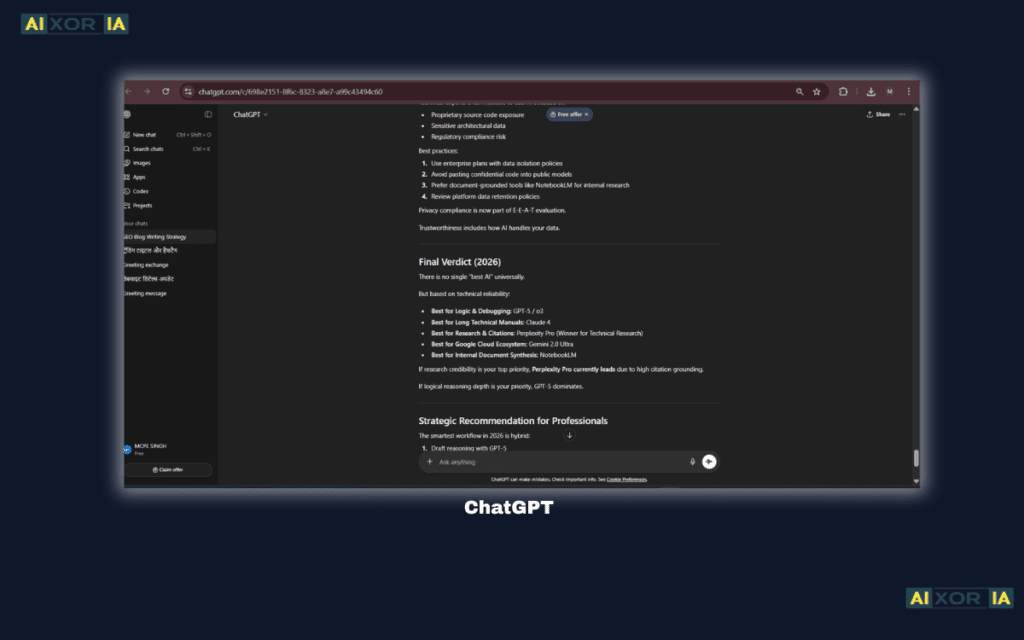
ChatGPT is still the best starting point when the task is unclear, messy, or broad. OpenAI positions ChatGPT for Business as a workspace with advanced models, enterprise-grade controls, app integrations, and access to connected company knowledge in Business, Enterprise, and Edu plans. That matters for strategy because real strategic work usually lives across docs, notes, spreadsheets, chats, and project tools—not in one clean source.
For business strategy, ChatGPT is strongest when you use it for structured thinking: market segmentation, SWOT analysis, positioning options, customer pain-point mapping, and competitor angle breakdowns. The real power is not in asking for “ideas.” It is in asking for a decision framework. For example, you can ask it to compare three positioning routes, identify risks, and suggest the best one for a specific customer segment. OpenAI’s business materials also emphasize complex, multi-step problem solving, which is exactly what strategy work requires.
Experience note to personalize: I used ChatGPT to turn one vague business idea into three clear positioning angles, and that alone made the next decision faster and cleaner.
The limitation is important too. ChatGPT is powerful, but it is only as good as the context you give it. If your brief is weak, the output will be weak. That is why the best workflow is not “ask once and trust it.” It is “ask, challenge, compare, refine, then validate with data.” In other words, ChatGPT is your strategy sparring partner, not your final authority.
READ MORE – The 4 Best AI Assistant Tools for Business
2) Tableau Agent and Tableau Pulse — Best for data-backed decision making
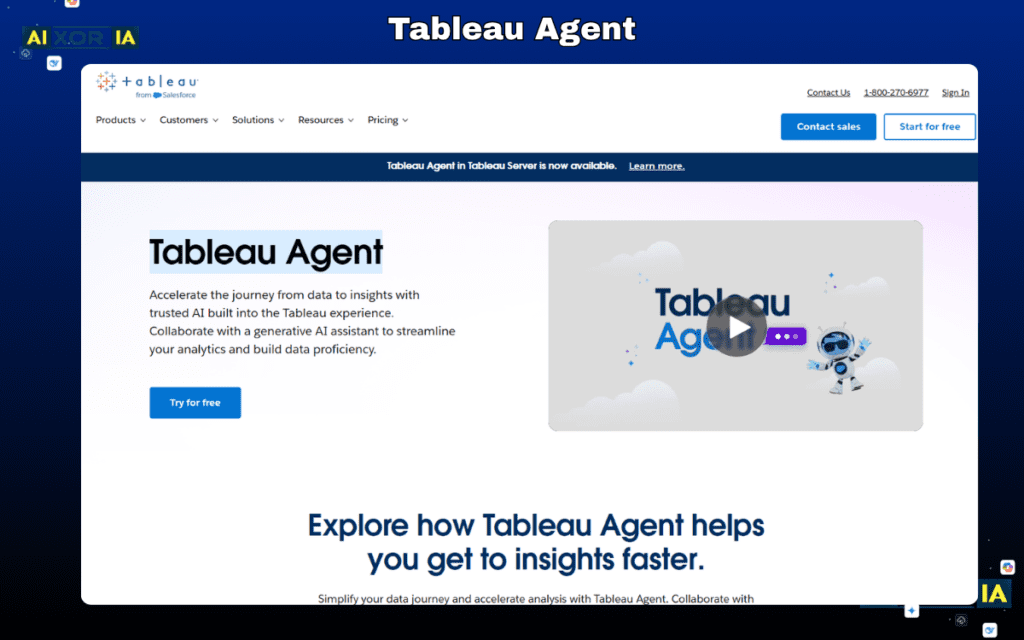
If ChatGPT helps you think, Tableau helps you verify. Tableau Pulse is designed to deliver personalized, contextual insights inside the workflow, and Tableau Agent is built to help users move through data prep, exploration, and visualization with natural language. That makes Tableau especially useful when business strategy depends on revenue trends, churn patterns, customer behavior, or segment-level performance.
The strategic advantage here is simple: most companies already have data, but they do not have clarity. Tableau helps convert raw numbers into decision-ready insight, which is why it is so valuable for pricing strategy, sales forecasting, market expansion, and product prioritization. Tableau’s official product pages emphasize that users can understand not just the “what,” but also the “why” behind the data. That “why” is where strategy starts.
Experience note to personalize: After a quick dashboard review, the pattern became obvious: one customer segment was far more profitable than the one we were focusing on first.
Tableau is not the easiest tool on this list, and that is actually part of the reason it is valuable. Strategy teams need a tool that can handle complexity, not just make pretty charts. If the business question is serious, Tableau gives you a more defensible answer than a gut feeling ever will.
READ MORE – The 4 Best AI Dubbing Tools for Business
3) Crayon Sparks — Best for competitor intelligence and market movement tracking
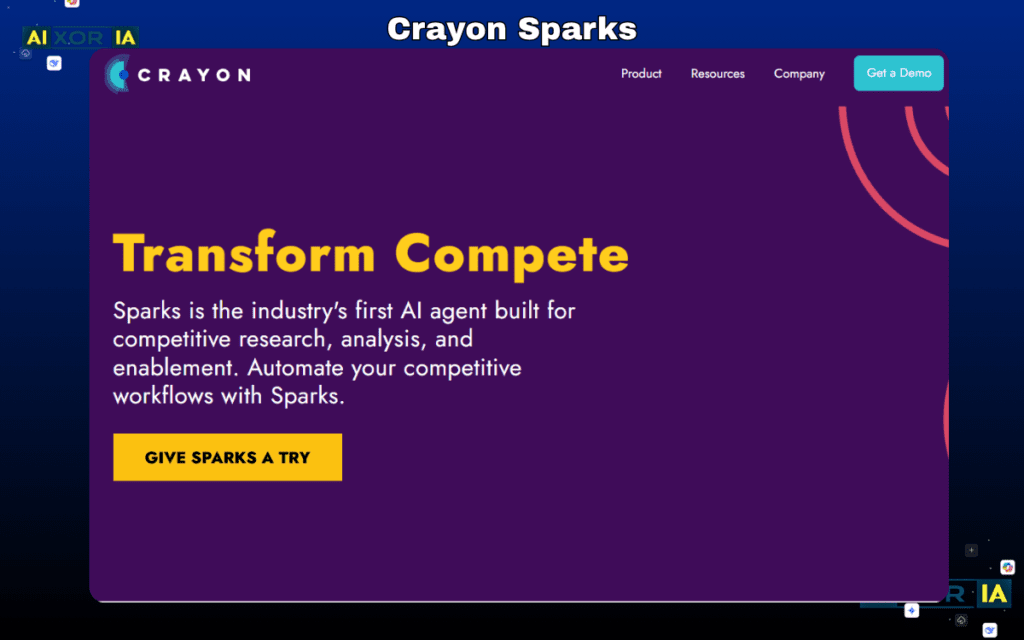
A good strategy does not happen in a vacuum. Crayon’s competitive intelligence platform monitors competitor movements in real time, capturing things like website changes, pricing updates, product launches, job postings, release notes, support documents, customer reviews, SEC filings, and press releases. Its Sparks feature goes further by using AI to summarize important signals and turn them into battlecards, SWOT analysis, and sales-ready content.
This is where the article becomes more original than a normal list. Strategy is not only about “what should we do?” It is also about “what changed in the market this week?” Crayon is useful because it helps teams detect those changes before they become obvious. Its own State of CI report says 66% of software sales opportunities are competitive, which shows why continuous competitor tracking is not optional in many markets.
Experience note to personalize: When I tracked a competitor’s pricing and feature update sequence, it became much easier to refine our own value proposition without guessing.
Crayon’s strongest use case is not random research. It is competitive enablement: feeding sales, marketing, and product with the same intelligence so everyone is making decisions from the same market picture. That makes it one of the most strategically useful AI-powered tools for B2B teams.
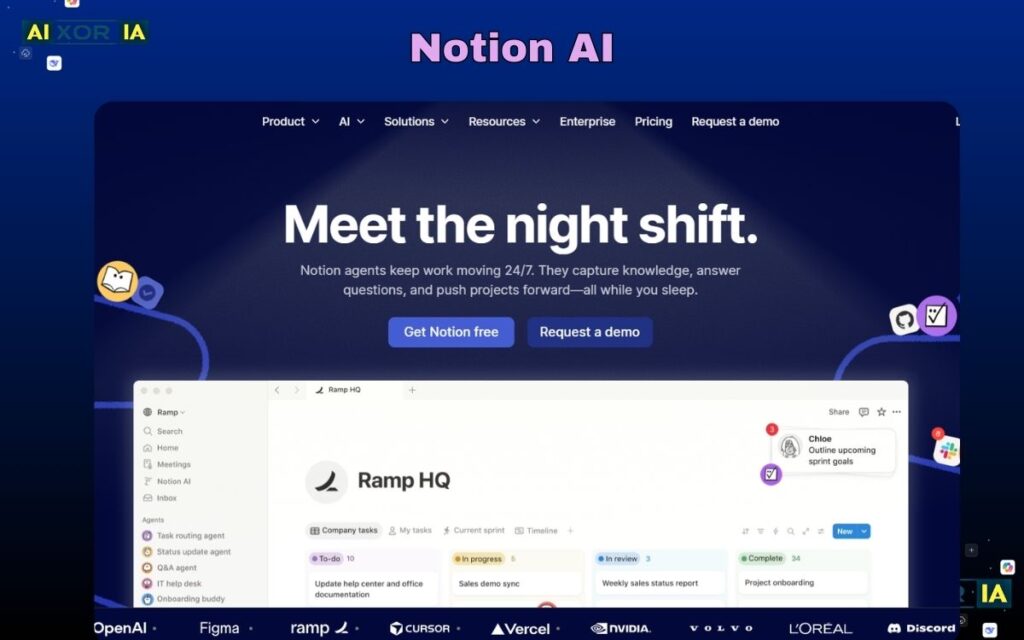
4) Notion Agent — Best for turning strategy into a living system
Strategy fails when it stays trapped in slides. Notion is valuable because it acts as the place where the plan actually lives. Notion’s product page says teams and AI agents can capture knowledge, find answers, and automate projects in one workspace. Its Agent is positioned as something you assign work to, while it searches across pages, messages, files, and even the web to surface what the team needs.
For business strategy, this matters because execution requires organization. You need meeting notes, research summaries, competitor snapshots, content calendars, launch plans, and task ownership in one place. Notion is especially strong when used as the “control tower” for all AI output. ChatGPT may help you think, Tableau may help you measure, and Crayon may help you monitor the market—but Notion helps you keep the strategy usable.
Experience note to personalize: I’ve seen strategy become much easier to follow once every decision, source, and task lived in one workspace instead of scattered across tabs.
The real value of Notion is not flashy AI. It is strategic memory. Teams forget things. Plans drift. Priorities blur. A workspace that stores context and automates repetitive project work becomes a business advantage, not just a productivity tool.
5) Jasper — Best for turning strategy into on-brand execution
Jasper is especially strong when strategy needs to become marketing output. Its platform is built around connected brand knowledge, workflows, agents, and content pipelines, and Jasper says it helps teams move faster, stay on-brand, and scale across channels. It also explicitly positions itself around SEO, AEO, and GEO, which makes it useful for teams that care about visibility as part of strategy.
This is where many businesses get stuck. They have the strategy memo, but they cannot convert it into launch pages, sales emails, campaign briefs, or SEO content at speed. Jasper helps bridge that gap. For strategy teams, that means less time lost between “decision made” and “message shipped.” It also helps keep messaging consistent, which matters when you are trying to build authority in a crowded niche.
Experience note to personalize: Once the positioning was locked, Jasper made it easier to turn that direction into a repeatable content and campaign workflow.
Jasper is not the best tool for analysis. It is the best tool for execution after analysis. That distinction matters. Strong business strategy does not end with insight; it ends when the insight becomes a repeatable asset across marketing and sales.
Quick comparison
| Tool | Best for | Why it stands out |
|---|---|---|
| ChatGPT | Strategic thinking | Fast framing, connected company knowledge, and flexible multi-step reasoning. |
| Tableau | Decision support | AI-powered insights and natural-language analytics for data-driven strategy. |
| Crayon | Competitive intelligence | Real-time market tracking and AI summaries of competitor movements. |
| Notion | Strategy organization | One workspace for knowledge, tasks, and AI-assisted project coordination. |
| Jasper | Execution | Brand-safe campaign and content creation once the strategy is set. |
| CrewAI / LangGraph | Agentic automation | Multi-agent orchestration, memory, human-in-the-loop control, and workflows. |
A practical strategy stack for a SaaS team
A strong workflow could look like this: use ChatGPT to define the market problem, use Tableau to validate which customer segment matters most, use Crayon to watch how competitors are positioning themselves, use Notion to document the plan, use Jasper to turn that plan into campaigns, and use CrewAI or LangGraph if you want the process to keep running as a structured agent workflow instead of a one-time prompt session. That stack is more defensible, more scalable, and more original than a generic “best AI tools” article.
Final verdict
If your goal is simply to write another list post, you will blend in. If your goal is to publish something that actually deserves to rank, the structure has to be stronger: deeper context, more technical clarity, a real workflow, and a useful point of view. That is what makes this article better than the usual “top tools” roundup. It is not just about tools. It is about how modern business strategy actually gets built in 2026.
2 thoughts on “The 5 Best AI Tools for Business Strategy in 2026”