Why Modern Firms Need Engineering Project Management Software
Scr0ll d0wn to D0VVNL0AD
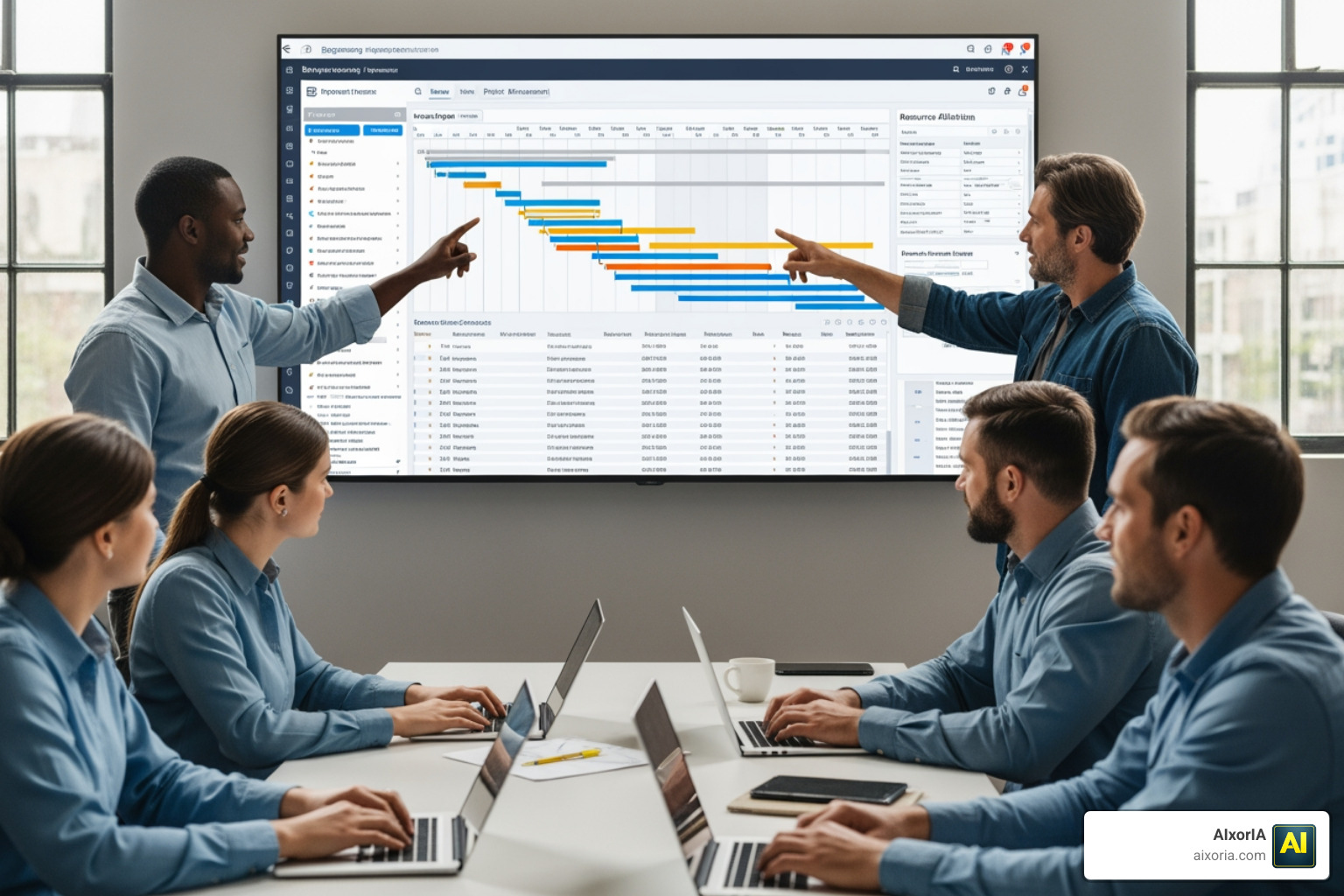
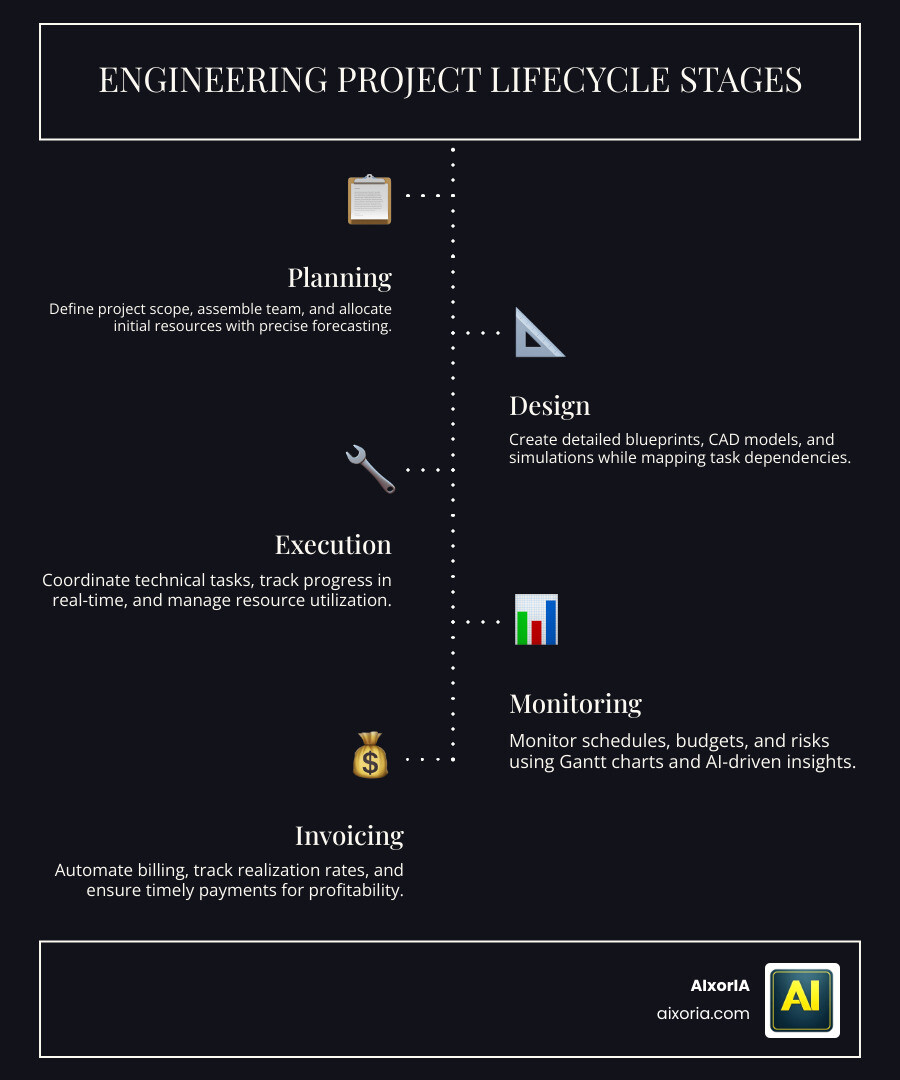 In 2026, the technical demands of engineering mean we can no longer afford to manage everything “in our heads” or through manual checklists. Modern projects involve high-density data, intricate technical task coordination, and the need for precision in resource allocation. Whether you are managing a civil engineering firm or a mechanical design team, the ability to see who is working on what — and how it impacts the bottom line — is the difference between growth and stagnation. ## Essential Features of Engineering Project Management Software When we look for the ideal engineering project management software, we aren’t just looking for a to-do list. We need a robust engine that understands the specific physics of an engineering workflow.
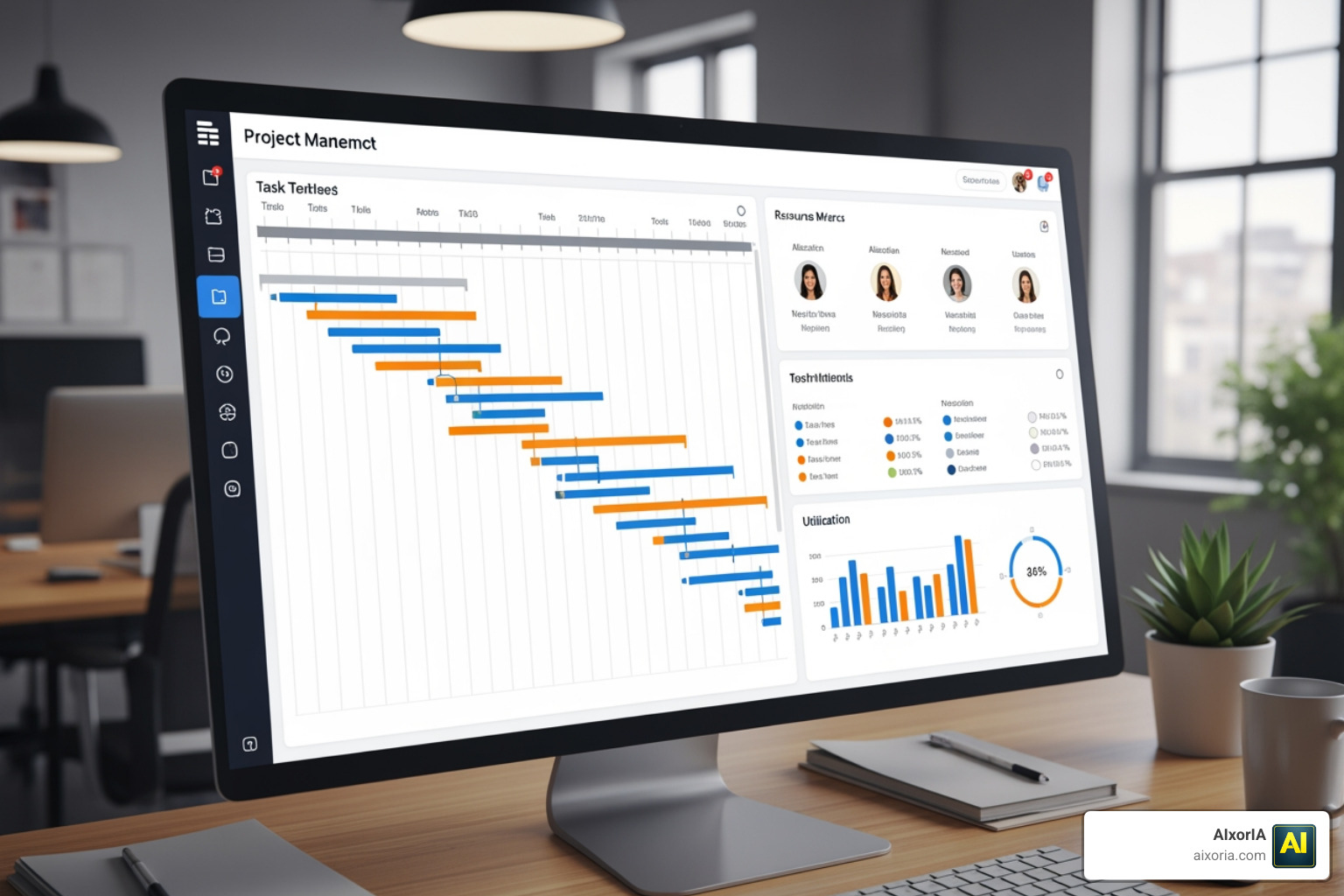 ### Gantt Charts and Dependency Mapping Engineering projects are rarely linear. One delay in a structural calculation can stall an entire construction phase. Advanced Gantt charts allow us to visualize these dependencies. Tools like ProjectManager and monday.com excel here, allowing us to filter by “critical path” so we know exactly which tasks cannot afford a delay. ### CAD and BIM Support For civil and mechanical teams, the project doesn’t just live in a task list; it lives in a model. The best tools now offer integrations or file-sharing capabilities that support Computer-Aided Design (CAD) and Building Information Modeling (BIM). This ensures that the project manager and the lead engineer are looking at the same version of the truth. ### Real-Time Resource Planning and Time Tracking Are we overloading the electrical team while the mechanical team has capacity? Real-time resource planning helps us balance workloads via drag-and-drop interfaces. This is vital for maintaining a high realization rate. If you’re curious about how these compare to general business tools, check out our breakdown of what are the top 10 project management tools in 2026. ### Budget Control and Automated Invoicing In engineering, time is literally money. Software like Monograph or BQE CORE allows us to track fees against phases in real-time. Instead of waiting until the end of the month to realize a project is over budget, we get alerts the moment we hit 75% of our allocated hours. ## Top Benefits: Efficiency, Profitability, and AI Integration The shift to specialized engineering project management software isn’t just about being organized; it’s about the measurable impact on your firm’s health.
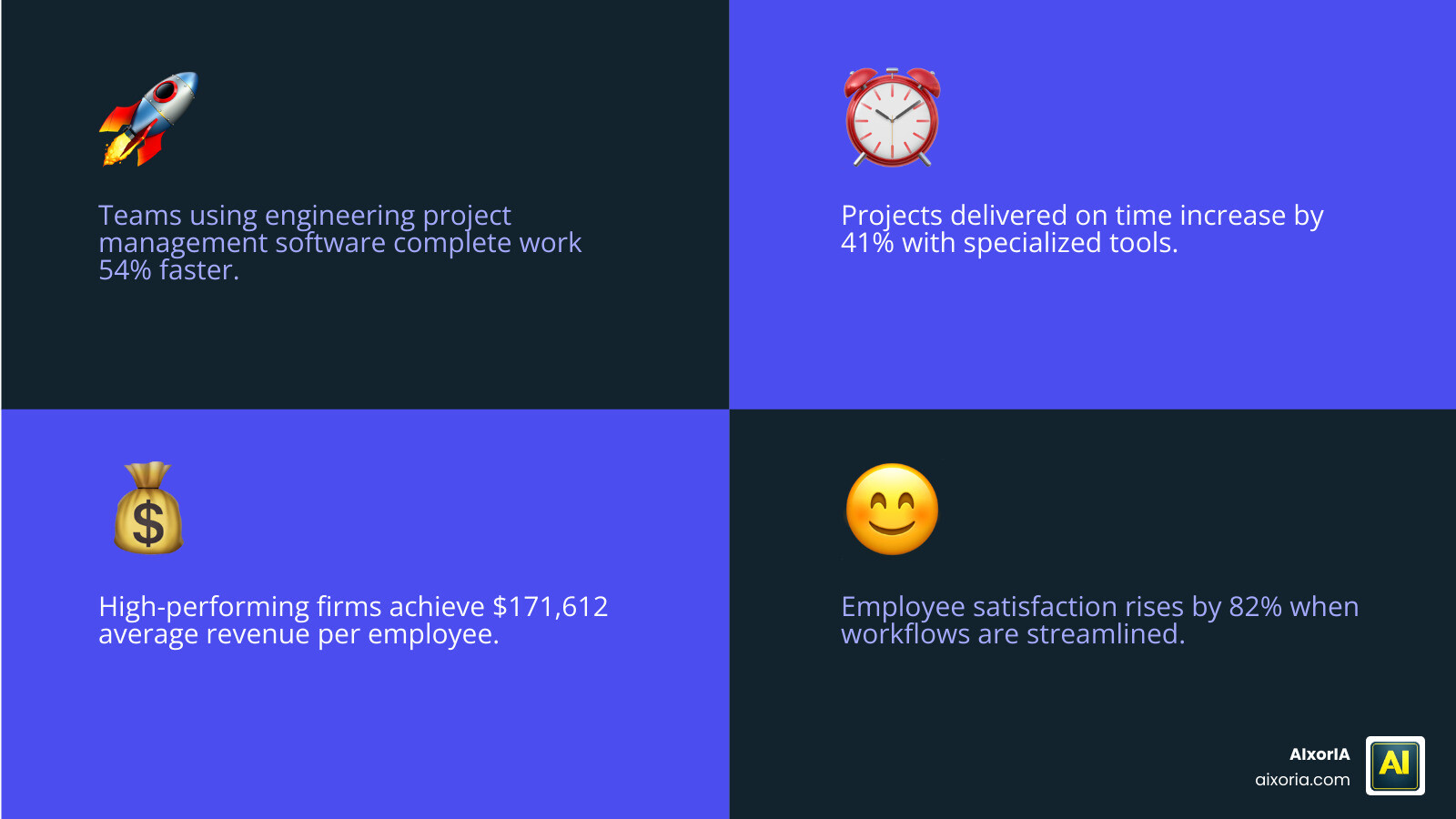 Based on industry data, the benefits are staggering: * Faster Execution: Teams using Asana report 54% faster execution of technical tasks. * On-Time Delivery: There is a 41% increase in projects delivered on schedule. * Profitability: Benchmarking from BQE CORE shows that the average revenue per employee in high-performing engineering firms is $171,612, with an average realization rate of 87%. * Employee Satisfaction: When workflows are clear and “busywork” is removed, employee satisfaction scores can jump by 82%. ### The Role of AI in 2026 We are now firmly in the era of AI-assisted engineering. Modern tools use AI to predict project risks before they happen. For example, AI can analyze past project data to suggest that a specific type of bridge design usually takes 20% longer than estimated, allowing us to adjust our bids accordingly. To dive deeper into this, read our guide on 9 AI tools to enhance project risk management in 2026 or explore top AI tools for managing construction finances. ## The Best Engineering Project Management Software in 2026 Choosing the right tool depends on your firm’s size, discipline, and whether you prefer a cloud-based “Software as a Service” (SaaS) model or a secure on-premise deployment.
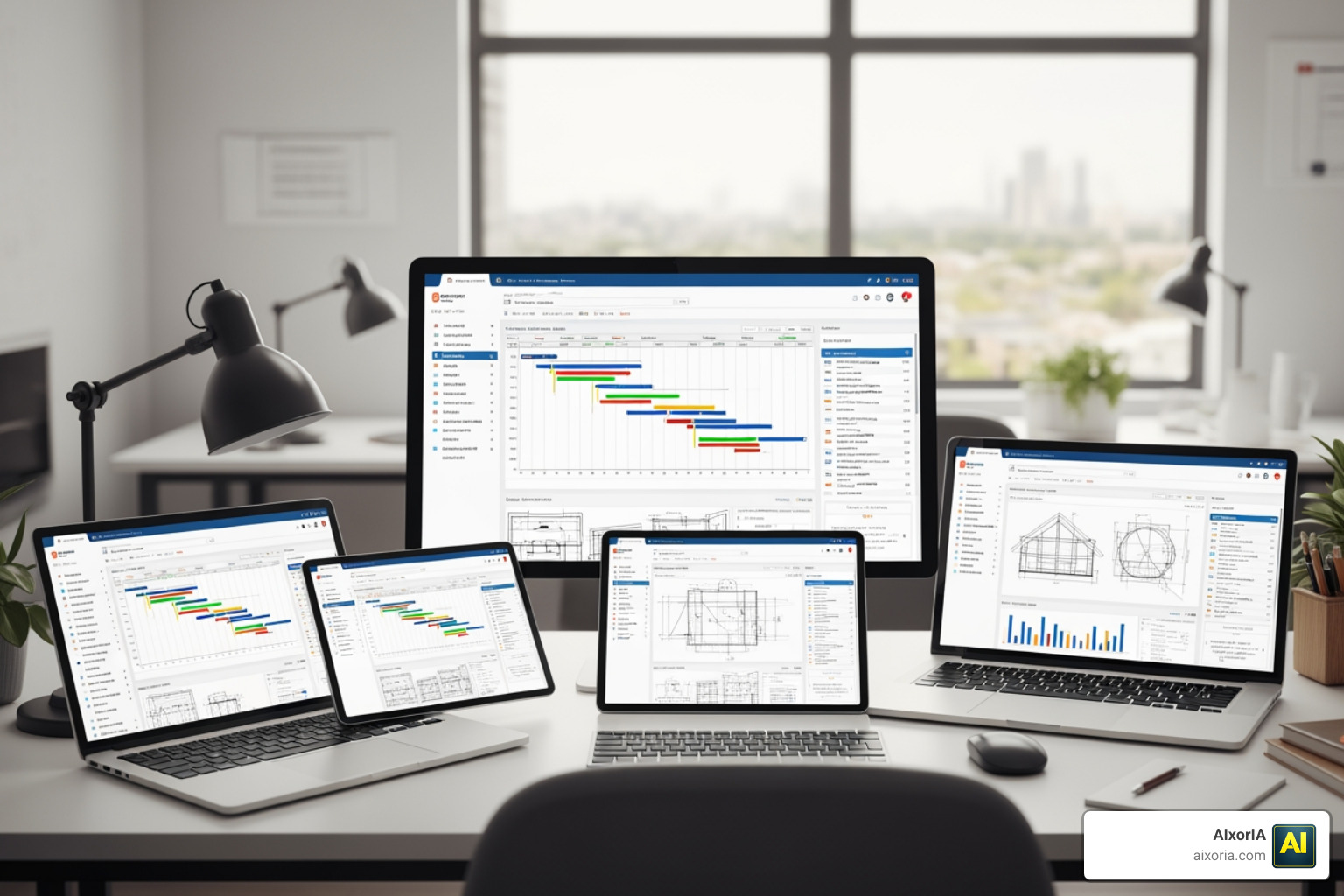 For teams focused on the construction side of engineering, there are specific nuances to consider. We’ve tested the 8 best AI tools for construction project management in 2026 to help narrow down those field-heavy options. ### Best Engineering Project Management Software for Agile Workflows If your engineering team operates in “sprints” — common in software engineering, systems engineering, or R&D — you need agility. * Jira: Now the gold standard for the AI era of project management, Jira allows developers to focus on building rather than context-switching. It offers deep integration with SCM and CI/CD pipelines. * Asana: Great for cross-functional teams where engineers need to collaborate with marketing or product managers. It excels at simplifying intake for work requests and bug tracking. * Hive: A democratically built platform that offers excellent value (starting at $5/user/month) and includes “Hive Buzz,” an AI tool that can summarize meetings and turn them into action items. ### Best Engineering Project Management Software for Specialized Firms For traditional Architecture & Engineering (A&E) firms, the “business” of engineering is just as important as the “doing.” * Monograph: Designed specifically for A&E firms, users report completing business tasks 67% faster and accelerating their billing process by 2.3x. It is highly visual, which appeals to design-oriented engineers. * BQE CORE: This is a powerhouse for firm-wide intelligence. It provides a “single source of truth” for everything from proposals to final payments, helping firms manage their collection periods (which average 56.8 days in the industry). * Deltek: Offers specialized solutions like Ajera (for small firms) and Vantagepoint (for large enterprises), focusing heavily on compliance and government contracting (GovCon) standards. * Accelo: A unified platform that handles the entire client journey. It’s particularly strong at managing retainers alongside one-off projects, helping firms increase billable hours by up to 10%. ## Frequently Asked Questions
 ### What are the typical costs for engineering project management software? Pricing models vary depending on the depth of the features. Basic collaborative tools like Hive start as low as $5 per user per month. More robust, industry-specific platforms like Monograph start around $25 per user per month. For enterprise-level solutions with advanced resource forecasting and AI risk prediction, costs can reach $30+ per user, often billed annually. The ROI usually comes from reducing “unbilled fees” and preventing budget overages, which can decrease by 44% with the right system. ### How does the software support different engineering disciplines? * Mechanical & Plant Engineering: Focuses on complex work packages, BOM (Bill of Materials) management, and Gantt charts for long-term manufacturing cycles. * Civil Engineering: Emphasizes field-to-office communication, mobile updates for site inspections, and tracking subconsultant costs. * Electrical Engineering: Prioritizes technical documentation, version control, and managing high volumes of small, interconnected tasks. * Technical Services: Focuses on utilization rat
es and ensuring that every billable hour is captured accurately. ### Which integrations are essential for engineering workflows? To avoid data silos, your engineering project management software should talk to your other tools: * Accounting: QuickBooks Online is a must-have integration for firms to sync time tracking with invoicing. * Communication: Slack or Microsoft Teams for real-time technical discussions. * Development Tools: Bitbucket or GitHub for version control in software-heavy projects. * Documentation: Atlassian tools like Confluence for maintaining technical specs and institutional knowledge. ## Conclusion The landscape of engineering has changed. In 2026, we are no longer just building structures or machines; we are managing massive streams of data and complex human-AI collaborations. Choosing the right engineering project management software is the first step toward reclaiming your time and ensuring your firm remains profitable in a competitive market. At AIxorIA, we specialize in helping businesses navigate this digital transformation. Whether you need custom AI solutions to automate your project reporting, performance audits of your current tech stack, or tool training workshops to get your team up to speed, we are here to help. We believe in simple language, affordable services, and fast support to empower your engineering team. Ready to optimize your workflow? Explore more AI productivity insights or contact us today to see how we can help you build a more efficient firm.
1 thought on “Engineering Project Management Software in 2026: 9 Best Tools for Engineering Teams”