Why Choosing the Best Paraphrase Tool Without AI Matters in 2026
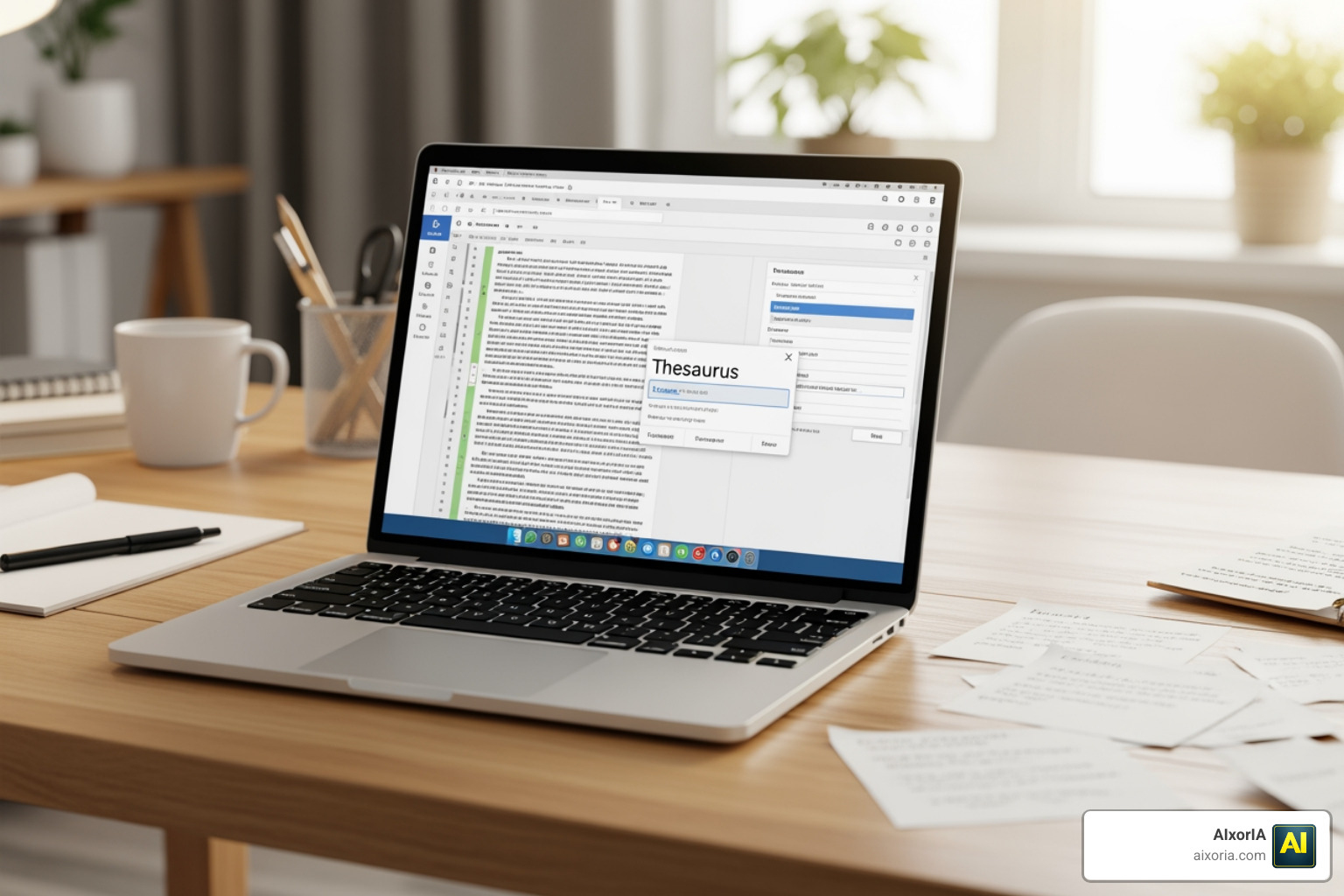
The best paraphrase tool without AI does exactly what it sounds like — it rewrites your text using synonym replacement and sentence restructuring rules, without sending your words to a large language model.
If you’re in a hurry, here are the top non-AI paraphrasing tools worth trying right now:
| Tool | How It Works | Word Limit | Sign-up Required |
|---|---|---|---|
| Toololis | Browser-based, 300+ synonym dictionary | No stated limit | No |
| Ref-n-Write | Rule-based, Microsoft Word add-in | No stated limit | No (trial) |
| Clever AI Humanizer | Synonym + sentence restructuring | 7,000 words/day | No |
| Paraphrasing-tool.com | Rule-based rewriter | 250 words/session | No |
Most small business owners and writers reach for a paraphrasing tool because they need to rephrase something fast — a clunky email, a repetitive report section, a dense paragraph that just won’t cooperate.
But here’s the problem with many popular tools: they run on AI models that send your text to remote servers, require a login, or produce output that AI detectors flag instantly.
Non-AI tools sidestep all of that. They run on fixed rules. Your text stays in your browser. No account needed.
Are they perfect? No. But for quick, private, predictable rewrites — especially for sensitive business content — they’re hard to beat.
Understanding the Best Paraphrase Tool Without AI Technology
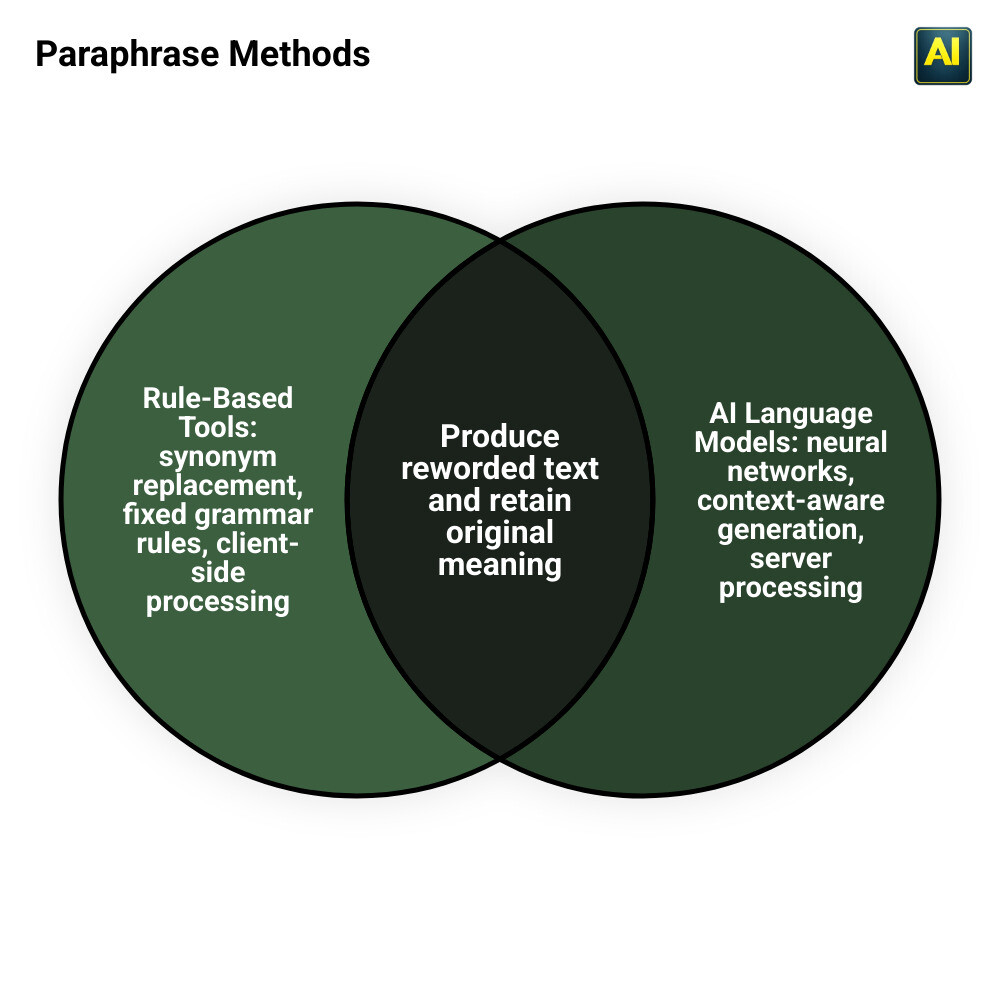
When we talk about the Best Paraphrase Tool Without AI, we are stepping away from Neural Language Processing (NLP) models like GPT-4 or Claude. Instead, we are looking at “rule-based” or “algorithmic” systems. Think of these as very sophisticated digital thesauruses combined with grammar maps.
These tools generally rely on three core pillars:
- Synonym Replacement: The tool identifies common words and swaps them with alternatives from a pre-defined dictionary. For example, “fast” might become “quick” or “rapid.”
- Sentence Restructuring: Using fixed grammatical rules, the tool might flip a sentence from active to passive voice or move a dependent clause from the end to the beginning.
- Client-Side Processing: This is the “secret sauce” for privacy. Many of these tools run 100% in your browser. Your text never leaves your computer to hit a server.
A great example of this approach is the Free Paraphrasing Tool – Reword Text Instantly | HumanizeThisAI, which focuses on rephrasing text to feel more organic without the heavy-handed “hallucinations” often found in generative AI. If you want to dive deeper into why this technology is making a comeback, check out our guide on the Best Paraphrase Tool Without AI in 2026.
Why Writers Choose the Best Paraphrase Tool Without AI
In 2026, the digital landscape is saturated with AI. While AI is powerful, it isn’t always the right tool for every job. We’ve found that many of our clients at AIxorIA prefer non-AI options for several practical reasons:
- Data Privacy: Since many of these tools process text locally, there is zero risk of your sensitive business data being used to “train” a future model.
- No Sign-up Friction: Most rule-based tools are free and don’t require an email address. You just paste, click, and go.
- Predictable Output: AI can sometimes get “creative” and change the meaning of your sentence entirely. Rule-based tools are more literal, which is often safer for technical or legal drafts.
- Bypassing AI Detectors: Because these tools don’t use the predictable patterns of large language models, they often produce text that doesn’t trigger “AI-written” flags in the same way.
For those specifically worried about search engine rankings, using a rule-based rewriter can be a strategic move, as discussed in our research on the 7 Best AI Paraphrasing Tools for SEO in 2026 Tested.
Navigating the Limitations of the Best Paraphrase Tool Without AI
We have to be honest: non-AI tools aren’t magic. Because they don’t “understand” context the way a human or a high-end AI does, they have specific hurdles.
- Vocabulary Coverage: A rule-based tool is only as good as its dictionary. If you use highly specialized jargon, it might not find a suitable synonym.
- Meaning Drift: Occasionally, a synonym swap can change the nuance. “The boss is firm” (meaning strict) might be changed to “The boss is solid” (meaning hard), which sounds a bit silly.
- Complex Syntax: Long, winding sentences can sometimes become “mutant sentences” if the restructuring rules clash.
This is why we always recommend a “human-in-the-loop” approach. Use the tool to get a fresh perspective, but always do a final manual edit. This is especially true for students who need to ensure their work remains academically sound, as noted in our testing of the 7 Best AI Paraphrasing Tools for Students 2026 Tested Against Turnitin GPTZero.
Key Features and Advantages of Non-AI Rewriters
The shift toward the Best Paraphrase Tool Without AI is driven by a need for transparency. In our workshops at AIxorIA, we often highlight how these tools offer a “cleaner” workflow for professionals who are tired of the “AI-ish” tone that has become common online.

One of the standout advantages is AI detection avoidance. AI detectors look for “perplexity” and “burstiness” — patterns that AI models naturally follow. Rule-based tools, by contrast, use a more mechanical synonym-swapping method that doesn’t follow those specific statistical patterns.
| Feature | Rule-Based (Non-AI) | Generative AI Models |
|---|---|---|
| Data Privacy | High (often local) | Moderate (server-side) |
| Speed | Instant | 5-10 seconds |
| Creativity | Low (literal) | High (imaginative) |
| Cost | Usually Free | Often Subscription-based |
| Internet Required | Not always (offline modes) | Always |
Additionally, tools like Ref-n-Write offer offline functionality as a Microsoft Word add-in, which is a lifesaver for researchers working in areas with spotty internet or high-security requirements.
How to Optimize Results from Rule-Based Tools
To get the most out of the Best Paraphrase Tool Without AI, you can’t just dump a 50-page document into it and hope for the best. We recommend a more surgical approach.
- Use Short Input Chunks: Instead of a whole page, paste 2-4 sentences at a time. This allows you to monitor the meaning drift closely.
- Protect Key Terms: Before you hit “paraphrase,” identify terms that must not change (like brand names, technical jargon, or specific dates). Many tools allow you to “freeze” or “lock” these words.
- Adjust the Synonym Slider: If the tool has a slider, start with a “Standard” or “Light” setting. Aggressive settings often lead to weird word choices that sound like a robot trying to be a poet.
- The “Read Out Loud” Test: After the tool gives you the output, read it out loud. If it sounds clunky or unnatural to your ears, it will sound clunky to your readers.
For those working on a thesis or research paper, these steps are vital to maintaining the formal tone required for your field. You can find more specific tips in our guide on the Best AI Paraphrasing Tools for Academic Writing in 2026.
Ethical Considerations in Modern Writing
Whether you are using the Best Paraphrase Tool Without AI or a high-end AI assistant, ethics remain the same. Paraphrasing is a tool for clarity, not a tool for theft.
- Plagiarism vs. Paraphrasing: Even if you change every single word in a sentence, the idea still belongs to the original author. You must always cite your sources.
- Self-Plagiarism: For researchers and bloggers, reusing your own previously published work without rephrasing can lead to “duplicate content” penalties from Google or academic boards.
- Originality: We believe the best writing is a blend of your unique voice and helpful tools. Don’t let the tool take over your personality.
At AIxorIA, we emphasize that these tools should be treated as “smart assistants” rather than “ghostwriters.” For a deeper look at how free tools stack up against plagiarism checkers, see our analysis of the 7 Best Free AI Paraphrasing Tools in 2026 Tested.
Frequently Asked Questions about Non-AI Paraphrasing
Can non-AI tools bypass AI content detectors?
Yes, often more effectively than AI-based rewriters. Because rule-based tools don’t follow the statistical probability patterns of large language models, they produce text that lacks the “fingerprint” AI detectors look for. However, they can still produce “robotic” sounding text if the synonym choices are too obscure.
Are these tools safer for sensitive data?
Generally, yes. Tools like Toololis run 100% client-side. This means the text is processed in your RAM and never transmitted over the internet. For lawyers, medical professionals, or corporate researchers, this is a massive advantage over cloud-based AI tools.
Do non-AI paraphrasers require a sign-up?
Most do not. Since they don’t require expensive server clusters to run (your own computer does the work), the creators usually offer them for free without requiring an account or a credit card.
Conclusion
Finding the Best Paraphrase Tool Without AI is about finding a balance between efficiency and integrity. When AI-generated content is becoming the “new normal,” there is a growing value in tools that are transparent, private, and predictable. Rule-based rewriters offer a reliable way to polish your emails, reports, and academic papers without the baggage of complex subscriptions or data privacy concerns.
At AIxorIA, we are dedicated to helping you navigate these technological shifts. Whether you need a custom AI solution or a simple tutorial on how to use these manual tools more effectively, we’re here to help you work smarter, not harder.
Ready to take your writing or business processes to the next level? More info about AIxorIA services is just a click away. Let’s build something great together in 2026!