Extract, transform, and load (ETL) processes are the backbone of modern data workflows—but building and maintaining them traditionally requires engineering time, infrastructure, and constant upkeep. That’s where no-code ETL tools come in.
No-code ETL platforms allow teams to move, transform, and manage data across systems without writing code. For growing companies and enterprises, this means faster implementation, lower dependency on developers, and the ability for analysts, marketers, and operations teams to own their data pipelines.
In 2026, the category has evolved significantly. The best no-code ETL tools now include AI-assisted pipeline creation, automated schema handling, real-time syncing, and deep integrations across cloud apps and databases.
This guide breaks down the best no-code ETL tools, focusing on usability, scalability, integrations, and AI capabilities—so you can choose the right platform based on your workflow.
Table of Contents
What Makes the Best No-Code ETL Tool?
Not all ETL tools are truly “no-code,” and not all are built for modern workflows. The best platforms typically offer:
Ease of use without technical complexity
A visual interface that allows users to create pipelines using drag-and-drop or simple configuration—without SQL or scripting.
Broad integrations
Support for SaaS apps, databases, APIs, data warehouses, and cloud storage systems.
Automation and scheduling
Ability to run pipelines automatically, handle incremental updates, and manage errors without manual intervention.
AI-assisted transformations
Modern ETL tools increasingly use AI to map fields, suggest transformations, detect anomalies, and optimize workflows.
Scalability and reliability
As data volume grows, the tool should handle performance, monitoring, and recovery without breaking pipelines.
The Best No-Code ETL Tools at a Glance
| Tool | Best For | Key Strength |
|---|---|---|
| Fivetran | Fully managed pipelines | Zero-maintenance data syncing |
| Airbyte | Open-source flexibility | Custom connectors + control |
| Stitch | Simple ETL workflows | Fast setup |
| Matillion | Cloud data transformation | Deep warehouse integration |
| Talend | Enterprise data integration | Advanced governance |
| Hevo Data | Real-time pipelines | Ease + automation |
| Integrate.io | Low-code ETL | Visual pipeline builder |
| Zapier | Workflow-based ETL | App integrations + AI automation |
Best No-Code ETL Tool for Fully Managed Pipelines
Fivetran
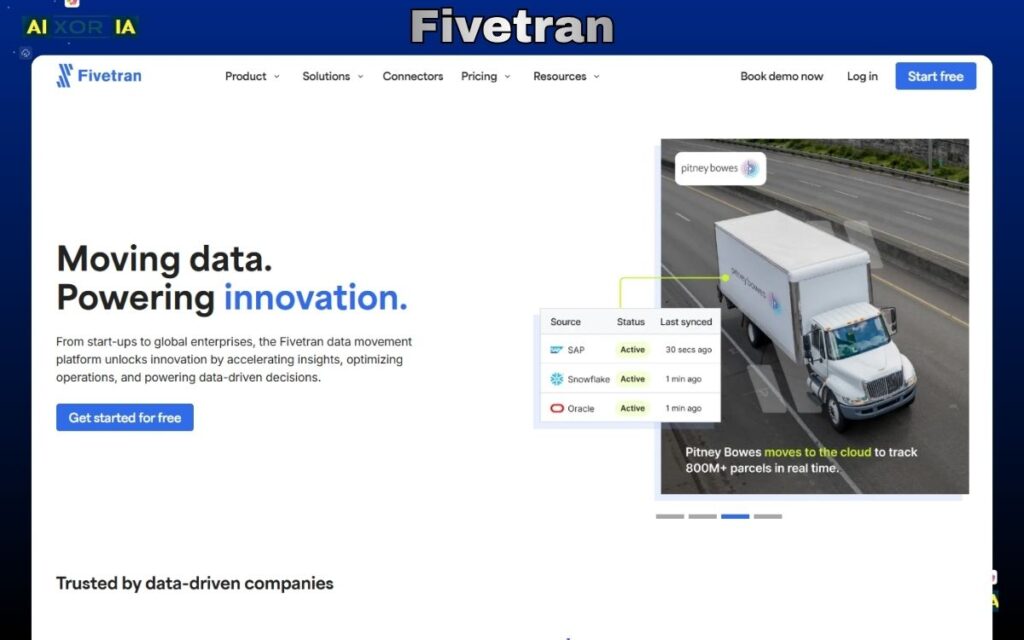
Fivetran is widely known for its fully managed approach to ETL. It automates data extraction and loading with minimal configuration, making it ideal for teams that want reliable pipelines without ongoing maintenance.
The platform supports a wide range of connectors, including databases, SaaS tools, and cloud services. Once set up, Fivetran automatically syncs data, handles schema changes, and ensures consistency across destinations like data warehouses.
Fivetran has also integrated AI-driven capabilities that improve pipeline reliability. It can automatically detect schema changes, adapt data structures, and optimize sync performance without manual intervention. This reduces the risk of pipeline failures and ensures data accuracy over time.
For organizations dealing with large-scale data operations, Fivetran provides strong governance, security, and compliance features, making it a preferred choice for enterprise environments.
Best for: Hands-off, automated ETL pipelines
Limitation: Less flexibility for custom transformations
Best No-Code ETL Tool for Open-Source Flexibility
Airbyte

Airbyte is an open-source ETL platform that combines flexibility with a growing no-code interface. It allows teams to build and manage data pipelines while maintaining control over infrastructure and customization.
Airbyte supports hundreds of connectors and enables users to create custom ones when needed. This makes it particularly useful for organizations with unique data sources or non-standard workflows.
Its AI capabilities are evolving, especially in areas like connector generation, schema mapping, and error detection. AI-assisted features help reduce manual setup and simplify complex integrations.
Airbyte’s hybrid approach—no-code interface with optional developer control—makes it suitable for teams that want flexibility without sacrificing usability.
Best for: Custom data workflows and open-source environments
Limitation: Requires some technical understanding for advanced use
Best No-Code ETL Tool for Quick Setup
Stitch
Stitch focuses on simplicity and speed. It’s designed for teams that want to get data pipelines up and running quickly without dealing with complex configurations.
The platform supports common data sources and integrates easily with cloud data warehouses. While it doesn’t offer as many advanced features as some competitors, its streamlined setup process makes it highly accessible.
AI features in Stitch are more limited compared to newer tools, but it still benefits from automation in data syncing and pipeline management. For straightforward ETL needs, this simplicity is often an advantage.
Best for: Fast and simple ETL setup
Limitation: Limited advanced features and customization
Best No-Code ETL Tool for Cloud Data Warehouses
Matillion

Matillion is built specifically for cloud data warehouses like Snowflake, BigQuery, and Redshift. It focuses on transforming data directly within the warehouse environment.
Its visual interface allows users to design pipelines using drag-and-drop components, making it accessible to non-developers while still offering advanced capabilities.
Matillion has introduced AI-powered features that assist with transformation logic, query optimization, and data mapping. These capabilities help users build efficient pipelines without deep technical knowledge.
For organizations heavily invested in cloud data infrastructure, Matillion provides strong performance and scalability.
Best for: Cloud-native ETL workflows
Limitation: Best suited for specific warehouse ecosystems
Best No-Code ETL Tool for Enterprise Data Integration
Talend
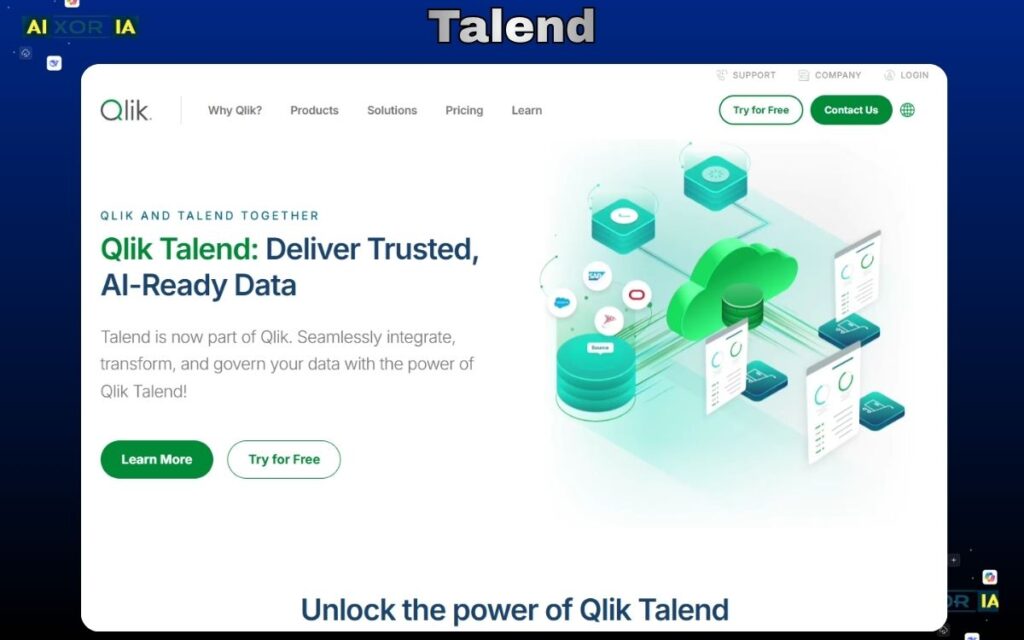
Talend is a comprehensive data integration platform designed for enterprise-scale operations. It combines ETL, data quality, governance, and integration into a single ecosystem.
Its no-code and low-code tools allow users to design pipelines visually, while still supporting advanced customization when needed.
Talend’s AI capabilities play a significant role in data quality and governance. It can detect anomalies, suggest data cleansing actions, and automate data preparation processes. This makes it particularly valuable for organizations dealing with large, complex datasets.
Best for: Enterprise-grade data integration and governance
Limitation: Can be complex and resource-intensive
Best No-Code ETL Tool for Real-Time Data Pipelines
Hevo Data
Hevo Data is designed for real-time data replication and transformation. It allows teams to move data continuously between systems with minimal delay.
The platform offers a no-code interface that simplifies pipeline creation, along with built-in transformations and automation features.
Hevo uses AI to improve pipeline reliability, detect issues, and optimize data flows. Its ability to handle real-time data makes it particularly useful for analytics, dashboards, and operational reporting.
Best for: Real-time ETL pipelines
Limitation: May not suit highly complex transformations
Best No-Code ETL Tool with Visual Pipeline Builder
Integrate.io
Integrate.io provides a visual interface for building and managing ETL pipelines. It focuses on making complex data workflows accessible through a user-friendly design.
Users can connect multiple data sources, apply transformations, and automate processes without writing code. The platform also includes monitoring and error-handling features.
AI capabilities in Integrate.io help with data mapping, transformation suggestions, and workflow optimization, reducing manual effort and improving efficiency.
Best for: Visual ETL pipeline creation
Limitation: May require setup time for complex workflows
Best No-Code ETL Tool for Workflow-Based Automation
Zapier
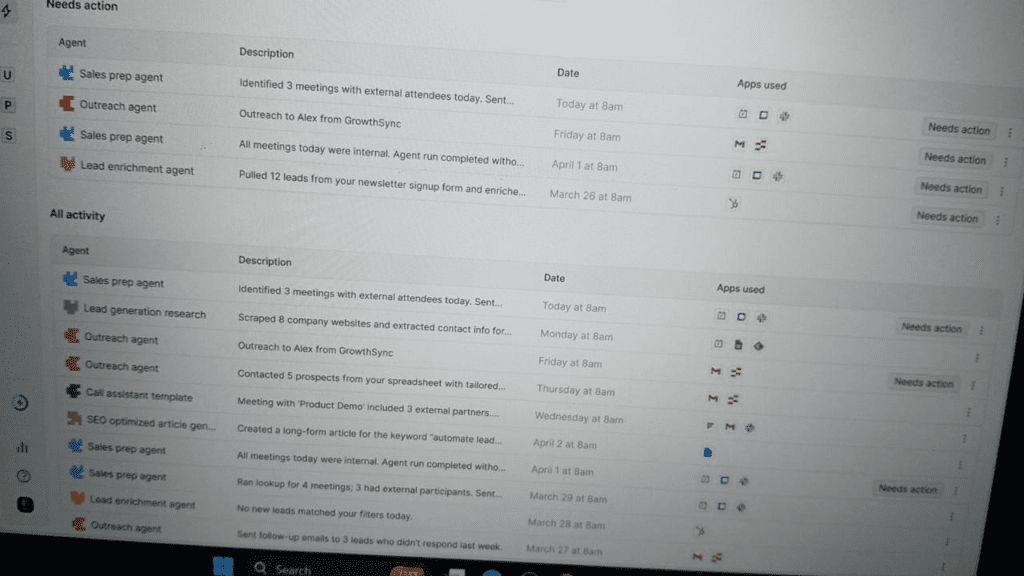
Zapier is not a traditional ETL tool, but it has become a powerful option for no-code data workflows. It connects thousands of apps and allows users to automate data movement through trigger-based workflows.
What sets Zapier apart is its AI-driven automation layer. With built-in AI assistants, users can describe workflows in natural language and generate automated pipelines. This makes it highly accessible for non-technical users.
Zapier also includes tools for data storage, form collection, and workflow orchestration, making it a flexible solution for lightweight ETL use cases across business teams.
Best for: App-based ETL and automation workflows
Limitation: Not ideal for large-scale data engineering
How to Choose the Right No-Code ETL Tool
The best tool depends on your use case:
- For fully automated pipelines → Fivetran
- For flexibility and customization → Airbyte
- For quick setup → Stitch
- For cloud warehouses → Matillion
- For enterprise integration → Talend
- For real-time data → Hevo Data
- For visual workflows → Integrate.io
- For app automation → Zapier
In many cases, teams combine tools—for example, using Fivetran for core pipelines and Zapier for workflow automation.
The Role of AI in No-Code ETL Tools (2026)
AI is transforming ETL from a technical process into an intelligent system.
Modern tools now use AI to:
- Automatically map data fields
- Suggest transformations
- Detect anomalies and errors
- Optimize pipeline performance
- Generate workflows from simple prompts
This reduces the need for manual configuration and allows teams to focus on insights rather than infrastructure.
AI is also making ETL more accessible to non-technical users, enabling faster decision-making and better collaboration across teams.
Final Thoughts
No-code ETL tools have fundamentally changed how organizations handle data. What once required dedicated engineering teams can now be managed by analysts, marketers, and operations professionals.
The best no-code ETL tools in 2026 are not just about moving data—they’re about simplifying complexity, enabling collaboration, and scaling workflows efficiently.
Choosing the right tool depends on your data environment, team structure, and long-term needs. In many cases, a combination of tools will provide the best results.