In 2023–2024, AI tools assisted businesses.
In 2026, AI tools execute work independently.
The shift from prompt-based assistants to autonomous AI agents is the single biggest transformation in modern business operations.
I’ve worked with service firms, SaaS startups, and digital agencies adopting AI workflows over the past two years. The businesses seeing real ROI are not using AI to “generate content.” They are using AI to:
- Perform browser research
- Execute multi-step workflows
- Make conditional decisions
- Update CRMs automatically
- Forecast revenue in real time
This is the era of AI that works — not waits.
Read More – Best 3 AI Tools for Business Name Generator
1. From Assistants to Autonomous Agents (2026 Shift)
ChatGPT – Now with Operator / Agentic Capabilities
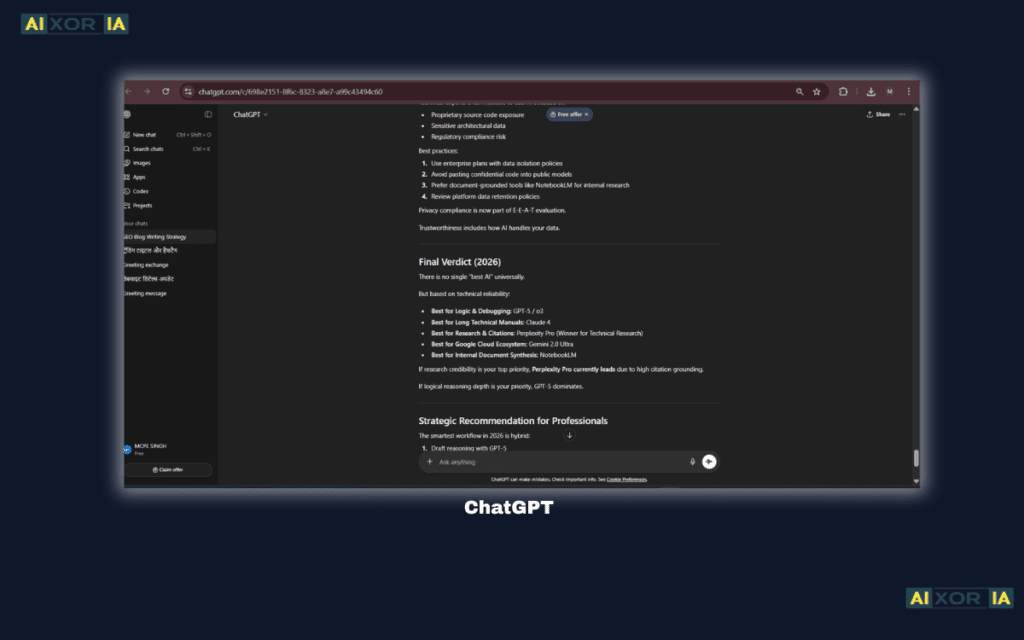
In 2026, modern AI models are not limited to answering prompts.
With autonomous reasoning modes (such as operator-style browsing and agentic execution), AI systems can:
- Open a browser session
- Conduct structured research
- Extract data from multiple websites
- Fill forms
- Update spreadsheets
- Draft emails
- Trigger follow-up workflows
This is not “chat.”
This is task delegation.
Businesses now use AI agents for:
- Competitive research reports
- Market pricing analysis
- CRM updates
- Lead qualification
- Vendor comparison sheets
The difference is critical:
| 2024 Assistant | 2026 Autonomous Agent |
|---|---|
| Responds to prompt | Executes multi-step tasks |
| Needs constant instruction | Makes conditional decisions |
| Generates drafts | Completes workflows |
That shift changes operational cost structure.
Zapier – From Automation to AI Agents
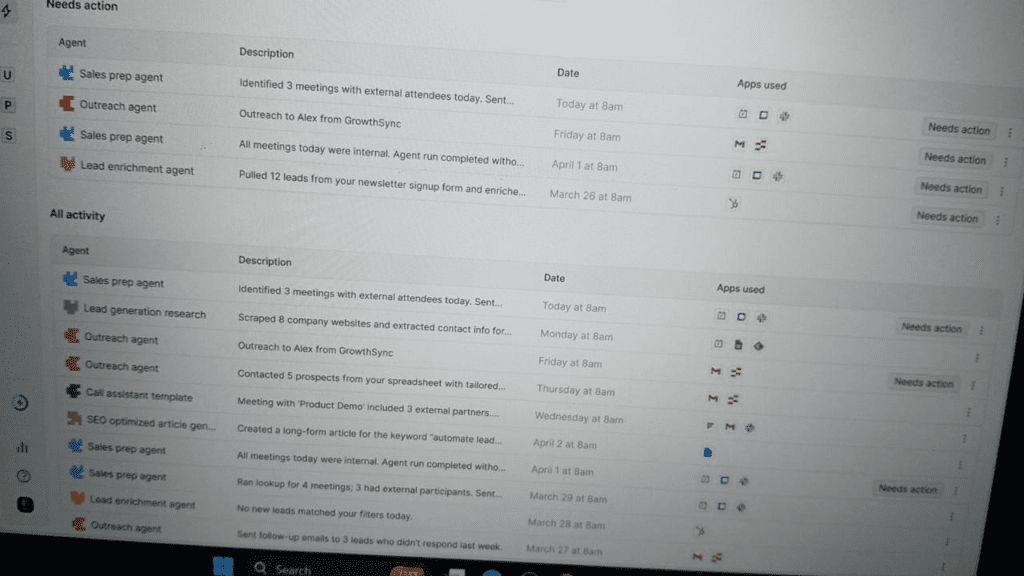
Earlier, Zapier required a trigger → action system.
In 2026, AI-driven automation platforms operate as persistent agents that:
- Monitor systems continuously
- Decide when to act
- Adjust workflows dynamically
- Optimize processes without manual triggers
Example:
Instead of:
“New lead → send email.”
Now:
AI monitors lead behavior → scores intent → checks CRM → drafts customized outreach → schedules follow-up → updates dashboard.
This is decision-based automation, not trigger-based automation.
2. The Business AI Efficiency Formula
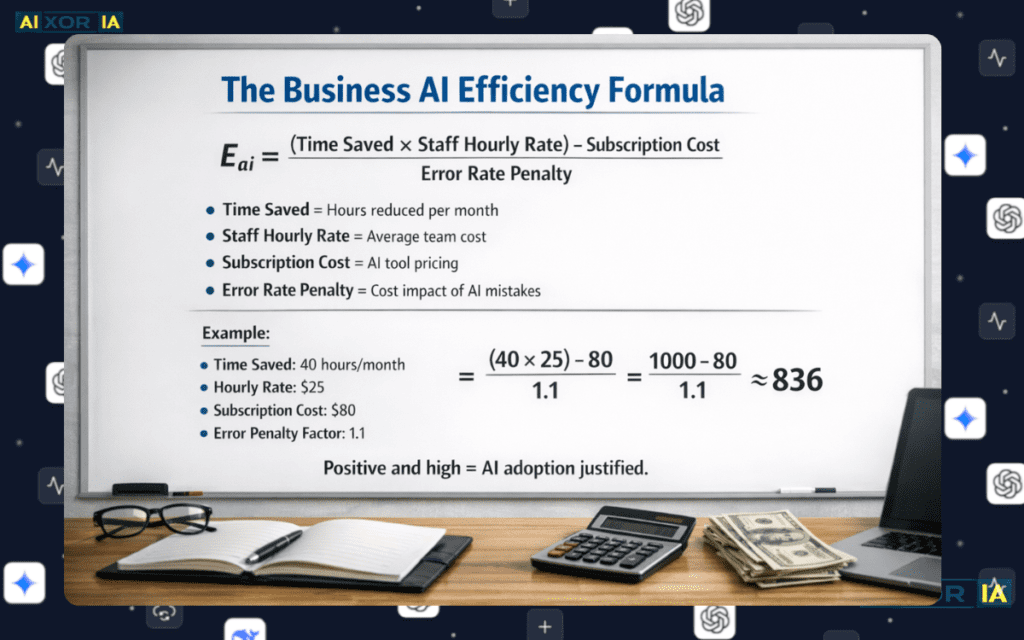
Serious businesses do not adopt AI emotionally. They calculate value.
In 2026, we evaluate AI tool efficiency using:Eai=Error Rate Penalty(Time Saved×Staff Hourly Rate)−Subscription Cost
Where:
- Time Saved = Hours reduced per month
- Staff Hourly Rate = Average team cost
- Subscription Cost = AI tool pricing
- Error Rate Penalty = Cost impact of AI mistakes
Example:
- Time saved: 40 hours/month
- Hourly rate: $25
- Tool cost: $80
- Error penalty factor: 1.1
Then:Eai=1.1(40×25)−80=1.11000−80≈836
Positive and high = AI adoption justified.
This formula transforms AI adoption from hype to financial decision-making.
3. Updated 2026 Business AI Stack
Marketing & Brand Voice
Anthropic – Claude 4 (Opus)
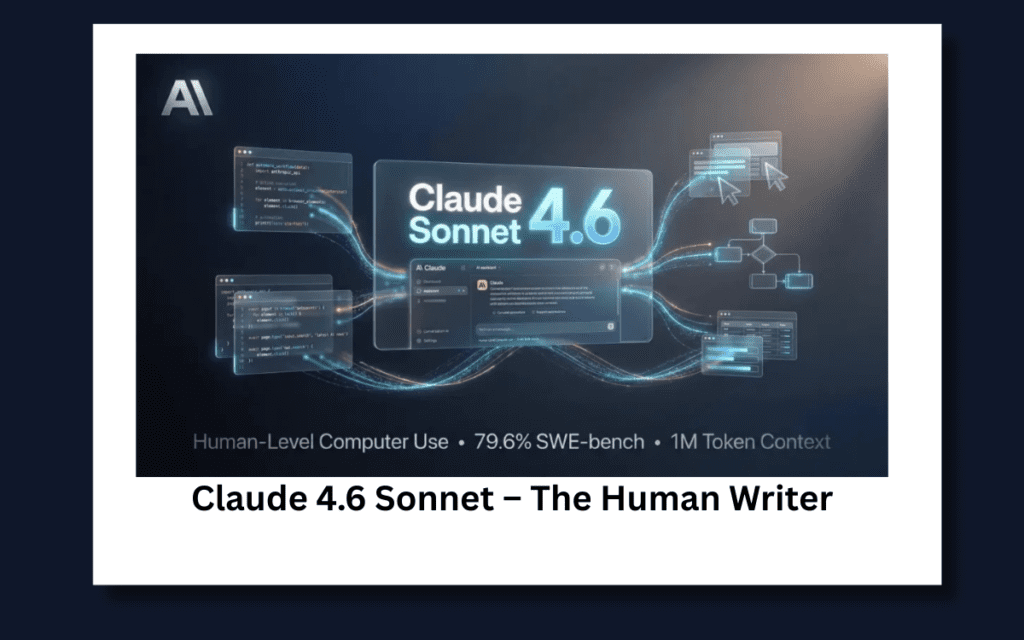
Professionals increasingly prefer Claude 4 (Opus tier) for:
- Near zero-hallucination outputs
- Long-form reasoning
- Brand-aligned email sequences
- Legal & compliance drafting
For high-stakes business communication, reliability matters more than creativity.
Canva – Gen-3 Video & Multimodal Editing
2026 Canva AI includes:
- Text-to-video (Gen-3)
- Multimodal editing (text + image + motion together)
- Auto brand kit enforcement
- AI voiceover generation
Small businesses now create full marketing campaigns without agencies.
Sales & CRM
HubSpot – Breeze AI
- Predictive lead scoring
- Revenue forecasting
- AI email personalization
- Churn prediction
AI-driven CRM now tells you who will buy before they buy.
Finance
Intuit – QuickBooks AI
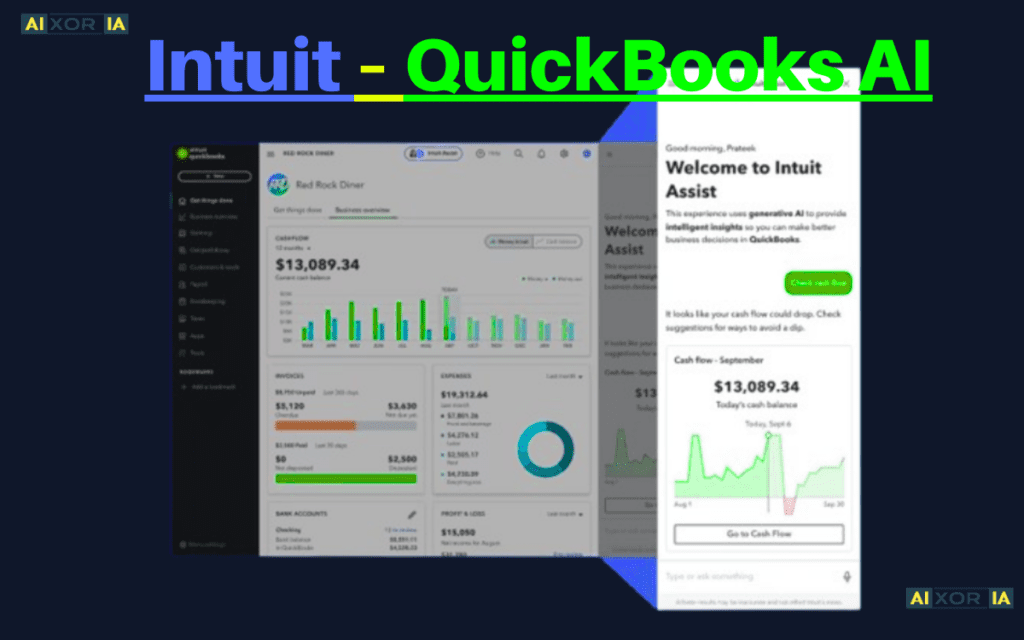
- Real-time tax prediction
- Expense anomaly detection
- Audit-ready automation
- Cash flow forecasting
AI is now part of financial compliance, not just bookkeeping.
Read More- Which Free AI Tool Is Best for Financial Analysis?
2026 Business AI Comparison Table
| Category (2026) | Top Tool | 2026 Killer Feature | Business Impact |
|---|---|---|---|
| All-in-one AI | ChatGPT-5 / o3 | Autonomous reasoning | 40% faster decision making |
| Marketing | Claude 4 | Human-like brand voice | High conversion email flows |
| Sales/CRM | HubSpot Breeze | Predictive lead scoring | AI revenue forecasting |
| Automation | Zapier Central | Persistent AI agents | 24/7 autonomous ops |
| Finance | QuickBooks AI | Real-time tax prediction | Audit-ready automation |
Structured clarity improves both human readability and search indexing.
4. Data Privacy, GDPR & AI Act 2026 (Critical for Authority)
Business adoption stops at one concern:
“Is our data safe?”
Modern AI platforms now provide:
- End-to-end encryption
- SOC 2 compliance
- GDPR-ready data processing
- Enterprise isolation layers
- On-premise AI deployment options
Regulatory Frameworks Businesses Must Consider:
- General Data Protection Regulation
- EU AI Act
Companies must:
- Avoid uploading sensitive PII without safeguards
- Use enterprise plans for data isolation
- Maintain internal AI usage policies
- Implement human oversight
AI compliance is now board-level responsibility.
5. Enterprise-Grade AI Security in 2026
Modern AI vendors provide:
- Zero data training guarantees (enterprise tiers)
- Role-based access control
- Audit logs
- API encryption
- Federated data models
Security maturity is now a competitive differentiator.
6. Real Case Study: 40% Workload Reduction
Digital Agency – 12 Employees
| Metric | Before AI | After AI Agents |
|---|---|---|
| Weekly Admin Hours | 62 | 34 |
| Lead Response Time | 3 hrs | 12 mins |
| Campaign Launch Time | 10 days | 6 days |
| Human Errors/Month | 18 | 6 |
Outcome:
- 40% workload reduction
- 22% revenue growth
- Faster client onboarding
AI agents handled repetitive execution. Humans handled strategy.
Read More- Best AI Tool for Financial Statement Analysis
Final Verdict: What Actually Wins in 2026?
The businesses ranking top and scaling fastest are not those using “more tools.”
They use:
- Fewer tools
- Deeper integrations
- Financial ROI calculations
- Compliance-ready frameworks
- Autonomous AI agents
AI is no longer software.
It is digital workforce infrastructure.