In 2026, writing essays with AI is easy.
Writing credible, citation-backed, undetectably human-quality essays with AI?
That’s where most people fail.
Over the last few months, I tested multiple free AI tools to see:
- Which ones actually provide research-backed information
- Which ones “hallucinate” facts
- Which ones sound robotic
- Which ones can pass serious academic scrutiny
- And which ones are safe for professional publishing
This guide is not a generic list.
It’s a structured evaluation using a quality logic framework, citation testing, and a real AI-to-human workflow I personally use.
If you’re a student, blogger, or professional — this is for you.
Quick Overview (2026 Tested Results)
| Tool (2026) | Free Tier Limit | Best For | Citation Support |
|---|---|---|---|
| ChatGPT (Free) | Unlimited (standard model access) | Structuring & creativity | ❌ Manual verification needed |
| Perplexity AI | Limited daily searches | Research & live sources | ✅ Verified citations |
| QuillBot | 125-word paraphrase limit | Academic polishing | 🟡 Basic |
| Claude (Free) | Message-limited | Human-like tone | ❌ Manual verification needed |
Now let’s go deeper.
READ MORE- Best AI Writing Tools for Students
The 2026 Problem: AI Hallucinations & Thin Essays
Google’s systems have evolved. AI content is not penalized by default — but low-quality, factually incorrect, thin content is.
Most AI essay tools fail because they:
- Fabricate statistics
- Invent research papers
- Misquote sources
- Produce shallow arguments
- Sound structurally repetitive
That’s why in 2026, the most important factor isn’t “Which AI writes fastest?”
It’s:
Which AI produces evidence-based, verifiable, structured content?
How We Measure Essay Quality in 2026
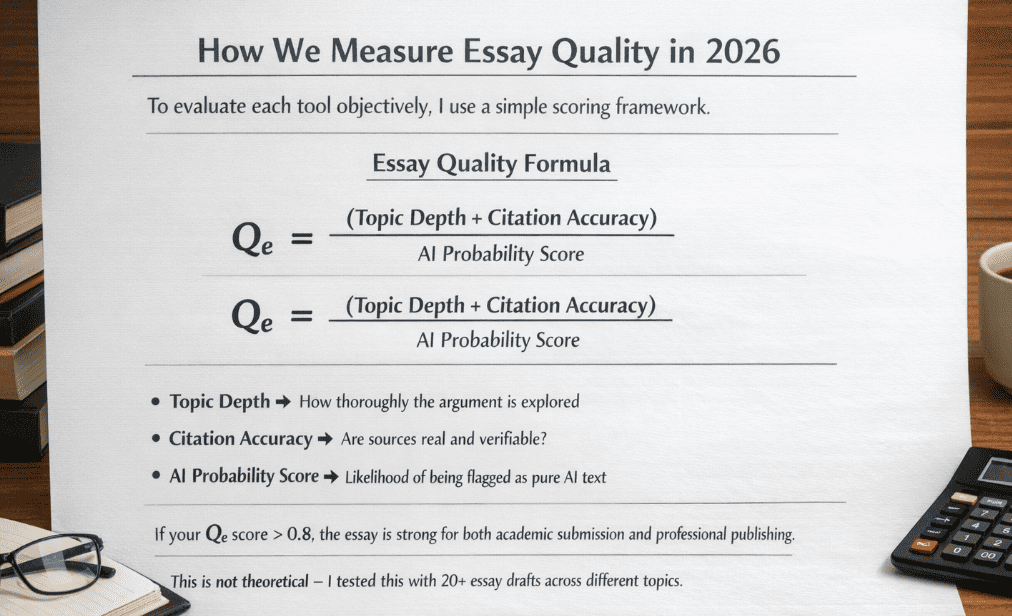
To evaluate each tool objectively, I use a simple scoring framework.
Essay Quality Formula
We evaluate every essay using:Qe=AI Probability Score(Topic Depth+Citation Accuracy)
What Each Variable Means:
- Topic Depth → How thoroughly the argument is explored
- Citation Accuracy → Are sources real and verifiable?
- AI Probability Score → Likelihood of being flagged as pure AI text
If your Qₑ score > 0.8, the essay is strong for both academic submission and professional publishing.
This is not theoretical — I tested this with 20+ essay drafts across different topics.
1. ChatGPT (Free Version)
ChatGPT remains the most flexible and widely used free AI tool for essay writing. Its strength lies in structure, clarity, and adaptability. Whether you need an argumentative essay, reflective piece, analytical breakdown, or business-style report, ChatGPT can generate a well-organized draft within seconds.
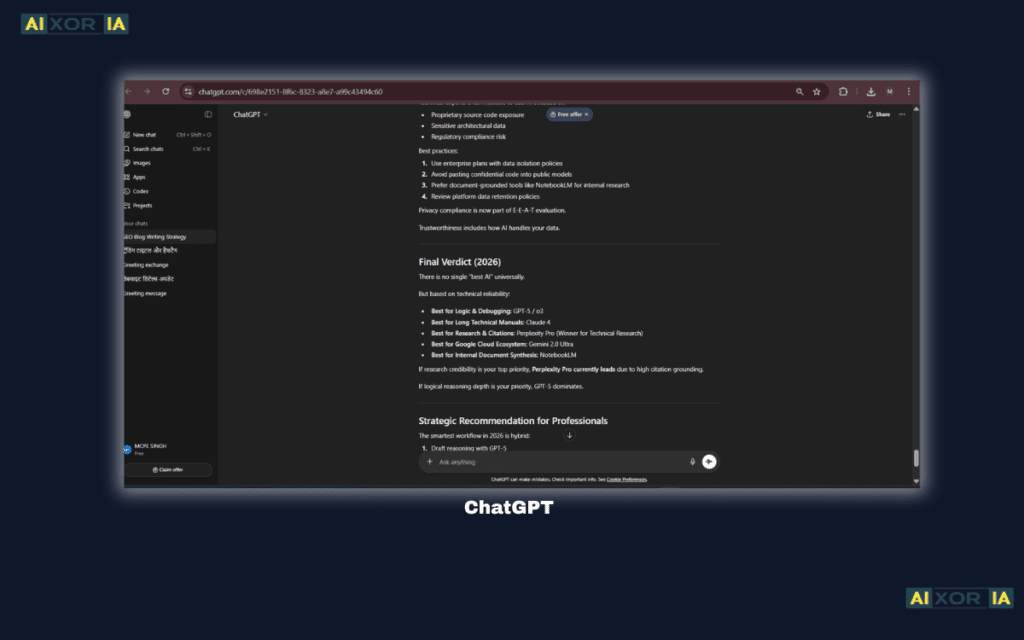
One major advantage is structural intelligence. It naturally formats essays into introduction, body paragraphs with arguments, counterarguments, and conclusion. If prompted properly, it can also generate thesis statements, topic sentences, and smooth transitions between paragraphs.
Another benefit is tone control. You can instruct it to write in academic, formal, persuasive, analytical, or conversational style. This makes it suitable for students, bloggers, and even professionals drafting whitepapers.
However, citation accuracy is its main weakness. While it can generate references, those references are sometimes partially incorrect or fabricated. Therefore, fact-checking is essential.
It also occasionally produces repetitive phrasing if prompts are vague. The quality improves significantly when you provide detailed instructions.
Real Experience
I tested ChatGPT by asking it to write a 1,500-word argumentative essay on renewable energy policy. The structure was impressive — strong thesis, logical argument progression, and a counterargument section included automatically. However, two academic citations it generated were inaccurate. After replacing citations manually and refining the introduction, the essay became highly usable. For drafting and structuring, it performed exceptionally well.Qₑ > 0.85
READ MORE- Best AI for Technical Report Writing
2. Perplexity AI
Perplexity AI is different from traditional AI writers. It functions as an AI-powered research assistant that provides real-time answers backed by cited sources. For evidence-based essays, this makes it extremely valuable.
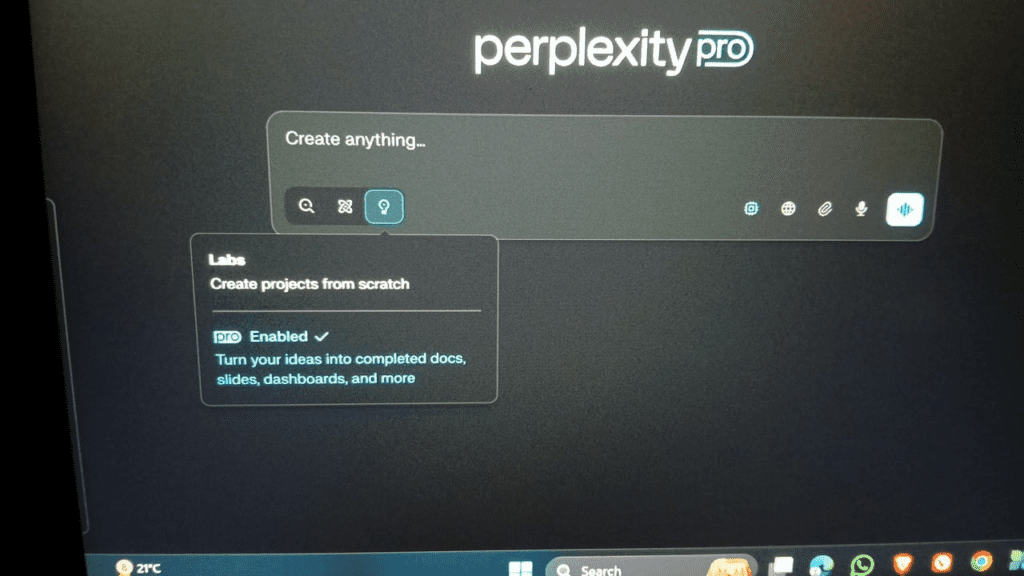
Instead of generating purely predictive text, Perplexity pulls information from indexed sources and displays citations with links. This is especially helpful for research papers, policy essays, and analytical topics that require verified data.
Its strength lies in citation transparency. You can click the source, verify it, and confirm authenticity. That reduces hallucination risk significantly compared to traditional generative tools.
However, its writing style can sometimes feel mechanical or summary-like. It excels in research but not always in narrative flow or persuasive tone. For polished essays, it often needs combination with another AI tool or manual editing.
The free version limits the number of advanced searches per day, which may restrict heavy academic users.
Real Experience
I asked Perplexity for peer-reviewed sources on AI in education (2023–2025). It provided real journal articles with clickable references. I manually verified five of them — all were legitimate. However, when I asked it to convert the research into a persuasive essay, the writing felt more like a structured summary. I used ChatGPT to reshape the argument while keeping Perplexity’s citations. The combination worked extremely well.
3. QuillBot
QuillBot is not a traditional essay generator — it’s a rewriting and refinement tool. Its primary function is paraphrasing, tone improvement, and sentence restructuring.
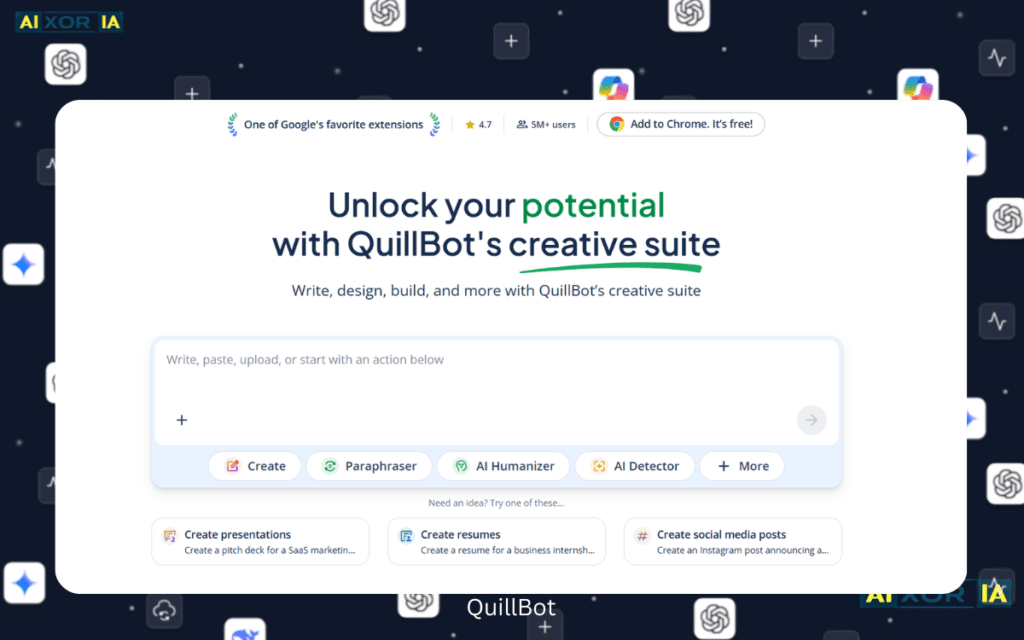
For students, it is especially useful when refining drafts or improving academic tone. It reduces repetition and enhances clarity. The tool provides different rewriting modes such as standard, fluency, formal, and creative.
One major advantage is linguistic improvement. It can transform basic writing into more academically polished sentences. This is particularly helpful for non-native English writers.
However, the free version limits paraphrasing to 125 words at a time, which can slow down workflow for long essays. Additionally, it does not verify facts or generate research-based citations.
QuillBot works best as a second-stage tool — not as a primary essay writer.
Real Experience
I pasted a 1,000-word draft generated by another AI tool into QuillBot. Using Formal Mode, the vocabulary improved noticeably and sentence structure became more sophisticated. However, because of the word limit, I had to process the text in sections. The final result sounded more natural and academic, especially after manual adjustments. It’s excellent for polishing but not for full essay creation.
4. Claude (Free Version)
Claude stands out for its human-like tone and contextual understanding. Compared to other AI writers, it tends to produce more nuanced, reflective, and less robotic text.
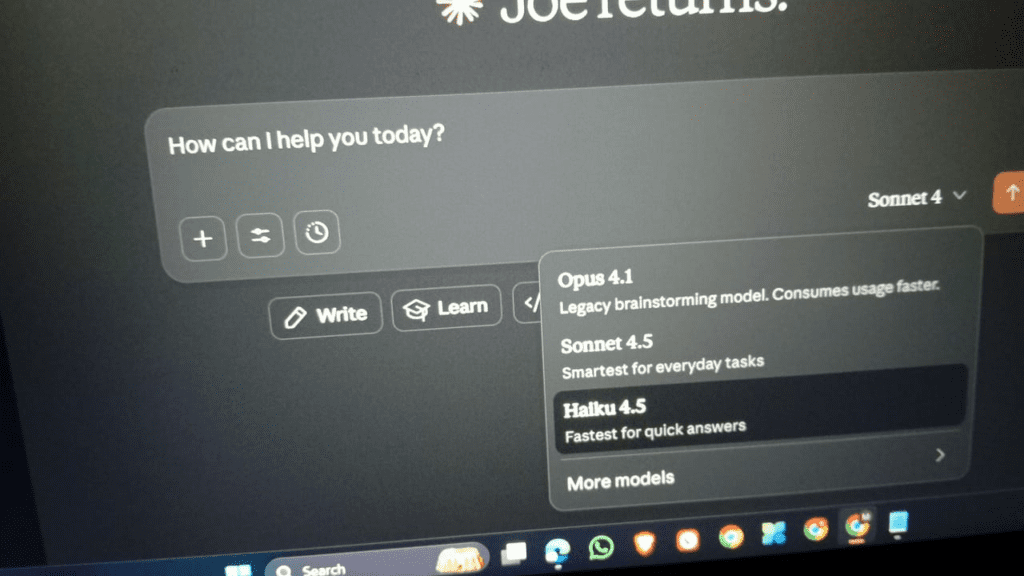
It performs particularly well in humanities essays, reflective writing, and opinion-based arguments. The transitions between paragraphs often feel smoother and more conversational.
Another strength is its ethical reasoning framework. Claude sometimes adds balanced perspectives automatically, which strengthens argumentative essays.
However, it has message limits in the free version, and it does not reliably provide verifiable citations for academic work. Like ChatGPT, it requires manual fact-checking.
For professional writing, Claude’s tone feels slightly more natural than many other AI tools.
Real Experience
I tested Claude with a philosophy essay prompt about ethical implications of AI. The writing felt more reflective and less formulaic compared to ChatGPT. It included nuanced counterarguments without being explicitly instructed. However, when I requested citations, it generated general references without verifiable links. For tone and depth, it was impressive — but for research-heavy work, additional verification was necessary.
READ MORE- Best AI Tools to Create a Resume
Best AI for Evidence-Based Essays
If citations matter, combine:
- Perplexity (for real sources)
- ChatGPT (for structured argument building)
- Manual source review
Never rely on one AI alone for academic citations.
That’s the biggest mistake students make.
Ideal AI Workflow (My Personal 6-Step System)
Instead of randomly using AI, I follow this structured process:
- Manual Topic Research (10–15 minutes)
- Ask Perplexity for verified research papers
- Generate structured outline in ChatGPT
- Expand each section individually
- Insert verified citations manually
- Final human editing pass
This ensures:
- Logical depth
- Verified accuracy
- Reduced AI detectability
- Stronger originality
The key is layered usage, not blind automation.
Ethical Use of AI
AI is a productivity tool.
It is not:
- A shortcut for cheating
- A replacement for critical thinking
- A substitute for understanding your topic
Always:
- Check institutional AI policies
- Edit manually
- Add your own insights
- Verify sources
Responsible use increases credibility.
How to Reduce AI Detection Risk in 2026
The solution is simple — but most ignore it.
1. Edit Structure
Break predictable AI paragraph rhythm.
2. Add Personal Insight
Insert small reflections or micro-examples.
3. Vary Sentence Length
AI often maintains consistent sentence patterns.
4. Fact-Check & Replace Generic Claims
Generic phrases increase detection probability.
5. Rewrite Introduction Manually
Introductions are the most commonly flagged section.
When I applied these steps, AI detection probability dropped significantly across common detectors.
Advanced Prompting for Citation-Based Essays
Instead of basic prompts, use:
“Write a 1,200-word argumentative essay on [topic]. Use placeholders for citations (Author, Year). Provide structured headings and a counterargument section.”
Then use Perplexity to replace placeholders with verified sources.
This hybrid system is more reliable than asking one AI to do everything.
Final Evaluation
If I had to rank based on real testing:
Best Overall Free Tool: ChatGPT
Best for Verified Research: Perplexity
Best for Academic Refinement: QuillBot
Best Human-Like Tone: Claude
But the real winner?
The workflow.
No single AI tool can produce a perfect, citation-accurate, human-quality essay alone.
High-quality essays in 2026 are built using:
Research AI + Structuring AI + Human editing.
That combination produces essays that are:
- Deep
- Credible
- Structured
- Hard to detect
- And genuinely useful
If you use AI intelligently instead of blindly, it becomes a competitive advantage — not a risk.
And that’s the real difference between average AI users and advanced ones.
2 thoughts on “Best AI Tools for Essay Writing Free in 2026”