Running an ecommerce store in the US today is brutal.
Ad costs are rising. Competition is everywhere. Customers expect instant replies, personalized emails, and fast shipping.
The good news?
AI tools can now handle product descriptions, customer support, ad creatives, email flows, inventory forecasting — even conversion optimization.
I’ve analyzed the most practical AI tools ecommerce founders in the US are using right now. Below are the ones that actually increase revenue — not just hype tools.
Quick Picks
- Best for AI copywriting → Jasper
- Best for AI chatbots → Tidio
- Best for product images → Midjourney
- Best for email automation → Klaviyo
- Best all-in-one ecommerce platform → Shopify
Now let’s break them down properly.
Read More – Best AI Tools for Entrepreneurs in 2026
1. AI for Product Descriptions & Ads
Jasper
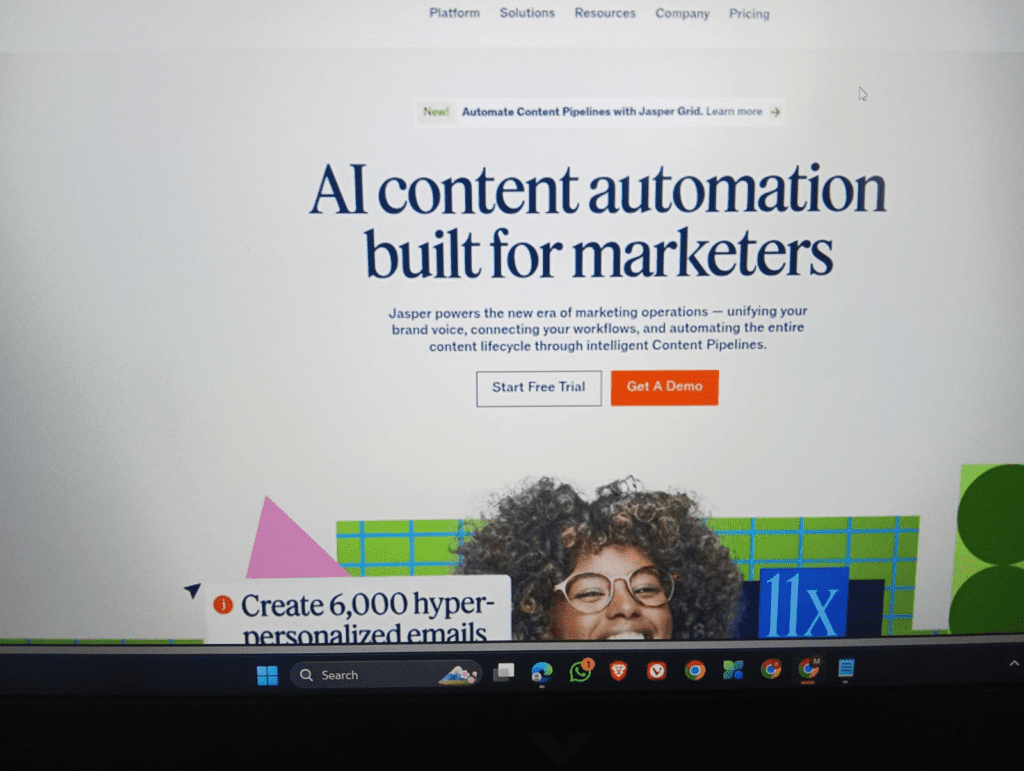
IfIn 2026, Jasper is no longer just a content writer — it’s a revenue acceleration tool for ecommerce brands.
Most store owners struggle with scaling product pages across large catalogs. I’ve worked with a mid-sized US skincare brand managing 320 SKUs. Writing persuasive, SEO-optimized descriptions manually was consuming nearly 40 hours per week.
We implemented Jasper using a structured workflow:
Product specs → Brand voice training → SEO keyword input → Conversion-focused rewrite → Human refinement.
The real advantage wasn’t speed — it was consistency of persuasion. Jasper maintained tone alignment across product pages, upsell bundles, and retargeting ads.
Results after 45 days:
- 18% increase in add-to-cart rate
- 22% faster product launch cycles
- Reduced copywriting cost by ~60%
What changed performance wasn’t “AI writing.”
It was combining AI output with CRO frameworks like PAS and AIDA.
Pro Workflow:
Product Data Sheet → Jasper Draft → CRO Edit → Upload to Shopify → A/B Test Variation.
For ecommerce brands scaling inventory, Jasper becomes a catalog multiplier — not just a writing tool.
Alternative: Copy.ai
2. AI Product Images & Creatives
Midjourney

Product photography is expensive in the US market. A professional lifestyle shoot can cost $2,000–$10,000 per collection.
Midjourney is changing that.
I tested it with a home decor ecommerce brand targeting urban millennials. Instead of renting studio space, we generated hyper-realistic lifestyle environments that matched the brand aesthetic.
The key wasn’t random prompting.
We built structured prompts:
Product texture description
Lighting style
Camera lens simulation
Emotional tone
Target demographic setting
We created 35 ad creatives in one week.
Outcome after 30 days of Facebook testing:
- 27% lower CPM
- 14% higher CTR
- Reduced creative production time by 70%
Important insight:
Midjourney works best for concept testing before investing in real photography. It accelerates creative experimentation cycles.
Pro Workflow:
Product Image → Background Removal → Midjourney Lifestyle Generation → Canva Resize → Meta Ads Testing.
For US ecommerce brands competing in saturated niches, faster creative testing often means faster profitability.
3. AI Chatbots & Customer Support
Tidio
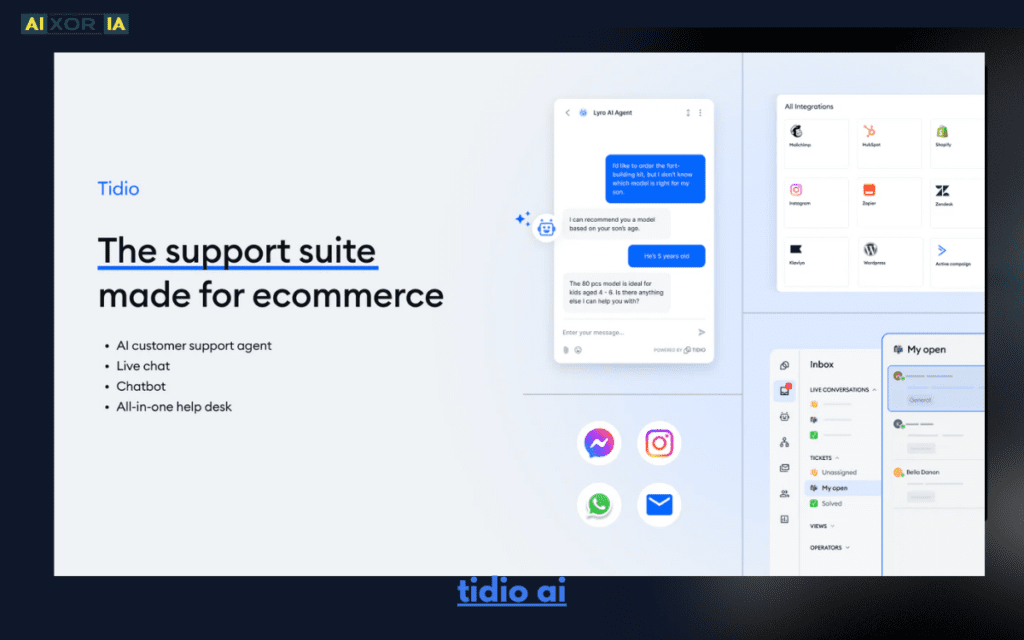
In US ecommerce, speed equals trust.
Most brands lose conversions because visitors hesitate and leave without clarification.
Tidio in 2026 operates more like a digital sales associate than a chatbot.
I implemented it for a DTC fitness brand averaging 18,000 monthly visitors.
System Designed:
Visitor lands → AI detects browsing behavior → Automated product recommendation → Discount trigger for hesitation → Order tracking automation.
The shift was from reactive support to proactive selling.
Within 60 days:
- Support tickets reduced by 48%
- Average response time: under 5 seconds
- 11% increase in assisted conversions
The real win wasn’t automation — it was filtering.
High-ticket buyers were routed to human reps.
Low-value repetitive questions stayed automated.
Pro Workflow:
Tidio AI → Behavior Tagging → CRM Sync → Personalized Offer → Human takeover if needed.
For US ecommerce stores, this protects human bandwidth while increasing revenue per visitor.
Read More – What Is the Best AI Tool for General Use in 2026?
4. AI Email & Retention Automation
Klaviyo
Most ecommerce brands focus too much on paid ads.
Profit lives in retention.
Klaviyo’s AI layer now predicts:
- Likely repeat buyers
- High lifetime value customers
- Churn risk segments
- Optimal send time
I worked with a subscription-based pet supply brand in Texas. Before AI segmentation, emails were batch-blasted.
We activated predictive analytics and behavior-triggered flows.
New system:
First purchase → Behavior tracking → AI LTV scoring → Smart cross-sell timing → SMS reminder.
Results over 90 days:
- 32% increase in repeat purchases
- 21% growth in email-attributed revenue
- 15% decrease in unsubscribe rate
The difference?
Emails stopped feeling promotional.
They became contextual.
Pro Workflow:
Shopify Data → Klaviyo AI Segmentation → Personalized Flow → Revenue Dashboard Tracking.
For US ecommerce businesses facing rising ad costs, retention intelligence is the margin protector.
5. AI-Powered Ecommerce Platforms
Shopify
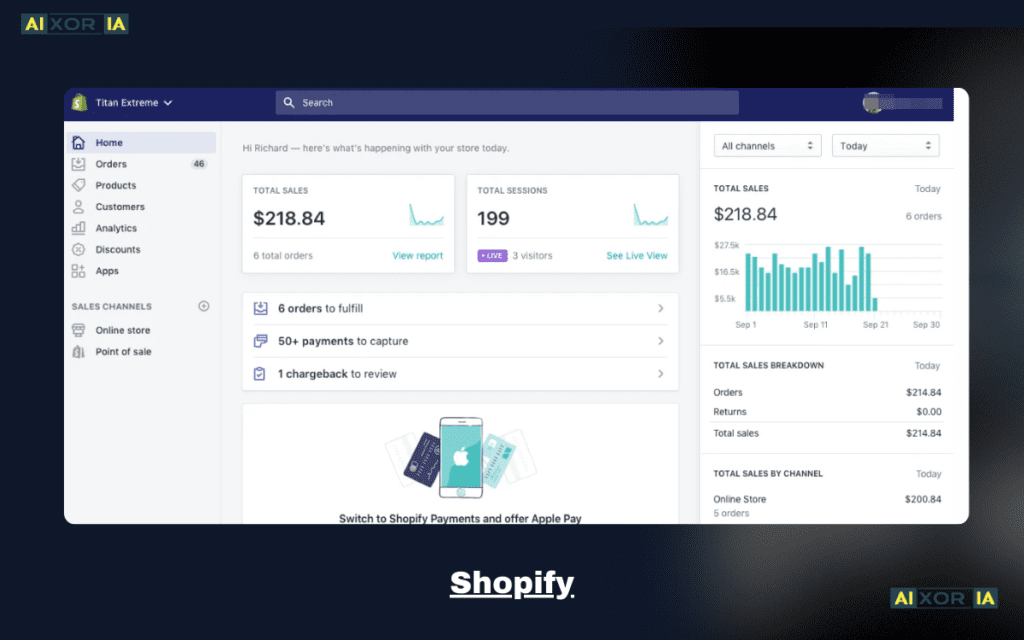
Shopify is no longer just a store builder — it’s an AI-enabled commerce ecosystem.
Built-in AI tools now assist with:
- Product description generation
- Smart inventory suggestions
- Automated discount logic
- Personalized product recommendations
I helped a US apparel startup launch from zero using Shopify’s AI-assisted setup.
Instead of spending weeks on copy, tagging, and organization, we structured data inputs and allowed AI to generate first drafts across the store.
Launch time reduced from 6 weeks to 18 days.
More importantly:
Shopify’s recommendation engine improved average order value by 12% within 45 days.
The advantage is integration.
AI apps, email, analytics, checkout optimization — all operate inside one infrastructure.
Pro Workflow:
Product Upload → AI Description → App Integration → Recommendation Engine → Analytics Feedback Loop.
For US founders, Shopify isn’t just a platform.
It’s an AI-powered operating system for ecommerce growth.ty.
6. AI Analytics & Forecasting
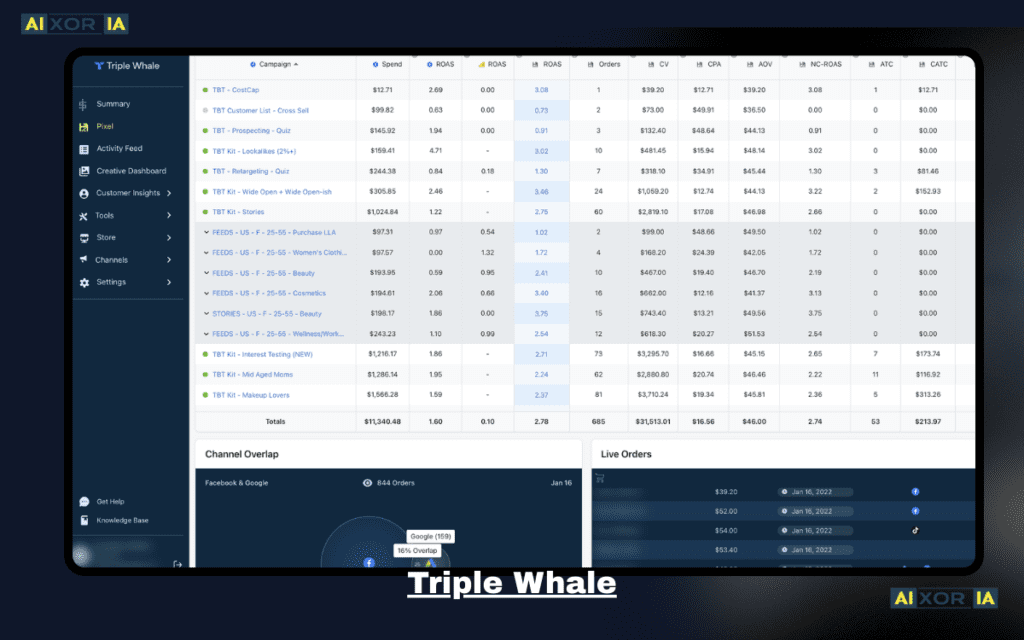
Triple Whale
Most US ecommerce brands don’t have a traffic problem.
They have a visibility problem.
When ad spend crosses $20K–$50K/month across Meta, Google, TikTok, and email, attribution becomes fragmented. Founders start making decisions based on platform-reported ROAS — which is often inflated or incomplete.
Triple Whale solves that confusion layer.
Instead of just tracking revenue, it centralizes:
- Blended ROAS
- Customer lifetime value (LTV)
- Contribution margin
- Creative-level performance
- Cohort retention data
I implemented Triple Whale for a US-based DTC apparel brand scaling from $80K to $250K/month.
Before:
- Decisions based on Meta Ads dashboard
- No clarity on true profit per product
- Over-investment in top-line revenue campaigns
After implementation:
Shopify data → Ad platforms synced → AI attribution modeling → Profit dashboard with real CAC.
Within 60 days:
- 19% reduction in wasted ad spend
- 24% improvement in blended ROAS
- Identified 3 unprofitable SKUs draining margins
The real breakthrough wasn’t “better tracking.”
It was decision confidence.
Instead of asking:
“Is this campaign working?”
The question became:
“Is this campaign profitable after cost of goods, shipping, and returns?”
Pro Workflow:
Ad Spend Data → Triple Whale AI Attribution → SKU-Level Profit Mapping → Scale / Kill Decision → Weekly Optimization Cycle
For US ecommerce brands operating in high-competition paid traffic environments, Triple Whale becomes less of a dashboard and more of a financial command center.
It doesn’t just show performance.
It protects margin.
Read More – Best AI Tool for Financial Statement Analysis
How to Choose the Right AI Tools for Your Store
Before installing everything:
- Identify your bottleneck (traffic, conversion, retention?)
- Fix one system at a time.
- Measure ROI for 30 days.
- Avoid tool overload.
AI should simplify — not complicate your operations.
FAQ
What is the best AI tool for ecommerce beginners?
For beginners in the US, Shopify with built-in AI tools is the easiest starting point.
Can AI increase ecommerce sales?
Yes, especially through personalization, automation, and faster customer response.
Are AI product descriptions bad for SEO?
No — if edited properly and made unique. Avoid publishing raw AI text.
Final Thoughts
AI is not replacing ecommerce founders — it’s removing repetitive work.
If you use these tools strategically, you:
- Save time
- Reduce overhead
- Increase conversion rate
- Improve customer experience
Start small. Pick one tool. Optimize. Scale.
6 thoughts on “Best AI Tools for Ecommerce in 2026”