Productivity in 2026 is no longer about drafting emails faster.
It’s about:
- Voice-driven AI interaction
- Camera-aware contextual assistance
- Autonomous AI agents that execute tasks
- Large context reasoning (1M+ tokens)
- Measurable AI ROI
The evolution of Gemini from a chatbot into a multimodal AI ecosystem marks a shift from assistant-based AI to agent-driven productivity systems.
This guide breaks down the real ecosystem — technically, strategically, and practically.
1. From Assistant to AI Agent: The 2026 Shift
In 2023–2024, AI helped you draft.
In 2026, Gemini acts.
An AI assistant responds to prompts.
An AI agent performs tasks autonomously across tools.
With Gemini integrated into Google Workspace:
- It drafts emails
- Checks availability
- Accesses Google Calendar
- Schedules meetings
- Organizes files in Drive
- Generates follow-up documents
Without needing step-by-step prompts.
This is agentic productivity.
Instead of:
“Draft email → copy → open calendar → schedule meeting”
You now say:
“Schedule a 30-min follow-up with the marketing team next week and attach last month’s report.”
Gemini handles the workflow end-to-end.
That’s the difference between assistance and execution.
2. Gemini Live: Real-Time Multimodal Productivity
Productivity is no longer keyboard-bound.
What Is Gemini Live?
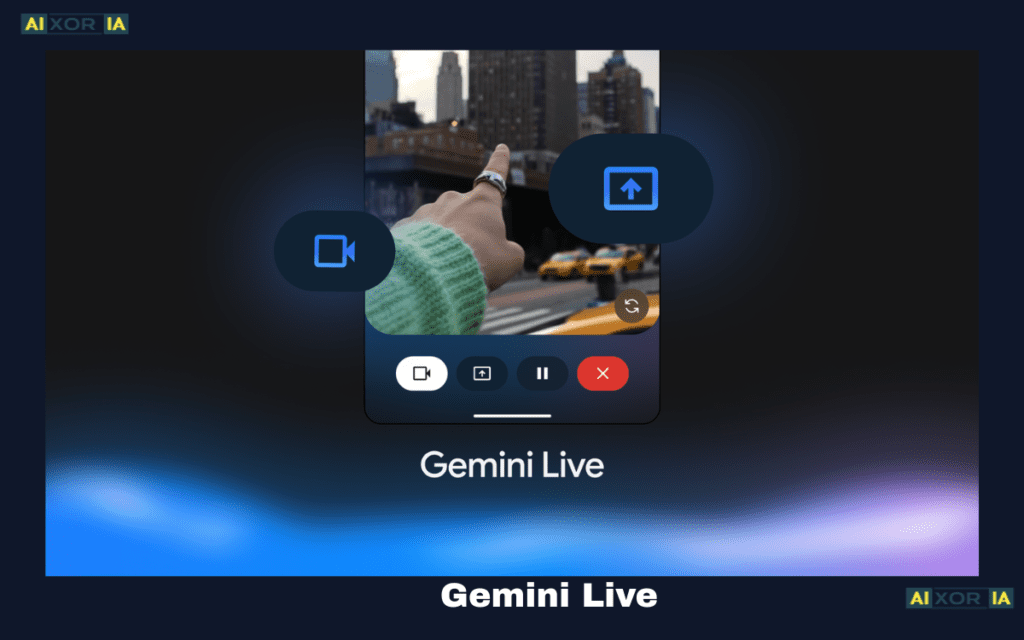
Gemini Live enables real-time voice interaction combined with contextual awareness.
You can:
- Speak naturally
- Interrupt mid-response
- Share screen context
- Use camera input
Real Meeting Use Case (2026 Scenario)
You’re in a client meeting.
You quietly ask through earbuds:
“Gemini, summarize the last 5 minutes and suggest 2 pricing strategies.”
Within seconds:
- You get a structured summary
- Strategic suggestions
- Risk comparison
No typing. No context switching.
That’s real-time multimodal AI productivity.
3. Project Astra: The Camera Becomes Your Co-Worker
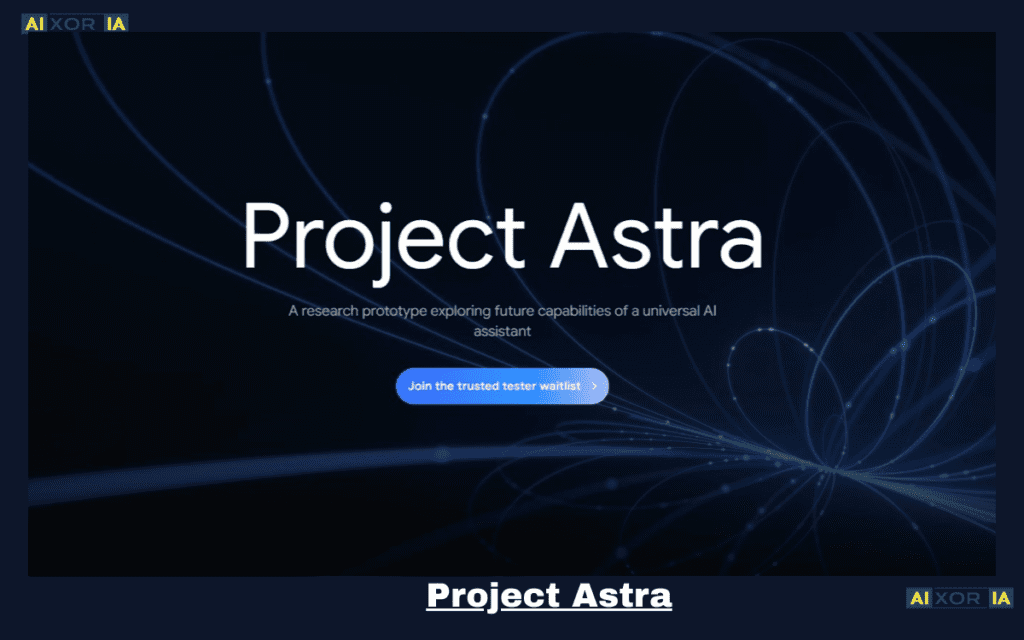
Project Astra represents the next leap — AI that sees and understands your environment.
With camera integration:
- Show a whiteboard → Get structured notes
- Show printed contracts → Extract action items
- Show messy desk → Get organization suggestions
- Show hardware setup → Receive troubleshooting guidance
This bridges digital + physical productivity.
For field workers, engineers, designers, educators — this changes workflow efficiency dramatically.
4. The Rise of Large Context Windows (1M+ Tokens)
Modern Gemini models (1.5/2.0 generation) support extremely large context windows.
This means:
- Entire books analyzed at once
- Full code repositories processed in one session
- Long research papers summarized with cross-reference
- Multi-document comparison without fragmentation
Large context windows reduce:
- Hallucinations
- Context loss
- Repetition errors
For productivity, this enables true research-grade reasoning.
5. Measuring AI Productivity: A Technical Framework
Authority content requires measurable logic.
In 2026, we evaluate AI efficiency using:
Gemini Productivity Gain ($G_{PG}$)
GPG=Token Latency (ms)Manual Task Time−AI Execution Time
Where:
- Manual Task Time = Time required without AI
- AI Execution Time = Time with Gemini
- Token Latency = Processing delay
This formula highlights:
- Time saved
- Response efficiency
- Model performance impact
High $G_{PG}$ means:
- Faster execution
- Lower latency
- Higher workflow acceleration
This shifts productivity from subjective feeling → quantifiable efficiency.
Updated 2026 Gemini Ecosystem Overview
| Gemini Tool (2026) | Best Productivity Use | Key Feature | Integration |
|---|---|---|---|
| Gemini for Workspace | Smart drafting & summaries | “Help me organize” (Sheets) | Docs, Gmail, Drive |
| Gemini Live | Real-time brainstorming | Multimodal voice | Android / iOS |
| Gemini Code Assist | Automated debugging | Full-stack generation | VS Code / JetBrains |
| Gemini Studio | Custom workflow agents | Low-code automation | Enterprise API |
This ecosystem approach is what differentiates Gemini from isolated AI tools.
It is not one tool.
It is a productivity infrastructure.
Privacy & Data Safety: The 2026 Concern
Users in 2026 care deeply about:
- Workspace data privacy
- Enterprise confidentiality
- AI model training transparency
Key reassurance points:
- Workspace enterprise data is not used to train public models
- Admin controls define AI access
- Data residency policies apply
- Audit logs track AI actions
For early feature testing, professionals explore
Google Workspace Labs
This allows safe preview access before wide deployment.
Trust is now part of productivity.
If users don’t trust AI, they won’t use it — regardless of features.
From Prompting to Orchestrating
The biggest mindset shift:
2024 → “How do I prompt AI better?”
2026 → “How do I design AI workflows?”
You are no longer writing clever prompts.
You are orchestrating:
- Agents
- APIs
- Context layers
- Automation flows
Gemini Studio enables businesses to build workflow agents without deep coding.
This is where productivity becomes exponential.
Advanced Real-World Workflow Example
Scenario: Content Agency
Step 1: Client sends brief → Gemini summarizes
Step 2: Agent creates outline → assigns to writer
Step 3: Writer drafts → Gemini optimizes SEO
Step 4: Gemini checks brand tone
Step 5: Auto-schedule publication
Step 6: Post-performance report generated
Human role:
- Strategy
- Creativity
- Final decision
AI role:
- Execution
- Optimization
- Structuring
Final Verdict: Is Gemini the Future of Productivity?
Yes — but not because it writes text.
It matters because:
- It sees (Project Astra)
- It listens (Gemini Live)
- It acts (AI Agents)
- It reasons at scale (1M+ tokens)
- It integrates (Workspace ecosystem)
- It protects enterprise data
The future of productivity is:
Multimodal
Autonomous
Measurable
Secure
And Gemini is positioning itself at the center of that transformation.
Conclusion
In 2026, productivity is no longer about working harder or typing faster.
It is about designing intelligent systems that:
- Reduce cognitive load
- Automate structured tasks
- Assist strategic thinking
- Operate within secure ecosystems
The professionals who understand AI agents today
will outperform traditional workflows tomorrow.