How AI Inventory Forecasting Helps Small Retailers Buy Smarter
Scr0ll d0wn to D0VVNL0AD
AI tools for inventory forecasting for small retailers use sales and stock data to estimate what customers will buy next. To choose one, look for a tool that connects to your point-of-sale system or online store, accounts for supplier lead times, and lets you review suggested orders before sending them.
That can help you avoid tying up cash in slow-moving stock while lowering the risk of running out of best sellers. It is not a guarantee: sudden demand spikes and late deliveries still call for human judgment. This guide compares what the tools do, what they cost, and how to start small.
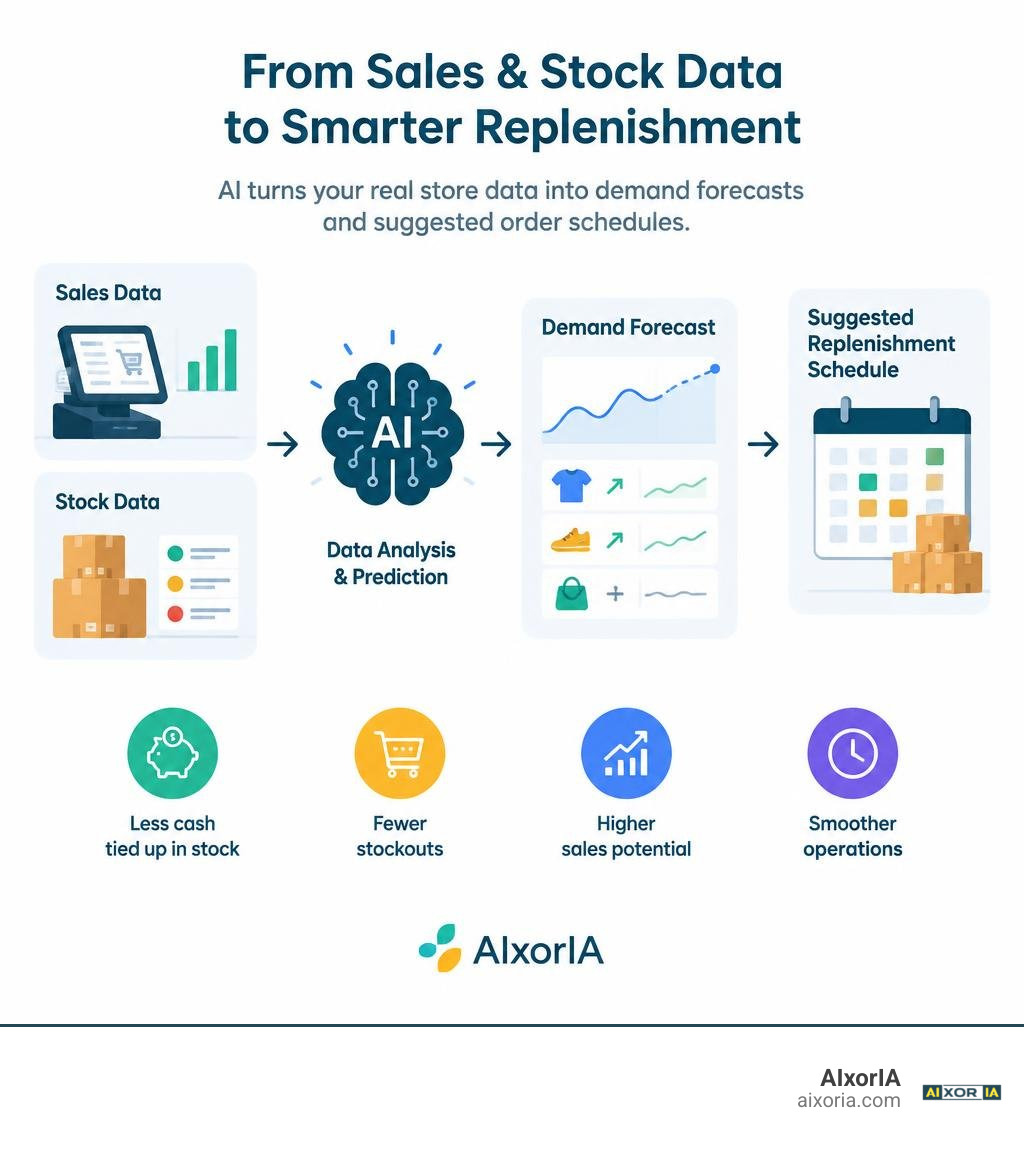
Understanding AI Tools for Inventory Forecasting for Small Retailers
Balancing stock is one of the toughest operational challenges an independent store faces. Holding excess inventory restricts working capital and inflates storage and insurance costs. On the flip side, running out of popular items directly erodes sales and damages customer trust. In fact, industry benchmarks show that roughly 55% of small and mid-sized businesses hold at least 20% in excess stock, while stockout events can drain 3% to 30% of potential retail revenue.
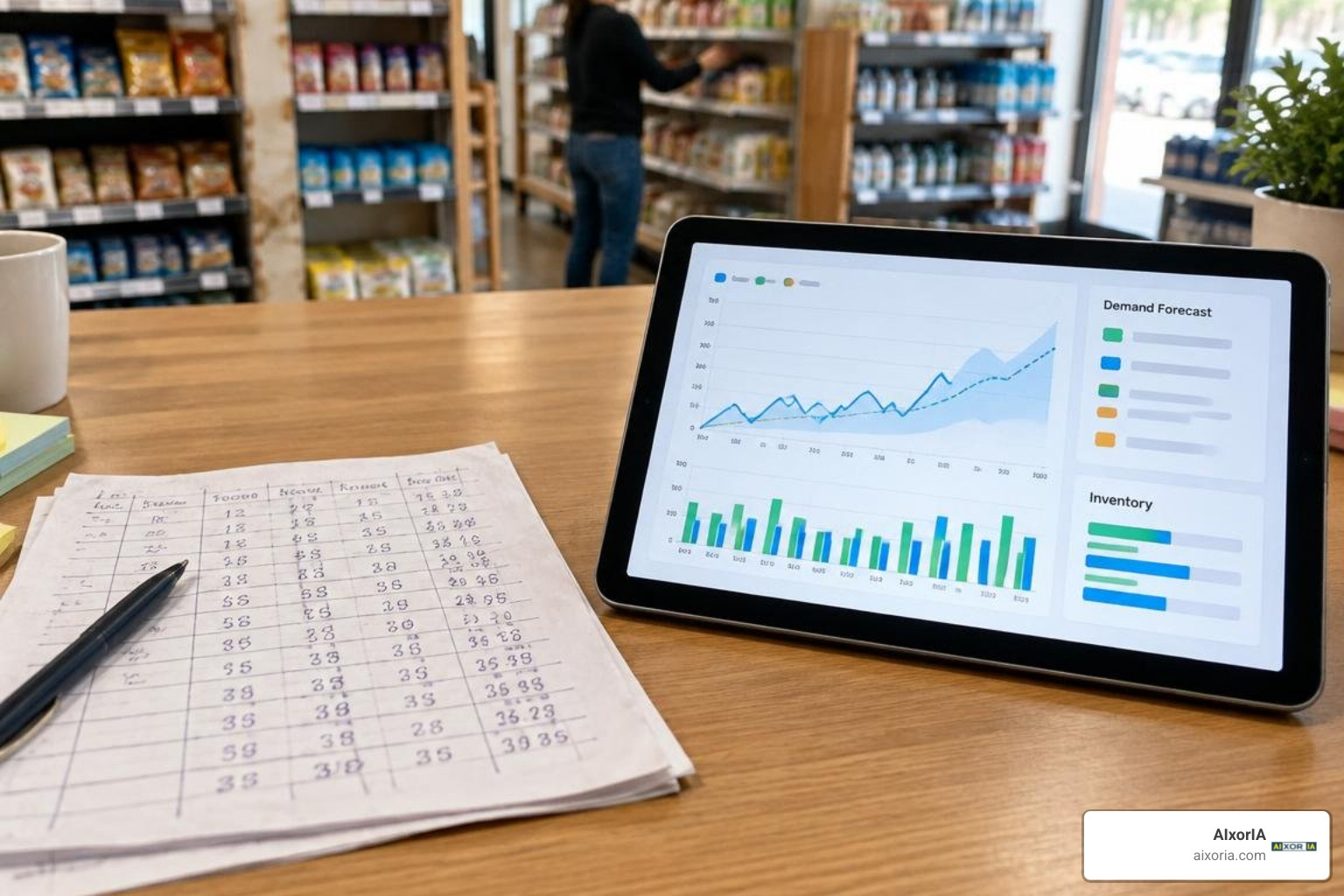
Modern AI demand forecasting replaces static guessing with continuous statistical analysis. By connecting directly with your store point-of-sale (POS) systems and e-commerce platforms, machine learning models evaluate past transactions, current inventory levels, and external market shifts. Rather than relying on simple end-of-month tallies, modern retail systems use data analysis and visualization tools to turn complex customer purchasing patterns into clear, practical replenishment advice.
Traditional vs. AI-Powered Demand Planning
Traditional inventory management relies heavily on manual spreadsheets, periodic sales reviews, and static reorder points. A business owner might look at last year’s sales for an entire product category, add a blanket 5% growth projection, and manually enter order quantities into vendor forms.
This static approach falls short because customer demand rarely moves in a straight line:
- Static thresholds vs. dynamic demand: Traditional formulas assume uniform sales rates across the year, frequently causing overstock during quiet weeks and sudden stockouts during demand surges.
- Category-level summaries vs. SKU-level precision: Spreadsheets often roll numbers up into high-level product groups, missing subtle shifts across specific sizes, variants, and colors.
- Manual lag vs. real-time sensing: Updating manual spreadsheets takes hours of administrative work, meaning stock decisions are constantly made using outdated numbers.
AI tools continuously evaluate sales velocity across every sales channel, adjusting reorder triggers dynamically based on real-time consumer activity.
How Machine Learning Predicts SKU Velocity and Seasonal Trends
Machine learning models predict stock requirements through time-series analysis and pattern recognition. Rather than merely calculating past averages, the system decomposes transaction histories into underlying trends, day-of-week buying cycles, and holiday variations.
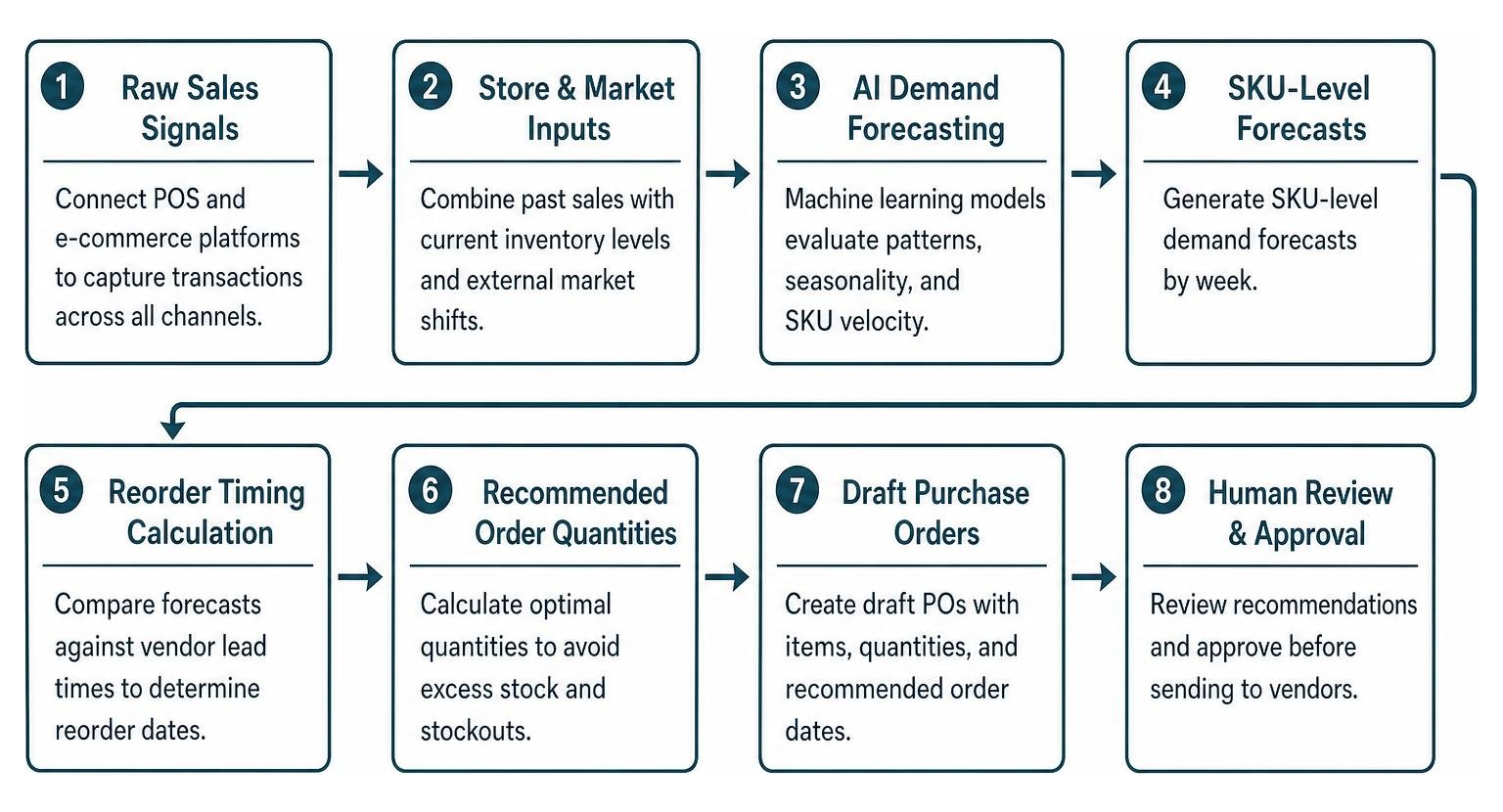
Most modern AI solutions require between 60 and 90 days of baseline transaction data to establish dependable velocity patterns. From there, algorithms detect subtle changes in consumer demand weeks before they become obvious on the sales floor. When sales of an item begin accelerating, the algorithm compares that velocity against configured vendor lead times to calculate the exact calendar date a purchase order must be drafted.
Top Benefits and Operational Impact for Independent Merchants
Deploying intelligent forecasting delivers measurable improvements across retail operations, especially for lean teams that cannot afford dedicated supply chain analysts. Incorporating AI tools for business productivity into day-to-day merchandising frees store owners to focus on customer experience and strategic expansion.
Key Advantages of AI Tools for Inventory Forecasting for Small Retailers
Implementing automated demand planning yields rapid returns across working capital, stock availability, and staff efficiency:
- 10% Forecast Accuracy Improvement: Advanced statistical modeling captures subtle demand shifts that human spreadsheets miss.
- 15% Inventory Holding Cost Reduction: Aligning purchase quantities with actual sales projections prevents cash from sitting idle on storeroom shelves.
- 13% Drop in Stockout Events: Dynamic safety-stock calculations ensure replenishment occurs before shelves run bare.
- Up to 23 Hours Saved Weekly: Automating demand calculations eliminates manual data entry, saving merchants dozens of planning hours every month.
- 5% Faster Inventory Turnover: Balanced inventory buys keep fresh products rotating smoothly through storefronts.
- 75% Planner Workload Reduction: Automating routine reorder calculations allows staff to manage inventory by exception rather than auditing every SKU manually.
Addressing Common Implementation Hurdles and Data Quality Gaps
Adopting new forecasting technology can present operational challenges for small merchants. Recognizing and preparing for these hurdles ensures a seamless rollout:
- Disconnected Data Silos: Sales originating across physical POS registers, online channels, and marketplace accounts often record inventory independently. Retailers must maintain unified multichannel data tracking to feed reliable numbers into machine learning models.
- Phantom Inventory Distortions: System records can diverge from physical shelf inventory due to customer theft, damaged items, or unrecorded returns. Periodic physical cycle counts are necessary to maintain baseline data hygiene.
- Change Management and Process Trust: Store managers accustomed to gut-feel ordering may feel hesitant to trust automated buying advice. Choosing solutions that clearly explain how recommendations are calculated builds team confidence during onboarding.
- Upfront Setup Costs: Small businesses often worry about complex software implementation fees. Selecting lightweight, self-serve applications designed specifically for smaller catalogs helps stores enhance operational performance while avoiding vendor lock-in. Adopting modern software for enhancing inventory visibility creates the foundation for accurate forecasting.
Evaluating the Best AI Forecasting Solutions: Features, Setup, and Pricing
Small retailers need flexible, accessible software that integrates cleanly with platforms like Shopify, WooCommerce, and Squarespace without requiring custom engineering. Choosing the right platform involves balancing core forecasting features against your store’s operating budget.
Core Capabilities to Look for in AI Tools for Inventory Forecasting for Small Retailers
When reviewing candidate platforms, focus on capabilities that solve everyday retail bottlenecks:
- Granular Supplier Lead-Time Customization: Look for systems that let you set custom supplier lead times by vendor and SKU, factoring in distinct manufacturing windows and shipping delays.
- Dynamic Safety-Stock Optimization: The software should calculate safety-stock buffers based on actual demand volatility rather than a flat number of days across all products.
- Revenue-at-Risk Prioritization: A prioritized reorder dashboard helps you allocate purchasing budgets to high-margin best sellers before replenishing slow-moving accessories.
- Seed Forecasting for New SKUs: Introducing brand-new products with zero sales history requires tools capable of seed forecasting based on category baselines and target sell-through goals.
- Cash Flow Integration: Aligning upcoming purchase order commitments with 13-week cash flow projections ensures you maintain sufficient working capital for payroll and operating expenses.
Many modern AI tools for ecommerce now integrate these planning functions natively into your storefront dashboard.
Software Comparison for Small Business Budgets
The following comparison highlights dedicated inventory forecasting platforms built for independent retailers and direct-to-consumer brands:
| Tool | Target Merchant & Platform | Primary Pricing Model | Historical Data Needed | Key Capabilities & Highlights |
|---|---|---|---|---|
| Stash | SMBs, multi-location shops | Tiered SaaS based on locations | 30–60 Days | Mobile-friendly interface, multi-location tracking, automated low-stock notifications. |
| Verve AI | Independent Shopify & WooCommerce stores | Flat rate (~$19.99/mo) | Direct store sync | Flat pricing without GMV or SKU penalties, continuous stock health monitoring, fast setup. |
| Restock | Micro-catalogs & Shopify boutiques | Free tier; Paid from $19/mo | 60 Days | Clean prioritized restock tables, automated email reorder digests, seasonal product snoozing. |
| Forthcast | Shopify merchants needing PO drafting | Flat rate ($19.99/mo) | 60–90 Days | 12-month demand horizons, revenue-at-risk SKU ranking, automated draft purchase orders. |
| Restocker | Growing Shopify & Squarespace stores | From $49/mo (30-day trial) | 90 Days | 30-day forecast views, SKU-level vendor lead-time overrides, rapid data refreshes. |
| SalesOracle AI | Scaling e-commerce brands | Monthly SaaS subscription | Store sync | 13-week cash flow budgeting, weekly SKU forecast modeling, one-click purchase order generation. |
Step-by-Step Implementation: Getting Started and Keeping Humans in the Loop
Rolling out an AI forecasting tool does not require an enterprise IT department or months of technical preparation. Following a structured rollout protects your operations and ensures reliable predictions from day one.

5-Step Roadmap from Data Sync to Automated Draft POs
Setting up automated replenishment workflows follows a clear five-step progression:
- Audit Historical Data: Review the last 60 to 90 days of transactions in your POS or e-commerce admin. Clean up discontinued product duplicates and reconcile any unresolved stock adjustments.
- Connect Store Integrations: Use secure OAuth connectors to link your storefront with your chosen forecasting app. Streamline your tech stack with automated data integration solutions to keep your sales channels in sync.
- Configure Vendor Parameters: Enter realistic lead times, vendor minimum order quantities (MOQs), and pack sizes for each primary supplier.
- Calibrate Safety Buffers: Set baseline safety-stock targets (for example, a standard 14-day lead time plus a 7-day buffer for high-volume items) to protect against transit delays.
- Launch a Pilot Category: Run the software on a single core product line for three to four weeks. Compare suggested reorder volumes against actual store demand before expanding automated draft purchase orders to your full catalog.
Why Human Oversight Remains Essential for Purchase Orders
While artificial intelligence excels at recognizing statistical trends across hundreds of SKUs, autonomous software should never submit binding purchase orders without human review. Maintaining human-in-the-loop governance protects your store from external variables the algorithm cannot see:
- Unannounced Marketing Campaigns: An upcoming influencer collaboration or localized promotional event will spike demand faster than historical models can anticipate.
- Supplier Relationship Nuances: Early factory closures for holidays, negotiated volume discounts, and temporary vendor supply constraints require personal merchant communication.
- Macro Disruptions and Freight Delays: Regional port congestion, severe weather events, and carrier disruptions require strategic human intervention to reroute replenishment.
By using AI to build draft purchase orders and flag critical stockout risks, retail buyers transition from tedious spreadsheet data entry to high-level exception management.
Frequently Asked Questions About Retail Inventory AI
Can AI inventory forecasting completely eliminate retail stockouts?
No software tool can eliminate 100% of stockouts. Unforeseen factory shutdowns, sudden regional weather events, and global freight disruptions will always introduce unexpected variables into the retail supply chain. AI significantly reduces stockout risk by evaluating sales velocity and lead times, but human judgment remains essential for navigating external disruptions.
What sales data and history do AI forecasting tools require to get started?
Most small-business forecasting tools generate initial demand projections using between 60 and 90 days of continuous order history. To forecast new product releases lacking historical data, look for platforms supporting seed forecasting based on category baselines and target inventory turnover rates.
How do AI tools handle unexpected seasonal shifts and viral trends?
AI demand planning systems combine historical annual cycles with short-term demand sensing. When an unexpected sales surge occurs—such as a viral product mention—the software detects the acceleration in daily sell-through and updates reorder dates immediately. For off-peak seasonal goods, merchants can snooze restock alerts to prevent unnecessary capital expenditures.
Conclusion
Transitioning from manual spreadsheets to automated demand forecasting helps small retailers protect cash flow, lower inventory holding costs, and prevent costly stockouts. Modern SaaS tools make enterprise-grade demand intelligence accessible to independent merchants through transparent, flat-rate pricing and simple storefront integrations.
At AIxorIA, we help businesses implement practical automation frameworks, avoid restrictive vendor lock-in, and build resilient workflows that scale sustainably. Explore our strategic AI automation frameworks to discover curated tools, hands-on workshops, and practical optimization strategies tailored to your business.