Which AI Tools Help Freelancers Chase Late Invoices?
Scr0ll d0wn to D0VVNL0AD
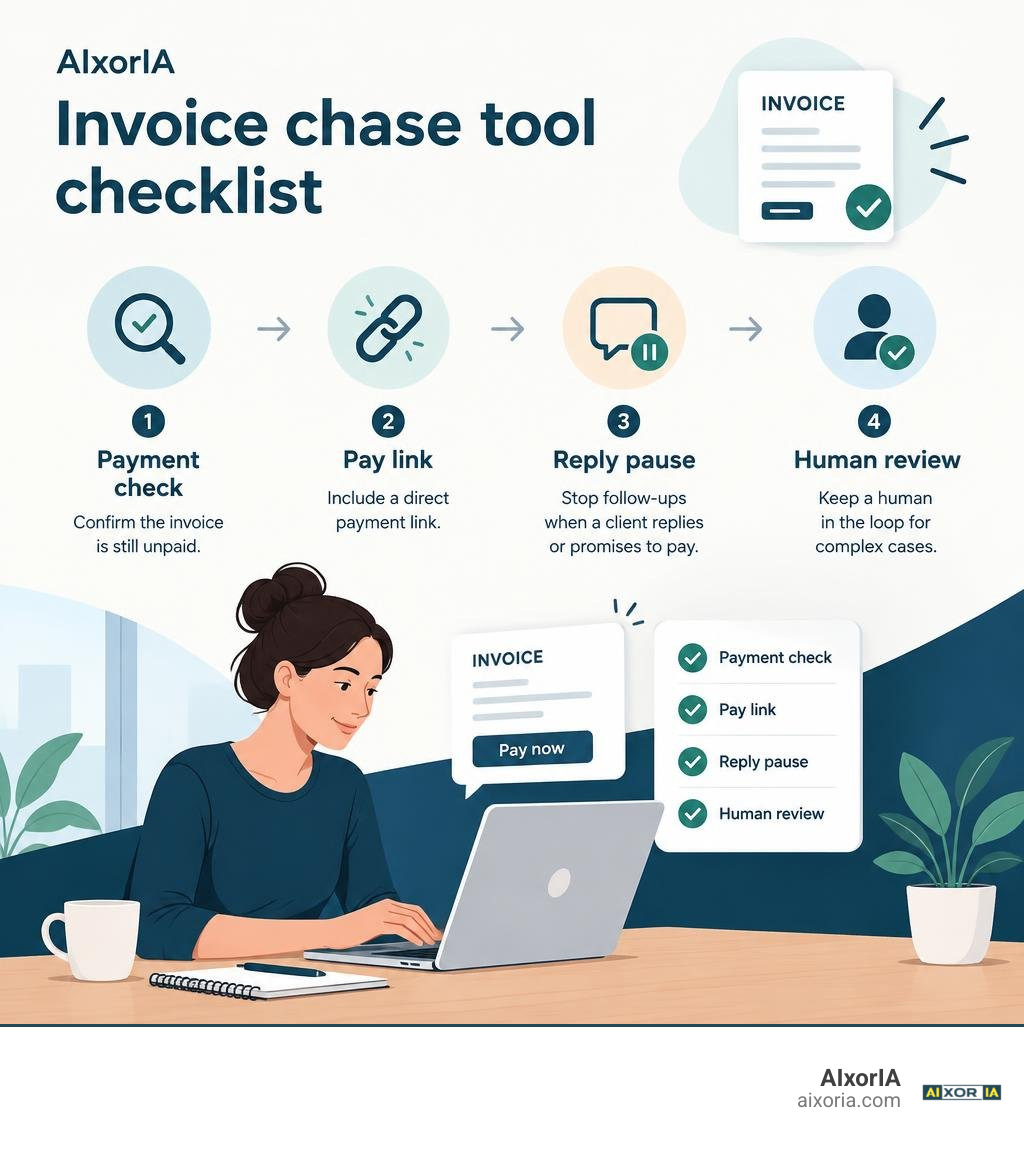
The best AI tools to chase late invoices for freelancers do more than send reminders. Look for a tool that checks whether an invoice is still unpaid before each message, includes a direct payment link, and pauses follow-ups when a client replies or promises to pay. If you have many repeat clients, payment-history insights can also help you spot likely delays before the due date.
Start with those basics, not a promise of fully hands-off collections. A polite reminder can save you time; a reminder sent after payment clears can cost you a client relationship.
Why Freelancers Lose Billable Hours to Overdue Payments
Getting paid is the lifeblood of independent work, yet collecting revenue remains one of the most frustrating, non-billable burdens solo professionals endure. Across global freelance datasets, roughly 29% of freelance invoices are paid at least a day late, leaving small firms waiting on an average of $17,700 in unpaid accounts receivable. In fact, 89% of small businesses report late payments, with 59% reporting invoices that sit more than 30 days overdue.
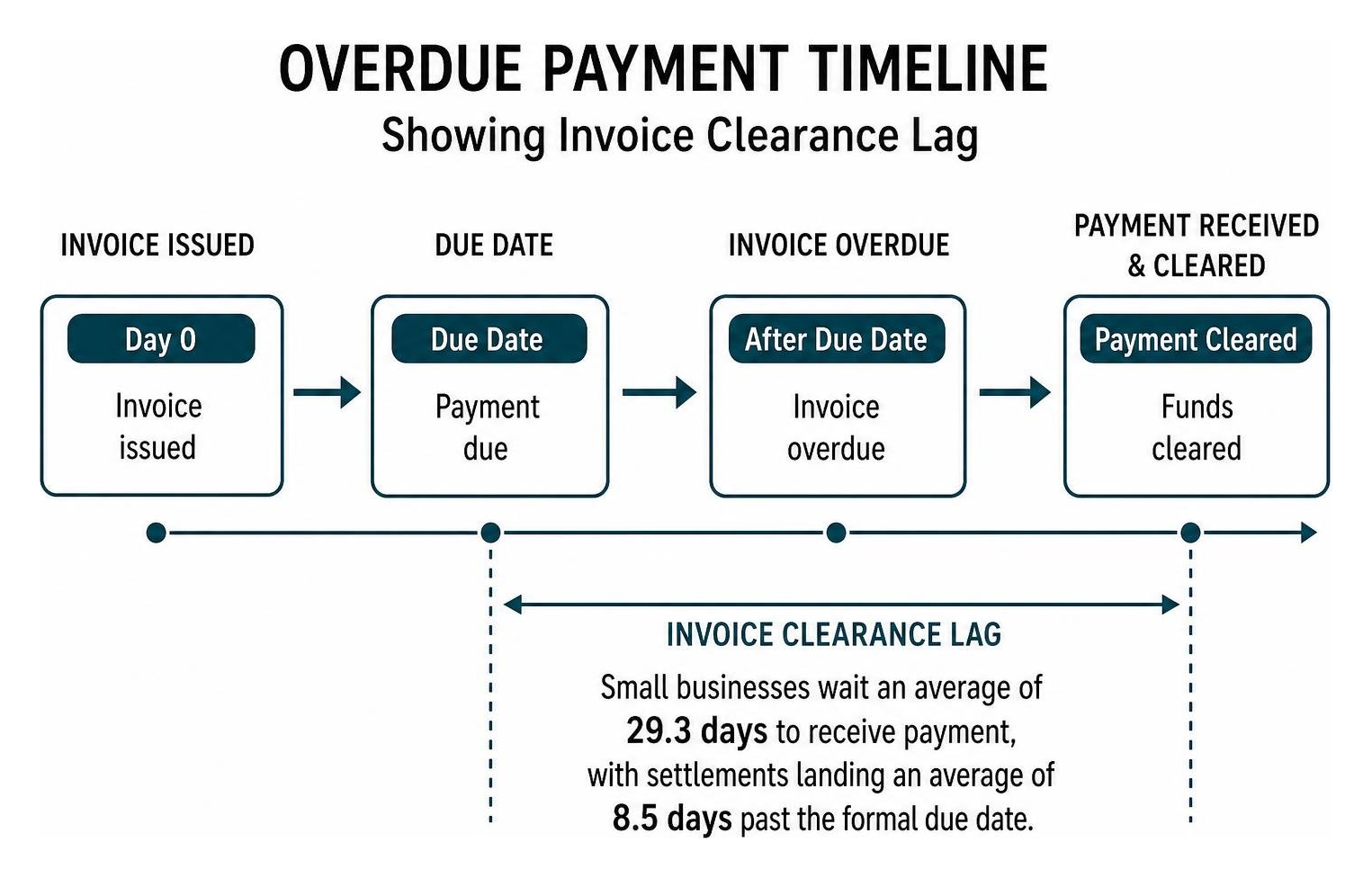
In typical quarters, small businesses wait an average of 29.3 days to receive payment, with settlements landing an average of 8.5 days past the formal due date. When you operate as a team of one, you bear 100% of the cash flow risk. You do not have a dedicated finance department or an accounts receivable clerk down the hall to run collections.
Instead, solo service providers waste over 8 hours every month manually reviewing bank ledgers, drafting uncomfortable follow-up emails, and second-guessing whether their messages sound too aggressive or too passive. This administrative drain directly steals billable client time.
Much of this friction stems from vague contract terms. When freelancers bill using relative phrases like “Net 30,” client finance teams often treat the invoice as an open-ended suggestion rather than a hard appointment. Setting explicit calendar due dates—and pairing them with the best AI tools for entrepreneurs in 2026—ensures your deliverables land on accounts payable schedules with clear expectations from day one.
How AI Tools to Chase Late Invoices for Freelancers Outperform Basic Reminders
Traditional invoicing systems rely on rigid, time-delayed reminder ladders. These static tools send the exact same canned template on Day 1, Day 7, and Day 14 past due, regardless of whether your client opened the email, clicked your payment gateway, or experienced a processing delay in accounts payable.
Clients quickly learn to filter out generic automated notifications. Dedicated AI-powered collections tools take a behavioral, signal-aware approach. Rather than relying on static timers, modern AI platforms monitor real-time email open rates, payment link clicks, and historical settlement habits to personalize follow-ups and optimize delivery schedules—demonstrating how smart invoicing AI reduces payment delays. Adopting the best AI tools for business productivity enables freelancers to modernize their billing operations without adding administrative complexity.
When evaluating automated collections workflows, understanding the difference between simple autoresponders and intelligent chasing systems is critical:
| Feature | Static Automated Reminders | Dedicated AI Invoicing & Chase Tools |
|---|---|---|
| Trigger Mechanism | Fixed calendar intervals (e.g., Every 7 days) | Behavioral engagement, click telemetry, and predictive risk |
| Email Copy | Repetitive static templates | Dynamic, context-aware phrasing tailored to past client interactions |
| Reply Understanding | None (emails bounce to inbox or no-reply) | Natural language intent parsing for promises to pay and disputes |
| Pre-Send Verification | Periodic ledger polling (risks false pings) | Real-time banking synchronization immediately prior to sending |
| Payment Rails | Attached PDF invoice (high friction) | Embedded digital payment links (Stripe, Apple Pay, SEPA, ACH) |
| Setup Overhead | Manual schedule per client | Automated sequence generation from PDF or accounting sync |
How AI Tools to Chase Late Invoices for Freelancers Predict Payment Delays
Modern accounts receivable platforms do not wait until an account is 15 days overdue to alert you to a cash flow bottleneck. By analyzing historical payment velocity across past transactions, invoice values, billing cadences, and seasonal client patterns, machine learning algorithms assign risk scores to pending invoices.
If a corporate client consistently requires two weeks to process vendor invoices due to multi-layered management approvals, the AI identifies this pattern. It flags the account as high risk and schedules a gentle, proactive reminder three days before the formal due date, keeping your invoice top-of-mind before payment queues lock for the month.
Dynamic Tone Escalation and Client Relationship Protection
The biggest fear freelancers face when following up on money is damaging valuable client relationships. No one wants to sound like an aggressive debt collector with a client who simply misplaced an email.
AI invoice-chasing systems utilize progressive dunning ladders that adapt their tone based on invoice status:
- Pre-Due Date (Day -3): A friendly, low-friction heads-up confirming receipt of project assets and providing a one-click payment link.
- Due Date (Day 0): A warm, polite check-in noting that the invoice is ready for processing.
- Grace Period (Day 4–7): An informal note asking if the finance team needs any additional vendor documentation or purchase order numbers.
- Firm Past Due (Day 8–14): A professional escalation referencing contract terms, original delivery dates, and formal accounts payable requirements.
- Final Notice (Day 15+): A formal communication summarizing outstanding balances, statutory late-payment rights, and project milestone pause notices.
Natural Language Reply Detection and Intent Parsing
When a client responds to an automated reminder saying, “We ran into a billing hold-up, but I’ll issue half this Friday and the rest next month,” static email tools fail. A standard system ignores the text and sends another automated reminder a few days later, creating friction and signaling that you aren’t paying attention.
AI collections tools utilize natural language processing (NLP) to read incoming replies. The software identifies intents such as:
- Promises to Pay: Automatically notes the promised payment date and pauses the reminder sequence until that day arrives.
- Partial Settlements: Recognizes split-payment offers and generates structured installment links.
- Disputes or Scope Queries: Immediately halts all automated communications and flags the thread for personal, human review.
Core Features vs Marketing Hype in Automated Accounts Receivable
The market for billing automation is filled with flashy marketing claims. Separating genuine time-saving features from conversational hype ensures you select a solution that protects your business cash flow without inflating your monthly software expenses.
To understand how dedicated AI accounts receivable software stacks up against alternative approaches, review our tested benchmarks across the best AI productivity software in 2026.
Key Criteria to Evaluate AI Tools to Chase Late Invoices for Freelancers
When comparing software options, prioritize the following foundational capabilities:
- Read-Only Ledger Sync: Dedicated tools connect to your accounting ledger with read-only permissions, monitoring overdue accounts without altering your financial records.
- Standalone Document Ingestion: Specialized tools parse standalone PDF invoices using optical character recognition (OCR), letting you run automated chase sequences without needing a costly enterprise accounting subscription.
- Instant Digital Payment Links: Solutions embed one-click payment rails (Apple Pay, Google Pay, credit card, and ACH) directly into follow-up emails, removing friction so clients can pay instantly.
- Engagement-Triggered Follow-ups: Platforms track whether a client opened an email or clicked an invoice link, adjusting the next follow-up contextually rather than blasting generic reminder templates.
- CRM and Pipeline Integration: Aligning your accounts receivable workflows with the best small business CRM software lets you trigger automated quotes and milestone invoices the moment contracts are signed.
Traditional Accounting Software vs Dedicated AI Accounts Receivable Agents
Traditional accounting platforms excel at general ledger bookkeeping, tax compliance, and financial reporting. In fact, industry data shows that businesses using online invoice payment integrations can get paid up to twice as fast as those relying on manual checks or paper invoices.
However, traditional accounting platforms often treat automated payment reminders as an afterthought, relying on rigid cron jobs with generic templates. Dedicated AI chasing tools bridge this gap by focusing entirely on the psychological and behavioral dynamics of collections:
- Tone Flexibility: AI tools craft human-sounding, contextual notes rather than rigid corporate billing notices.
- Frictionless Ingestion: You can snap a photo of an invoice, forward an email, or upload a PDF to initiate a chase sequence in seconds.
- Cost Efficiency: While full accounting suites often cost between $30 and $90 per month, lightweight chasing utilities often provide free entry tiers or affordable plans starting around $10 to $19 monthly.
Managing Complex Scenarios: Disputes, Partial Payments, and Data Security
When billing scenarios become complicated, full automation must yield to human judgment. A reliable AI accounts receivable tool acts as a digital assistant that prepares drafts and flags anomalies, leaving high-stakes relationship decisions firmly under your control.
When a client raises a project milestone dispute or challenges an itemized bill, your chasing tool should instantly pause reminders. This gives you room to resolve scope questions directly without sending tone-deaf automated payment demands.
Similarly, if you bill clients in jurisdictions with statutory late-payment legislation, your system can incorporate objective legal frameworks into late-stage notices:
- United Kingdom: Under the Late Payment of Commercial Debts Act 1998, freelancers can claim statutory late-payment interest (Bank of England base rate + 8%) alongside fixed debt recovery compensation tiers of £40, £70, or £100 depending on invoice size.
- European Union: EU Directive 2011/7/EU establishes statutory interest frameworks and a mandatory €40 minimum recovery compensation fee for late B2B commercial transactions.
Referencing statutory compensation as a standard legal baseline eliminates personal awkwardness and frames collections as an objective business policy.
Financial Data Privacy, Encryption, and Model Training Safeguards
Connecting software to your billing and bank accounts requires strict security evaluation. Never paste unredacted client bank account numbers or confidential corporate identifiers into public, unverified AI chat interfaces.
When selecting an AI invoicing or chase tool, verify that the vendor provides:
- Zero-Data-Retention & No-Training Policies: Ensures your proprietary client financial data is not used to train public machine learning models.
- OAuth 2.0 Integration: Connects securely to payment gateways (such as Stripe) and accounting tools without storing raw passwords or sensitive cardholder credentials.
- Arithmetic Verification: Language models are text predictors, not calculation engines. Always verify that line-item totals, tax additions, and currency conversions are handled by deterministic accounting scripts rather than raw LLM generation.
Frequently Asked Questions About AI Invoice Chasing
How do AI tools predict which invoices will be paid late?
AI invoicing tools evaluate historical settlement speed, client-specific approval delays, invoice sizes, and email engagement signals (such as open rates and link clicks). By comparing these data points against typical payment cycles, the software identifies high-risk accounts and schedules proactive pre-due-date check-ins.
Will automated invoice reminders damage client relationships?
No, provided the software uses conversational, tone-matched language, respects standard business hours, and verifies payment clearance in real time before sending messages. Starting with polite, helpful reminders and escalating firmness only when invoices remain overdue preserves professional trust.
How do AI tools handle payment promises and partial payments?
Modern AI tools use natural language processing to read incoming email replies. When a client promises to pay on a specific date or offers an installment plan, the AI parses the message intent, automatically pauses scheduled chase sequences, and alerts you with a suggested confirmation draft.
Conclusion
Automating your accounts receivable does not mean handing your client relationships over to an impersonal bot. It means eliminating the emotional fatigue, awkward manual follow-ups, and hours of weekly administrative overhead that hold freelancers back from scaling their billable work.
By combining predictive payment tracking, polite tone escalation, and direct digital payment links, modern AI tools help you get paid faster while keeping communications professional and calm.
At AIxorIA, we build cost-effective automation frameworks and practical operational workflows to help independent entrepreneurs, consultants, and growing businesses optimize their operations and scale efficiently. Explore our curated implementation guides and AI orchestration strategies to take the friction out of your business operations today.