ElevenLabs vs Murf vs PlayHT for Voiceovers: Which Should You Choose?
Scr0ll d0wn to D0VVNL0AD
Choose ElevenLabs if natural-sounding narration and voice cloning matter most, especially for audiobooks or podcasts. Choose Murf if your team needs to sync voiceovers with slides and video in one editor. Choose PlayHT if you plan to generate audio through an API or publish it at scale.
The best choice depends on what slows you down today. Test the same real script in each tool, then compare the finished voice, the time spent fixing it, and the cost of those revisions. Check commercial-use terms before publishing.
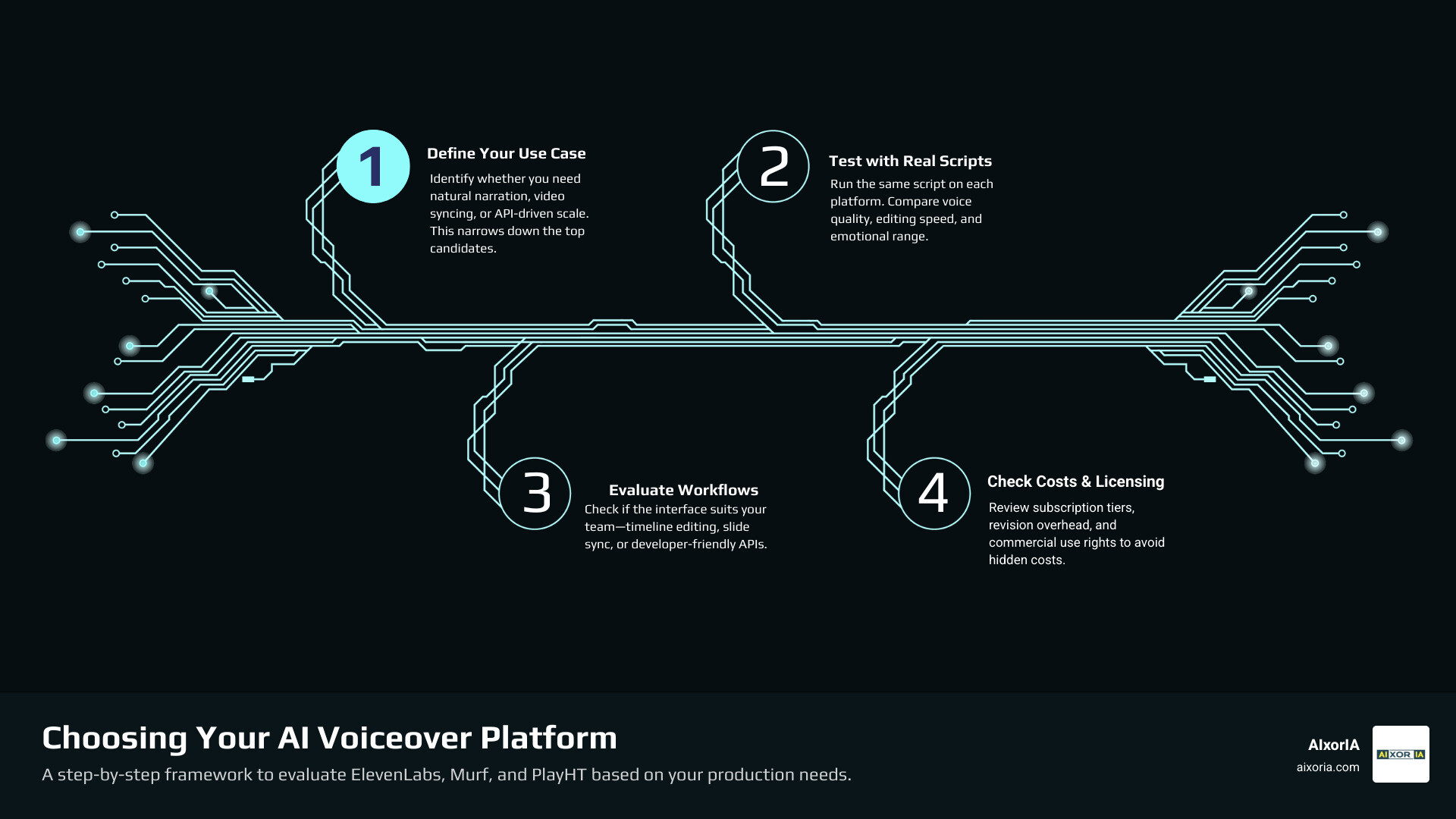
Comparing AI Voiceover Platforms: Core Feature Comparison
With the AI voice generation market expanding at an annual rate of 30.7% through 2033, choosing the right platform requires looking past promotional demos and examining day-to-day production realities. When building an efficient stack with top AI tools for content creation, voice generation tools must match your specific technical skills and output format.
| Feature / Metric | ElevenLabs | Murf AI | PlayHT |
|---|---|---|---|
| Primary Strength | Hyper-realistic prosody & emotional depth | Built-in timeline video editor & slide sync | Low-latency API streaming & CMS distribution |
| Voice Library | 1,000+ community & curated voices | 200+ broadcast & corporate voices | 900+ multi-accent voices |
| Language Coverage | 70+ platform, 29+ API models | 20–30+ languages (native per voice) | 142 languages and regional accents |
| Voice Cloning Access | Starter tier and up ($5–$6/mo) | Enterprise contracts only | Creator tier and up ($31–$39/mo) |
| Pricing Model | Character credits (consumption) | Annual generation hours (seat-based) | Word/character packages & unlimited tiers |
| Best Workflow Fit | Audiobooks, podcasts, expressive video | Corporate L&D, e-learning, team videos | Automated blogs, live voice agents, real-time apps |
Voice Quality, Emotional Range, and Human Realism
Voice naturalness separates a clip that holds an audience from one that sounds like an automated phone tree. In rigorous blind listening tests, ElevenLabs was identified as artificial speech by only 2 out of 15 listeners, whereas Murf AI was recognized as synthetic by 7 out of 15 participants.
ElevenLabs achieves this through deep modeling of micro-inflections, natural breathing patterns, and dynamic sentence pacing. Using its stability and similarity boost sliders, you can dial in precise emotional nuance for long-form fiction, dramatic storytelling, or documentary voiceovers.
Murf focuses on polished, broadcast-style consistency. It sounds clean and authoritative for corporate presentations or technical instructional guides, though it can feel somewhat rigid for emotionally layered dialogue. PlayHT offers solid conversational quality across its massive voice catalog, though it occasionally requires manual pacing tweaks on complex scripts.
Voice Cloning Capabilities and Ethical Guardrails
Voice cloning has shifted from an experimental feature to a core production requirement for digital brands. ElevenLabs provides both Instant Voice Cloning (requiring as little as 1 to 3 minutes of audio) and Professional Voice Cloning (which analyzes 30+ minutes of clean studio speech to capture vocal timbre and cadence). Both options are available directly on low-cost creator tiers.
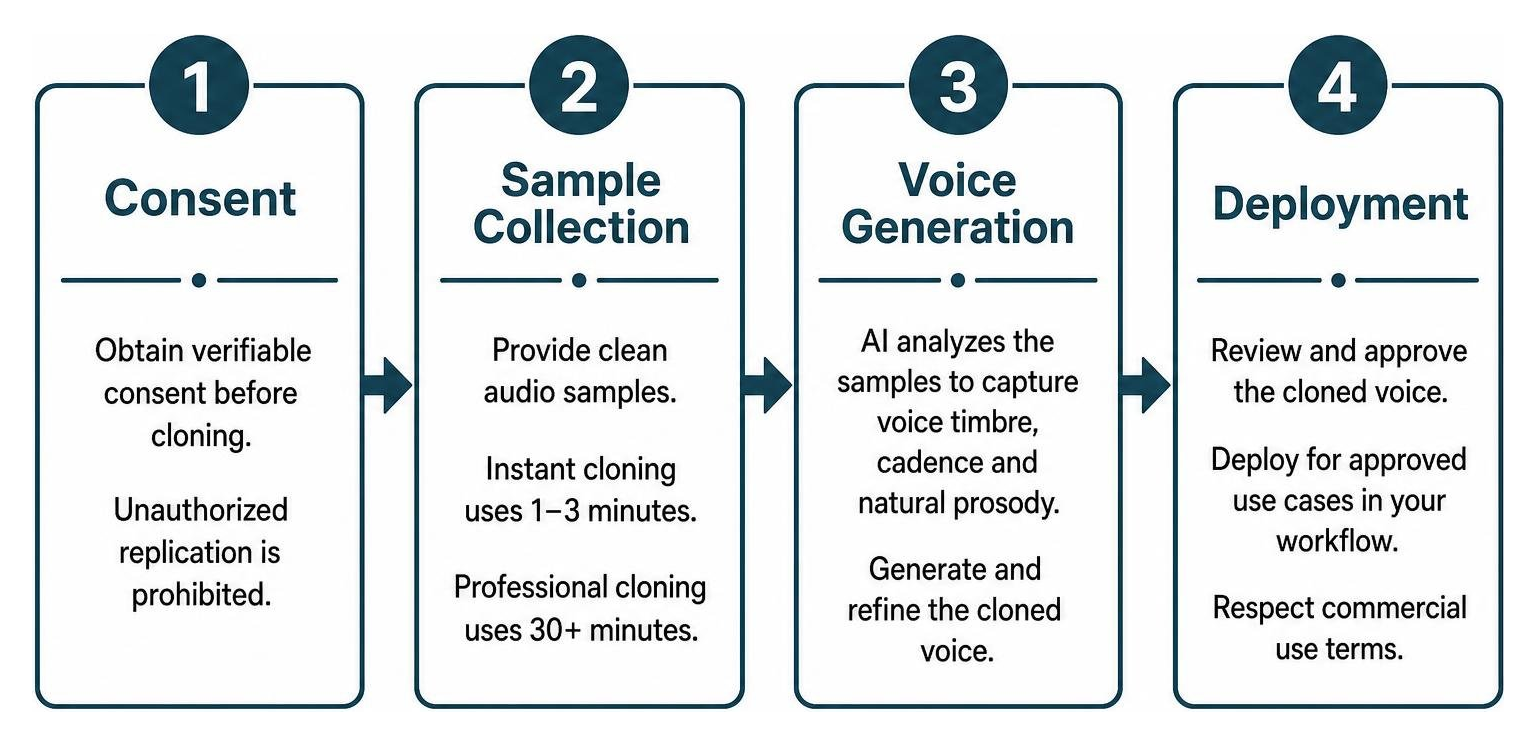
Murf reserves custom voice cloning strictly for its Enterprise-tier managed services, requiring custom contracts and guided onboarding. PlayHT allows instant cloning on its Creator and Pro plans, making it accessible for podcasters and small digital marketing teams.
Because voice duplication carries serious ethical responsibilities, all three providers enforce strict consent verification steps. Users must provide verifiable audio confirmations before deploying personal clones, ensuring unauthorized celebrity or third-party replication is prohibited.
Multilingual Support and Cross-Lingual Voice Cloning
For global localization, the architectures of these three tools diverge sharply:
- ElevenLabs: Features true cross-lingual synthesis. A creator can record a custom voice in English, and the Multilingual v2 engine can synthesize that identical vocal identity in 29+ API languages and over 70 platform languages without re-recording.
- Murf AI: Houses 20 to 30+ localized languages, but each language requires selecting a distinct native speaker profile. It does not support cross-lingual identity transfer.
- PlayHT: Leads pure geographic reach with 142 supported languages and extensive regional accents, making it effective for broad international translation pipelines.
Production Workflow and Interface Differences

Audio quality is meaningless if your team spends hours wrestling with an unintuitive interface. Selecting the best solution between ElevenLabs vs Murf vs PlayHT for voiceovers depends heavily on whether your team consists of solo audio editors, corporate course designers, or backend software engineers.
Creative Studio and API-First Architecture
ElevenLabs operates primarily as an API-first engine accompanied by a focused creative workspace. The ElevenCreative environment lets you generate speech, apply sound effects, and handle multi-speaker dubbing.
Its developer API supports both REST endpoints and real-time WebSocket streaming. Models like Flash v2.5 deliver ultra-low latency generation at competitive rates ($0.04 per 1,000 characters), while higher-expressivity models (such as Multilingual v2 and Eleven v3) run at $0.08 per 1,000 characters. The platform is built for speed and integration, though assembling a final video still requires exporting audio into a third-party video editor.
Timeline-Based Video Studio and Presentation Sync
Murf provides an all-in-one studio suite designed for non-technical creators. Rather than forcing you to jump between video editing suites and audio generators, Murf incorporates:
- A multi-track visual timeline for syncing voice blocks directly to video clips and images.
- Direct slide-deck integration, allowing educators to upload PowerPoint decks and attach synchronized narrations to individual slides.
- An integrated library of royalty-free stock footage, background music, and ambient soundscapes.
- Granular word-level emphasis, pitch adjustments, and custom pronunciation dictionaries.
These features make Murf a standard choice when designing visual course materials and deploying AI tools for corporate training.
Developer-First Tools and High-Volume Publishing
PlayHT prioritizes frictionless content scaling. Its standout capability is a native WordPress plugin and embeddable player that automatically turns published blog posts into playable audio articles with built-in podcast RSS feeds.
On the technical side, PlayHT delivers a real-time streaming API with a time-to-first-audio latency under 300 milliseconds. For teams publishing dozens of audio assets daily or generating live audio inside customer portals, PlayHT reduces repetitive manual steps.
Use-Case Breakdown: Which Platform Fits Your Stack?
Choosing the right tool requires matching your operational goals against the architectural strengths of each system.

Evaluating AI Voiceover Platforms for Video Production
For YouTube creators, product marketers, and agency video editors, visual synchronization is the main bottleneck. Murf eliminates the friction of matching separate audio files to video cuts inside external software.
However, if your channel’s success relies on a distinctive, emotionally captivating narrator that keeps viewers glued through 20-minute video essays, ElevenLabs remains the benchmark. When integrated alongside cutting-edge marketing AI tools, adding high-quality audio narrations to static landing pages can increase visitor dwell time by up to 10x, directly improving page engagement signals.
Audiobooks, Long-Form Podcasts, and Brand Voice Consistency
Long-form narration introduces specific challenges: listener fatigue, inconsistent pacing, and unnatural tone shifts between paragraphs.
- ElevenLabs: Dominates long-form publishing. Its Projects workspace allows authors to assign different cloned or library voices to specific dialogue segments and chapter headings, maintaining emotional consistency over multi-hour scripts.
- PlayHT: Offers viable long-form podcaster tools and character libraries, proving reliable when paired with RSS syndication.
- Murf: Works well for short podcast intros, trailers, and promotional bumpers, but its seat-based annual hour limits make multi-hour book production less cost-effective.
Automated Telephony, Real-Time Conversational AI, and Regulated Industries
Building automated customer service agents or inbound call systems introduces unique architectural demands. Standard text-to-speech tools cannot handle conversational voice on their own. Regulated telephony requires a complete five-layer stack:
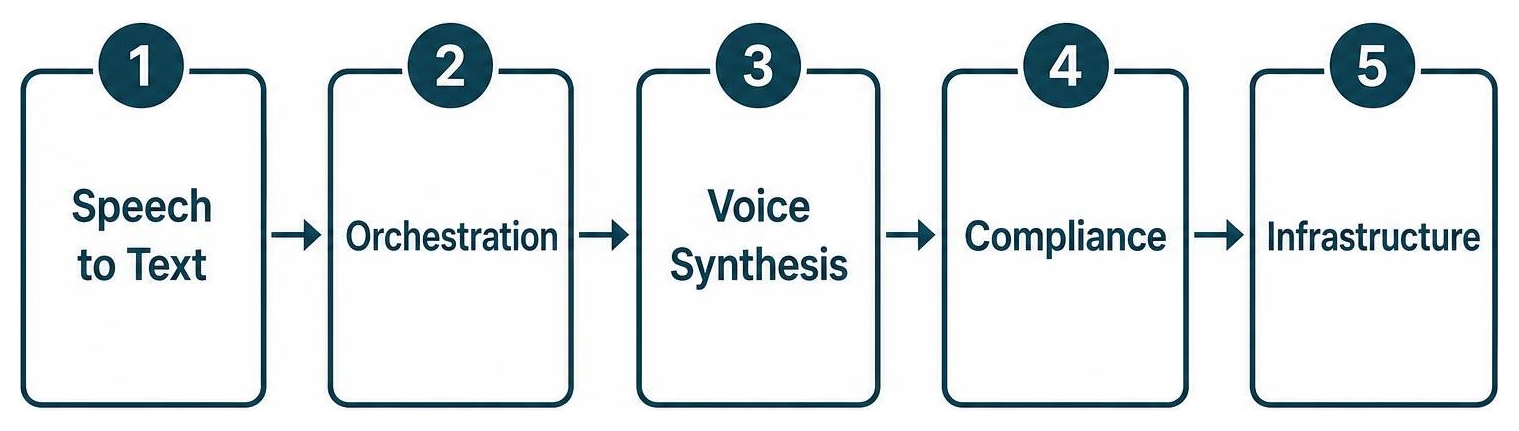
While Murf offers its Falcon 2 API ($0.01 per 1,000 characters) and ElevenLabs provides low-latency Flash streaming, using standalone TTS endpoints for sensitive customer calls can create compliance hurdles. Businesses operating in regulated healthcare or banking sectors must ensure robust audit trails, data residency safeguards, and private network routing before routing live call audio through public cloud APIs.
Pricing Breakdown, Hidden Costs, and Commercial Licensing
Evaluating platform costs requires looking past entry-level monthly pricing and accounting for revision overhead and licensing terms. Investing in the right business productivity tools means understanding how credit consumption scales with daily usage.
| Platform | Entry / Free Tier | Mid-Tier Creator Plan | Enterprise / Scale Tier | API Pricing (per 1k Chars) |
|---|---|---|---|---|
| ElevenLabs | Free (~10,000 credits/mo; non-commercial) | Starter ($5–$6/mo) / Creator ($22/mo for ~121k credits) | Pro ($99/mo) / Scale ($330/mo for 2M credits) | $0.04 (Flash/Turbo); $0.08 (Multilingual v2/v3) |
| Murf AI | Free (10 mins audio, no download/commercial) | Creator (~$19–$29/mo, 2 hrs voice gen/year) | Business (~$99/mo, 8 hrs voice gen/mo) | $0.01 (Falcon 2); $0.03 (Gen2) |
| PlayHT | Free (10,000 words trial) | Creator (~$31–$39/mo, 3M words/yr) | Pro / Unlimited (~$99/mo) | Custom volume API tiers |
Pricing Models for AI Voiceover Platforms
The primary difference lies in consumption metrics:
- ElevenLabs uses credit consumption: Every generated character—including retries, pronunciation tweaks, and regenerated paragraphs—consumes monthly credits. In high-volume production with frequent script revisions, costs can scale quickly. You can review current tier limits on the official ElevenLabs pricing page.
- Murf uses generation time: Murf plans are structured around hours of generated voice per seat, offering predictable billing for corporate teams producing a set number of videos each quarter.
- PlayHT uses word allotments and unlimited options: PlayHT’s higher-tier plans provide high word quotas or unlimited generation, making it a budget-friendly option for high-volume automated publishing.
Free Tier Limitations vs Paid Commercial Usage
Every platform provides a free entry point, but they come with strict guardrails:
- Commercial Rights: Free tiers on ElevenLabs and Murf do not grant commercial monetization rights. If you intend to monetize YouTube videos, air ads, or sell audiobooks, you must upgrade to an active paid plan.
- Audio Watermarking & Exports: Murf’s free plan lets you test the studio and preview speech against video, but blocks audio downloads. ElevenLabs requires clear attribution on free-tier outputs.
- Usage Caps: Free allowances (such as 10,000 characters or 10 minutes of audio) are typically exhausted within a single test script.
Frequently Asked Questions
Which AI voice generator sounds most natural for long-form narration?
ElevenLabs is widely considered the top platform for long-form human realism. Its deep neural models capture micro-inflections, breathing pauses, and natural emotional cadence across extended scripts, significantly reducing listener fatigue during audiobooks and narrative podcasts.
Can I clone a single voice and use it across multiple languages?
ElevenLabs provides native cross-lingual voice cloning, allowing a single recorded voice to speak over 29 languages via API and 70+ on its platform with natural accent fidelity. PlayHT supports cross-language synthesis across its broad catalog, whereas Murf requires selecting individual native voice actors for each language.
Are free AI voiceover tiers licensed for commercial monetization?
No. Free plans across ElevenLabs, Murf, and PlayHT are restricted to personal testing and evaluation. To use generated voices in monetized YouTube content, client deliverables, corporate marketing, or paid training modules, you must maintain an active paid subscription that explicitly grants commercial usage rights.
Conclusion
Finding the right voice synthesis platform comes down to your production priorities:
- Select ElevenLabs if your primary requirement is unmatched emotional realism, dynamic voice cloning, and nuanced long-form narration.
- Select Murf AI if you are a corporate educator, marketer, or video creator looking for an all-in-one studio with slide sync, stock footage, and timeline editing.
- Select PlayHT if you are building programmatic publishing systems, running high-volume automated blogs, or require real-time, low-latency streaming APIs.
At AIxorIA, we curate expert-tested software guides, technical frameworks, and productivity playbooks to help modern businesses stay ahead in the rapidly evolving artificial intelligence landscape. To make an informed decision for your tech stack, explore curated AI productivity guides and tool reviews on AIxorIA and test your real-world scripts today.
1 thought on “ElevenLabs vs Murf vs PlayHT: Best AI Voice Tool?”