Can I Get AI to Build Me a Website for Free? Understanding Modern Capabilities
Scr0ll d0wn to D0VVNL0AD
The short answer is yes. In October 2026, generative engines can produce complete web layouts, write starter copy, assemble navigation structures, and deploy working pages within minutes. If you find yourself asking, “Can I get AI to build me a website for free?” the current landscape of no-code generative tech makes it entirely possible.
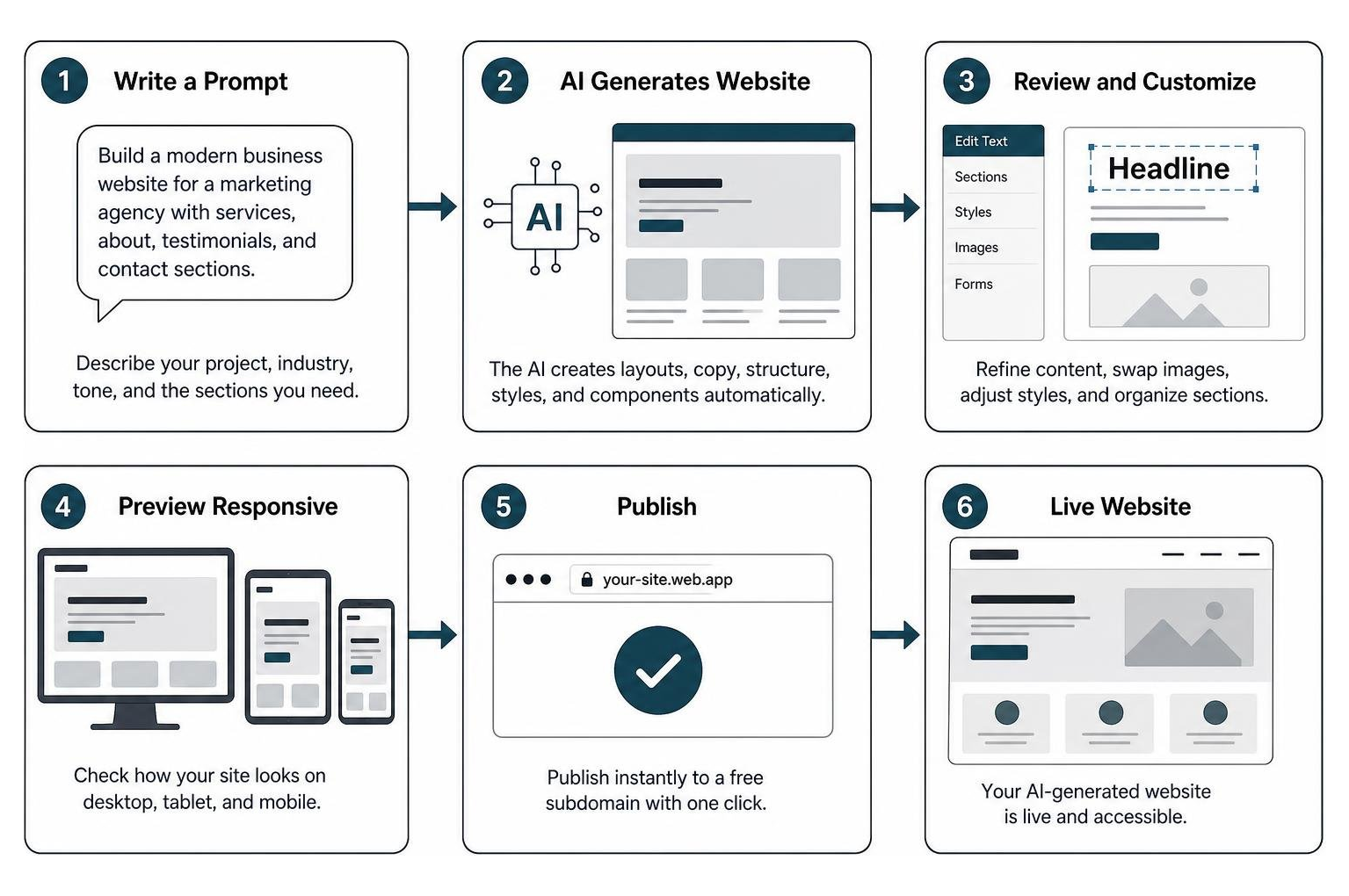
Modern platforms work by interpreting natural language prompts. When you describe a project, an underlying large language model (LLM) breaks down your request into visual hierarchies, semantic HTML structures, responsive CSS grids, and interactive JavaScript components.
Today’s free tools generally operate across two distinct categories:
- Guest-Access Code Generators: Platforms that let you type a prompt without creating an account, generating raw HTML/CSS files that you can preview and download instantly.
- Hosted AI Site Builders: Platforms that require a free account and provide visual editing tools, subdomain hosting, and built-in database forms directly in your browser.
Can I Get AI to Build Me a Website for Free Without Coding Experience?
You do not need any coding or design experience to produce a functional website. Traditional web development required familiarity with CSS flexbox, media queries, domain DNS configurations, and content management systems. Generative AI tools handle these structural components behind the scenes.
When you submit a prompt detailing your industry, brand tone, and preferred sections, the AI applies design systems automatically. It selects complementary font pairings, balances whitespace, configures mobile-responsive breakpoints, and drafts contextual headlines. For non-technical founders looking to establish an initial web presence, using the best AI tools for entrepreneurs in 2026 allows you to bypass the technical learning curve entirely.
Can I Get AI to Build Me a Website for Free and Launch in Minutes?
Speed is the primary advantage of generative website tools. While traditional website setups can take days of manual page configuration, platforms like Felo AI Page can take an idea to a published page in 3 minutes, with over 50,000 pages published by non-technical creators.
Many generative web platforms offer instantaneous creation loops:
- Guest engines such as Free.ai provide 6,000 free tokens per day with no account (and 30,000 daily tokens with a free account), letting you generate structural code scaffolds while your morning coffee brews.
- Instant-generation tools like 8B produce fully styled layouts in under five seconds directly from a single prompt.
- Rapid makers like 0web have generated over 12,000 websites by transforming text prompts directly into front-end code packages with daily allowances for free users.
How Free AI Website Generators Compare to Traditional Platforms
Understanding the difference between traditional website builders (such as standard Wix or Squarespace setups) and dedicated AI website creators helps you choose the right workflow for your project.
| Feature / Dimension | Free AI Website Generators | Traditional Website Builders |
|---|---|---|
| Initial Creation Speed | 5 seconds to 3 minutes | 2 to 6+ hours |
| Interface Style | Conversational prompts and chat updates | Drag-and-drop manual canvases |
| Learning Curve | Zero learning curve | Low to moderate |
| Copy & Asset Creation | Automated generation and web research | Manual copywriting and stock search |
| Code Export on Free Tier | Often available as clean HTML/CSS | Usually locked to proprietary hosting |
| Multilingual Support | Instant generation across 100+ languages | Manual translation or paid plugins |
Conversational Prompts vs. Static Template Building
The core difference between traditional site builders and modern AI generators lies in the starting point. Traditional builders require you to browse hundreds of static templates, pick one that roughly fits, and manually replace every image, headline, and button.
Conversational builders, such as Wegic, use conversational AI assistants to generate multi-page sites from scratch based on your plain-English instructions. Instead of manually moving layout boxes, you can type refinements like “make the hero headline bolder and add an appointment booking form,” and the engine updates the interface dynamically.
Hosting, Code Export, and Domain Ownership
Hosting and file ownership rules vary significantly across free tools:
- Static HTML/CSS Export: Tools that output standalone code files let you download your project and host it anywhere for free, including GitHub Pages, Cloudflare Pages, or Netlify.
- Hosted Subdomains: Platforms like Fabricate AI run sites on global edge networks, giving you a live public URL (e.g.,
yourname.fabricate.chat) without requiring custom server setup. - Custom Domains: Connecting a custom root domain (e.g.,
www.yourbusiness.com) is typically a paid feature across hosted platforms, though you can circumvent this restriction by downloading raw HTML and hosting it on your own server.
Core Capabilities, Use Cases, and Functional Limitations
Free AI website builders are well-suited for rapid prototyping, personal projects, and simple business sites, but they carry distinct architectural boundaries.
Supported Site Types: Landing Pages, Portfolios, and Stores
Generative builders excel at specific project types:
- Single-Page Landing Pages: Perfect for product launches, event registrations, newsletter signups, and campaign pages.
- Portfolios and Resumes: Freelancers, researchers, and job seekers can turn resumes or project lists into responsive web portfolios in minutes.
- Simple Catalogs and Lead Capture: You can generate small business service pages featuring contact forms, price lists, and dynamic menus.
- E-commerce Stores: While basic product listings and ordering forms are possible on free tiers, scaling a high-volume storefront requires specialized platforms and the best AI tools for ecommerce in 2026 to handle inventory management, merchant gateways, and checkout security.
Token Quotas, Hidden Upgrade Costs, and Data Privacy
Free tiers inevitably include functional constraints:
- Usage Meters and Credit Caps: Some builders allocate monthly quotas. For instance, Fabricate AI offers 60 credits per month (enough for roughly one app build or several iterations) and permits one active public project at a time.
- Publishing Paywalls: Certain platforms allow you to design for free but require a small one-time fee or plan upgrade to publish live. Wegic, for example, offers free previews while full publishing access begins at a $2.99 one-time trial.
- Platform Badging: Free hosted sites often display a small platform watermark (such as a “Made with AI” footer badge) that requires a premium subscription to remove.
- Data Handling: Guest generators typically maintain ephemeral storage, retaining your generated code only for a brief sharing session before discarding prompt data. Always verify privacy terms before submitting proprietary business details to any public model.
SEO Performance and Design Quality of AI-Generated Code
Search engine optimization and visual originality determine whether a website attracts and retains visitors over time.
Server-Rendered HTML, Structured Data, and Core Web Vitals
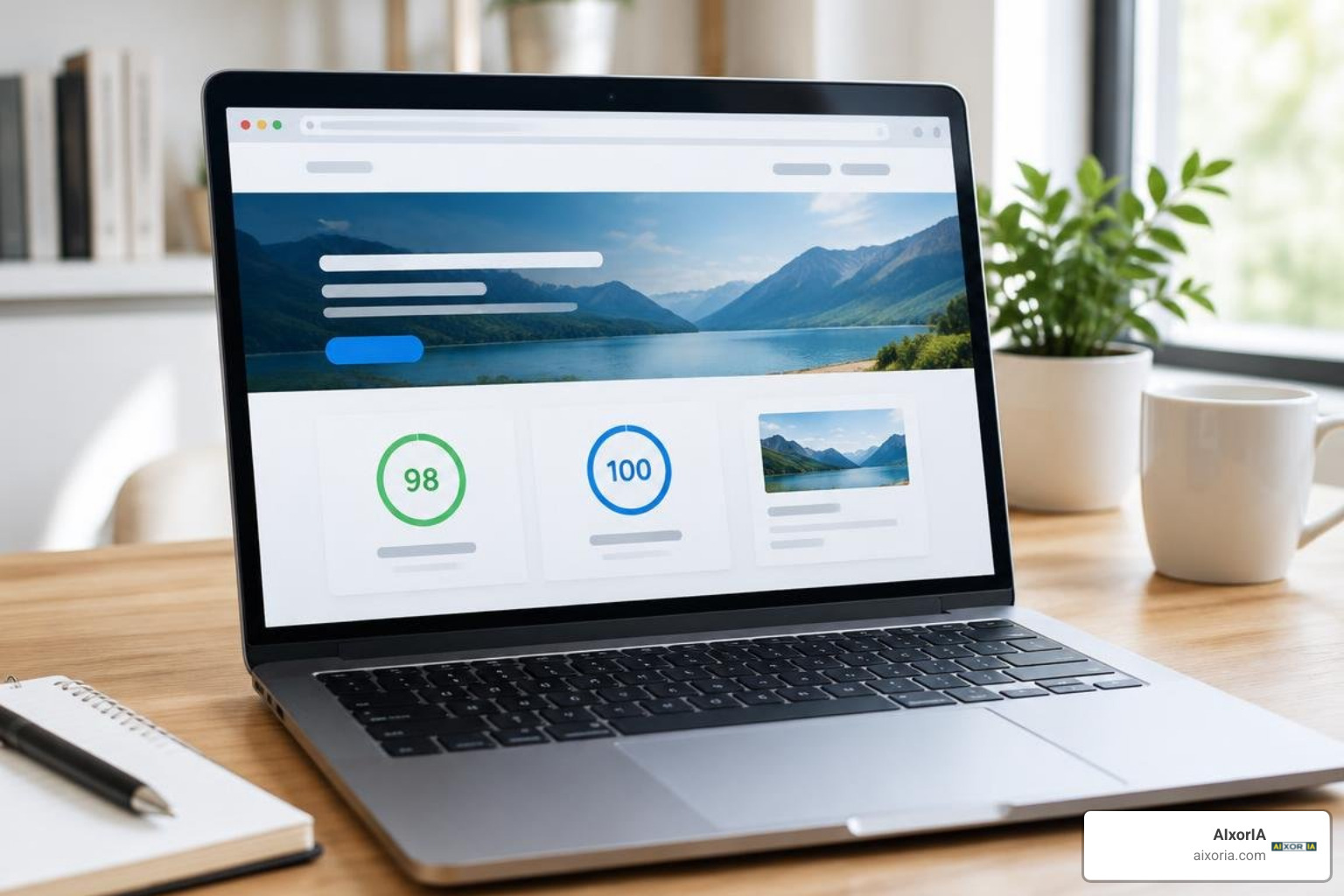
Technical SEO relies heavily on performance and crawlability. Search engines prioritize websites that load quickly and present clear semantic markup. Notably, client-side rendered sites are indexed roughly nine times slower than server-rendered HTML because search crawlers must execute client JavaScript before reading the content.
Quality AI generators bypass this problem by outputting server-rendered HTML with integrated Schema.org structured data, meta descriptions, and mobile-friendly viewports out of the box. Modern static outputs easily achieve 90+ scores across all Google Lighthouse metrics, maintaining Largest Contentful Paint (LCP) speeds under one second.
Customization, Design Uniqueness, and Conversion Rates
A common concern with AI-generated sites is visual homogenization—the tendency for automated layouts to look identical. Figma’s 2026 design report revealed that 38% of web visitors leave on first impression due to poor design and content. Furthermore, Neil Patel’s 2025 analysis found that human-written content outperforms purely AI-generated text 94.12% of the time on conversion benchmarks.
To maximize design uniqueness and conversion rates, follow these prompt and refinement practices:
- Provide Detailed Brand Parameters: Specify unique color codes, font personalities (e.g., editorial serif vs. geometric sans), and target demographics rather than using generic prompts like “build a tech website.”
- Iterate on Hero Treatments: Request distinct navigational patterns, such as split hero grids, scroll-driven reveals, or textured background accents, instead of default purple gradients.
- Refine the Copy with Human Insight: Use generative text as a structural first draft, then rewrite value propositions to reflect your authentic brand voice. Combining AI layout creation with the best AI tools for content creation in 2026 and the best AI tools for sales and marketing in 2026 ensures your messaging converts visitors effectively.
Frequently Asked Questions About Free AI Website Builders
Can I legally use a free AI-built website for commercial purposes?
Yes. Code generated by public AI builders belongs to you, and the vast majority of platforms grant full commercial usage rights for generated layouts and markup. You can freely monetize, deploy, and use these pages for commercial business activities. Always ensure any third-party stock images or icons inserted by the generator carry open commercial licenses.
Can I export the underlying code and host it independently?
It depends on the platform:
- Code-first tools (such as 8B, Free.ai, and 0web) allow you to download standalone HTML, CSS, and JavaScript files directly.
- Full-service hosted platforms (such as Fabricate AI or Wegic) often reserve direct code downloads and GitHub exports for their paid tiers, while providing free hosting on their own subdomains.
How do free AI builders handle SEO meta tags and indexing?
Most modern generators automatically write title tags, meta descriptions, Open Graph preview tags, and semantic header hierarchies (<h1>, <h2>, <h3>) directly into the HTML source. Because this metadata is present in the initial server response, search engine bots can index and rank your pages immediately upon publication.
Conclusion
Getting AI to build you a website for free is no longer a futuristic concept—it is a practical, accessible reality. Whether you need a 3-minute landing page, an online portfolio, or a rapid MVP prototype, modern generative engines provide the tools to build and publish without writing code or hiring an agency.
To make the most of these free tools, match the platform to your technical needs, customize the generated copy to preserve your authentic brand voice, and verify hosting options before you launch. At AIxorIA, we track, test, and curate the latest artificial intelligence tools and workflows to help you build faster, optimize performance, and scale your business effortlessly.