Core Types: Which Insurance Is Best for Business Base Protection?
Scr0ll d0wn to D0VVNL0AD
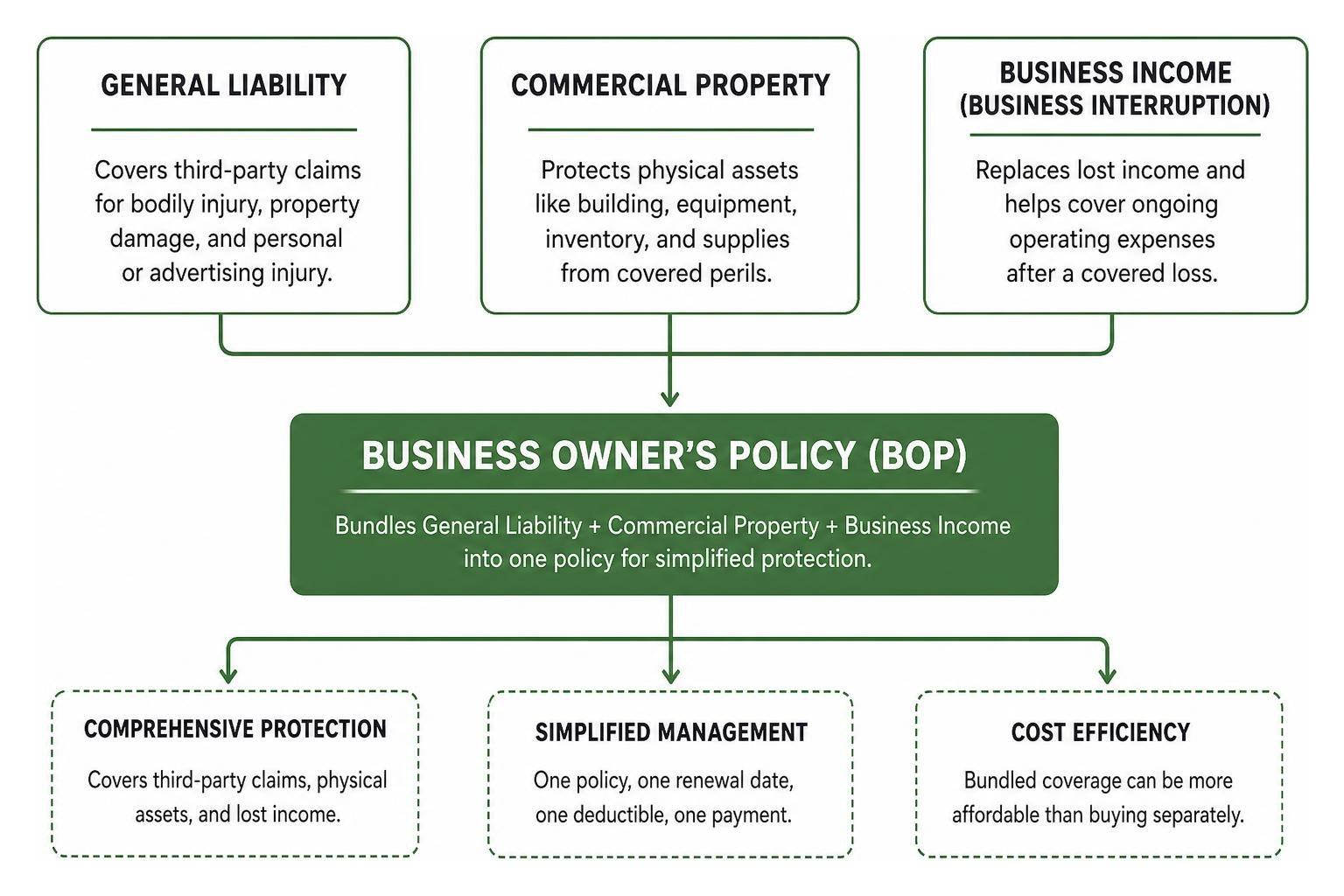
When figuring out which insurance is best for business, starting with foundational coverage is essential. Most small and medium-sized enterprises begin with three core policies: general liability, commercial property, and business income insurance. Together, these form the baseline protection stack for your everyday operations.
- General Liability Insurance: This covers third-party claims involving bodily injury, physical property damage, and personal or advertising injury (such as libel or slander). If a customer slips on a wet floor in your retail shop or you accidentally break a client’s high-end monitor while installing equipment on-site, general liability steps in to pay for legal defense, medical costs, and court settlements.
- Commercial Property Insurance: This protects your physical assets—including your building, equipment, inventory, specialized tools, and office furniture—from risks like fire, theft, vandalism, and storm damage.
- Business Income Insurance (Business Interruption): If a covered disaster forces your business to close temporarily, this coverage replaces lost revenue and helps pay ongoing operating expenses, such as employee payroll, property rent, and utility bills.
Relying solely on a single policy leaves significant exposure gaps. For instance, general liability strictly covers third-party damage; it won’t repair your burned-out inventory or replace stolen tools. Combining these foundational coverages creates a safety net that protects both your tangible assets and daily revenue streams.
Business Owner’s Policy (BOP) Advantages
Rather than buying individual policies separately, many companies opt for a Business Owner’s Policy (BOP). A BOP packages general liability, commercial property, and business income insurance into a single convenient agreement.
The primary advantage of a BOP is financial savings combined with administrative simplicity. Insurance carriers typically offer bundling discounts ranging from 10% to 15% when you purchase these three policies together inside a BOP compared to acquiring them individually.
For example, while individual general liability policies average $45 to $68 per month and property policies add significant standalone costs, standard BOP packages start between $25 and $83 per month for micro-businesses, with average small business costs landing around $141 per month ($1,687 annually). Additionally, managing one renewal date, one deductible structure, and one insurance premium payment reduces administrative overhead so you can stay focused on growing your business.
How to Know Which Insurance Is Best for Business Operations
Determining which insurance is best for business operational risks requires looking closely at how your business runs every day. To identify your exact insurance stack, evaluate these key operational variables:
- Foot Traffic and Physical Exposure: Do clients visit your office, shop, or showroom? If so, high general liability coverage limits are non-negotiable to handle potential slip-and-fall claims.
- Workforce and Staffing: Once you hire your first employee, workers’ compensation insurance becomes mandatory in almost every state.
- Contractual Requirements: Landlords routinely require general liability and property insurance before signing a commercial lease. Similarly, enterprise clients often demand proof of professional liability or high general liability coverage limits (such as $1 million per occurrence / $2 million aggregate) before signing service contracts.
- Services and Advice Rendered: If your business provides professional guidance, software development, financial advice, or specialized design work, physical liability insurance will not protect you against claims of advice errors or missed contract deadlines.
Essential Additional and Specialized Coverage Options
While a BOP creates a solid foundation, it does not protect against every operational risk. Growing businesses, service industries, and specialized fields require targeted add-on policies to achieve comprehensive financial protection.
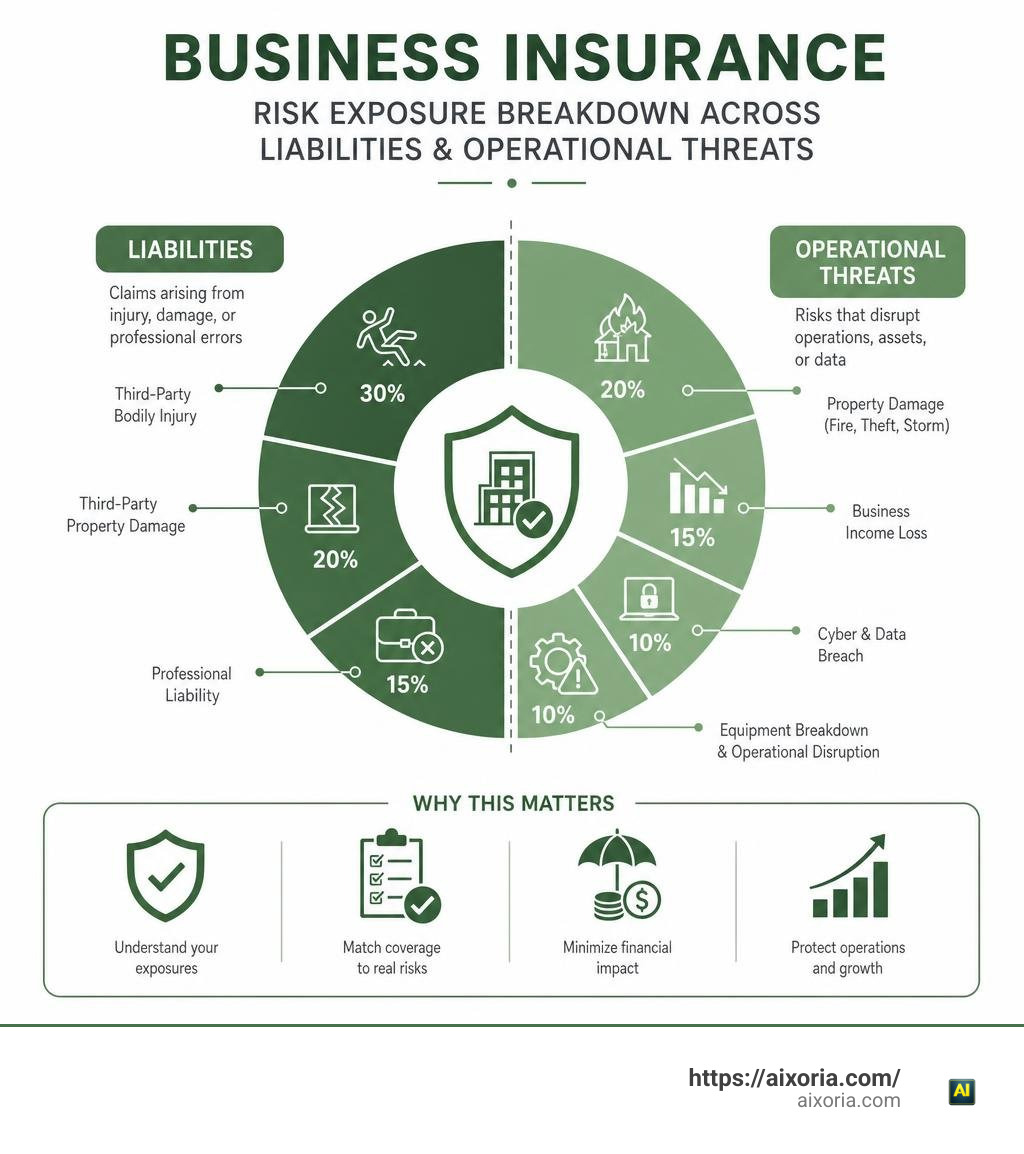
Solopreneur and Online Business Protection
Running an e-commerce platform or working as an independent solopreneur comes with unique liability exposures that differ from traditional brick-and-mortar storefronts.
- E-Commerce and Data Security Risks: Digital stores are prime targets for cybercrime. Research indicates that 43% of cyberattacks target small businesses, and 60% of small companies that experience a major data breach close within six months. Cyber liability insurance covers customer notification costs, forensic investigations, data recovery fees, and ransomware demands.
- Home Business Exclusions: Many home-based solopreneurs mistakenly assume their standard homeowners insurance protects their business operations. In reality, residential policies explicitly exclude commercial liability claims and cap business equipment coverage at very low limits (often under $2,500).
- Personal Asset Exposure: If you operate as a sole proprietor or single-member LLC, legal judgments exceeding your policy limits can directly target your personal savings and property. Carrying dedicated professional liability and general liability insurance isolates your business liabilities from your personal estate.
Specialized Policy Add-Ons
Depending on your industry, adding tailored endorsements or standalone policies is necessary to close critical coverage gaps:
- Professional Liability (Errors & Omissions): Essential for consultants, accountants, lawyers, real estate agents, and tech providers. It covers claims of professional negligence, inaccurate advice, design flaws, or breach of contract.
- Workers’ Compensation Insurance: Covers medical expenses, disability benefits, and lost wages for employees injured on the job. It also protects employers against injury-related lawsuits.
- Commercial Auto Insurance: Personal auto insurance policies strictly exclude accidents that occur while performing work tasks (such as client visits, tool transport, or deliveries). Commercial auto covers company vehicles and employee drivers.
- Employment Practices Liability Insurance (EPLI): Protects your business against employee lawsuits alleging wrongful termination, discrimination, sexual harassment, or wage disputes.
- Inland Marine Insurance: Protects specialized equipment, machinery, and tools while in transit or stored across various off-site job locations (ideal for construction contractors and field services).
- Liquor Liability Insurance: Mandatory for restaurants, bars, or event venues that manufacture, sell, or serve alcohol, covering damages caused by intoxicated patrons.
- Commercial Umbrella Liability: Extends the payout limits of your existing general liability, commercial auto, and employer’s liability policies when major claims exceed baseline limits.
Business Insurance Costs, Bundling, and Savings
Understanding average costs and pricing structures allows you to budget effectively while securing complete protection. Business insurance premiums vary based on industry risk profiles, company size, and chosen coverage limits.
| Policy Type | Average Monthly Cost Range | Average Annual Cost | Primary Scope of Protection |
|---|---|---|---|
| Business Owner’s Policy (BOP) | $25 – $141 / mo | $300 – $1,687 / yr | Bundles general liability, property, and business income |
| General Liability Insurance | $45 – $68 / mo | $538 – $810 / yr | Third-party bodily injury, property damage, and advertising injury |
| Professional Liability (E&O) | $22 – $88 / mo | $264 – $1,055 / yr | Professional advice errors, negligence, and missed deadlines |
| Workers’ Compensation | $54 – $86 / mo | $650 – $1,032 / yr | Work-related employee injuries, medical care, and lost wages |
| Cyber Liability Insurance | $35 – $60 / mo | $420 – $720 / yr | Data breaches, ransomware, data recovery, and legal defense |
| Commercial Auto Insurance | $150 – $245 / mo | $1,800 – $2,945 / yr | Vehicle accidents, bodily injury, and property damage on the road |
Factors That Impact Your Insurance Costs
When underwriters calculate your business insurance premiums, they evaluate several core risk variables:
- Industry Classification: A residential tree-trimming business pays significantly higher liability and workers’ compensation rates than a accounting firm because of higher physical injury risks.
- Payroll and Staff Size: Workers’ compensation costs scale directly with your total payroll and the specific job duties performed by your workforce.
- Annual Revenue: Higher revenues reflect larger operational scales, higher customer volume, and greater potential financial liability in legal disputes.
- Geographic Location: Businesses located in regions prone to severe weather events or high litigation rates experience higher property and liability rates.
- Claims History: A clean claims record demonstrates effective risk management and earns favorable underwriting discounts, whereas frequent past claims increase overall premiums.
Smart Strategies to Lower Your Monthly Premiums
You don’t have to compromise on protection to keep insurance costs manageable. Here are proven strategies to reduce your overall insurance expenses:
- Bundle Policies into a BOP: Combining property, liability, and business income into a Business Owner’s Policy provides instant baseline savings compared to standalone policies.
- Implement Workplace Safety Programs: Establishing formal safety training, providing personal protective equipment, and enforcing ergonomic standards reduces workers’ compensation claims and lowers experience modification ratings.
- Increase Your Policy Deductibles: Choosing a higher out-of-pocket deductible (for example, raising your property deductible from $500 to $2,500) directly lowers your monthly premium rate.
- Pay Annually Instead of Monthly: Most insurance carriers charge administrative processing fees for monthly billing. Paying your premium in full upfront can save 5% to 10% overall.
- Conduct Annual Policy Audits: Review your actual revenue, payroll, and asset values every year. Downsizing equipment or shifting operational models should be reflected in reduced coverage limits so you don’t overpay.
How to Evaluate and Compare Top Business Insurance Carriers
Choosing the best business insurance provider requires looking beyond advertised premium prices. You need a reliable insurance partner capable of processing claims quickly and supporting your business through unexpected setbacks.

Evaluating Carrier Reliability and Claims Reputation
To ensure an insurance company will stand behind your policy when a crisis hits, evaluate carriers using these objective standards:
- Financial Strength Ratings: Check third-party rating agencies like AM Best. Look for financial strength ratings of A- (Excellent) or higher to ensure the carrier has the financial reserves to pay out large claims.
- Claims Processing Speed: Research claims settlement track records. Efficient carriers resolve routine commercial claims in about 22 days, compared to industry averages of over 40 days.
- Customer Satisfaction Ratings: Check independent small business satisfaction studies, as well as NAIC (National Association of Insurance Commissioners) complaint index resources.
- Digital Management Tools: Choose providers that offer easy online portals or mobile apps for instant certificate of insurance (COI) generation, policy adjustments, and 24/7 claims reporting.
Key Steps to Switch or Purchase Coverage
Transitioning to a new business insurance policy or purchasing coverage for the first time is straightforward when following a structured sequence.
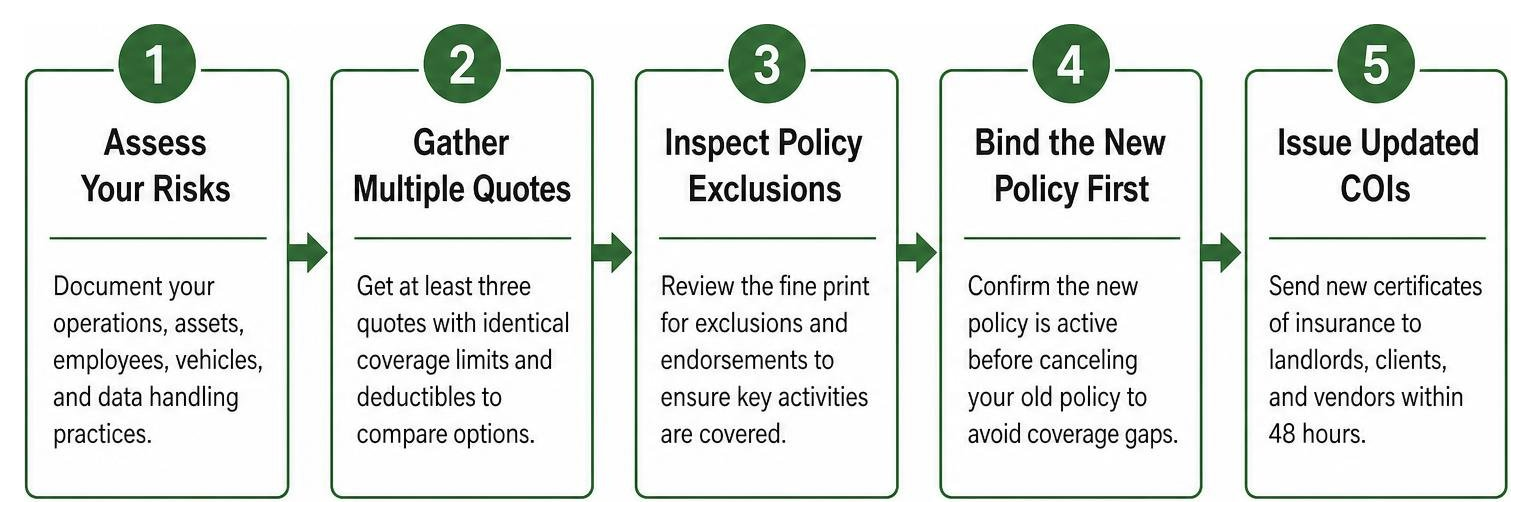
- Conduct an Operational Risk Assessment: Document your business activities, physical asset values, employee count, commercial vehicle usage, and client data handling habits.
- Gather Multiple Quotes: Obtain at least three comparative quotes from direct digital insurers, national commercial carriers, or independent insurance brokers using identical coverage limits and deductibles.
- Inspect Policy Exclusions: Review the fine print for specific exclusions. Ensure the policy does not contain restrictive endorsements that leave key operational activities uninsured.
- Bind the New Policy First: Ensure your new insurance policy is fully bound, active, and effective before canceling your old policy to prevent dangerous gaps in coverage.
- Issue Updated Certificates of Insurance (COI): Send new COIs to your commercial landlord, primary clients, and key vendors within 48 hours of policy activation to maintain full contractual compliance.
Frequently Asked Questions About Business Insurance
Is business insurance required by law for all companies?
While general liability and commercial property insurance are not federally required, specific coverages are mandated by state and federal laws:
- Workers’ Compensation: Legally required in 49 states as soon as a business hires employees (specific thresholds vary by state). Operating without mandatory workers’ comp can result in severe state fines reaching up to $100,000 per day, legal injunctions, or criminal charges.
- Commercial Auto Insurance: Required in almost all states for company-owned vehicles or personal vehicles driven for commercial transport and deliveries.
- Professional Mandates: Certain licensed professions—such as healthcare providers, lawyers, financial advisors, and commercial contractors—are required by state regulatory boards or local municipalities to carry professional liability or surety bonds before receiving operating licenses.
How to Determine Which Insurance Is Best for Business Growth?
As your business expands, your insurance coverage must scale alongside your revenue and operational complexity. Re-evaluate your commercial policies whenever you experience key growth milestones:
- Hiring Staff: Triggers mandatory workers’ compensation requirements and increases employment practices liability exposure.
- Acquiring Physical Assets: Purchasing expensive machinery, upgrading specialized tools, or expanding inventory requires raising commercial property insurance limits.
- Moving Locations or Expanding Workspaces: Signing a lease for a larger facility increases general liability exposure and demands updated property coverage.
- Introducing New Services: Launching digital sales requires cyber liability coverage, while offering strategic consulting services necessitates professional liability (E&O) protection.
Can I bundle different types of insurance to lower rates?
Yes, bundling is one of the most effective ways to lower your total business insurance costs. Bundling general liability, commercial property, and business interruption into a single Business Owner’s Policy (BOP) delivers baseline savings of 10% to 15%.
Additionally, many commercial insurers offer multi-policy discounts when you add workers’ compensation, commercial auto, or umbrella liability to your existing BOP or general liability account. Bundling also streamlines administrative work by consolidating billing statements and renewal schedules under a single insurance provider.
“https://www.mediafire.com/file/tr1pkmflfw0ra8f/Lucky_Block_Race_BY_MCMPDL.mctemplate/file“;
Conclusion
Determining which insurance is best for business success comes down to assessing your specific risks, establishing a strong foundation with a Business Owner’s Policy (BOP), and adding targeted coverage like workers’ compensation, professional liability, or cyber protection as your operations grow. Protecting your company against unforeseen liabilities ensures long-term stability and resilience.
Beyond mitigating risk through insurance, maintaining a competitive edge requires optimizing your everyday operational workflows. As you build a resilient foundation for your company, explore modern software strategies to boost workflow efficiency with AI productivity tools and keep your business running smoothly.