Why the Best Personal Finance Software Without Subscription Is Worth Finding in 2026
Scr0ll d0wn to D0VVNL0AD

The best personal finance software without subscription might save you more money than you think — most paid apps cost between $10 and $20 per month, which adds up to $120–$240 every year just to track your own money.
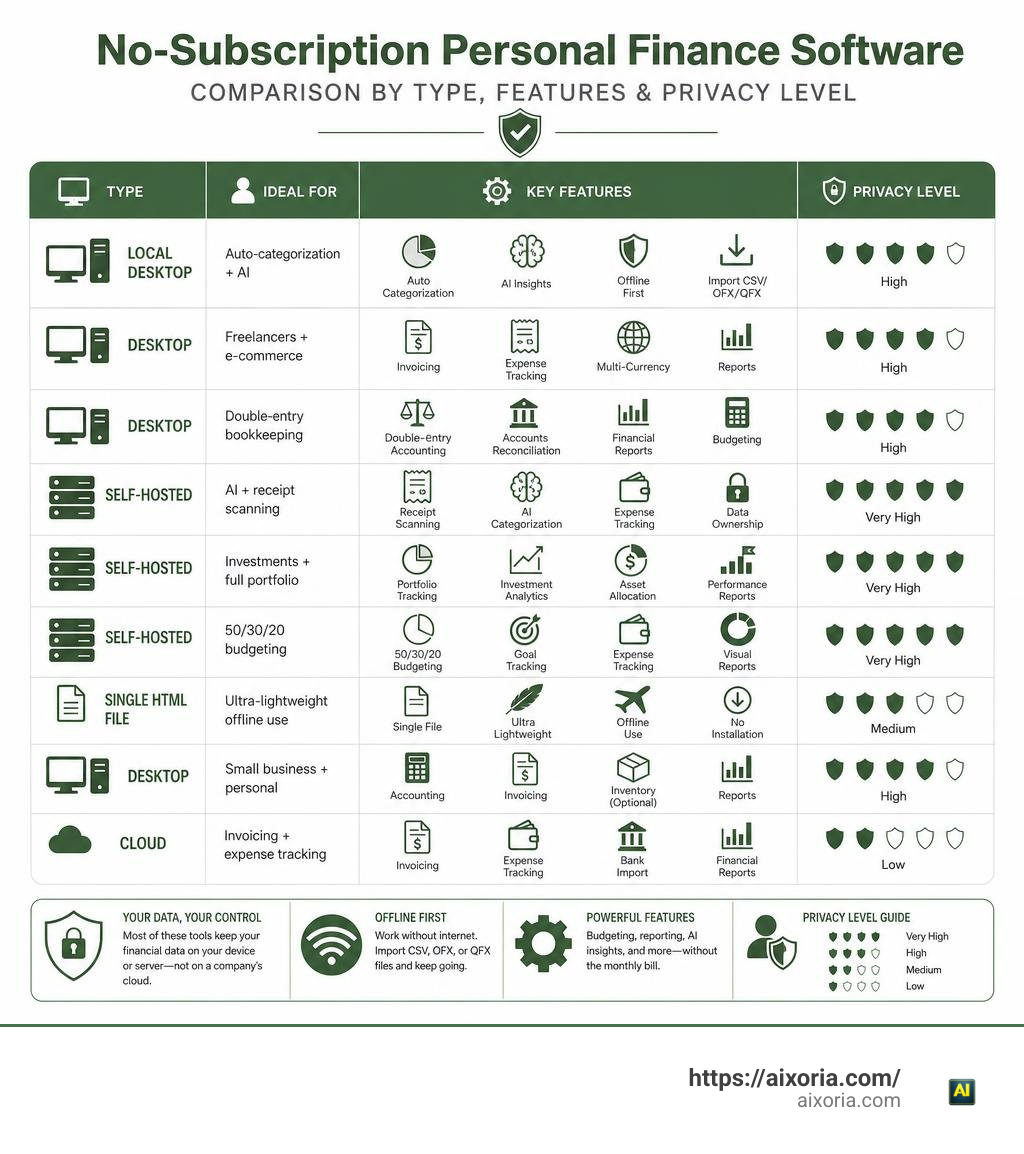
Here are the top no-subscription options available right now:
| App | Type | Best For | Cost |
|---|---|---|---|
| Nemo | Local desktop | Auto-categorization + AI | Free |
| OpenLedger | Local desktop | Freelancers + e-commerce | Free |
| GnuCash | Desktop | Double-entry bookkeeping | Free, open-source |
| Cashlytics | Self-hosted | AI + receipt scanning | Free, self-host |
| Steward | Self-hosted | Investments + full portfolio | Free, self-host |
| Ouriva | Self-hosted | 50/30/20 budgeting | Free, self-host |
| Hedgie | Single HTML file | Ultra-lightweight offline use | Free, open-source |
| Manager.io | Desktop | Small business + personal | Free desktop version |
| Wave | Cloud | Invoicing + expense tracking | Free cloud tier |
Most of these tools keep your data on your own device or server — not on a company’s cloud.
The subscription model took over personal finance software for a simple reason: live bank syncing costs money to maintain, and recurring revenue is attractive to software companies. But that doesn’t mean you’re stuck paying forever. A growing wave of local-first, open-source, and self-hosted tools in 2026 give you powerful features — including AI categorization — without the monthly bill or the privacy trade-offs.
Some users still remember when Mint was the go-to free option. That era ended when Mint shut down and migrated its features to Credit Karma. That shift pushed many people to ask a harder question: who actually owns my financial data?
This guide answers that question — and helps you find the right no-subscription tool for your situation.
Understanding No-Subscription Financial Tools: Trade-Offs and Core Features
When we talk about the best personal finance software without subscription, we are stepping out of the standard SaaS (Software as a Service) subscription loop. Traditional cloud accounting software packages charge monthly fees—often around $30/month for entry-level platforms—to cover continuous bank API sync connections, server hosting, and constant software maintenance. Over time, those recurring charges feel less like a modern convenience and more like paying a monthly toll on your own pocketbook.
Choosing a software solution with zero subscriptions usually brings clear trade-offs. The primary shift is moving away from continuous third-party cloud connections. While traditional paid budgeting tools rely heavily on commercial aggregators to pull live bank records, no-subscription software relies on direct encrypted connections, self-hosted databases, or manual statement reconciliation via bank CSV and OFX exports.
For many users, manual entry or weekly file uploads are an easy price to pay. Importing a CSV file from your online banking portal takes under two minutes, yet it saves hundreds of dollars each year. You also regain complete control over software update schedules and avoid sudden price hikes, forced account migrations, or unexpected product shutdowns.
Evaluating the Best Personal Finance Software Without Subscription for Privacy and Security
Privacy is where non-subscription software truly outshines traditional subscription platforms. Cloud-based budgeting services frequently store your bank credentials, net worth history, and daily transaction details on public cloud networks. Even when heavily secured, these databases remain tempting targets for security incidents, while some free services monetize user spending behavior for partner advertising.
When evaluating the best personal finance software without subscription, privacy becomes the primary design principle rather than an afterthought:
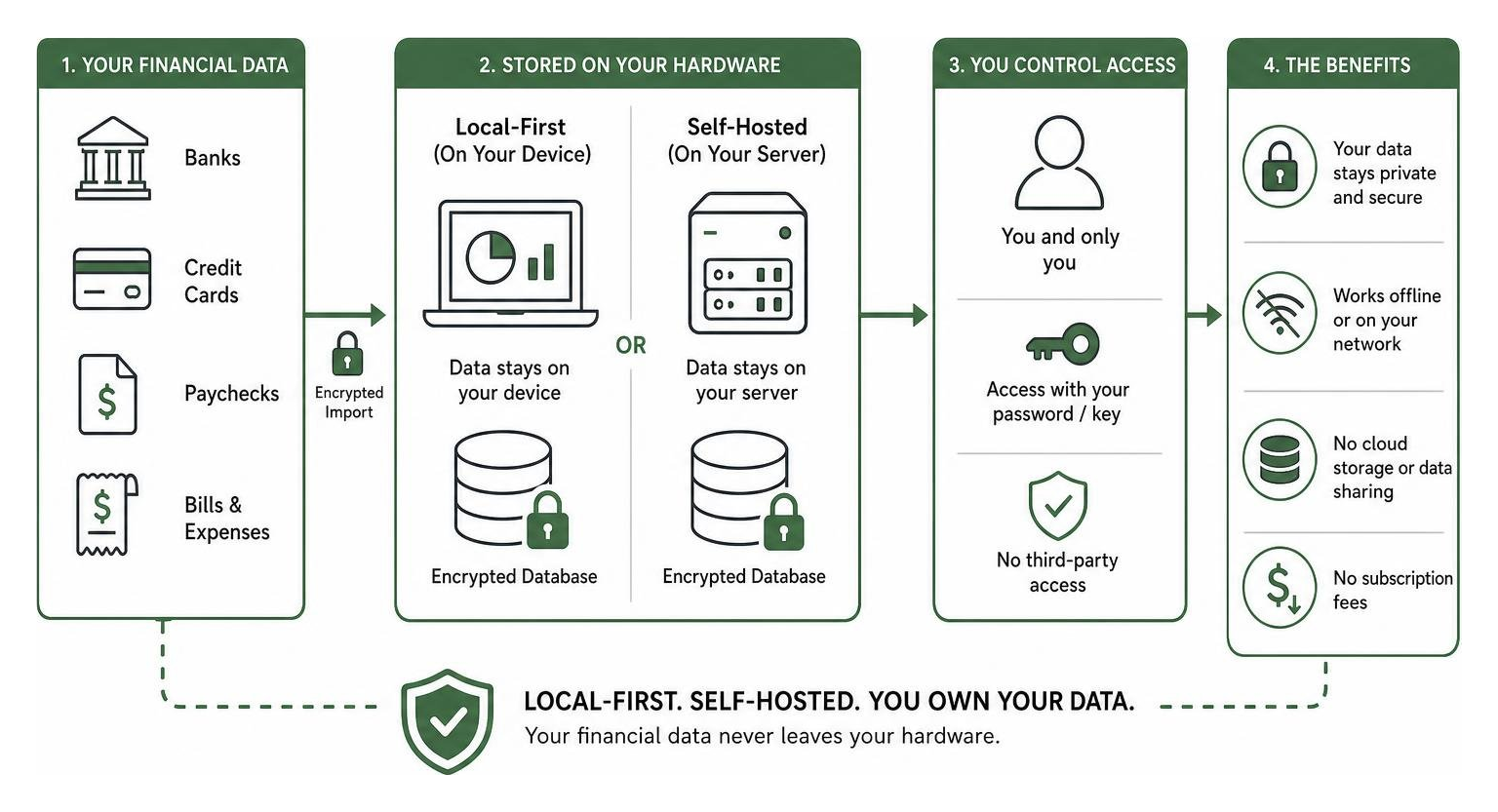
- 100% Data Ownership: Your financial records reside inside encrypted vaults on your personal hard drive or your private home server. If a software company closes down tomorrow, your database remains intact and accessible on your local hardware.
- Local Storage: Desktop tools save files locally in encrypted formats using standards such as AES-256 encryption. Nobody can read your spending logs without your master password.
- Self-Hosted Control: Deploying software on personal hardware—such as a home NAS device, a Raspberry Pi, or a private virtual server—ensures zero third-party tracking, zero built-in ad networks, and no external access to your net worth logs.
Standout Features of Open-Source and Free Financial Tools in 2026
Open-source and free personal finance software has evolved far beyond clunky spreadsheets. In 2026, non-subscription tools offer sophisticated features that rival or exceed expensive commercial platforms:
- Double-Entry Bookkeeping: Tools like GnuCash provide true double-entry accounting. Every debit must match an equal credit, ensuring business-grade ledger accuracy for tracking complex assets, loans, and business equity.
- Multi-Currency Support: Managing accounts across standard international ISO 4217 currency codes (USD, EUR, GBP, BRL, JPY) without forced, incorrect conversion rates is standard in self-hosted engines.
- On-Device AI Assistant Capabilities: Modern desktop platforms like OpenLedger — Free Personal Finance Software with AI run machine-learning models locally on your computer to auto-categorize expenses without sending a single transaction line to an external cloud.
- Invoicing and Business Management: Free desktop accounting tools like Manager.io allow small business owners and freelancers to issue unlimited professional invoices, track client receivables, and map expense categories for tax filings.
The Best Personal Finance Software Without Subscription: Top Categories and Options
To choose the best personal finance software without subscription, it helps to organize options by deployment style. Personal finance apps fall into three main categories: local desktop tools, self-hosted web systems, and lightweight single-file software.
| Platform Category | Setup Effort | Technical Skill Needed | Best For | Typical Examples |
|---|---|---|---|---|
| Local-First Desktop | Low (5-10 mins) | Beginner | Offline privacy, direct local AI, easy install | Nemo, OpenLedger, GnuCash, Manager.io |
| Self-Hosted Cloud | Medium (10-30 mins) | Intermediate (Docker / NAS) | Household sharing, multi-device sync, web access | Cashlytics, Steward, Ouriva |
| Lightweight Single-File | Very Low (1 min) | Beginner | Maximum simplicity, full offline access | Hedgie |
Local-First Desktop Apps with AI Categorization
Local desktop applications install directly onto your macOS, Windows, or Linux system. They store financial transactions within an encrypted vault on your hard drive, providing fast interface performance and full offline availability.
A leading contender in this space is Nemo — Smarter than Monarch. More private than a spreadsheet.. Nemo delivers a modern desktop experience that combines direct, secure bank connections with strict local privacy. It connects directly to financial institutions using mutual TLS (mTLS) through Teller, encrypting credentials in a local vault on your device.
Nemo boasts up to 99% auto-categorization accuracy—outperforming many paid subscription alternatives that hover around 70% to 90% accuracy. Because Nemo processes data on your local machine, your personal spending habits stay strictly private. Users can ask plain-English questions about spending trends or check if a purchase fits within their monthly budget without subscribing to a paid cloud platform.
Another desktop option is OpenLedger — Free Personal Finance Software with AI. OpenLedger is a completely free, local platform designed for both personal spending management and e-commerce tracking. It runs on-device machine learning (XGBoost combined with a local LLM) to organize transaction imports from QBO, OFX, CSV, and PDF bank statements.
OpenLedger excels for freelancers and multi-channel sellers, mapping platform fee breakdowns and net payouts from marketplaces like Amazon, Etsy, Shopify, and eBay alongside standard personal budgeting accounts.
Self-Hosted Financial Managers for Advanced Users
Self-hosted financial platforms run on your own hardware or private virtual servers. They provide the convenience of cloud web apps—such as access from mobile devices, laptops, and shared household tablets—without handing your financial data to a third-party subscription vendor.
For automated budgeting and receipt capture, Cashlytics: Free Self-Hosted Personal Finance App provides a complete, modern financial dashboard. Built on Next.js and PostgreSQL, Cashlytics deploys via Docker in under five minutes. It features an AI-powered receipt scanner that extracts merchant details, totals, and line items, along with multi-currency tracking, bill push notifications, and a Progressive Web App (PWA) interface that functions seamlessly offline.
If portfolio management and family accounts are top priorities, $teward: Self-hosted personal finance, without the middleman – 7312.us offers comprehensive wealth tracking. Steward supports seven distinct account types (checking, savings, credit cards, brokerage, crypto, loans, and non-liquid real estate assets) along with 25 built-in financial reports. It includes real checkbook reconciliation, automated DRIP dividend handling, and role-based access control, allowing family members or bookkeepers view-only or user access without master admin rights.
For simple household budgeting based on proven framework rules, Ouriva — Personal Finance for the Real World applies the popular 50/30/20 budgeting rule (Needs, Wants, Savings) directly to manual CSV statement uploads. Ouriva operates under an open-source AGPL-3.0 license, installs via Docker, and tracks multi-currency balances without requiring bank API connections or paying recurring monthly SaaS fees.
Lightweight Single-File and Desktop Solutions
For users who want zero server setups, zero account registrations, and minimal setup overhead, lightweight solutions offer total software autonomy.
An outstanding open-source project in this class is lancebramsay/hedgie. Hedgie is a household budget planner that operates entirely out of a single downloadable index.html file in your web browser. It requires no user account, no central server, and no subscription fee.
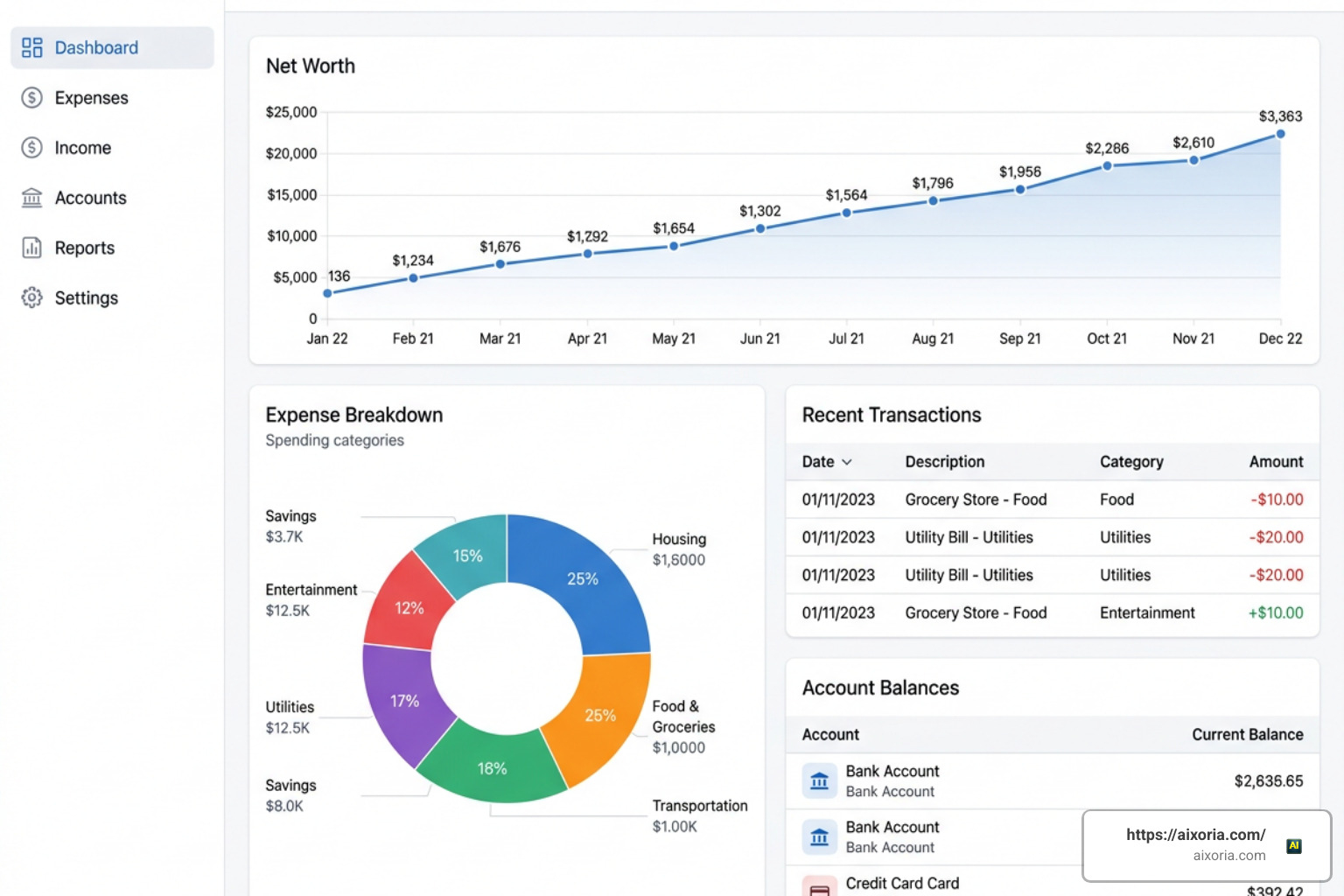
Despite its lightweight design, Hedgie includes net worth portfolio charts, receipt logging, and bill coverage indicators. Data remains stored locally in browser storage, with optional end-to-end encrypted cloud synchronization using private GitHub Gists, Dropbox, or JSONBin protected by client-side AES-256-GCM encryption.
For classic desktop accounting, traditional platforms like GnuCash and Manager.io (Desktop Edition) remain solid choices. GnuCash is a free, open-source accounting suite featuring full double-entry bookkeeping, investment tracking, and custom reporting. Manager.io provides a free-forever desktop tier that includes invoicing, purchase orders, and tax category mapping without forcing users onto paid cloud updates.
Data Migration, On-Device AI, and Advanced Capabilities
Transitioning away from a paid subscription app to the best personal finance software without subscription is far easier than most people expect. Modern open-source and free desktop tools include robust import utilities designed to pull data out of commercial systems.
How to Migrate Financial Data to the Best Personal Finance Software Without Subscription
When leaving a subscription platform like Quicken, Monarch, or YNAB, you don’t have to leave your financial history behind. Follow this migration process to retain your historical records:
Most non-subscription tools (including Steward, Cashlytics, and OpenLedger) include mapping wizards that remember your preferences for future CSV uploads.
On-Device AI and Local Automated Categorization
One major historical advantage of subscription apps was automated transaction categorization. Today, on-device AI bridges that gap without invading your privacy.
Modern local-first financial apps utilize machine-learning models (like XGBoost) and local Large Language Models (LLMs) running directly on your computer’s CPU or GPU. Software like Nemo and OpenLedger analyzes transaction payees locally to achieve up to 99% categorization accuracy.
Similarly, self-hosted applications like Cashlytics allow users to attach receipt photos and parse merchant names, dates, and total prices using AI. Because processing occurs on your device or private server, your spending data never leaves your control.
Selection Strategy: Choosing Between Desktop, Self-Hosted, and Free Cloud Apps
Selecting the best personal finance software without subscription comes down to matching a tool to your technical comfort level, hardware, and specific financial needs.
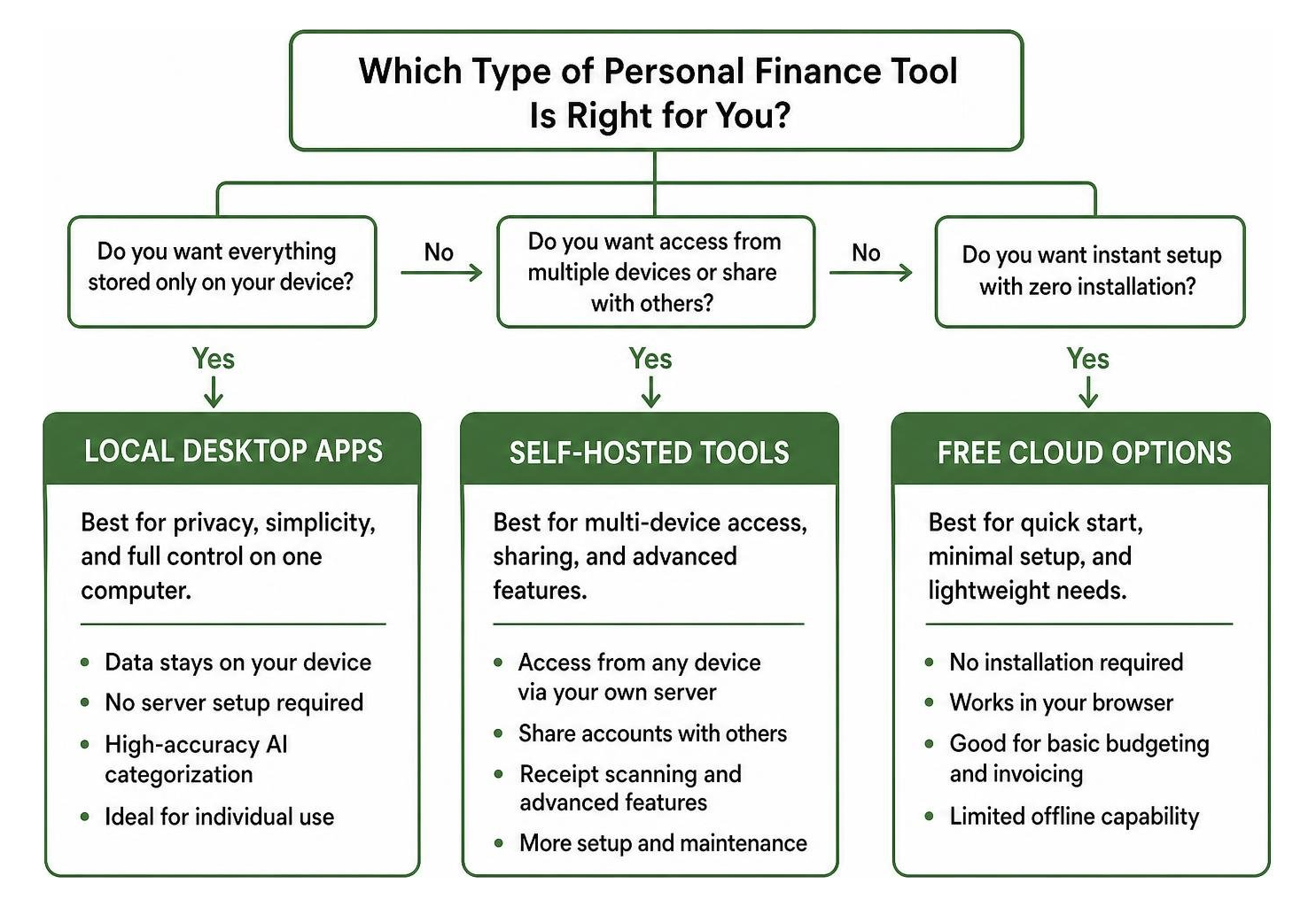
- Choose Local Desktop Apps (Nemo, OpenLedger, GnuCash) if you want simple single-click installation, total data privacy on your laptop, high-accuracy AI auto-categorization, or double-entry bookkeeping without managing servers.
- Choose Self-Hosted Tools (Cashlytics, Steward, Ouriva) if you want mobile browser access, shared accounts for household members, receipt scanning, or complex investment portfolio oversight across multiple home devices.
- Choose Single-File or Free Cloud Options (Hedgie, Wave, Manager.io) if you want instant setup with zero installation overhead, basic invoicing, or ultra-lightweight offline budgeting.
Frequently Asked Questions About Subscription-Free Finance Tools
Can I automatically sync bank accounts without paying a monthly subscription?
Yes, selected modern desktop apps offer secure direct sync without recurring monthly fees. For example, Nemo uses mutual TLS (mTLS) bank authentication via Teller to sync account transactions directly to an encrypted vault on your computer without charging a monthly subscription. Other platforms rely on simple two-minute CSV or OFX statement uploads directly from your online banking portal, preserving complete privacy while avoiding aggregator fees.
Are open-source and offline finance tools safe for sensitive data?
Open-source and offline desktop applications are often significantly safer than commercial cloud services. Offline software stores your financial registers locally on your drive, protected by standards like AES-256 encryption. Open-source code bases are publicly auditable, ensuring there are no hidden tracking codes or covert data sales. Furthermore, self-hosted applications operate behind your personal network firewall without exposing bank passwords to central cloud servers.
What are the main limitations of free personal finance tools?
The main trade-offs involve hands-on management and customer support. Free and open-source personal finance platforms do not offer 24/7 phone support teams; help is usually provided through active community forums, GitHub issue trackers, and online user guides. Additionally, users who prefer non-subscription platforms may choose manual file uploads over automatic aggregator syncing, spending a few minutes each month importing bank statementshttps://www.mediafire.com/file/k1abieo4psg78be/VILLAGERS%252B%252B_2.0_BY_MCMPDL.mcaddon/file“;.
Conclusion
Finding the best personal finance software without subscription is ultimately about taking back control of your financial life. Eliminating $10 to $20 monthly subscription fees puts money back into your pocket every year, while keeping your sensitive transaction history stored safely on your own terms.
Whether you choose a local-first desktop application with built-in AI auto-categorization like Nemo or OpenLedger, a feature-packed self-hosted system like Cashlytics or Steward, or a lightweight offline file like Hedgie, modern subscription-free software delivers all the power and clarity you need to track net worth, organize budgets, and hit your long-term goals.
To learn more about leveraging intelligent technology to streamline your everyday workflows, check out our complete cheat sheet to Discover the best AI for productivity in 2026.