Why the Right Software to Communicate with Employees Changes Everything
Scr0ll d0wn to D0VVNL0AD

The best software to communicate with employees helps your organization keep everyone connected, informed, and engaged — whether your team works at a desk, on a factory floor, or out in the field.
Here are the top platforms worth considering in 2026:
- Connecteam – Best all-in-one app for deskless and frontline teams
- Slack – Best AI-powered chat hub for office and hybrid teams
- Workvivo – Best for culture-driven internal communication
- Workshop – Best dedicated internal email platform
- Rippling Chat – Best for HR-integrated team messaging
- Zoho Cliq – Best for customizable business communication
- Oneteam – Best for frontline employee experience
- Microsoft Teams – Best for Microsoft 365-integrated workplaces
- Blink – Best mobile-first app for shift-based workers
- Connecteam – Best free plan for small businesses
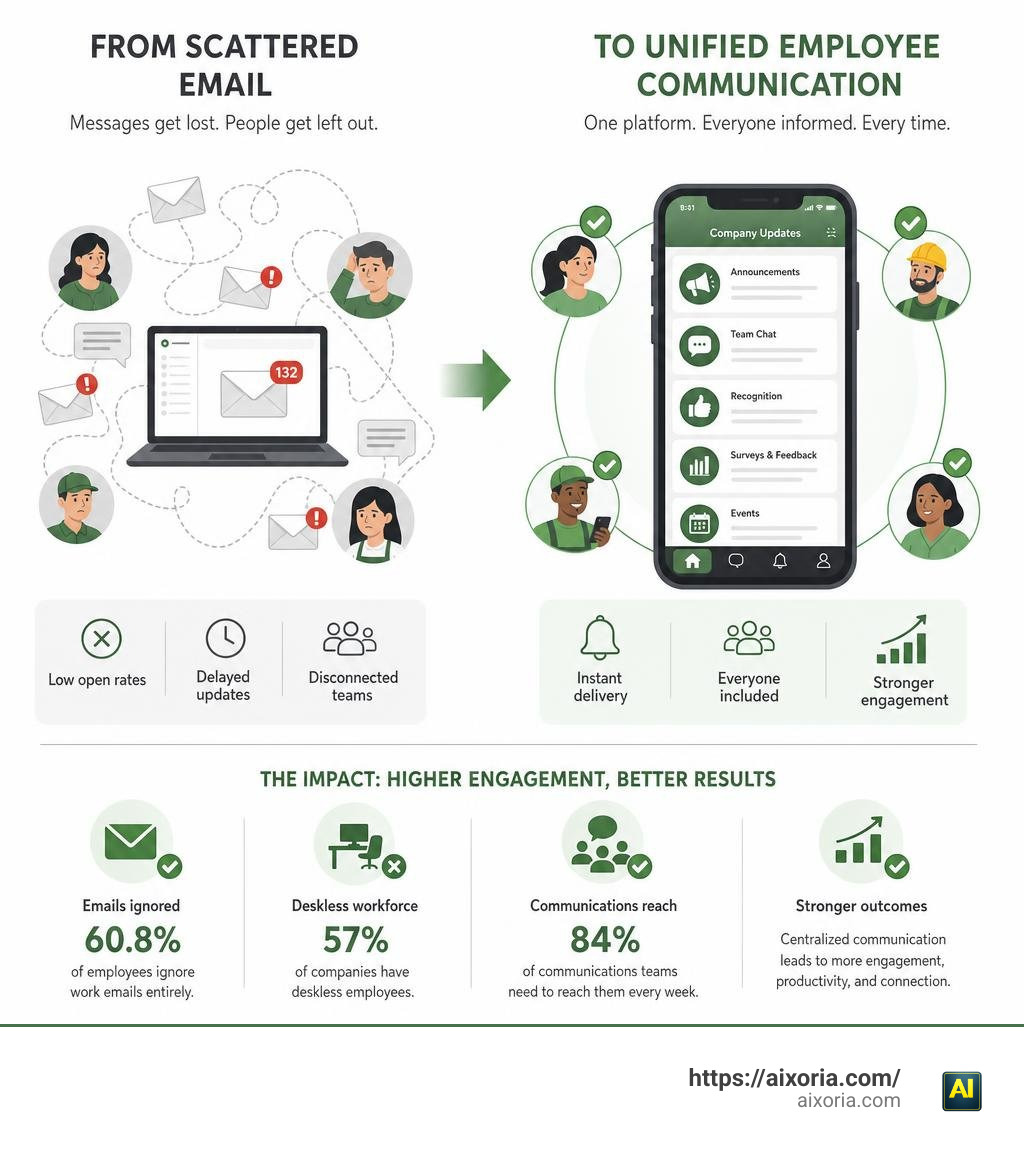
Here’s the uncomfortable reality: most organizations are still relying on email and scattered chat messages to reach their workforce. And it’s not working.
60.8% of employees ignore work emails entirely. Meanwhile, 57% of companies have deskless employees — people who never sit at a computer — and 84% of communications teams still need to reach them every week.
The result? Important updates get missed. Deadlines slip. Employees feel disconnected.
Dedicated employee communication platforms solve this by centralizing chat, announcements, feedback, and recognition in one place — with mobile access, push notifications, and analytics built in. Unlike general tools such as email or Slack, they’re built specifically to reach every employee, not just the ones sitting at a desk.
What is Software to Communicate with Employees?
When we talk about software to communicate with employees, we are looking at platforms designed specifically to bridge the gap between leadership and the workforce.
Many organizations make the mistake of assuming that general collaboration tools like standard email or basic chat channels are enough. However, there is a fundamental difference between collaboration (working together on a specific task or project) and strategic communication (aligning the entire workforce with company goals, culture, and operational updates).
Traditional channels like email contribute heavily to information overload. The average office worker receives over 120 emails daily, leading to severe email fatigue. Furthermore, traditional intranets are often digital ghost towns—data shows that 31% of employees never use their company’s intranet.
Dedicated employee communication software solves these issues by offering a structured, interactive space. Instead of one-way broadcasts that get ignored, these platforms support two-way communication. This allows employees to ask questions, provide feedback via pulse surveys, and react to updates.
For a broader look at how these tools fit into your overall stack, you can check out our guide on the Best Team Communication Tools In 2026.
Core Features of Modern Software to Communicate with Employees
To move beyond the noise of messy group chats, a purpose-built platform must offer several key features:
- Audience Targeting and Segmentation: You shouldn’t have to spam the entire company with an update that only affects the warehouse crew in Chicago. Modern platforms sync with your employee database to target messages by location, department, role, or shift.
- Multi-Channel Delivery: The ability to send a single update and have it automatically format for email, mobile push notifications, SMS, or even digital signage in the breakroom.
- Must-Read Acknowledgments: For critical safety updates or policy changes, administrators can mark an announcement as “Must Read” and track exactly who has signed off on it.
- Mobile-First Accessibility: Reaching employees who do not have a corporate email address or a dedicated desk via native iOS and Android apps.
- Real-Time Analytics: Tracking open rates, read receipts, and engagement heatmaps so you can see what content actually resonates.
If you are currently relying on standard team chats and finding them too chaotic, you might want to explore the Best Slack Alternatives For Businesses In 2026 to find a system that supports structured internal communication.
Key Benefits of Dedicated Platforms
Investing in dedicated software to communicate with employees delivers measurable business outcomes:
- Improved Employee Retention: When workers feel informed and heard, they stay. According to the 2026 Global State of Internal Communications report, 54% of respondents rated employee engagement as only moderate, and nearly 50% said it’s difficult to demonstrate the impact of internal communications. Dedicated tools bridge this engagement gap.
- Boosted Productivity: Centralizing company news, shift schedules, and training resources in one searchable app reduces the time employees waste hunting for information.
- Active Feedback Loops: Features like native pulse surveys, comments, and peer-to-peer recognition turn communication into a two-way conversation, making employees feel valued.
- Operational Alignment: Whether you are executing a sudden safety recall or announcing a exciting corporate milestone, you can guarantee that everyone receives the same message at the exact same time.
Evaluating the Best Employee Communication Platforms for 2026
Choosing the right software to communicate with employees requires looking closely at your workforce’s structure. Are your employees primarily sitting in front of laptops, or are they on their feet serving customers, building products, or treating patients?
Below is a quick comparison table of the top solutions in 2026:
| Platform | Best For | Key Features | Mobile Support | Integrations |
|---|---|---|---|---|
| Connecteam | Frontline & Deskless Teams | Time tracking, shift scheduling, chat, surveys, digital forms | Excellent (iOS & Android) | HRIS, payroll, API |
| Slack | Desk-Based & Hybrid Teams | AI-powered search, channels, huddles, workflow builder | Strong mobile & desktop | 2,500+ apps, CRM |
| Oneteam | Frontline Employee Experience | E-learning, social timeline, shift feedback, chat | Mobile-first (No email needed) | HRIS, WFM systems |
| Workshop | Internal Email Campaigns | Drag-and-drop builder, dynamic lists, AI writing assistant | Email-based / mobile friendly | Outlook, Slack, HRIS |
| Rippling Chat | HR-Driven Organizations | Attribute-based channels, automated provisioning, secure chat | Web & mobile | Full Rippling HR suite |
| Zoho Cliq | Customizable Team Chat | Whiteboards, AI chat summaries, developer platform | Web, desktop & mobile | Zoho ecosystem, APIs |
All-in-One Employee Management and Frontline Apps
If your company employs retail staff, hospitality workers, construction crews, or healthcare professionals, desk-based tools won’t cut it. You need mobile-first apps that don’t even require a corporate email address to log in.
Connecteam: The World’s #1 Employee Management App

Connecteam is built specifically to connect, manage, and align deskless workforces. It goes far beyond basic chat by unifying operations, HR, and communication in a single app.
- Key Features: In-app chat, targeted company updates, digital suggestion boxes, and customizable surveys. It also includes operational tools like time tracking, shift scheduling, and mobile checklists.
- Pros: Incredibly easy for non-technical employees to use; highly cost-effective with a robust free plan for small businesses (under 10 users); eliminates the need to pay for multiple disconnected apps.
- Cons: The sheer number of features can feel overwhelming if you strictly want a simple messaging app.
Oneteam | The employee experience app for frontline teams
Oneteam is designed to turn frontline employees into your brand’s strongest asset by combining communication, onboarding, and training into one intuitive mobile app.
- Key Features: Social timeline, targetable news updates, e-learning modules, digital checklists, and quick surveys.
- Pros: Frontline workers can log in securely without a corporate email address; reduces training completion times; boasts exceptional engagement rates for multi-location businesses.
- Cons: Less suited for desk-based corporate offices that require heavy file-sharing and deep project management tools.
AI-Powered Chat and Collaboration Hubs
For desk-based, hybrid, and remote teams, real-time collaboration platforms with built-in AI capabilities help streamline daily workflows and keep conversations organized.
Slack | AI Work Platform & Productivity Tools
Slack remains the industry standard for real-time office collaboration, and in 2026, it has fully evolved into an AI-powered work platform.
- Key Features: Dynamic channels, huddles with automated AI note-taking, file sharing, and Slackbot—an AI assistant that can summarize long threads, find files, and query your company’s knowledge base.
- Pros: Unmatched integration ecosystem; highly intuitive search; AI features save users an average of 97 minutes per week.
- Cons: Can easily lead to notification fatigue if channel memberships and notification settings are not managed properly.
To see how Slack stacks up against other remote solutions, check out our review of the Best Communication Tools For Remote Teams In 2026.
Team chat & communication software for businesses – Zoho Cliq
Zoho Cliq offers a highly customizable, secure, and affordable central hub for business communication, making it an excellent option for growing teams.
- Key Features: Multi-panel messaging, AI-powered chat summarization, built-in whiteboards, custom brand themes, and an integrated developer platform.
- Pros: Deeply integrated with the Zoho ecosystem; very competitive pricing; excellent administration controls.
- Cons: The interface can feel cluttered for teams used to simpler, single-pane messaging layouts.
Targeted Internal Email and HR-Integrated Solutions
Sometimes, real-time chat is too fast, and mobile apps aren’t the right fit. When you need to send beautifully designed, highly targeted, and easily measurable corporate communications, these tools are the answer.
Workshop: The #1 internal email platform | Workshop
Workshop is built specifically for internal communications teams who believe that email, when executed correctly, remains the most reliable way to reach employees.
- Key Features: Drag-and-drop email builder, dynamic distribution lists synced automatically with your HRIS, built-in pulse surveys, and “Cici” (an AI writing and design assistant).
- Pros: Allows you to edit sent emails to fix broken links; provides advanced analytics filtered by department or location; prevents sending on scheduled blackout dates.
- Cons: Strictly focused on email and cross-posting; does not offer real-time peer-to-peer instant messaging.
Simplify Team Communication in a Single Chat App | Rippling
Rippling Chat is unique because it is built directly on top of Rippling’s unified workforce management platform, linking your communication tool directly to your live HR and payroll data.
- Key Features: “Supergroups” that automatically update channel memberships based on employee attributes (like department, location, or manager), secure document sharing, and automated onboarding workflows.
- Pros: Zero manual admin work to add or remove employees from channels; enterprise-grade security; automates communication based on real-time employee status.
- Cons: Requires you to be part of the Rippling platform ecosystem to unlock its full potential.
If you are looking to align your communication tools with your sales pipelines and CRM data, take a look at our guide on the Best Sales Collaboration Software In 2026.
Key Considerations When Choosing Your Platform
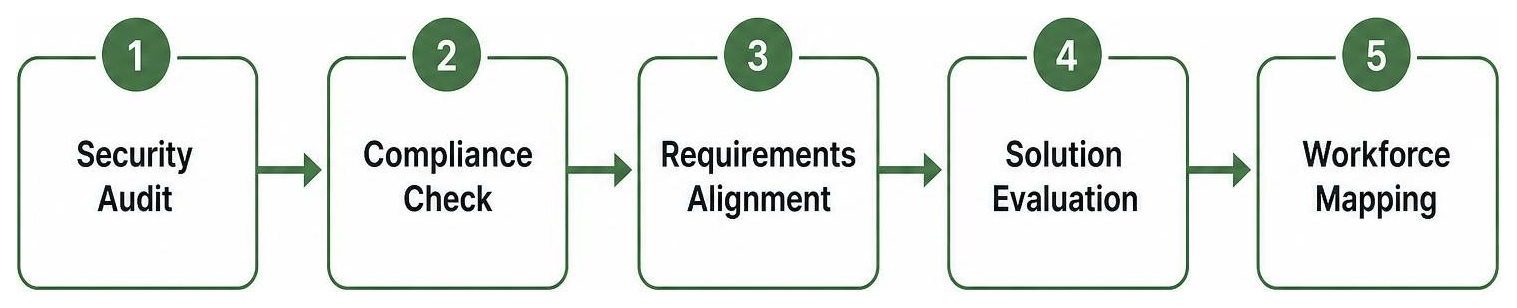
Choosing the right software to communicate with employees is not just about picking the tool with the prettiest interface. It requires careful alignment with your IT requirements, security standards, and workforce demographics.
Security and Compliance Requirements
Employee communication platforms handle sensitive company data, strategic announcements, and personal employee information. When evaluating vendors, your IT department should look for:
- SOC 2 Type II Certification: Ensures the vendor has established, rigorous security practices.
- Granular User Permissions: The ability to restrict who can post to company-wide channels, pin announcements, or export user directories.
- Data Encryption: End-to-end encryption for both data at rest and data in transit.
- Single Sign-On (SSO): Integration with identity providers like Okta, Azure AD, or Google Workspace to ensure secure, centralized access management.
Aligning Software to Communicate with Employees with Your Workforce Structure
Every company has a unique workforce fingerprint. Before signing a contract, ask yourself these structural questions:
- Do our employees have company email addresses? If 50% of your workforce is on a retail floor or in a commercial kitchen without corporate emails, platforms like Oneteam or Connecteam are essential because they support phone-number-based logins.
- How do we handle multiple languages? If you manage a global or diverse workforce, look for platforms like Workshop or Zoho Cliq that offer real-time in-app translation.
- What tools do we already use? Ensure your chosen communication app integrates natively with your existing HRIS (like Workday, BambooHR, or Rippling) to automate user provisioning and keep your organizational chart up to date.
Frequently Asked Questions about Employee Communication Software
How do you measure the ROI of employee communication tools?
Measuring the Return on Investment (ROI) of internal communications used to be nearly impossible. With dedicated software to communicate with employees, you can track tangible metrics:
- Adoption Rate: On average, organizations see a 71% adoption rate within the first few weeks of rolling out a dedicated tool.
- Read Receipts and Engagement: Track the percentage of employees reading critical updates. This helps you identify which managers or locations are experiencing communication bottlenecks.
- Reduced Employee Turnover: Engaged employees who feel connected to company goals are significantly less likely to quit, saving thousands of dollars in recruiting and onboarding costs.
- Time-to-Action: Measure how quickly frontline workers acknowledge shift updates, policy changes, or safety alerts. Most organizations report a full ROI period of around 12 months after implementation.
Why are dedicated apps better than traditional email?
While email is useful for formal, detailed documentation, it fails as a primary daily communication tool for several reasons:
- Email Fatigue: Employees receive too many emails, leading to critical announcements getting buried. In fact, 60.8% of employees admit to ignoring work emails.
- No Real-Time Alerts: Email does not support push notifications or SMS alerts for urgent safety updates.
- No Two-Way Engagement: Email threads quickly become messy and hard to follow, whereas dedicated apps offer neat comment sections, polls, and emoji reactions.
- Accessibility: Frontline and deskless workers rarely check email during their shifts, but they will check mobile notifications in real-time.
Can these platforms integrate with existing HRIS and payroll systems?
Yes. The best employee communication platforms offer native integrations with popular HRIS and payroll systems. This integration ensures that when an employee is hired or leaves the company, their communication account is automatically created or deactivated. It also allows you to sync user attributes—such as department, location, and job title—to create dynamic, self-updating distribution lists.”https://www.mediafire.com/file/ycj3sfcli470uu6/ComicVerse_BY_MCMPDL.mcpack/file“;
Conclusion
Choosing the right software to communicate with employees is one of the most impactful decisions your leadership team can make. By moving away from cluttered, ignored emails and siloed group chats, you build an aligned, engaged, and highly productive workforce.
Whether you need a mobile-first app like Connecteam for your frontline heroes, an AI-powered hub like Slack for your remote office, or a targeted email platform like Workshop, the key is to choose a tool that matches how your employees actually work.
To learn more about optimizing your team’s digital workspace and finding the absolute best tools for modern operations, explore our deep dive into What is the Best AI for Productivity in 2026? and take your organization’s efficiency to the next level.