Why Bing Webmaster Tools Deserves a Place in Your SEO Strategy
Scr0ll d0wn to D0VVNL0AD
Bing Webmaster Tools is a free platform from Microsoft that lets you monitor, manage, and improve how your website appears in Bing search results — and increasingly, in AI-generated answers through Microsoft Copilot.
Here’s a quick overview of what it does:
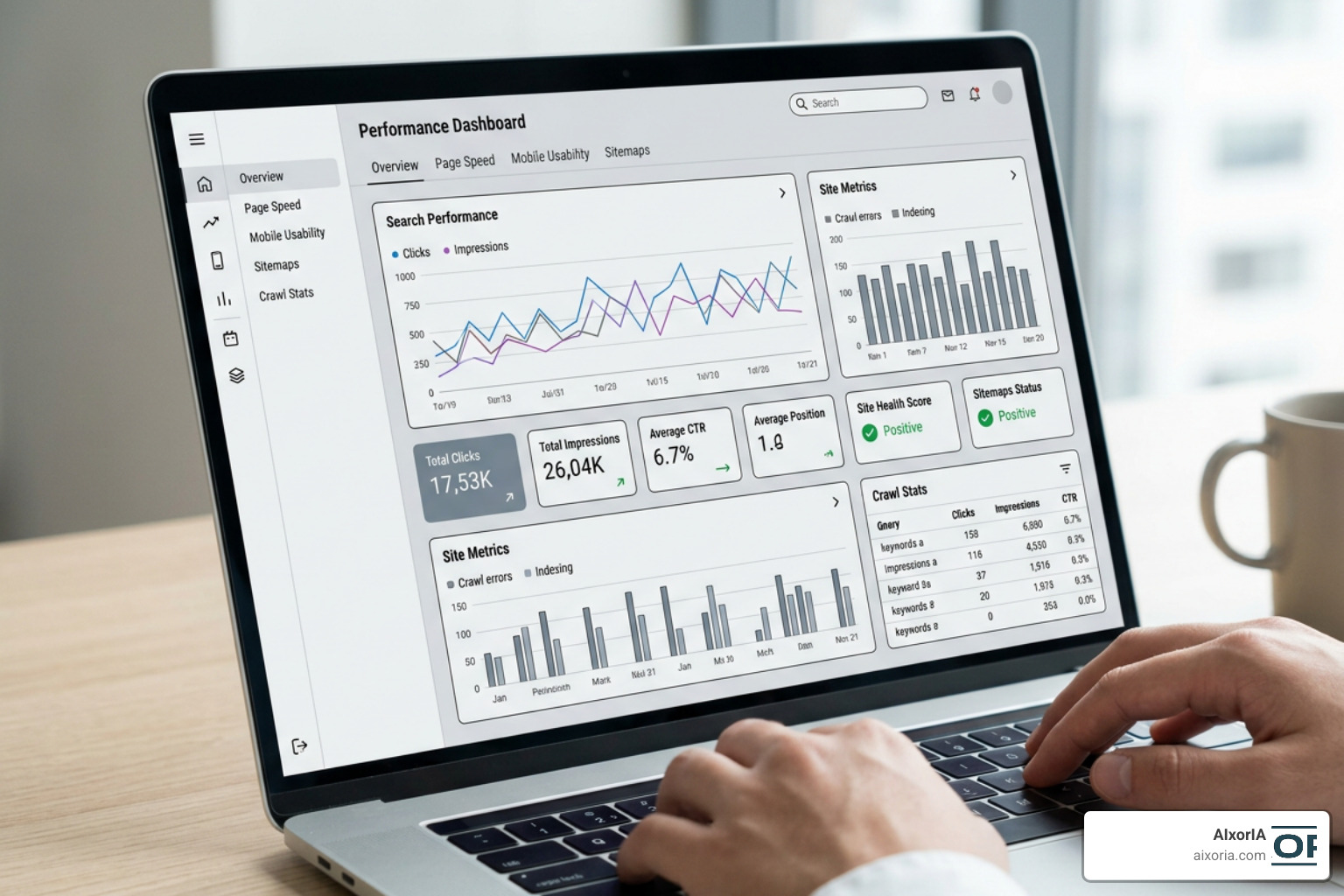
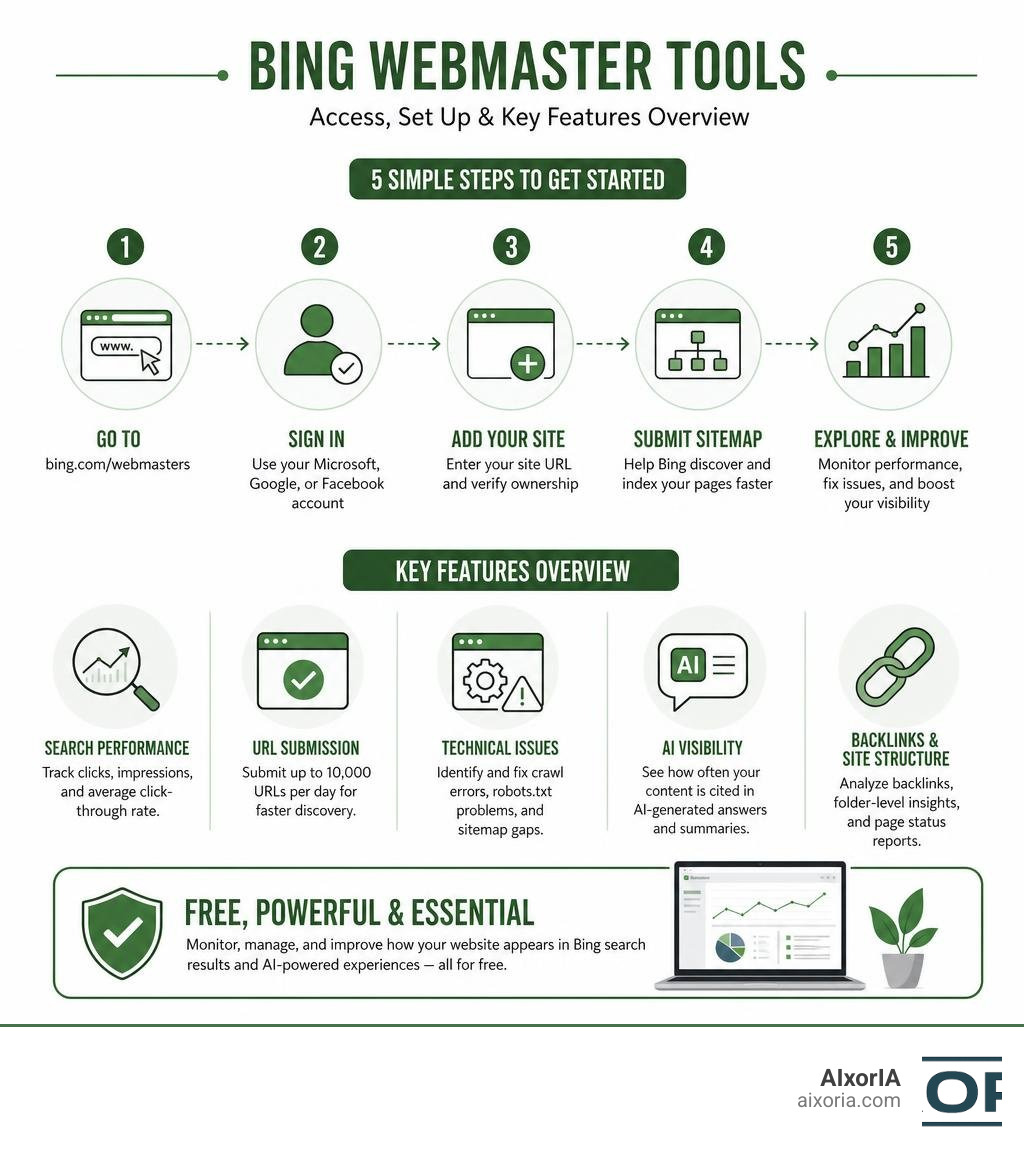
- Monitor search performance — track clicks, impressions, and average click-through rate
- Submit URLs for indexing — up to 10,000 URLs per day for faster discovery
- Fix technical issues — crawl errors, robots.txt problems, and sitemap gaps
- Track AI visibility — see how often your content is cited in Copilot and Bing AI summaries
- Analyze backlinks and site structure — folder-level insights and page status reports
Access it at www.bing.com/webmasters using a Microsoft, Google, or Facebook account. It’s completely free.
Bing may not be Google. But it’s not small either. Over 100 million people use Bing every day, and it powers search results across Yahoo, DuckDuckGo, and even ChatGPT. That’s a lot of potential visitors most small business owners are quietly ignoring.
And here’s the thing — setting up Bing Webmaster Tools takes less than 10 minutes. If you already use Google Search Console, you can import your site directly. No technical skills required.
In June 2026, Bing also launched an AI Performance report — a first-of-its-kind tool that shows you exactly how often your pages are cited inside AI-generated answers. That’s a genuinely new kind of visibility data that Google Search Console doesn’t offer yet.
Whether you’re a small business owner trying to get more organic traffic or just want to make sure your site isn’t invisible to a billion-dollar search ecosystem, this guide will show you everything you need to know.
What is Bing Webmaster Tools and How Does It Differ from Google Search Console?
When we think of search engine optimization, our minds automatically drift to Google. It makes sense—Google commands the lion’s share of the search engine market. However, ignoring the desktop search market where Bing accounts for just over 9 percent of global traffic means leaving valuable conversions on the table.
While Google Search Console (GSC) is the industry standard, Bing Webmaster Tools offers an incredibly polished user interface that many beginners find easier to navigate. Beyond aesthetics, the two platforms differ in how they analyze and rank websites.
For instance, Bing places a much heavier emphasis on exact-match keywords in page title tags, meta descriptions, domain names, and H1/H2 headers. Additionally, Bing openly acknowledges using social signals (such as shares and engagement on social platforms) as direct ranking factors, whereas Google has historically downplayed or denied their direct impact.
Here is a quick breakdown of how the two platforms compare:
| Feature | Google Search Console | Bing Webmaster Tools |
|---|---|---|
| Daily URL Submission | Varies (typically lower limits) | Up to 10,000 URLs per day |
| Data Retention | 16 months | 16 months |
| Social Signals | Not directly utilized | Used as ranking factors |
| Exact Match Keywords | Less weighted (prefers semantic context) | Highly weighted in titles, headers, and domains |
| Link Disavow Tool | Still active (though hidden) | Sunsetted as of October 2023 |
| AI Citation Tracking | None | AI Performance report (integrated with Copilot) |
If you want to dive deeper into how these algorithmic differences impact your overall SEO strategy, you can Learn more about the differences.
How to Set Up and Verify Your Site Fast
Getting started with Bing Webmaster Tools is incredibly straightforward. First, head over to the portal and log in using your preferred Microsoft, Google, or Facebook account.
Once inside, you will be prompted to add a site. You have two primary paths:
- Google Search Console Import (Fastest): If your site is already verified in Google Search Console, you can import it with a single click. Bing will pull all of your verified properties and instantly approve ownership.
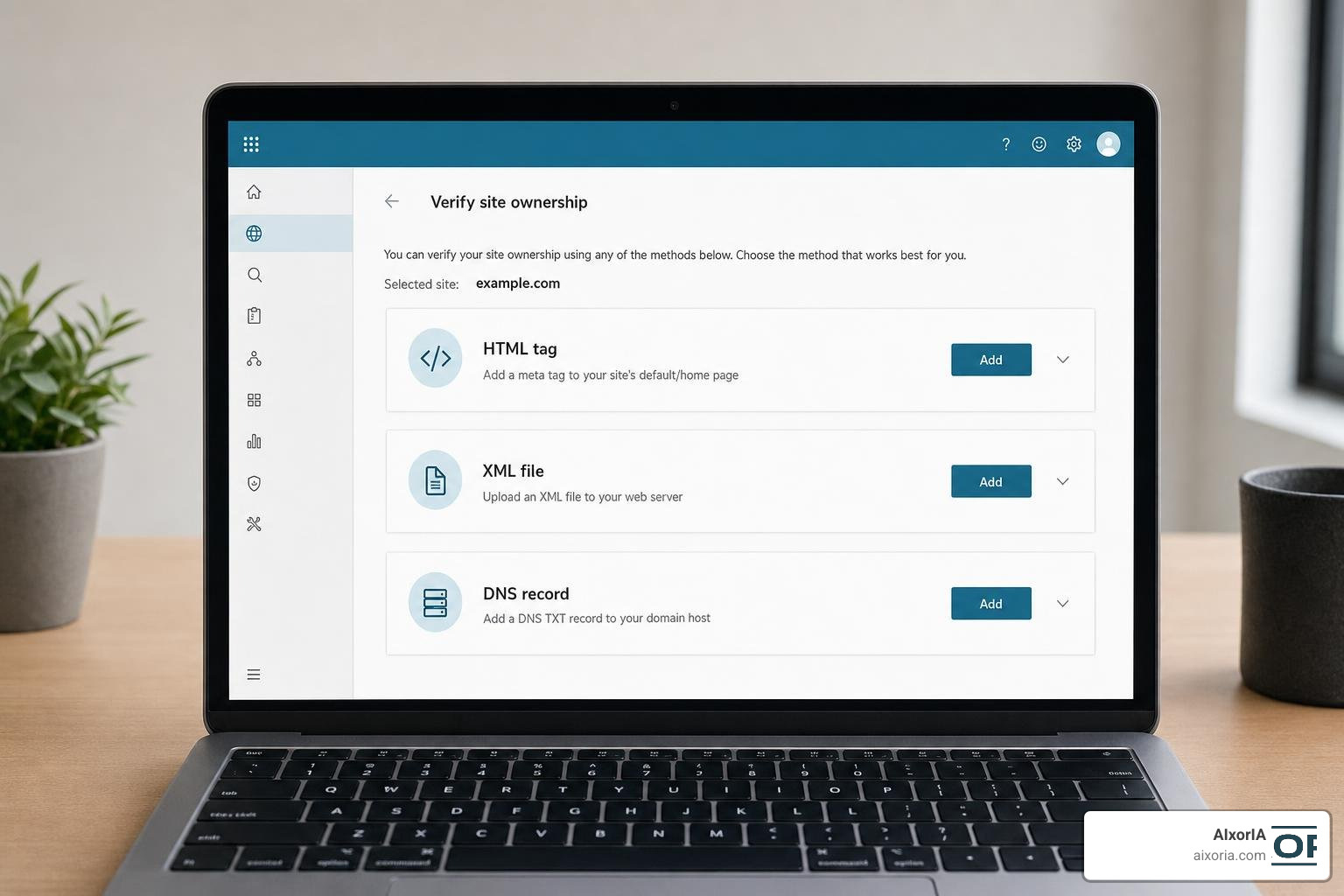
- Manual Addition: If you prefer to add your site manually, you can type in your URL and choose one of several verification methods.
To ensure your site starts ranking and indexing immediately, we highly recommend checking out Microsoft’s official blog post to Start setting up your site.
Verifying Ownership in Bing Webmaster Tools
If you choose the manual route, you will need to verify ownership using one of the following methods:
- Domain Connect: If your domain registrar supports it, Bing can automatically configure your DNS records with a quick login popup.
- XML Verification File: Download the custom XML file provided by Bing and upload it to your website’s root directory.
- Meta Tag Insertion: Copy the
<meta>tag provided by Bing and paste it into the<head>section of your homepage’s HTML. - DNS TXT/CNAME Record: Add a TXT or CNAME record directly to your DNS settings through your domain registrar.
Once you have completed any of these steps, click “Verify” for instant access to your dashboard.
Core Features and Technical SEO Reports
Once verified, you gain access to a suite of highly actionable technical SEO tools.
- Crawl Control: Unlike other search engines that crawl your site at their own pace, Bing allows you to schedule when Bingbot visits. If you run a high-traffic site, you can tell Bingbot to only crawl during your off-peak hours to save server bandwidth.
- Robots.txt Tester: Webmasters can validate their robots.txt files in real time to ensure critical pages aren’t accidentally blocked from search results.
- Site Scan: This built-in technical audit tool crawls your site on demand to identify broken links, missing alt tags, duplicate title tags, and other common on-page SEO issues.

Analyzing Site Structure with Site Explorer
One of the most unique features of Bing Webmaster Tools is Site Explorer. Unlike traditional list-based reports, Site Explorer organizes your website’s data using its actual directory and folder structure.
With folder-based insights, you can see cumulative clicks, impressions, and total backlink counts for specific sections of your site (e.g., /blog/ vs /shop/). This makes it incredibly easy to see which subfolders are driving the most organic value.
Site Explorer also categorizes every URL on your site into one of four distinct states:
- Indexed: Successfully crawled and live in Bing search results.
- Error: Suffered a technical issue (like a 404 error) that prevented indexing.
- Warning: Indexed, but with issues (such as being blocked by robots.txt but still receiving external links).
- Excluded: Intentionally left out of search results (due to canonical tags, redirects, or noindex tags).
To master this folder-based diagnostic tool, you can Explore Site Explorer features.
Accelerating Indexing with IndexNow and URL Submissions in Bing Webmaster Tools
Instead of waiting days or weeks for search engine crawlers to discover your new content, Bing allows you to force-feed updates directly into its index.
Through the manual URL submission tool, you can submit up to 10,000 URLs per day for instant indexing. For larger sites or automated workflows, you can utilize the IndexNow protocol. IndexNow is an open-source tool that instantly alerts participating search engines (including Bing and Yandex) the exact second you publish, edit, or delete content.
If you manage a large site or want to automate this process through a custom CMS or application, you can set up Programmatic access via Bing Webmaster API.
Optimizing for AI Search and Generative Engine Optimization (GEO)
As we navigate 2026, the SEO landscape has shifted dramatically toward conversational search. With Microsoft Copilot and AI-generated summaries built directly into Bing, traditional blue links are no longer the sole goal.
To help webmasters adapt, Microsoft introduced the AI Performance report. This dashboard is designed for Generative Engine Optimization (GEO), showing you exactly how your content is utilized inside AI search experiences.
The AI Performance report tracks several key metrics:
- Total Citations: How many times your website’s pages were cited as sources in AI-generated answers.
- Average Cited Pages: The average number of unique pages from your site used as sources per day.
- Grounding Queries: The exact prompt or conversational query the user typed that led the AI to retrieve and cite your content.
To optimize your site for AI citations, focus on creating structured, highly authoritative content. Use bullet points, concise tables, and clear FAQ sections. The easier your site is for an AI model to parse, the more likely you are to be cited.
To explore how to activate and read these reports, you can Discover the AI Performance report.
Frequently Asked Questions about Bing Webmaster Tools
How long does it take for data to appear in Bing Webmaster Tools after verification?
It typically takes up to 48 hours for Bing to collate and present initial search performance data after you verify a new site. Don’t worry if your dashboard looks empty on day one; the reports will populate as Bingbot processes your site’s historical search data.
Can I programmatically submit URLs to Bing?
Yes! Developers can use the Bing Webmaster API to automate URL submissions. If you are a Python developer, you can install the official client library directly via the bing-webmaster-tools PyPI package to easily build automation scripts for your publishing pipeline.
How does IndexNow differ from traditional sitemap processing?
While Bing processes traditional XML sitemaps at least once every 24 hours, IndexNow works on a “push” model. Instead of waiting for Bing to pull your sitemap, IndexNow instantly notifies the search engine of changes, ensuring your content is indexed in seconds and vastly improving crawl efficiency.
Conclusion
Setting up Bing Webmaster Tools is one of the easiest, highest-leverage actions you can take to expand your website’s organic footprint and prepare your brand for the age of AI search. By ignoring Bing, you miss out on millions of desktop users and critical visibility within Microsoft Copilot.
At AIxorIA, we believe that navigating the future of search shouldn’t be overly complicated or expensive. We provide custom AI solutions, performance audits, and hands-on tool training workshops to help businesses of all sizes get found online. Whether you are looking to audit your technical SEO or optimize your data workflows, we are here to support you with simple language and fast customer service.
Ready to streamline your business operations and data pipelines? Explore the best no-code ETL tools in 2026 to learn how to manage your data without writing a single line of code.
I am really impressed along with your writing talents as neatly as with the
format for your blog. Is that this a paid subject or did you modify it yourself?
Anyway stay up the excellent high quality writing, it is uncommon to look a great blog
like this one these days..