If you’ve been using Spotify for your daily music streaming, you already understand why it became the default music app for millions of people.
It’s fast.
It’s familiar.
And its recommendation engine is still one of the strongest in the industry.
But in 2026, one major question keeps pushing users to search for Spotify alternatives:
Why am I still paying more for compressed audio when other platforms offer Lossless HiFi sound at the same price—or even less?
That is the biggest conversation in music streaming right now.
While Spotify spent years teasing its “HiFi” or “Supremium” tier, platforms like Apple Music and Amazon Music quietly moved ahead by offering Lossless Audio, Spatial Audio, and even 24-bit/192kHz streaming without forcing users into a much higher-priced plan.
For many listeners, that changed everything.
But sound quality is only part of the story.
Some users want:
- better artist support
- stronger podcast alternatives
- smarter AI music discovery
- cheaper family plans
- more independent music
- better offline listening
- fewer ads
- more ethical streaming platforms
- or simply a platform that feels fresh again
The truth is simple:
Spotify is still excellent.
But it is no longer the obvious best choice for everyone.
In this guide, we’ll break down the 9 best Spotify alternatives in 2026, compare pricing, audio quality, AI recommendation systems, and explain which platform actually deserves your subscription.
This isn’t another generic list.
This is the real comparison serious listeners need before switching.
Let’s begin.
Quick Comparison Table: Best Spotify Alternatives in 2026
| Platform | Starting Price | Audio Quality | Best Feature |
|---|---|---|---|
| Apple Music | $10.99/mo | Lossless + Hi-Res Lossless (24-bit/192kHz) | Best for premium audio |
| YouTube Music | $10.99/mo | Up to 256 kbps AAC | Best for music + video discovery |
| Amazon Music Unlimited | $10.99/mo | HD + Ultra HD + Spatial Audio | Best for Prime users |
| Tidal | $10.99/mo | HiFi + High-Resolution FLAC | Best for audiophiles |
| Deezer | $10.99/mo | HiFi FLAC | Best for personalized discovery |
| SoundCloud Go+ | $9.99/mo | High quality streaming | Best for indie creators |
| Pandora | Varies by region | Standard + Premium tiers | Best for radio-style listening |
| Audiomack | Free + Premium | Standard streaming | Best free alternative |
| Bandcamp | Pay per artist/project | High-quality downloads | Best for supporting artists |
Apple Music
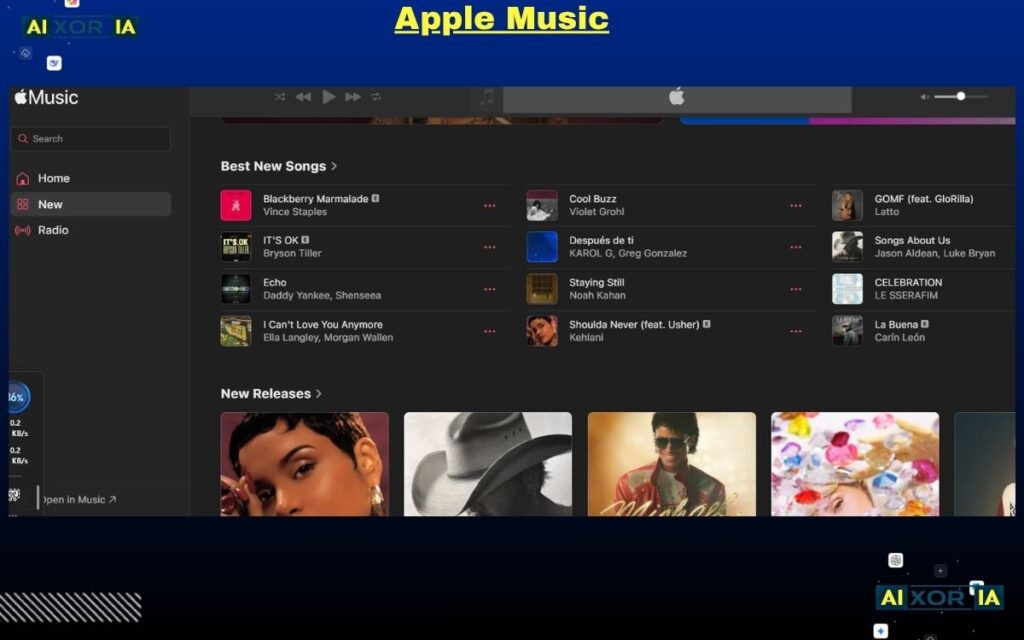
Apple Music is one of the strongest Spotify alternatives in 2026, especially for users who care about better sound quality and a premium listening experience.
While Spotify is known for music discovery, Apple Music focuses more on audio quality, cleaner music streaming, and deeper integration with Apple devices like iPhone, AirPods, Mac, and HomePod.
It offers Lossless Audio, Spatial Audio with Dolby Atmos, offline listening, and access to over 100 million songs—all without charging extra for better sound quality.
For users who want a more polished and high-quality listening experience, Apple Music often feels like a direct upgrade from Spotify.
Apple officially states that Apple Music includes over 100 million songs, lossless audio, Spatial Audio, and offline listening across supported devices. (apple.com)
Key Features
- Lossless Audio included
- Spatial Audio with Dolby Atmos
- Over 100 million songs
- Offline downloads
- Ad-free listening
- Apple Music Classical included
- Family sharing support
- Cross-platform support for iPhone, Android, Windows, and smart TVs
- Strong human-curated playlists
Pros
- Better sound quality than Spotify
- Excellent integration with Apple devices
- No extra payment for lossless audio
- Clean and music-focused interface
- Reliable offline downloads
- Apple Music Classical included
Cons
- Discovery algorithm is weaker than Spotify
- Less social playlist sharing
- Better experience mainly for Apple users
- Interface may feel less flexible for some Android users
Best For
Apple Music is best for:
- iPhone users
- Audiophiles
- Users who want premium sound quality
- People using AirPods, Mac, or HomePod
- Users looking for a true Spotify replacement
Pricing
Apple Music pricing for U.S. users in 2026:
- Individual Plan — $10.99/month
- Student Plan — $5.99/month
- Family Plan — $16.99/month
Apple also offers free trial options for eligible new subscribers.
Apple’s official pricing page lists Individual at $10.99/month, Student at $5.99/month, and Family at $16.99/month. (apple.com)
Real Experience
If you already use an iPhone, Apple Music feels very smooth and premium.
The sound quality is noticeably better, especially with good headphones, and offline downloads work reliably. While Spotify still wins in music discovery, Apple Music feels better for users who care more about listening quality than recommendation algorithms.
YouTube Music
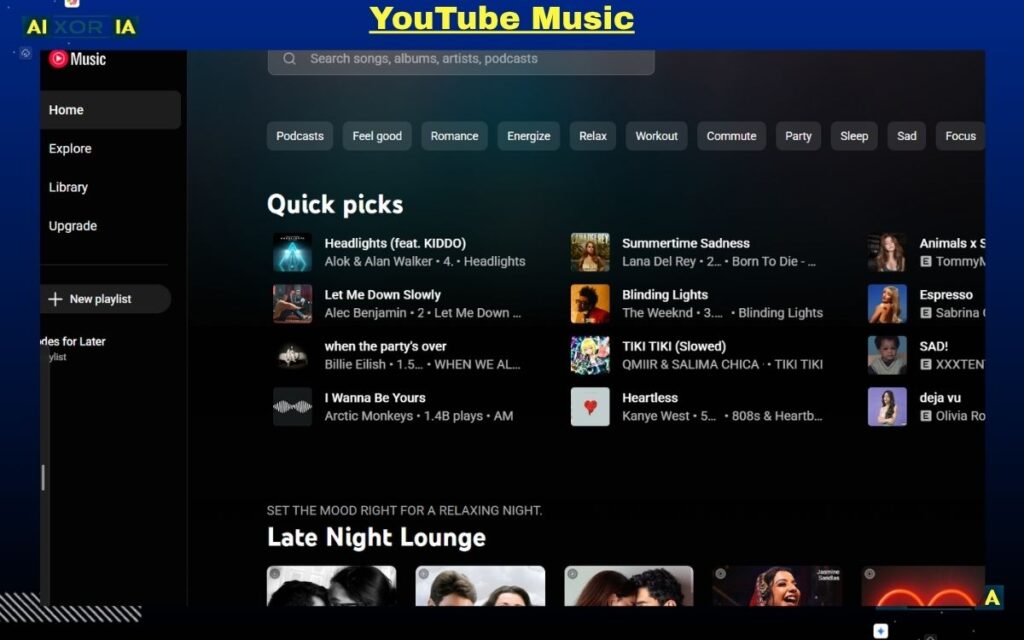
YouTube Music is one of the best Spotify alternatives for users who love discovering rare songs, live performances, remixes, and unofficial versions that are often missing from Spotify.
Unlike traditional music streaming platforms, YouTube Music combines official music releases with the massive YouTube video library. This means you can find covers, concerts, DJ mixes, unreleased tracks, and niche content all in one place.
For users who enjoy music discovery beyond standard playlists, YouTube Music often feels more flexible and more entertaining than Spotify.
It may not offer the same premium hi-res audio experience as Apple Music or TIDAL, but for variety and discovery, it is one of the strongest options available.
Google highlights that YouTube Music includes official songs, albums, playlists, radio, live performances, covers, and music videos across its platform. (music.youtube.com)
Key Features
- Access to official songs and albums
- Live performances and concert recordings
- Covers, remixes, and unofficial uploads
- Music videos included
- Smart recommendations based on YouTube activity
- Offline downloads for Premium users
- Background play support
- Cross-device syncing
- Huge music discovery potential
Pros
- Massive content library beyond normal streaming apps
- Great for rare songs and hard-to-find tracks
- Excellent recommendation engine
- Includes music videos
- Strong discovery for niche music lovers
- Works well across all devices
Cons
- No true hi-res lossless audio
- Free version includes ads
- Interface can feel cluttered for some users
- Audio quality is not ideal for audiophiles
Best For
YouTube Music is best for:
- Users who love discovering rare songs
- Fans of live performances and remixes
- People who watch music videos regularly
- Listeners who enjoy niche or regional music
- Users who want more than just standard streaming
Pricing
YouTube Music pricing for U.S. users in 2026:
- Individual Plan — $10.99/month
- Family Plan — $16.99/month
- Student Plan — $5.49/month
It is also available as part of YouTube Premium, which includes ad-free YouTube video access and background play.
Google’s official pricing may vary slightly by location and promotional offers. (youtube.com)
Real Experience
YouTube Music feels strongest when you want songs that Spotify simply doesn’t have.
Finding live concerts, remixes, and old unofficial uploads is much easier here. If music discovery matters more to you than perfect sound quality, YouTube Music can feel more fun and more useful than Spotify.
TIDAL
TIDAL is one of the best Spotify alternatives for users who care more about sound quality than mainstream music discovery.
While Spotify focuses heavily on playlists and recommendation algorithms, TIDAL is built for listeners who want a premium, high-fidelity music experience. It offers lossless audio, HiFi streaming, Dolby Atmos support, and FLAC-quality playback for users who want studio-level sound.
Another major reason users switch to TIDAL is artist support. TIDAL has often been recognized for offering better artist payouts compared to many other streaming platforms, which makes it attractive for listeners who want their subscription to support musicians more fairly.
If your goal is better listening quality rather than just background music, TIDAL feels like a serious upgrade from Spotify.
TIDAL promotes lossless audio, HiRes FLAC, Dolby Atmos, and immersive listening features as part of its premium music plans. (tidal.com)
Key Features
- HiFi lossless audio
- HiRes FLAC streaming
- Dolby Atmos support
- Large music catalog
- Offline listening
- Ad-free experience
- Artist-focused platform
- Personalized recommendations
- Cross-platform support
Pros
- Excellent sound quality for audiophiles
- Better artist payouts than Spotify
- Music-focused platform without heavy podcast clutter
- Strong premium listening experience
- Dolby Atmos and FLAC support included
Cons
- Smaller social ecosystem than Spotify
- Discovery features are weaker
- Less popular among casual listeners
- Premium plans can feel expensive for some users
Best For
TIDAL is best for:
- Audiophiles
- Users with premium headphones or speakers
- Listeners who prioritize sound quality
- Music fans who want better artist support
- Users looking for a cleaner music-first experience
Pricing
TIDAL pricing for U.S. users in 2026:
- Individual Plan — around $10.99/month
- Family Plan — varies by region
- Student discounts available
TIDAL has simplified its pricing in recent years, with lossless audio included in standard premium plans instead of expensive separate HiFi tiers. (tidal.com)
Real Experience
TIDAL feels different the moment you use good headphones.
The sound is noticeably cleaner and richer compared to Spotify, especially for users who actually listen carefully instead of just playing music in the background. If audio quality matters most, TIDAL feels like one of the strongest upgrades available.
Amazon Music
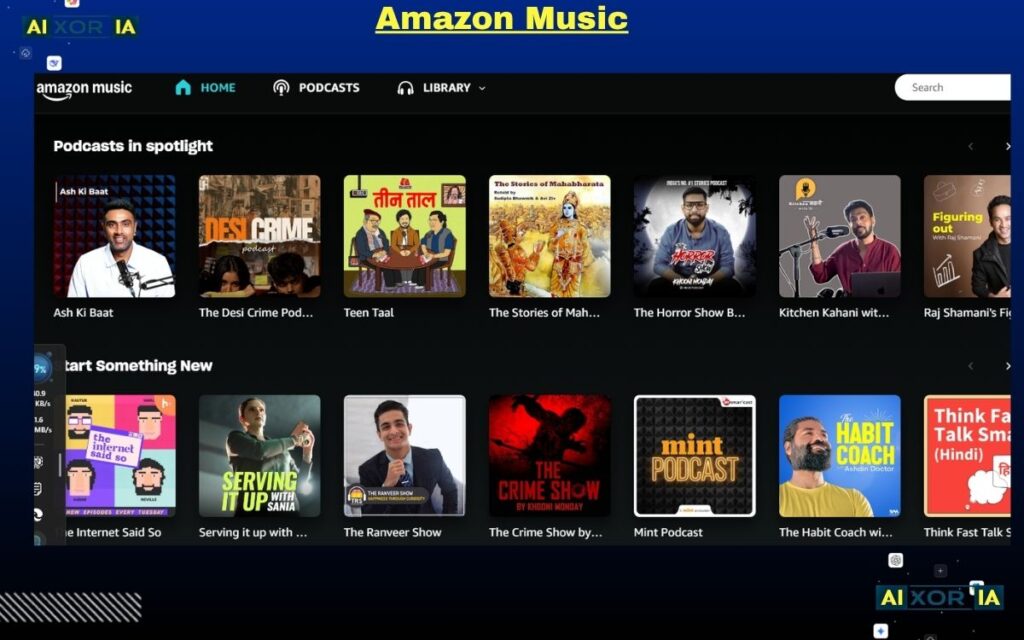
Amazon Music is one of the most practical Spotify alternatives in 2026, especially for users who already have an Amazon Prime membership.
It may not have the same social popularity as Spotify or the premium audiophile reputation of TIDAL, but it offers strong value for everyday listeners. With HD and Ultra HD audio, offline listening, Alexa integration, and a large music library, Amazon Music gives users a reliable streaming experience without feeling overpriced.
For people already using Alexa devices, Echo speakers, Fire TV, or other Amazon services, the experience becomes even smoother because everything works inside the same ecosystem.
It’s not the flashiest platform, but for convenience and pricing, Amazon Music is a strong option.
Amazon states that Amazon Music includes millions of songs in HD and Ultra HD quality, offline downloads, and deep Alexa integration across supported devices. (amazon.com)
Key Features
- HD and Ultra HD audio
- Large music catalog
- Offline downloads
- Alexa voice control
- Echo and Fire TV integration
- Ad-free listening with premium plans
- Personalized playlists and stations
- Cross-platform support
- Included benefits for Prime users
Pros
- Great value for Amazon Prime users
- Strong sound quality with HD audio
- Excellent Alexa and smart home integration
- Reliable offline listening
- Large mainstream music library
- Good family plan options
Cons
- App interface feels less polished than Spotify
- Music discovery is weaker
- Social playlist features are limited
- Better experience mainly for Amazon ecosystem users
Best For
Amazon Music is best for:
- Amazon Prime members
- Alexa users
- Smart home users
- Budget-conscious listeners
- Users who want strong value without paying extra
Pricing
Amazon Music pricing for U.S. users in 2026:
- Prime Music — included with Amazon Prime (limited catalog/features)
- Amazon Music Unlimited Individual — around $10.99/month
- Family Plan — around $16.99/month
- Student discounts available
Pricing may vary depending on Prime membership status and promotional offers. Amazon regularly updates pricing through its official plans page. (amazon.com)
Real Experience
Amazon Music feels strongest when you already live inside the Amazon ecosystem.
Using voice commands with Alexa is smooth, and the value feels much better if you already pay for Prime. It may not feel as polished as Spotify, but for convenience and everyday listening, it works surprisingly well.
Deezer
Deezer is one of the most underrated Spotify alternatives in 2026, especially for users who want a familiar experience without feeling like they are learning a completely new platform.
It offers a clean interface, strong personalized recommendations, high-quality audio options, and a feature called Flow, which creates a continuous mix of songs based on your listening habits. For many users, this feels very similar to Spotify’s recommendation system.
Deezer also supports FLAC-quality audio on supported plans, making it a strong middle-ground option between Spotify’s discovery features and Apple Music’s better sound quality.
For users who want an easy switch away from Spotify without losing convenience, Deezer is often one of the smoothest transitions.
Deezer officially highlights features like Flow recommendations, offline listening, personalized mixes, and HiFi-quality FLAC streaming on supported plans. (deezer.com)
Key Features
- Flow personalized recommendations
- FLAC-quality audio support
- Offline downloads
- Ad-free premium listening
- Large global music catalog
- Personalized playlists and mixes
- Cross-platform support
- Easy playlist transfer options
- Family and student plans available
Pros
- Very easy for Spotify users to switch
- Strong recommendation engine with Flow
- Clean and simple interface
- Better sound quality options with FLAC
- Good free plan availability
- Reliable offline listening
Cons
- Less popular in the U.S. compared to Spotify
- Smaller social music community
- Some exclusive content is limited
- Interface can feel too simple for power users
Best For
Deezer is best for:
- Users switching directly from Spotify
- Listeners who want familiar recommendations
- Users who want FLAC-quality audio
- People who prefer a clean and simple interface
- Users looking for a balanced all-around music app
Pricing
Deezer pricing for U.S. users in 2026:
- Premium Plan — around $11.99/month
- Student Plan — discounted monthly pricing
- Family Plan — multi-user access with shared billing
Pricing may vary depending on region and promotional offers, and Deezer often provides free trial options for new users. (deezer.com)
Real Experience
Deezer feels like the easiest Spotify replacement because nothing feels too unfamiliar.
The Flow feature works surprisingly well for daily listening, and the clean interface makes the switch simple. If you want something that feels like Spotify but with a slightly different experience, Deezer is a very safe choice.
SoundCloud

SoundCloud is one of the best Spotify alternatives for users who care more about discovering independent artists than listening to mainstream chart music.
Unlike traditional streaming platforms, SoundCloud is heavily creator-focused. It gives independent musicians, DJs, producers, and underground artists a place to upload music directly, which means listeners often discover new songs here long before they appear on bigger platforms like Spotify.
It is especially strong for remixes, DJ sets, experimental music, podcasts, and early releases that may never reach mainstream streaming services.
If your music taste goes beyond trending playlists and popular albums, SoundCloud offers a very different kind of listening experience.
SoundCloud promotes itself as a creator-first platform with access to millions of tracks, independent uploads, DJ mixes, and direct artist publishing tools. (soundcloud.com)
Key Features
- Massive independent music library
- Direct uploads from artists and creators
- DJ mixes and live sets
- Remixes and unofficial tracks
- Podcast support
- Personalized discovery recommendations
- Offline listening for premium users
- Creator-first platform
- Strong community engagement
Pros
- Excellent for discovering underground artists
- Huge collection of remixes and DJ sets
- Early access to unreleased music
- Strong creator support system
- Unique content not available on Spotify
- Good free listening options
Cons
- Audio quality can be inconsistent
- Interface feels less polished than Spotify
- Mainstream music catalog is weaker
- Premium plans are less attractive for casual listeners
Best For
SoundCloud is best for:
- Indie music fans
- DJ mix listeners
- Underground music discovery
- Fans of remixes and unofficial tracks
- Users who want something beyond mainstream streaming
Pricing
SoundCloud pricing for U.S. users in 2026:
- Free Plan — ad-supported listening
- SoundCloud Go — around $4.99/month
- SoundCloud Go+ — around $10.99/month
Premium plans offer offline listening, ad-free music, and access to the full licensed catalog depending on the subscription tier. (soundcloud.com)
Real Experience
SoundCloud feels less like a polished streaming app and more like a place to discover music before everyone else does.
If you enjoy finding hidden artists, underground remixes, or long DJ sessions, it can feel much more exciting than Spotify. It’s not the best for perfect audio quality, but for discovery, it is hard to beat.
Bandcamp
Bandcamp is a unique Spotify alternative in 2026 because it is not just a streaming platform—it is also a direct marketplace where fans can support artists by buying music.
Unlike Spotify, where you mainly stream songs, Bandcamp focuses on ownership and artist support. You can stream music for free (in many cases), but the real strength of Bandcamp is that it allows you to purchase albums, merchandise, and digital downloads directly from artists.
This makes it especially popular among independent musicians and listeners who care about supporting creators more fairly.
Bandcamp is often used by indie artists to release albums early, sell exclusive tracks, and connect directly with fans without relying on traditional streaming payouts. (bandcamp.com)
Key Features
- Direct artist-to-fan music platform
- High-quality audio downloads (often lossless)
- Stream before you buy
- Exclusive indie releases
- Merchandise and vinyl purchases
- Artist-controlled pricing
- Support for independent musicians
- Mobile and web access
Pros
- Strongest platform for supporting artists directly
- High-quality audio downloads available
- Access to exclusive indie and niche music
- No heavy algorithm-driven distractions
- Transparent pricing controlled by artists
- Great for music collectors
Cons
- Not a full Spotify-style streaming experience
- Limited mainstream music catalog
- No advanced recommendation system
- More focused on purchases than casual listening
Best For
Bandcamp is best for:
- Indie music fans
- Users who want to support artists directly
- Music collectors (albums, vinyl, digital downloads)
- Listeners of niche or experimental genres
- Fans of exclusive or early releases
Pricing
Bandcamp itself is free to use for streaming many tracks.
However, pricing depends on the artist:
- Individual albums — usually $5 to $20 (varies by artist)
- Merchandise and vinyl — priced by creators
- Optional “pay more to support artist” model
There is no fixed subscription model like Spotify; instead, Bandcamp focuses on direct purchases and artist-controlled pricing. (bandcamp.com/help)
Real Experience
Bandcamp feels very different from Spotify because it is less about endless streaming and more about discovering and supporting music you truly like.
When you find an artist you enjoy, buying their album feels more personal, almost like owning a piece of their work. It’s not built for casual background listening, but for people who care about music ownership and artist support, it feels very meaningful.
Pandora
Pandora is one of the oldest and most established Spotify alternatives, especially popular in the U.S. for radio-style music listening.
Unlike Spotify, which focuses heavily on playlists and on-demand music, Pandora is built around its Music Genome Project, a recommendation system that creates personalized radio stations based on your taste. You choose a song or artist, and Pandora automatically builds a continuous listening experience around it.
This makes it especially useful for users who prefer passive listening—like while driving, working, or relaxing—without needing to constantly choose what to play next.
Even in 2026, Pandora remains strong in the “radio-first” music experience category, even though it is less focused on advanced on-demand features compared to Spotify or Apple Music.
Pandora is known for its personalized radio stations powered by its Music Genome Project and remains one of the most widely used internet radio services in the U.S. (pandora.com)
Key Features
- Personalized radio stations
- Music Genome Project recommendations
- Custom station creation from songs or artists
- Offline listening (premium plans)
- Ad-supported free streaming
- Podcast support
- Voice control on smart devices
- Curated genre stations
- Simple, lightweight interface
Pros
- Excellent for passive listening
- Very strong radio-style recommendations
- Easy to use with minimal setup
- Great for driving or background music
- Long-standing reputation in the U.S. market
- Smooth smart device integration
Cons
- Limited on-demand control in free version
- Weaker global presence compared to Spotify
- Smaller music discovery beyond radio style
- Audio quality options are limited compared to competitors
Best For
Pandora is best for:
- Users who like radio-style listening
- Drivers and commuters
- Background music listeners
- People who don’t want to manage playlists
- Casual music users in the U.S.
Pricing
Pandora pricing for U.S. users in 2026:
- Free Plan — ad-supported radio streaming
- Pandora Plus — around $4.99/month
- Pandora Premium — around $10.99/month
- Family Plan — higher tier with multiple accounts
Premium plans unlock on-demand listening, offline playback, and full playlist control. (pandora.com/upgrade)
Real Experience
Pandora feels best when you don’t want to think about what to play next.
You just start a station, and it keeps going with surprisingly accurate song choices based on your mood or favorite artists. It’s not as feature-rich as Spotify, but for hands-free, background listening, it still works really well.
Qobuz
Qobuz is a premium Spotify alternative designed mainly for users who care deeply about high-resolution sound quality and a more “audiophile” listening experience.
Unlike Spotify, which focuses on algorithm-based discovery and social sharing, Qobuz is built around studio-quality audio, detailed album information, and a more curated, music-journal-style experience. It is especially popular among serious listeners who use high-end headphones, DACs, or speaker setups.
Qobuz stands out because it offers true Hi-Res audio (beyond standard streaming quality) and also allows users to purchase and download music in high quality, making it a hybrid between streaming and ownership.
For users who feel Spotify sounds “compressed” or too casual, Qobuz feels like a major step up in clarity and depth.
Qobuz is widely known for its Hi-Res FLAC streaming, editorial music content, and focus on studio-quality listening for audiophiles. (qobuz.com)
Key Features
- Hi-Res FLAC streaming (studio-quality audio)
- Lossless audio support
- Offline downloads
- Music purchase and download options
- Editorial reviews and album guides
- Large classical and jazz catalog
- Ad-free listening
- High-quality metadata and album info
- Cross-platform support
Pros
- One of the best audio quality platforms available
- Excellent for audiophiles and professionals
- Strong classical, jazz, and niche music library
- No compressed sound like basic streaming services
- Detailed album credits and editorial content
- Option to own music via downloads
Cons
- Less focused on mainstream pop discovery
- Smaller social and playlist ecosystem
- Higher pricing compared to basic streaming apps
- Not ideal for casual background listening
- Limited popularity in some regions
Best For
Qobuz is best for:
- Audiophiles and sound engineers
- Users with high-end headphones or speakers
- Classical and jazz music lovers
- Listeners who prefer quality over algorithms
- Users who want a premium, studio-like experience
Pricing
Qobuz pricing for U.S. users in 2026:
- Studio Premier Individual — around $12.99/month
- Duo Plan — discounted multi-user option
- Family Plan — higher tier shared access
It also offers music purchasing options, where albums can be bought and downloaded in Hi-Res quality. (qobuz.com/pricing)
Real Experience
Qobuz feels like listening to music in a studio rather than a streaming app.
The sound is extremely clear, detailed, and natural—especially with good headphones. It may not have Spotify’s social or discovery features, but for pure listening quality, it easily competes with the best platforms available today.
Which Spotify Alternative Should You Choose?
In 2026, Spotify is still a strong music platform, but it’s no longer the only “best option.” The right alternative depends completely on how you listen to music.
If you want the simplest answer:
- Best overall replacement → Apple Music (balanced, premium, great sound)
- Best for discovery → YouTube Music (huge variety + rare content)
- Best audio quality → TIDAL or Qobuz (audiophile-grade listening)
- Best value for Amazon users → Amazon Music
- Best Spotify-like experience → Deezer
- Best indie music discovery → SoundCloud
- Best artist support → Bandcamp
- Best radio-style listening → Pandora
The biggest shift in 2026 is simple:
Music platforms are no longer “one-size-fits-all.”
Each app is now built for a specific type of listener.
So instead of asking “What is the best Spotify alternative?”
the better question is:
👉 “Which music experience do I actually want?”