The Documentation Crisis Quietly Burning Out Your Clinical Team
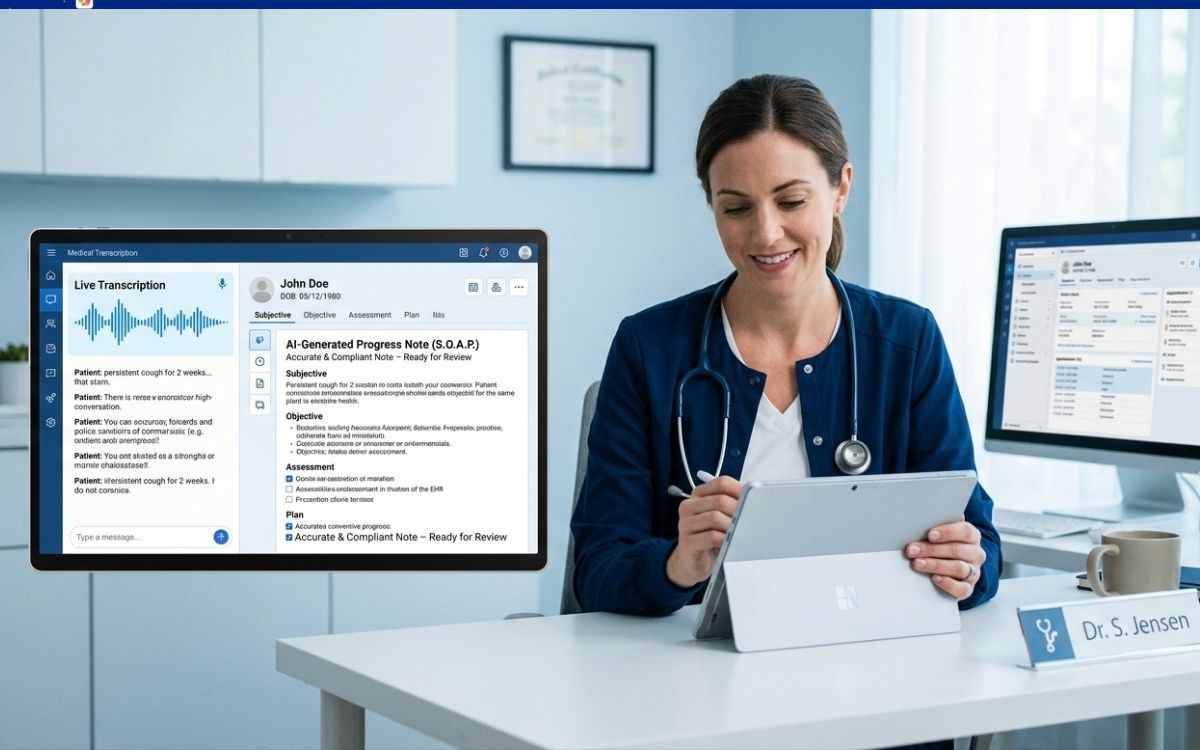
The best medical transcription software can be the difference between a clinician who leaves work at 5:30 PM and one who is still finishing notes at 7:00 PM — long after the last patient has gone home.
Here’s a quick look at the top options for 2026:
| Software | Best For | Key Strength |
|---|---|---|
| Simular Pro | Workflow automation | End-to-end task execution beyond transcription |
| Freed | Small clinics | Ambient AI, minimal editing needed |
| Nuance Dragon Medical One | Enterprise/hospital | Industry-leading voice accuracy |
| Amazon Transcribe Medical | Developers/API users | Scalable, HIPAA-eligible, pay-per-use |
| Heidi Health | Multilingual/collaborative | Team-friendly, specialty support |
| Sonix | General transcription | 53+ languages, fast turnaround |
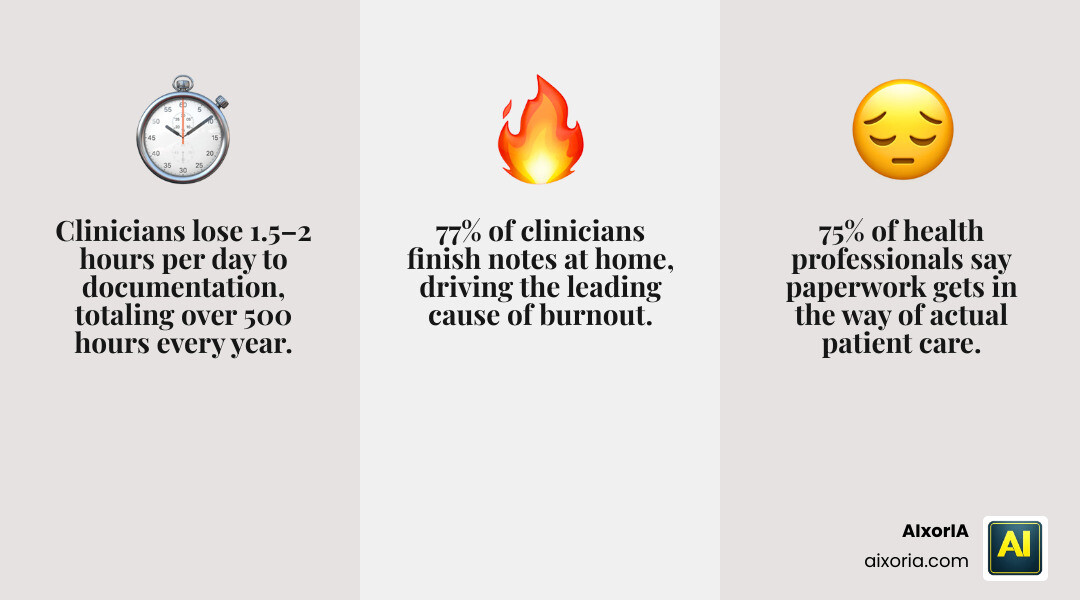
The numbers behind this problem are hard to ignore:
- 77% of clinicians are taking notes home after work
- 75% of health professionals say documentation gets in the way of patient care
- Documentation burden is now one of the leading causes of physician burnout
This isn’t a minor inconvenience. It’s a systemic drain on the people responsible for keeping patients healthy.
The good news? AI-powered medical transcription tools have advanced dramatically. Most now go well beyond simple speech-to-text — they generate structured clinical notes, suggest billing codes, and even connect directly to your EHR. The right tool doesn’t just transcribe. It gives clinicians their time back.
This guide compares the top solutions side by side, so you can find the right fit for your practice without the guesswork.
Key Evaluation Criteria for the Best Medical Transcription Software
Choosing the best medical transcription software isn’t just about finding the tool with the most bells and whistles; it’s about finding a solution that fits your clinical reality. In 2026, the stakes for data security and accuracy are higher than ever.

HIPAA Compliance and Security
First and foremost, any tool you consider must be HIPAA-compliant. This means the vendor must be willing to sign a Business Associate Agreement (BAA). Look for industry-gold standards like SOC 2 Type II certification and HITECH adherence. Tools like Medical Transcription Software | HIPAA-Compliant | Sonix 2026 emphasize a secure infrastructure where data is encrypted both at rest and in transit.
EHR Integration
A transcription tool that doesn’t talk to your Electronic Health Record (EHR) is just another tab you have to manage. The top-tier software offers native integration with giants like Epic, Cerner, and athenahealth. This allows for a “push” of the finalized note directly into the patient chart, eliminating the tedious copy-paste dance.
Accuracy and Specialty Vocabulary
General-purpose transcription tools often struggle with “medicalese.” The 9 Best Medical Transcription Software in 2026 are those that reach up to 99% accuracy by using specialized medical vocabularies. Whether you are dealing with complex oncology regimens or orthopedic surgical terms, the software needs to understand the context to avoid dangerous errors.
AI Scribes vs. Traditional Dictation: Choosing Your Workflow
We often see clinicians confused by the difference between “dictation” and “ambient AI scribing.” Understanding this distinction is vital for your workflow.
- Traditional Dictation: This is active. You finish a visit, pick up a mic, and say, “Patient is a 45-year-old male…” It transcribes your words exactly. Tools like VoiceboxMD are excellent for this, offering a 99% accuracy rate for doctors who prefer to narrate their own findings.
- Ambient AI Scribes: This is passive. You place your device on the desk, press record, and talk to your patient. The AI listens to the conversation, filters out the small talk about the weather, and extracts the clinical meat to generate a structured SOAP note.
| Feature | Traditional Dictation | Ambient AI Scribe |
|---|---|---|
| Input Type | Active clinician narration | Passive patient-clinician dialogue |
| Formatting | Word-for-word text | Structured SOAP notes |
| Time Saved | Moderate (replaces typing) | High (replaces note creation) |
| Ideal For | Operative reports, Radiology | Primary care, Mental health |
For a deeper dive into how these perform in the field, check out our report on the Most Accurate Dictation Software in 2026 Tested by Professionals.
Top-Rated Best Medical Transcription Software Solutions in 2026
As we navigate the current landscape, several heavy hitters have emerged as leaders in documentation efficiency.
- Simular Pro: This stands out because it acts as a “computer agent.” It doesn’t just transcribe; it can execute workflows across multiple desktop apps, making it a powerhouse for complex administrative tasks.
- Freed: A favorite for small clinics. It’s known for contextual understanding, with users reporting they save 1.5 to 2 hours daily. It transforms messy conversations into polished notes with minimal editing.
- Nuance Dragon Medical One: The veteran in the space. It remains the gold standard for hospital environments, particularly for Windows users who need deep EHR integration and high-speed voice recognition.
- Amazon Transcribe Medical: A developer’s dream. It’s a stateless, HIPAA-eligible API that allows practices to build their own custom transcription layers without needing machine learning expertise.
- WebChartMD: If you need a platform that handles everything from dictation recording to e-signing and automated distribution, WebChartMD provides a robust, cloud-based workflow management system.
For those looking for a broader list of recommendations, see our guide on the Best Dictation Software for Doctors in 2026.
Best Medical Transcription Software for Specialized Practices
Not all medicine is practiced in a standard exam room. Specialized fields require specialized tools.
- Veterinary Medicine: Animals don’t talk, but their owners do. Check out the 7 Best Veterinary Dictation Software in 2026 to see how vets are managing documentation.
- Mac Users: Historically, medical software was Windows-only. Thankfully, the Best Medical Dictation Software for Mac 2026 Guide shows that cloud-based tools have finally closed the gap.
- Efficiency Boosters: Tools like PhraseExpress allow for “medical transcription on steroids” by using dot phrases and ICD-10 autocompletion to speed up manual typing when AI isn’t the primary choice.
Overcoming Challenges: Hallucinations and Human-in-the-Loop
While AI is impressive, it isn’t perfect. One of the biggest risks in 2026 is “AI hallucination”—where the software confidently invents a detail that was never spoken.
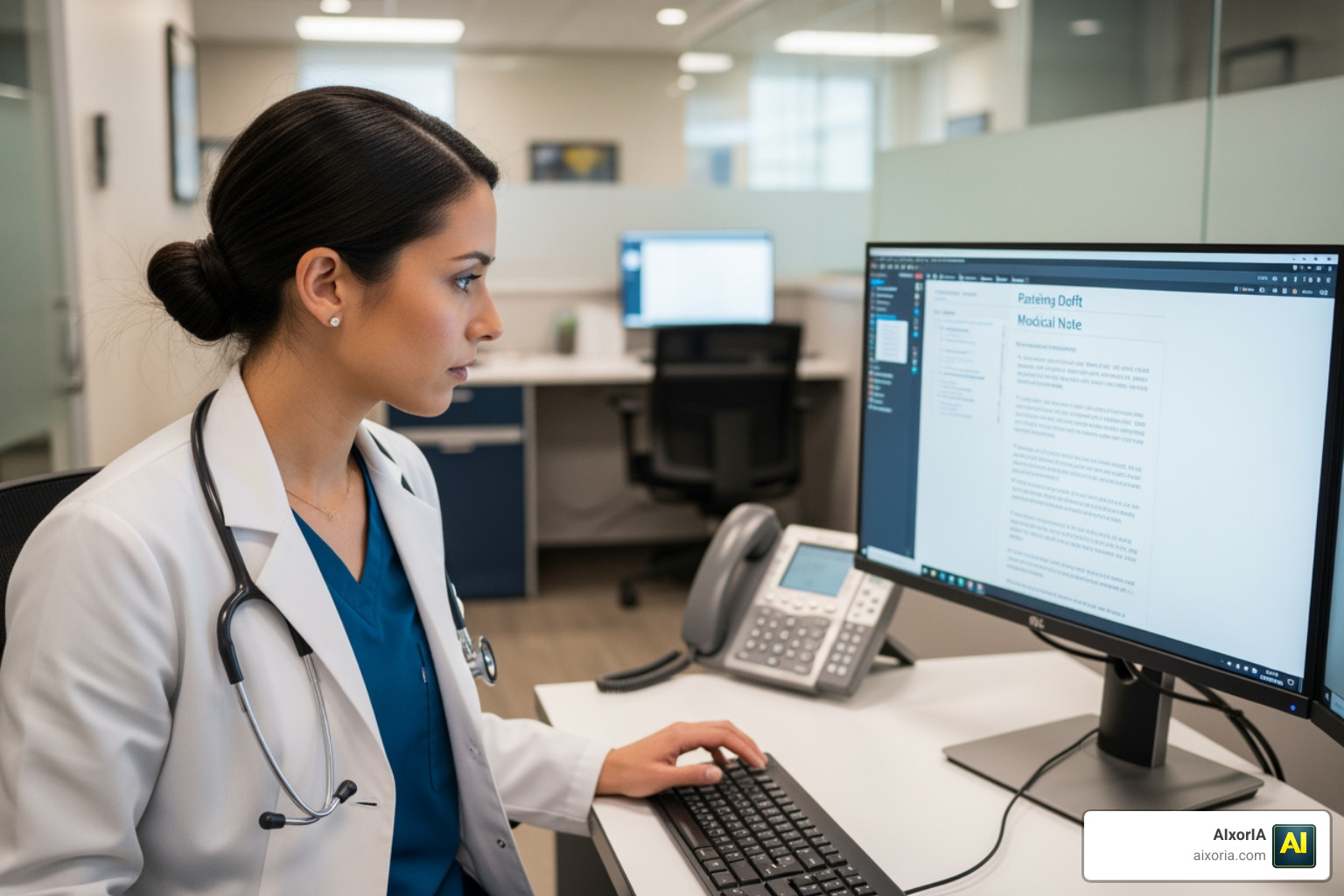
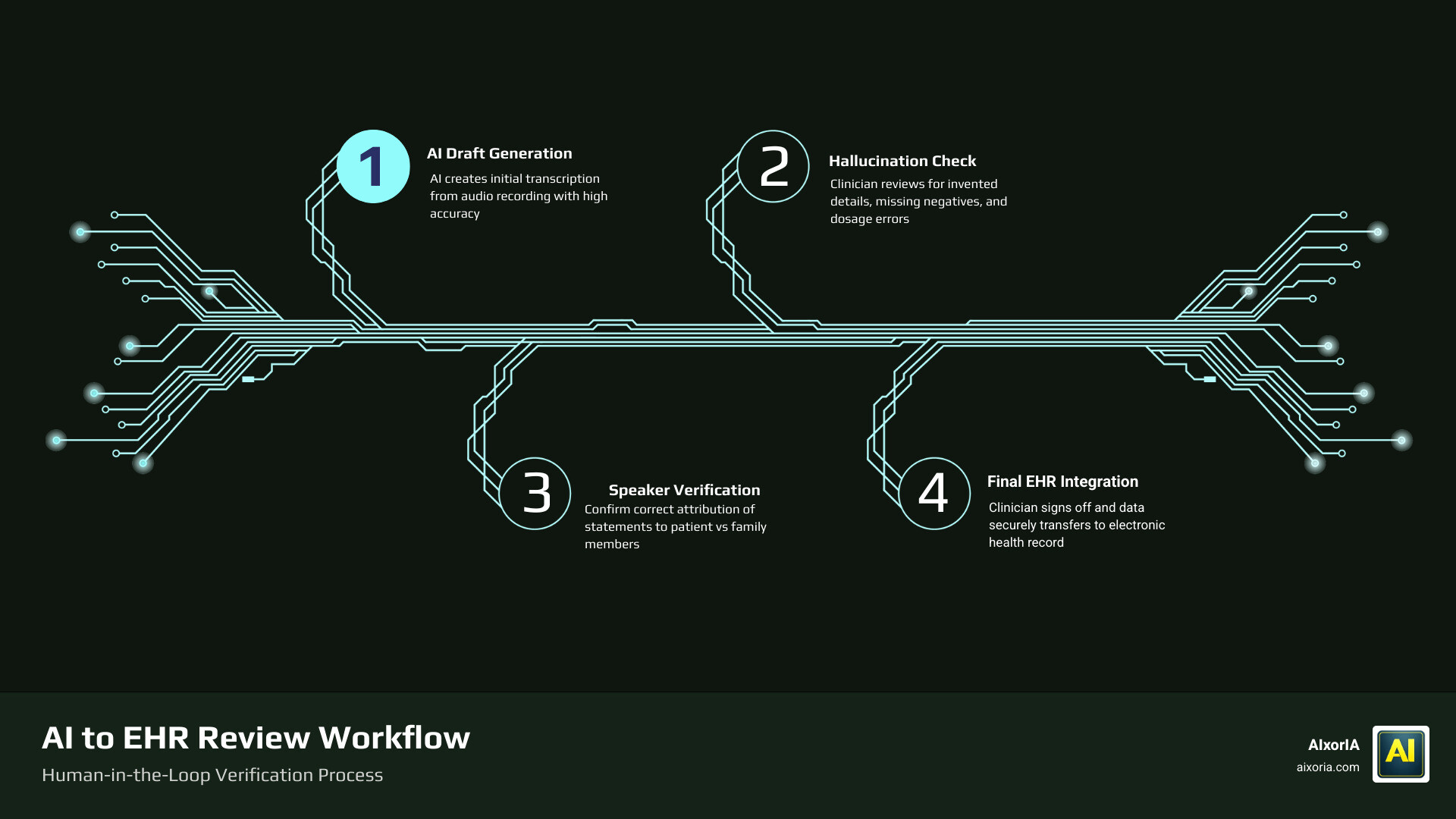
To maintain patient safety, we always recommend a “Human-in-the-Loop” approach. This means the AI generates the draft, but the clinician must review and sign off on it. Common errors to watch for include:
- Missing Negatives: The patient said they don’t have chest pain, but the AI records “chest pain.”
- Medication Dosages: Confusing “10mg” with “50mg” due to background noise.
- Speaker Identification: Attributing the patient’s sister’s medical history to the patient themselves.
Implementing verification gates ensures that the best medical transcription software remains a tool for productivity rather than a liability.
Frequently Asked Questions about Medical Transcription
Is AI-powered Best Medical Transcription Software HIPAA compliant?
Yes, provided the vendor signs a BAA and uses end-to-end encryption. Many modern tools are “stateless,” meaning they don’t store your audio or the resulting text on their servers once the transcription is delivered, which adds an extra layer of privacy.
How much time can clinicians save with automated scribes?
On average, clinicians save 1.5 to 2 hours per day. Some platforms, like Suki, claim a reduction in documentation time of up to 76%. Over a year, this can recover over 500 hours—time that can be spent with family or seeing more patients.
What is the difference between browser-based and desktop agents?
Browser-based tools are easy to set up but are often “trapped” in the web browser. Desktop agents like Simular Pro have “transparent execution,” meaning they can interact with other software on your computer (like your local EHR or a PDF reader) to automate the entire documentation workflow.
Conclusion
The documentation burden doesn’t have to be a permanent fixture of medical practice. By leveraging the best medical transcription software, clinicians can reclaim their evenings and focus on what truly matters: patient care.
At AIxorIA, we specialize in helping businesses navigate this rapidly evolving landscape. Whether you need a custom AI solution, a performance audit of your current tools, or a training workshop to get your team up to speed, we are here to help with simple language and affordable services.
Ready to transform your workflow? Find more info about AI tools for business here.
1 thought on “Best Medical Transcription Software in 2026 (Tested & Reviewed)”