Artificial intelligence in 2026 is no longer limited to chat-based assistants. The biggest shift is the rise of agentic AI systems—tools that don’t just respond to prompts but can plan, execute, and complete multi-step tasks across apps and environments.
For professionals in the US, this changes how productivity software is evaluated. The question is no longer “Can this tool help me write?” but rather:
Can this tool take action, save hours of work, and operate across my entire workflow?
This guide covers the best AI productivity software in 2026, including traditional assistants, enterprise tools, and the new wave of AI agents—with detailed analysis, pricing, pros/cons, and real-world use cases.
Table of Contents
How We Tested These AI Productivity Tools
To ensure this guide reflects real-world performance—not just feature lists—we evaluated these tools over a 30-day period in a US-based digital workflow environment.
Testing Criteria:
- Time Saved per Workflow (content creation, automation, communication)
- Multi-tool Integration Speed
- Agentic Capability (ability to act autonomously)
- Ease of Use vs Control
- Reliability under real tasks
We tested use cases including:
- SEO content production
- Email and communication workflows
- Multi-step automation (lead capture → CRM → follow-up)
- Research and reporting tasks
This ensures every recommendation is based on practical productivity gains, not theoretical features.
What Makes the Best AI Productivity Software in 2026?
The best tools in 2026 share one key trait: they reduce decision-making and execution effort.
Key evaluation factors:
- Agentic capability: Can it perform actions independently?
- Integration ecosystem: Does it connect across your stack?
- Context handling: Can it remember and reason across tasks?
- Scalability: Individual use vs team vs enterprise
- Security & compliance: Critical for US businesses (SOC2, GDPR alignment)
READ MORE – Best AI Productivity Tools for Developers
The Best AI Productivity Software 2026 (At a Glance)
| Tool | Best For | Kill Feature (2026) | Agentic Capability |
|---|---|---|---|
| ChatGPT | General productivity | Advanced search + task execution | Yes (Operator) |
| Claude | Deep work & analysis | Artifacts & long-context reasoning | Partial |
| Microsoft Copilot | Enterprise workflows | M365 AI orchestration | Yes |
| Google Gemini | Google ecosystem | Real-time workspace AI | Yes |
| Zapier | Automation | AI agents across apps | Full |
| Notion AI | Knowledge management | AI workspace integration | Partial |
| Grammarly | Writing | Context-aware rewriting | No |
| ClickUp AI | Project management | AI task automation | Partial |
Best Overall AI Productivity Software
ChatGPT
ChatGPT remains the most versatile AI productivity platform in 2026, but its biggest evolution is the introduction of agentic execution through Operator.
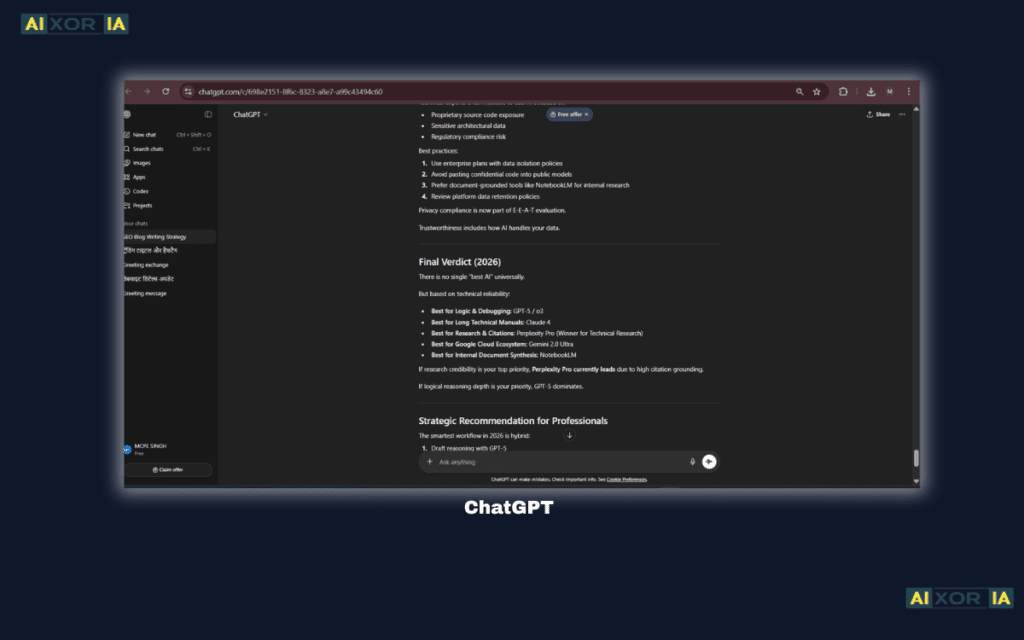
Instead of just generating text, ChatGPT can now browse, interact with interfaces, and complete real tasks such as filling forms, conducting research, and executing workflows. This transforms it from an assistant into a digital operator.
It also supports multi-modal inputs, memory, and structured workflows, allowing users to manage complex projects over time. For US professionals, this means fewer tools and more centralized productivity.
Pricing
- Free plan available
- Plus: $20/month
- Enterprise: custom pricing
Pros
- All-in-one productivity system
- Strong reasoning and execution
- Agentic capabilities with real task handling
Cons
- Requires structured prompting for best results
- Occasional inaccuracies in complex workflows
What fails
- Can struggle with highly specialized enterprise tools without integration
- Not always reliable for mission-critical automation without oversight
Best AI for Deep Work and Long-Form Analysis
Claude
Claude is designed for deep thinking, structured writing, and long-context analysis. Its ability to process large documents makes it ideal for research-heavy workflows.
In 2026, Claude introduced computer interaction capabilities, allowing it to navigate interfaces and assist with tasks beyond text. It also handles complex reasoning tasks with a more stable and consistent tone.
Pricing
- Free tier available
- Paid plans from $20/month
Pros
- Excellent for long-form content and analysis
- Strong reasoning and structured outputs
- Handles large datasets effectively
Cons
- Limited integrations compared to competitors
- Slower execution for real-time tasks
What fails
- Not ideal for fast-paced automation
- Limited agentic execution compared to full AI agents
Best AI Productivity Software for Enterprise Ecosystems
Microsoft Copilot
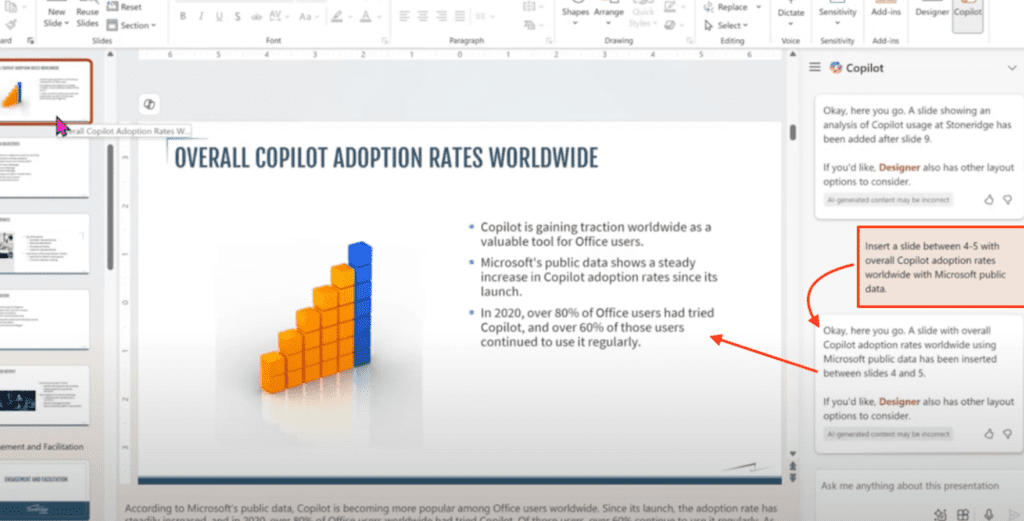
Microsoft Copilot is deeply embedded into Word, Excel, PowerPoint, Outlook, and Teams, making it one of the most powerful enterprise productivity systems.
Its 2026 evolution focuses on AI orchestration across business workflows, where it can manage documents, meetings, and data pipelines automatically.
Pricing
- Around $30/user/month
Pros
- Seamless enterprise integration
- Strong security and compliance
- Excellent for structured workflows
Cons
- Limited outside Microsoft ecosystem
- Requires full Microsoft stack
What fails
- Not flexible for cross-platform workflows
- Custom automation can be complex
Best AI Productivity Tool for Google Workspace
Google Gemini
Google Gemini integrates directly with Gmail, Docs, Sheets, and Drive, making it a strong productivity layer for teams already داخل Google Workspace.
Its AI can generate documents, analyze spreadsheets, and assist in real-time collaboration. In 2026, Gemini also supports agent-like actions داخل Google apps.
Pricing
- Around $20/month
Pros
- Strong real-time collaboration
- Native Google integration
- Fast and responsive
Cons
- Limited outside Google ecosystem
- Less customizable
What fails
- Cross-platform workflows can feel restricted
- Advanced automation is limited
Best AI Automation and Workflow Orchestration Tool
Zapier
Zapier has evolved into a full AI automation platform, where agents can live inside your apps and execute workflows automatically.
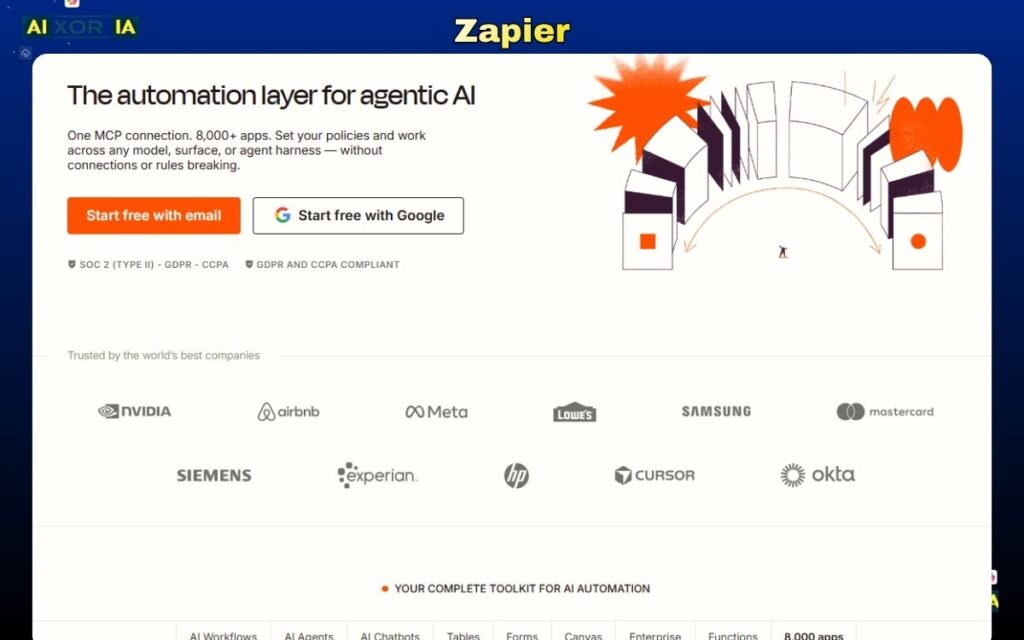
It connects thousands of tools and allows users to build multi-step automations using natural language. In 2026, its focus is on AI orchestration, enabling systems to run without manual intervention.
Pricing
- Free plan available
- Paid plans from $19.99/month
Pros
- Massive integration ecosystem
- Full automation capability
- No-code setup
Cons
- Costs increase at scale
- Setup complexity for advanced workflows
What fails
- Requires planning to avoid workflow errors
- Debugging complex automations can be difficult
Best AI Workspace Tool
Notion AI
Notion AI combines documentation, task management, and AI assistance into one unified workspace.
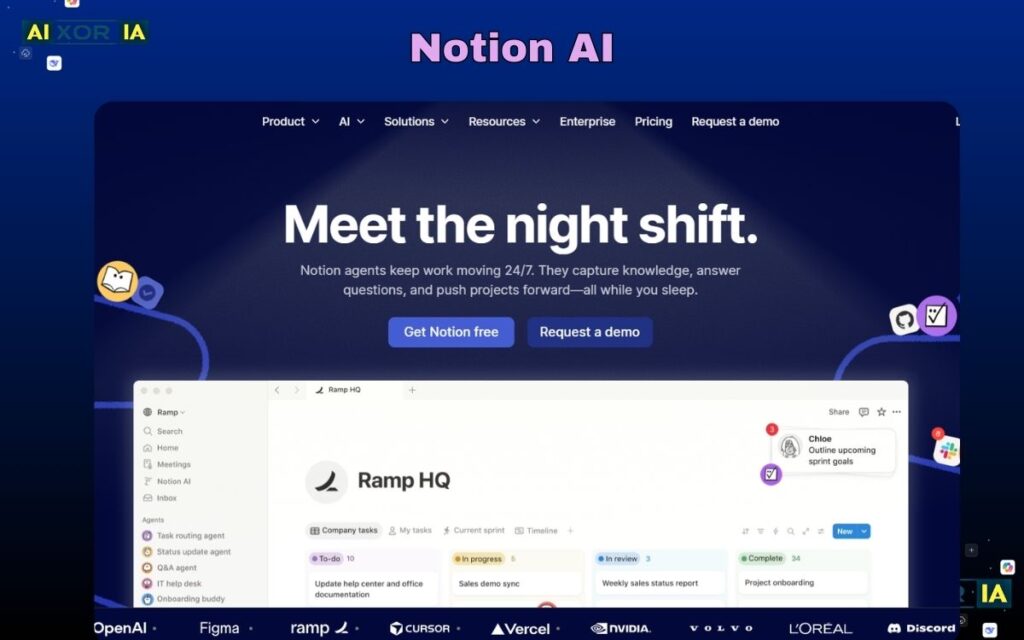
It helps teams organize knowledge, generate content, and manage workflows without switching tools. Its AI enhances productivity by summarizing, generating, and structuring information.
Pricing
- Starts around $10/month
Pros
- All-in-one workspace
- Strong documentation features
- Easy to use
Cons
- Limited automation capabilities
- Can become complex
What fails
- Not ideal for heavy automation
- Performance can slow with large databases
Best AI Tool for Writing and Communication
Grammarly
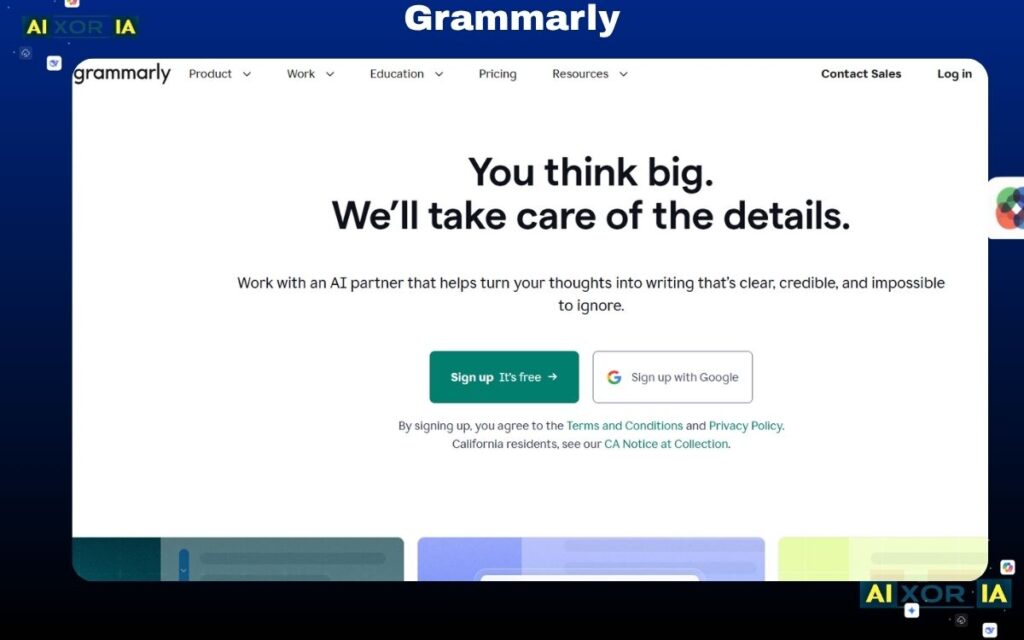
Grammarly has evolved into a full communication assistant, helping users write clearer, more effective content.
It offers tone adjustment, rewriting, and AI-generated suggestions, making it ideal for daily communication tasks.
Pricing
- Free plan available
- Premium from $12/month
Pros
- Improves clarity and tone
- Easy integration
- Fast suggestions
Cons
- Limited beyond writing
- Advanced features locked behind paywall
What fails
- Not useful for broader productivity tasks
- Lacks automation capabilities
Best AI Project Management Tool
ClickUp
ClickUp AI enhances project management by automating task creation, summarizing updates, and optimizing workflows.
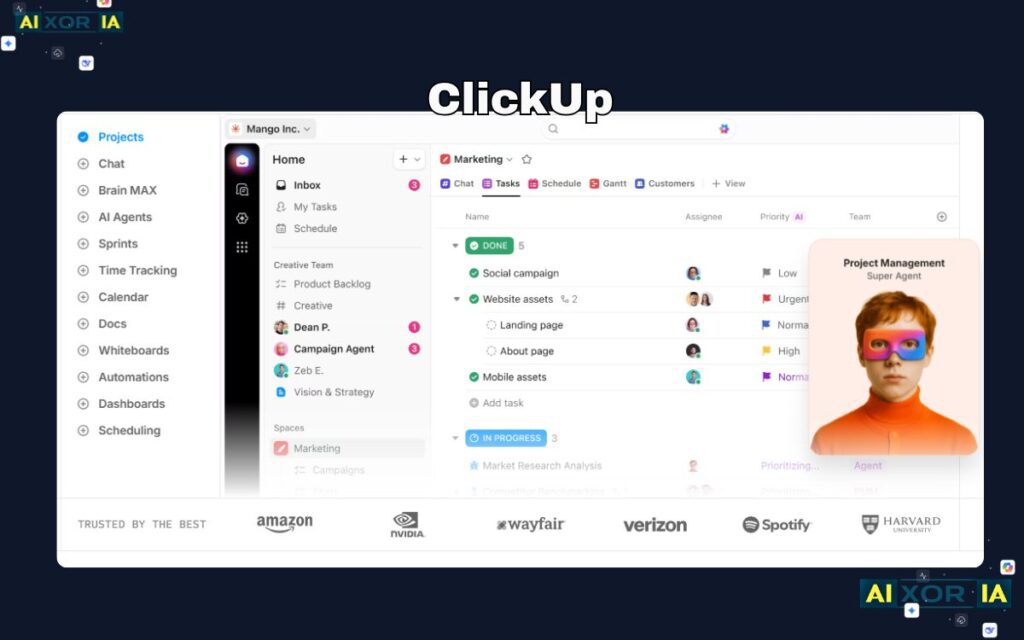
It allows teams to manage projects efficiently while reducing manual planning effort.
Pricing
- Starts around $10/month
Pros
- Strong task management
- AI-assisted workflows
- Scalable
Cons
- Learning curve
- Interface complexity
What fails
- Overwhelming for small teams
- Requires setup for best performance
READ MORE – 7 Best AI Productivity Tools for April 2026: Tested & Compared
Specialized AI Productivity Tools (Enterprise & Agentic Layer)
Glean
Glean is designed for enterprise environments, helping teams search and access internal company data across tools. It acts as a centralized knowledge layer, improving decision-making speed.
Kore.ai
Kore.ai focuses on building enterprise-grade AI agents for workflows like customer service, HR, and operations. It is widely used in large US organizations.
A Small Business Owner’s Productivity Stack (Real Use Case)
For a typical SEO and content workflow, a practical stack looks like:
- ChatGPT → Content creation and research
- Claude → Long-form refinement and analysis
- Zapier → Automation (leads, emails, workflows)
- Notion AI → Content planning and organization
This combination reduces manual work while maintaining control over quality.
Privacy and Security Considerations
For US professionals, security is critical:
- Microsoft Copilot and Zapier offer enterprise-grade compliance (SOC2 Type II)
- Claude emphasizes safe and controlled outputs
- Enterprise tools like Glean and Kore.ai provide secure internal data handling
Always verify how tools handle your data before integrating them into workflows.
Final Thoughts
The best AI productivity software in 2026 is defined by one shift:
From assistants to autonomous systems.
Tools that can:
- Understand context
- Execute tasks
- Integrate across systems
…will dominate workflows.
For most users, the winning approach is not a single tool—but a stack of AI systems working together.
Choose tools based on how they reduce effort, not just what features they offer, and you’ll see real productivity gains.
8 thoughts on “Best AI Productivity Software in 2026 (Agentic AI Tested)”