Infrastructure failures—whether in power grids, transportation systems, manufacturing plants, or IT environments—can lead to massive financial losses, safety risks, and operational downtime. As systems grow more complex, traditional monitoring methods are no longer sufficient.
This is where artificial intelligence becomes critical. By analyzing patterns, detecting anomalies, and predicting potential breakdowns before they happen, AI enables organizations to shift from reactive maintenance to predictive and preventive strategies.
But not all AI capabilities are equally effective.
This guide explores which AI capability is most relevant for predicting infrastructure failure before it occurs, along with the best tools, real-world applications, and how enterprises are implementing these systems in 2026.
Table of Contents
What Is Infrastructure Failure Prediction?
Infrastructure failure prediction involves using data from sensors, logs, and historical records to identify early warning signs of system breakdowns.
Examples include:
- Predicting when a machine will fail in a factory
- Detecting structural weaknesses in bridges
- Forecasting server outages in cloud systems
- Identifying faults in power grids before disruption
The goal is simple: detect issues early enough to prevent failure.
The Most Relevant AI Capability: Predictive Analytics with Machine Learning
Predictive Analytics
The most relevant AI capability for predicting infrastructure failure is predictive analytics powered by machine learning.
Predictive analytics uses historical and real-time data to forecast future outcomes. In infrastructure systems, it analyzes patterns such as vibration, temperature, pressure, usage cycles, and error logs to identify when a failure is likely to occur.
Machine learning models continuously improve as they process more data, allowing them to detect subtle patterns that humans or rule-based systems would miss.
Why Predictive Analytics Is Most Effective
- Learns from historical failure patterns
- Processes large volumes of sensor and operational data
- Detects early warning signals before visible damage occurs
- Continuously improves accuracy over time
- Works across industries (energy, transport, IT, manufacturing)
This capability forms the foundation of predictive maintenance systems, which are now standard in modern enterprise infrastructure.
Supporting AI Capabilities That Enhance Prediction
While predictive analytics is the core capability, several supporting AI techniques strengthen its effectiveness:
Anomaly Detection
Identifies unusual patterns or deviations from normal behavior, often signaling early-stage failures.
Time Series Analysis
Analyzes data collected over time (e.g., sensor readings) to forecast future trends and detect degradation.
Deep Learning
Handles complex, high-dimensional data such as images (e.g., structural cracks) or audio signals (machine noise).
Computer Vision
Used for visual inspection of infrastructure like bridges, pipelines, and buildings through drones or cameras.
The Best AI Tools for Predicting Infrastructure Failure
Below are some of the most widely used AI platforms that apply predictive analytics to infrastructure systems.
Best AI Platform for Industrial Predictive Maintenance
IBM Maximo
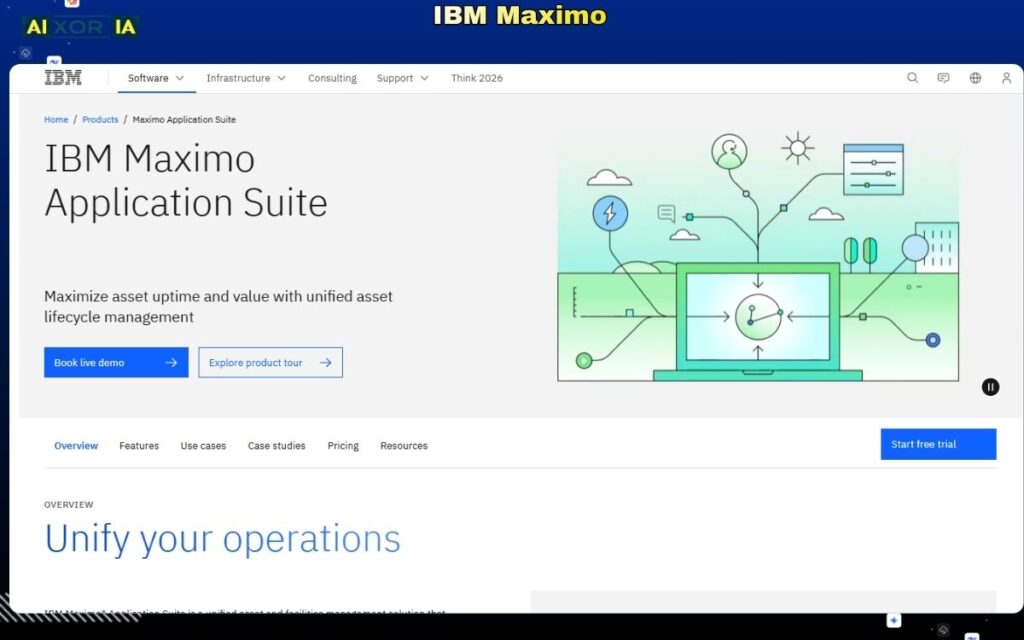
IBM Maximo is a leading enterprise asset management platform that integrates AI for predictive maintenance and infrastructure monitoring.
It uses machine learning models to analyze operational data from sensors and historical maintenance records. The system can predict when equipment is likely to fail and recommend maintenance actions before breakdown occurs.
Maximo also supports IoT integration, allowing real-time data collection from physical assets. Its AI capabilities extend to anomaly detection, failure prediction, and automated scheduling of maintenance tasks.
For large enterprises managing complex infrastructure—such as utilities, manufacturing plants, or transportation systems—IBM Maximo provides a centralized platform for monitoring and optimization.
Pros:
- Strong predictive analytics capabilities
- Scales for large enterprise environments
- Integrates with IoT and asset management systems
Cons:
- Complex implementation
- Requires technical expertise
- Higher cost for full deployment
Pricing: Custom enterprise pricing (typically quote-based)
Best AI Tool for Cloud Infrastructure Monitoring
Google Cloud AI
Google Cloud AI offers advanced machine learning tools designed for large-scale infrastructure monitoring and failure prediction.
It enables organizations to build predictive models using time-series data, logs, and system metrics. Combined with Google Cloud’s monitoring tools, it can detect anomalies, forecast outages, and automate responses.
One of its strengths is scalability—it can process massive datasets in real time, making it ideal for cloud-native infrastructure and distributed systems.
AI models can also be customized, allowing teams to tailor predictions based on specific operational conditions.
Pros:
- Highly scalable
- Strong data processing capabilities
- Advanced machine learning tools
Cons:
- Requires ML expertise
- Setup can be complex
- Costs can increase with scale
Pricing: Pay-as-you-go (varies based on usage)
Best AI Tool for Industrial IoT and Edge Analytics
Microsoft Azure Machine Learning
Microsoft Azure Machine Learning provides a comprehensive environment for building predictive models focused on infrastructure health.
It integrates with IoT devices, enabling real-time data collection and analysis at the edge. This is especially useful in industries like manufacturing, energy, and logistics, where immediate insights are critical.
Azure’s predictive maintenance solutions use machine learning to identify patterns that indicate potential failure. It also supports automated workflows, making it easier to deploy models across large systems.
Pros:
- Strong integration with IoT ecosystems
- Flexible model deployment
- Enterprise-grade security and compliance
Cons:
- Learning curve for beginners
- Requires proper data infrastructure
- Costs depend on usage
Pricing: Pay-as-you-go; enterprise plans available
Best AI Tool for Engineering and Simulation-Based Prediction
Siemens MindSphere
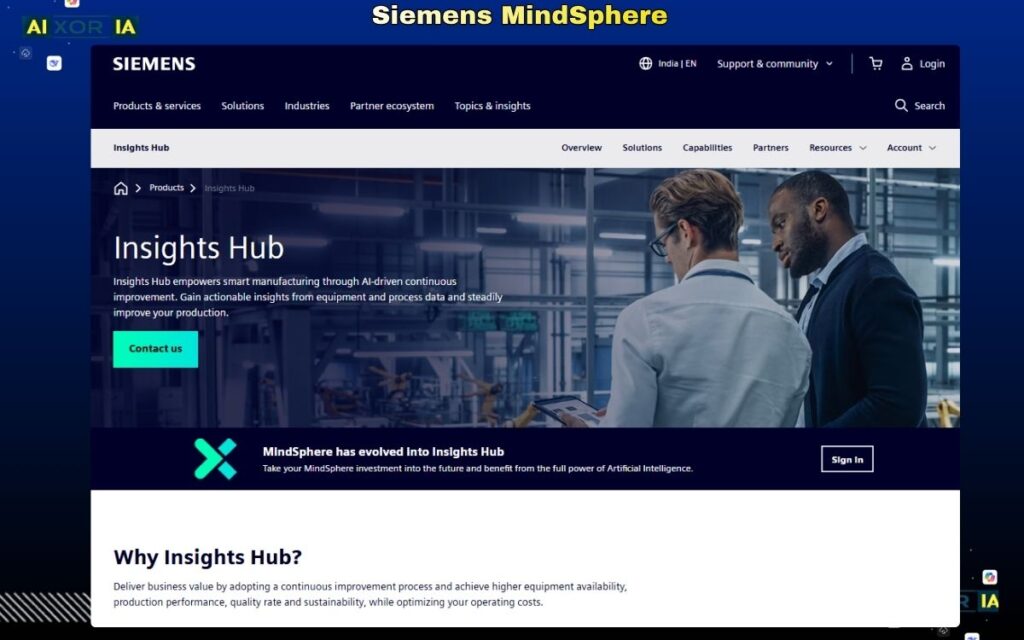
Siemens MindSphere is designed for industrial environments where simulation and engineering data play a critical role.
It combines IoT data with advanced analytics to monitor equipment performance and predict failures. The platform is particularly strong in industries like manufacturing, energy, and transportation.
MindSphere allows engineers to create digital twins—virtual models of physical systems—that can simulate stress, wear, and failure conditions. This provides deeper insights into how and when infrastructure might fail.
Pros:
- Strong engineering and simulation capabilities
- Digital twin technology
- Real-time monitoring
Cons:
- Complex setup
- Best suited for industrial use cases
- Requires domain expertise
Pricing: Enterprise pricing (custom quotes)
Best AI Tool for Monitoring and Observability
DataRobot
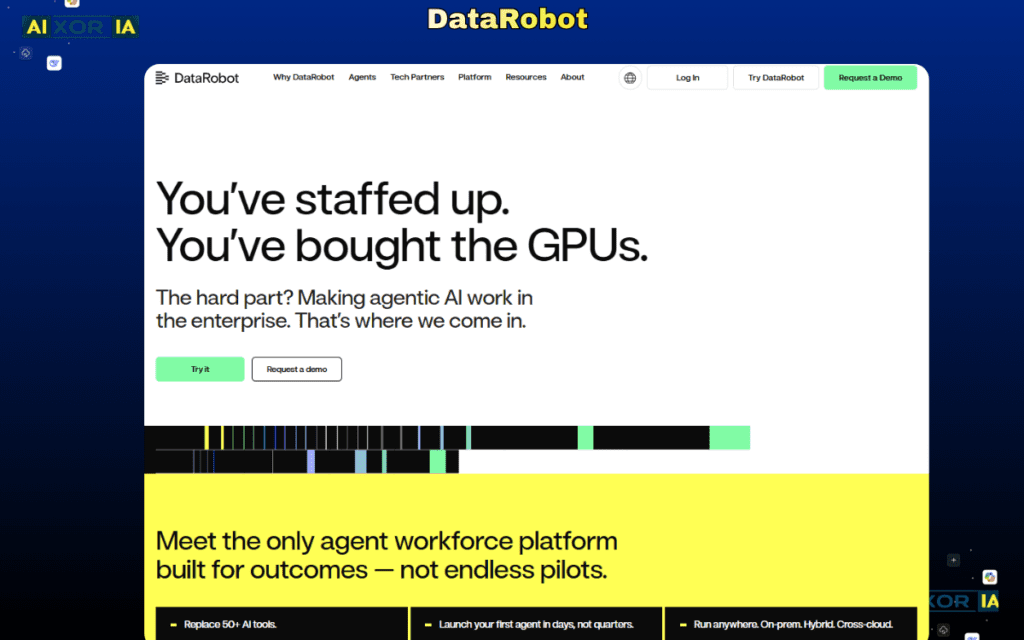
DataRobot focuses on automating machine learning workflows, making predictive analytics more accessible.
It allows organizations to build and deploy models quickly without deep data science expertise. In infrastructure monitoring, DataRobot can analyze operational data to predict failures and identify risk factors.
Its automated approach reduces the time required to develop predictive models, making it suitable for organizations that want faster implementation.
Pros:
- Automated machine learning
- Faster deployment
- User-friendly interface
Cons:
- Less control over model customization
- Enterprise-focused pricing
- Requires data preparation
Pricing: Custom enterprise pricing
How AI Predicts Infrastructure Failure (Step-by-Step)
- Data Collection
Sensors, logs, and monitoring systems collect real-time data. - Data Processing
AI systems clean and organize the data for analysis. - Pattern Recognition
Machine learning models identify patterns linked to past failures. - Prediction Generation
The system forecasts when a failure is likely to occur. - Actionable Insights
Alerts or automated actions are triggered to prevent failure.
Use Cases Across Industries
Energy and Utilities
Predict power grid failures and optimize maintenance schedules.
Transportation
Monitor bridges, rail systems, and aircraft components.
Manufacturing
Detect machine wear and prevent production downtime.
IT and Cloud Infrastructure
Predict server outages and system failures.
Limitations and Challenges
While AI is powerful, it’s not without challenges:
- Requires high-quality data
- Implementation can be complex
- Initial setup costs can be high
- Models need continuous updates
Organizations must invest in data infrastructure and expertise to fully benefit from AI-driven predictions.
Final Answer
The most relevant AI capability for predicting infrastructure failure before it occurs is predictive analytics powered by machine learning.
It stands out because it:
- Learns from historical data
- Detects early warning signals
- Improves over time
- Applies across multiple industries
Other capabilities like anomaly detection, time-series analysis, and deep learning enhance this foundation, but predictive analytics remains the core driver.
Conclusion
Infrastructure systems are becoming more complex, and the cost of failure is increasing. AI is no longer optional—it’s essential for proactive maintenance and risk management.
Organizations that adopt predictive analytics can move from reacting to failures to preventing them entirely. The tools available today make it possible to implement these systems at scale, whether in industrial operations, cloud environments, or public infrastructure.
1 thought on “Which AI Capability Is Most Relevant for Predicting Infrastructure Failure Before It Occurs? (2026 Guide)”