AI orchestration has moved beyond simple workflow automation. In 2026, enterprises are increasingly using orchestration platforms to manage how AI models interact with systems, data, and users—while maintaining strict security, compliance, and governance standards.
For security-focused teams, the challenge is not just automation. It’s about controlling how AI behaves across environments, ensuring sensitive data is protected, and maintaining visibility over every automated decision.
This is where AI orchestration tools focused on security come in. These platforms combine workflow automation, AI model management, and enterprise-grade security controls to help organizations scale AI safely.
In this guide, we break down the top AI orchestration tools focused on security in 2026, including their strengths, limitations, pricing, and ideal use cases.
Table of Contents
What Makes the Best AI Orchestration Tool for Security?
Not all orchestration tools are built with security in mind. The best platforms for secure AI orchestration typically offer:
Governance and access control
Role-based access, audit logs, and approval workflows ensure that only authorized users can create or modify automations.
Data protection and compliance
Support for standards like SOC 2, GDPR, HIPAA, and encryption (in transit and at rest) is essential for enterprise environments.
AI model control and monitoring
The ability to monitor AI decisions, manage prompts, and track outputs helps prevent misuse and ensures accountability.
Integration across secure systems
Enterprise workflows often span cloud apps, on-prem systems, and internal databases. Strong integrations reduce risk and manual handling.
AI guardrails and policy enforcement
Modern tools include guardrails to prevent sensitive data exposure, enforce policies, and limit AI actions.
READ MORE – What are the Best Tools for AI Orchestration?
The Best AI Orchestration Tools Focused on Security at a Glance
| Tool | Best For | Key Strength | Pricing |
|---|---|---|---|
| Zapier | Secure AI orchestration across apps | 8,000+ integrations + governance | Free; paid from $19.99/month |
| Tines | Security automation workflows | Built for SOC teams | Custom pricing |
| Torq | No-code security orchestration | AI-driven incident response | Custom pricing |
| Palo Alto Cortex XSOAR | Enterprise security orchestration | Deep SOAR capabilities | Custom pricing |
| Microsoft Power Automate | Microsoft ecosystem security | Native compliance + Copilot | From $15/user/month |
| Splunk SOAR | Data-driven security workflows | SIEM + automation integration | Custom pricing |
| IBM Cloud Pak for Security | Hybrid enterprise security | Open integration + AI insights | Custom pricing |
Best AI Orchestration Tool for Secure Cross-App Automation
Zapier
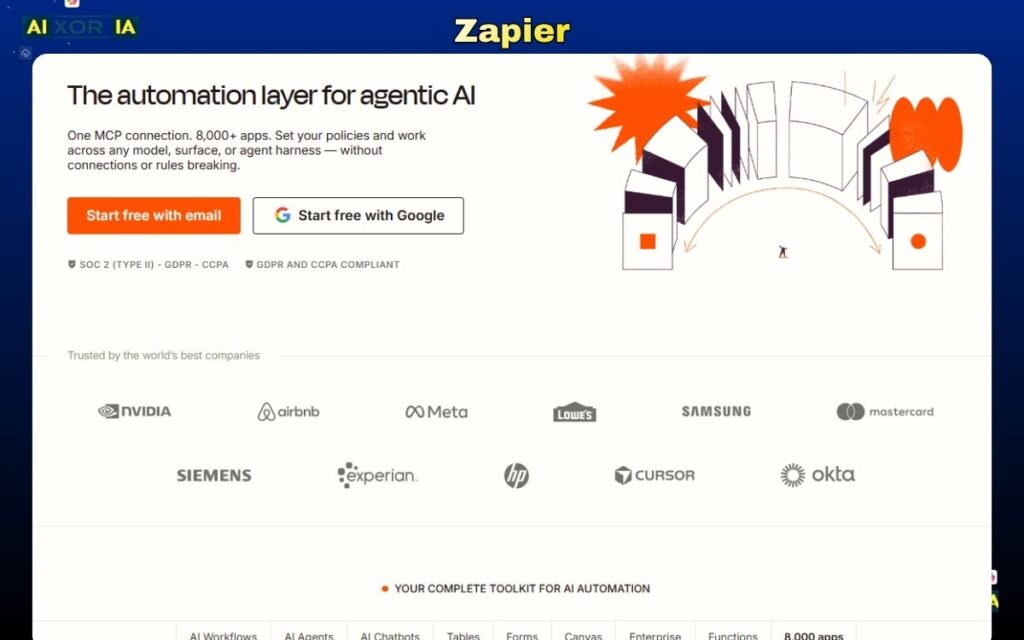
Zapier has evolved into a full AI orchestration platform that emphasizes both flexibility and security. While traditionally known for automation, it now enables enterprises to build AI-powered workflows with strong governance controls.
Zapier connects to over 8,000 applications, allowing teams to orchestrate workflows across marketing, operations, IT, and security systems without writing code. Its AI features—including Copilot, AI agents, and natural language workflow generation—make it accessible to non-technical users while still maintaining control through admin-level permissions and audit logs.
From a security perspective, Zapier supports enterprise-grade features such as SSO, SCIM, SOC 2 Type II compliance, and detailed audit trails. Admins can define who can build automations, how they are approved, and how they are monitored.
This makes it particularly valuable for organizations that want to scale AI automation across departments without compromising security or governance.
Pricing: Free plan available; paid plans from $19.99/month; enterprise pricing available
Pros:
- Extensive integrations across secure and cloud systems
- Strong governance and access control features
- AI-powered workflow generation and orchestration
Cons:
- Limited control over highly specialized security operations
- No dedicated mobile app experience
Best AI Orchestration Tool for Security Teams (SOC Focus)
Tines
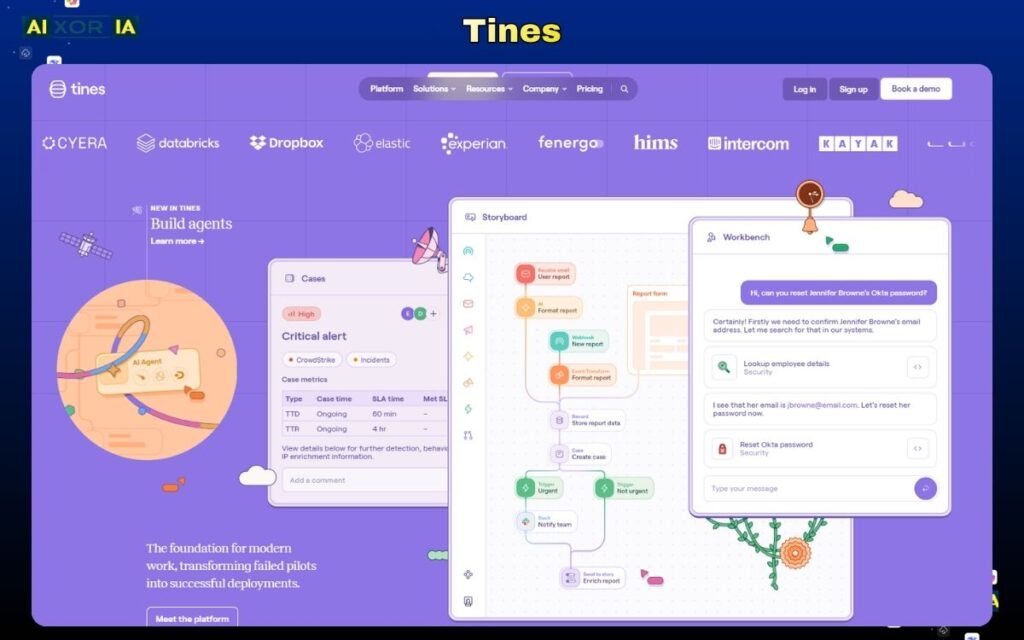
Tines is purpose-built for security teams that need to automate incident response, threat detection, and operational workflows. Unlike general automation platforms, Tines focuses entirely on security orchestration.
It provides a no-code interface where security teams can design workflows that respond to alerts, enrich data, and trigger actions across security tools. The platform integrates deeply with SIEMs, EDR systems, and threat intelligence platforms.
Tines also incorporates AI capabilities to assist with decision-making, alert prioritization, and workflow optimization. Its security-first architecture ensures that sensitive data is handled with strict controls, including encryption, audit logs, and compliance certifications.
This makes it ideal for SOC teams that need both automation and visibility into every action taken.
Pricing: Custom enterprise pricing
Pros:
- Built specifically for security operations
- Strong integrations with security tools
- High level of control and auditability
Cons:
- Requires onboarding and setup time
- Less suitable for non-security workflows
Best No-Code AI Security Orchestration Platform
Torq
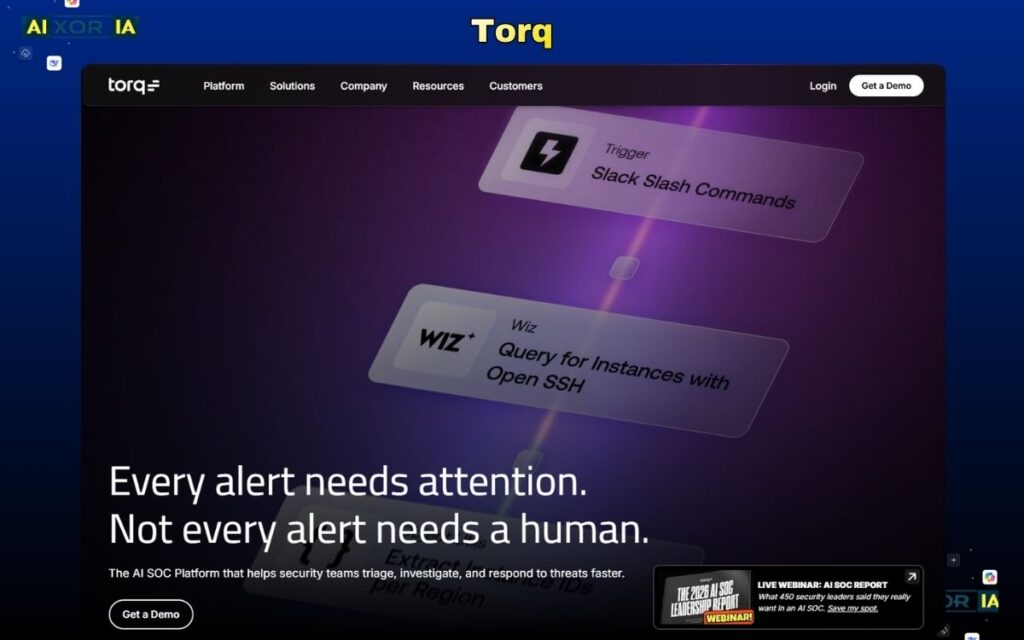
Torq is a modern no-code security orchestration platform designed to help teams automate complex security workflows without relying on engineering resources.
It combines automation, AI decision-making, and incident response into a single platform. Security teams can build workflows that detect threats, analyze data, and respond automatically—all while maintaining visibility and control.
Torq’s AI capabilities allow it to process large volumes of alerts, reduce noise, and prioritize critical issues. It also supports secure integrations with cloud environments, SaaS tools, and internal systems.
The platform emphasizes usability, making it easier for teams to adopt automation without deep technical expertise.
Pricing: Custom pricing
Pros:
- No-code interface for fast deployment
- AI-driven alert handling and prioritization
- Strong focus on usability and speed
Cons:
- Newer platform compared to legacy tools
- May require integration setup for complex environments
Best Enterprise Security Orchestration Platform
Cortex XSOAR
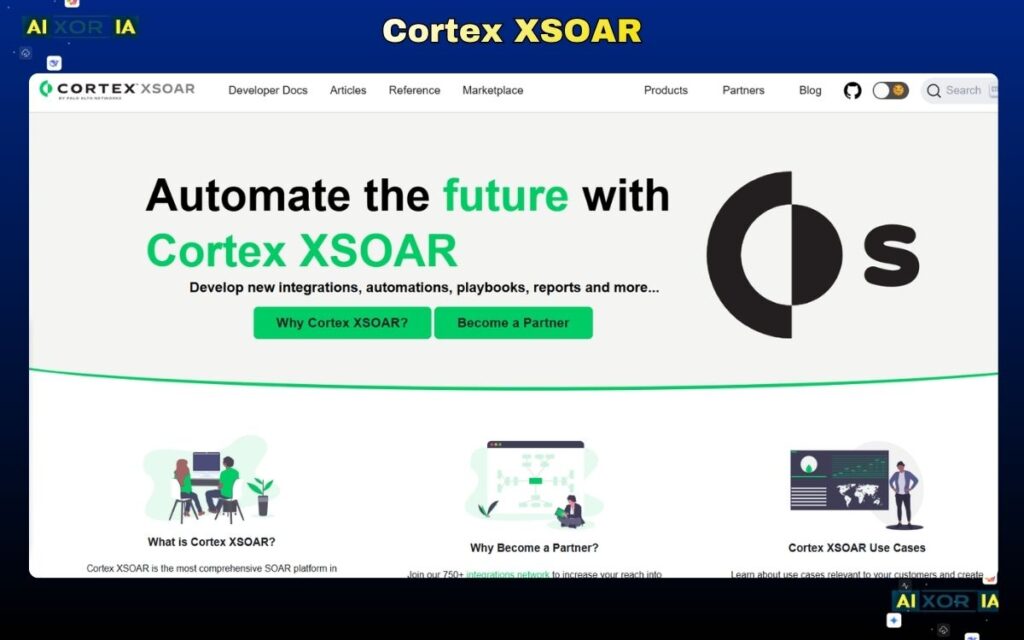
Cortex XSOAR is one of the most advanced security orchestration, automation, and response (SOAR) platforms available for enterprises.
It combines incident management, automation, and threat intelligence into a single system. Organizations can orchestrate complex workflows that handle everything from detection to resolution, with full visibility and control.
Cortex XSOAR also integrates AI capabilities to assist with threat analysis, automate repetitive tasks, and improve response times. Its deep integration with security ecosystems makes it a powerful choice for large organizations with complex infrastructures.
Pricing: Custom enterprise pricing
Pros:
- Comprehensive SOAR capabilities
- Deep integration with security tools
- Advanced automation and incident management
Cons:
- High cost and complexity
- Requires dedicated resources for implementation
Best AI Orchestration Tool for Microsoft Security Ecosystem
Microsoft Power Automate
Microsoft Power Automate is a strong choice for organizations already using Microsoft 365 and Azure. It allows teams to automate workflows across Microsoft services while maintaining compliance and security standards.
The platform includes AI features through Copilot, enabling users to create workflows using natural language. It also supports document processing, approvals, and integrations with security tools within the Microsoft ecosystem.
From a security standpoint, Power Automate benefits from Microsoft’s compliance framework, including data protection, identity management, and governance controls.
Pricing: From $15/user/month for premium plans
Pros:
- Deep integration with Microsoft ecosystem
- Strong compliance and security framework
- AI-assisted workflow creation
Cons:
- Less flexible outside Microsoft environments
- Complex workflows can become difficult to manage
Best Data-Driven Security Orchestration Platform
Splunk SOAR
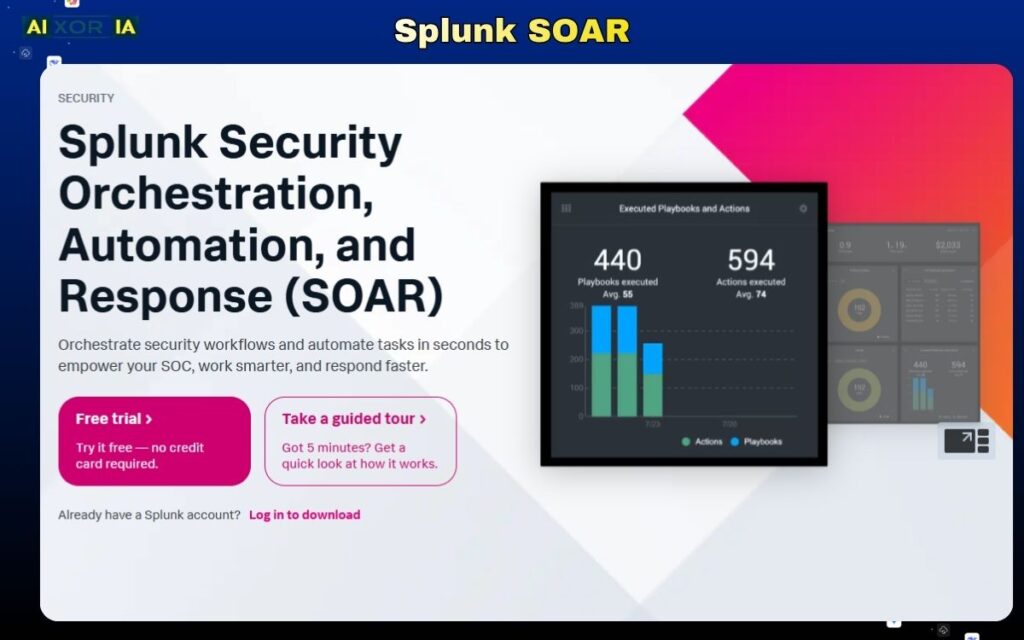
Splunk SOAR is designed for organizations that rely heavily on data-driven security operations. It integrates with Splunk’s analytics platform to provide automation based on real-time data insights.
Security teams can create workflows that analyze threats, trigger responses, and document actions automatically. The platform also supports playbooks, which standardize responses to common incidents.
Its AI capabilities enhance threat detection and response by analyzing patterns and suggesting actions.
Pricing: Custom pricing
Pros:
- Strong data integration and analytics
- Scalable for large enterprises
- Playbook-based automation
Cons:
- Requires familiarity with Splunk ecosystem
- Implementation can be complex
Best Hybrid AI Security Orchestration Platform
IBM Cloud Pak for Security
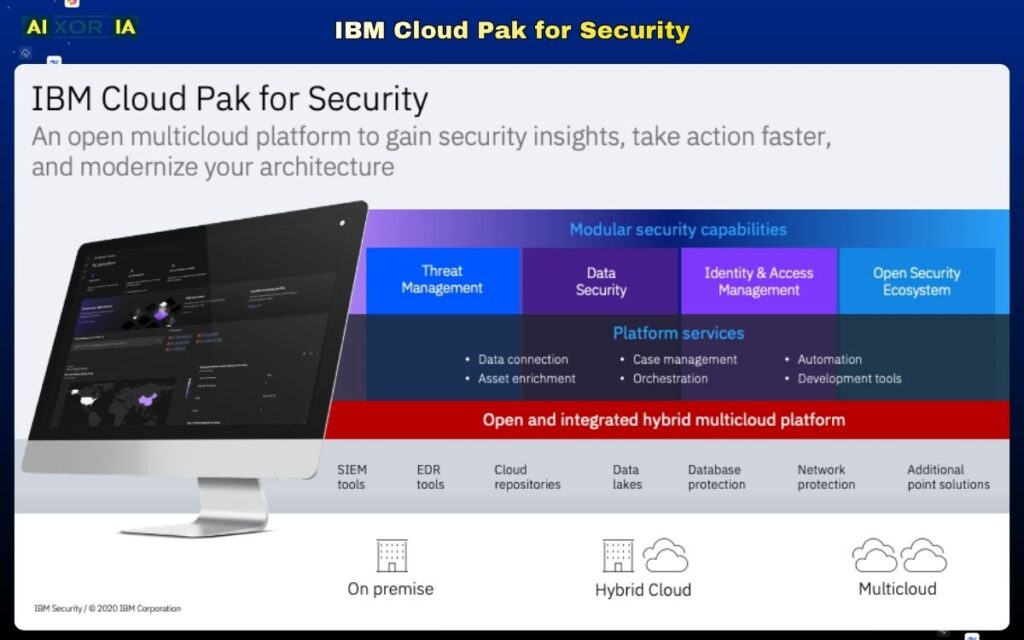
IBM Cloud Pak for Security is built for enterprises operating in hybrid environments, where data and systems are distributed across cloud and on-prem infrastructure.
It provides a unified platform for threat detection, investigation, and response, with AI-powered insights and automation. The platform integrates with a wide range of security tools, allowing organizations to orchestrate workflows across different environments.
Its open architecture and strong focus on compliance make it suitable for industries with strict regulatory requirements.
Pricing: Custom enterprise pricing
Pros:
- Strong hybrid and multi-cloud support
- AI-driven insights and automation
- Open integration framework
Cons:
- Complex setup and deployment
- Requires enterprise-level resources
READ MORE – Top AI Orchestration Tools for Enterprises in 2026
How to Choose the Right AI Orchestration Tool for Security
The best tool depends on your environment and priorities:
- For cross-app automation with governance → Zapier
- For SOC-focused workflows → Tines or Torq
- For enterprise-grade security orchestration → Cortex XSOAR
- For Microsoft environments → Power Automate
- For data-driven security operations → Splunk SOAR
- For hybrid enterprise infrastructure → IBM Cloud Pak for Security
Many enterprises use a combination of tools—for example, a dedicated SOAR platform alongside a broader orchestration layer.
The Role of AI in Secure Orchestration (2026)
AI is reshaping how security orchestration works.
Modern platforms can:
- Automatically analyze threats and prioritize alerts
- Generate workflows from natural language prompts
- Detect anomalies and suggest responses
- Enforce policies and prevent data exposure
This reduces manual effort while improving accuracy and response speed.
However, it also introduces new risks, making governance, monitoring, and control more critical than ever.
Final Thoughts
AI orchestration is becoming a core part of enterprise security strategy. The ability to automate workflows while maintaining strict control over data and decisions is no longer optional—it’s essential.
The top AI orchestration tools focused on security in 2026 offer different strengths:
- Some prioritize flexibility and integrations
- Others focus on deep security operations
- Many now include AI as a core capability
The right choice depends on your organization’s scale, infrastructure, and security requirements.
3 thoughts on “Top AI Orchestration Tools Focused on Security in 2026”