Why the Right AI Orchestration Tools Can Make or Break Your Enterprise AI Strategy
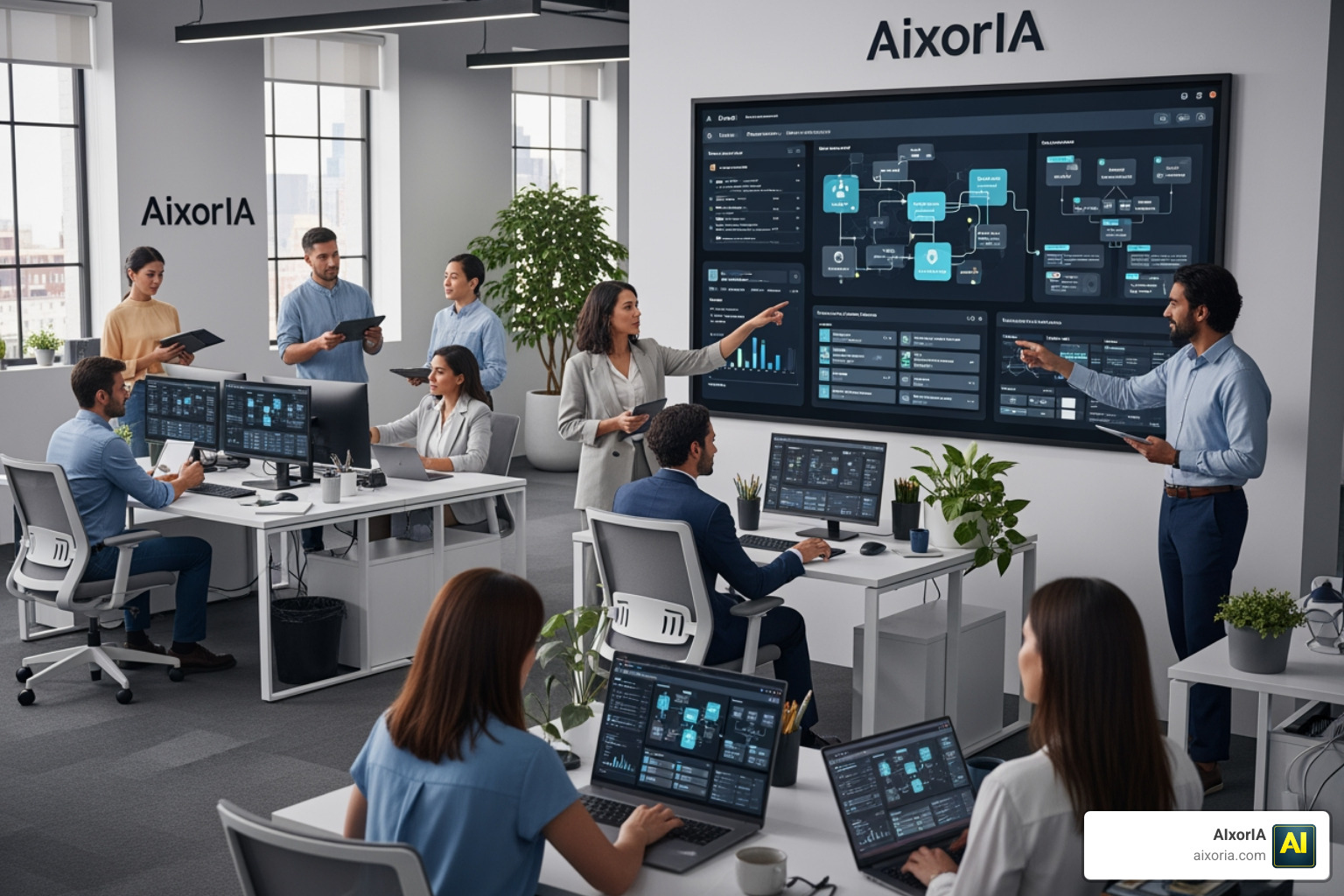
The top AI orchestration tools for enterprises in 2026 are no longer a nice-to-have — they’re the difference between AI that actually delivers results and AI that just burns budget.
Here’s a quick look at the leading options:
| Tool | Best For | Approach |
|---|---|---|
| Zapier | No-code workflow automation | Visual, drag-and-drop |
| LangChain / LangGraph | Custom AI app development | Developer-first framework |
| Amazon Bedrock Agents | Cloud-native multi-agent systems | AWS-native infrastructure |
| IBM watsonx Orchestrate | Governed enterprise workflows | Enterprise SaaS |
| UiPath | RPA + AI automation | Low-code enterprise |
| Workato | Cross-system integration | iPaaS + AI |
| Prefect | Data pipeline orchestration | Python-based |
| CrewAI | Role-based multi-agent teams | Open-source framework |
| Conductor OSS | Durable, internet-scale workflows | Open-source engine |
| Boomi Orchestrate | IT + business team collaboration | AI-guided design |
Right now, the business world is in the middle of what many are calling an agentic pivot — AI is shifting from a tool you experiment with to infrastructure you run your business on.
The numbers back this up. 52% of executives at generative AI companies say their AI agents are already in production. 80% of Fortune 500 companies are running active AI agents built with low-code and no-code tools.
But here’s the uncomfortable truth: most of those deployments still lack unified governance, clear audit trails, and measurable outcomes. And 71% of CIOs say they have until mid-2026 to prove AI’s value — or face budget cuts.
That pressure is real. So is the complexity. When you’re running multiple AI models, data sources, and business processes at once, you don’t just need AI — you need something to conduct all of it.
That’s exactly what AI orchestration does.
This guide breaks down every major category of orchestration platform, who each tool is built for, and how to choose one that delivers real results — fast.
Understanding AI Orchestration in the 2026 Enterprise Landscape
Imagine a movie set without a director. The actors (AI models) are talented, the lighting crew (data sources) is ready, and the script (your business goal) is written. But without someone to tell the actors when to speak or the crew when to move, you just have expensive chaos.
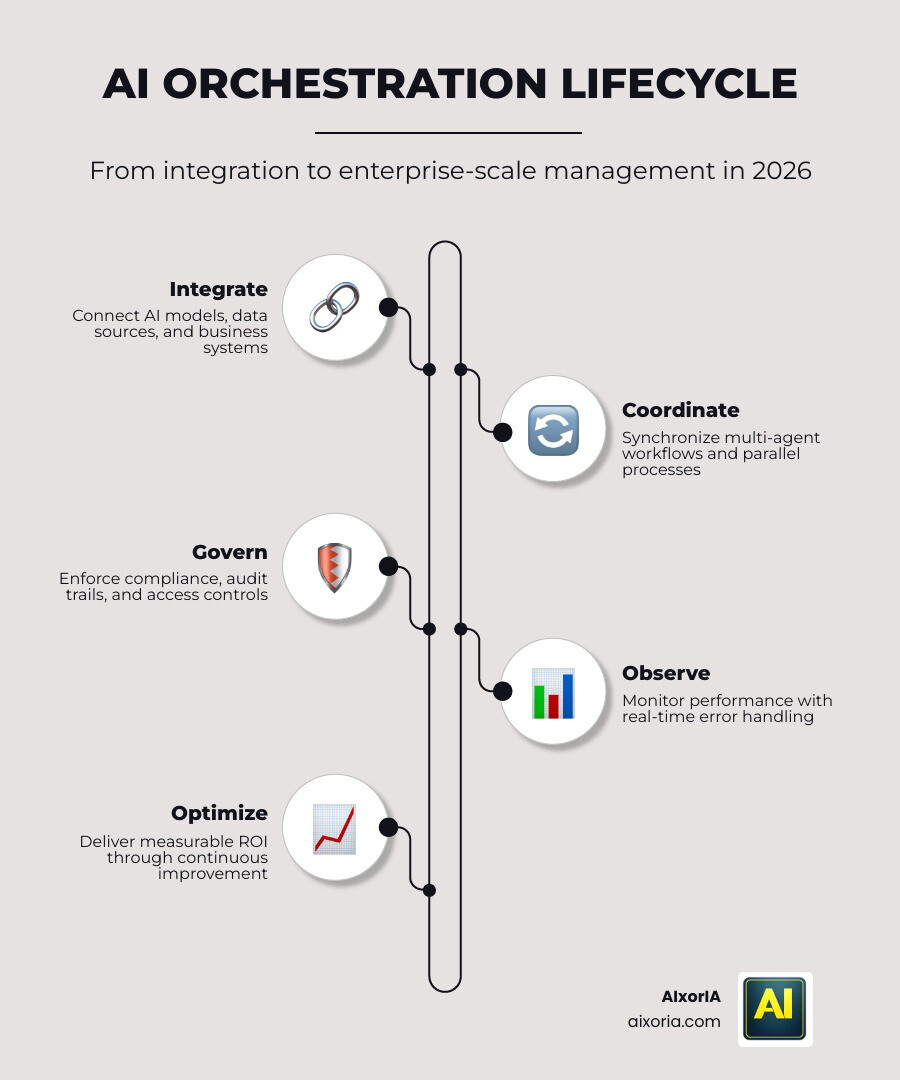
AI orchestration is that director. It is the coordination and management of AI models, systems, and integrations. It covers everything from deployment and implementation to the ongoing maintenance of components within a larger AI ecosystem. In 2026, we’ve moved past simple “chatbots” to multi-agent systems where specialized agents handle data retrieval, analysis, and decision-making in parallel.
When we look for What is the Best AI Orchestration Tool in 2026, we aren’t just looking for a “smart” tool. We are looking for a system that manages state, handles communication between agents, and ensures the whole process is deterministic—meaning it produces reliable, consistent results every time. Tools like Flyte: Dynamic, resilient AI orchestration have become industry standards because they allow us to coordinate data, models, and compute with the resilience that big business requires.
Why AI Orchestration is Critical for Enterprise AI Adoption
For a large organization, scalability is the name of the game. A retailer might need to scale its recommendation engines 300% during a holiday peak and then immediately scale back. Orchestration makes this possible without manual infrastructure changes.
Furthermore, with the 71% CIO deadline looming, we must move fast. Orchestration reduces manual integration work by 50% or more. It allows us to answer the question: Which AI Capability Enables Autonomy Planning Tool Use? The answer is orchestration—it provides the “brain” that allows autonomous agents to use tools like CRMs, ERPs, and web search to complete complex tasks.
How Orchestration Differs from AI Agents and MLOps
It’s easy to get these terms mixed up. Here is how we distinguish them:
- AI Agents: These are individual “workers.” They autonomously plan and execute specific tasks.
- MLOps: This is the “factory” where the models are built, tested, and deployed.
- AI Orchestration: This is the “manager” that sits above both. It integrates multiple agents, connects them to data pipelines, and ensures they follow business rules.
Orchestration uses state machines and feedback loops to manage “fleets” of agents. If you are interested in the building blocks, check out our guide on the Top 5 Tools for Building AI Agents for Enterprise in 2026.
Categorizing the Top AI Orchestration Tools for Enterprises
Not all tools are built for the same purpose. We generally group the top AI orchestration tools for enterprises into four categories:
| Category | Primary Goal | Key Tools |
|---|---|---|
| Operational/No-Code | Speed and ease of use for business teams | Zapier, Workato |
| Developer-First | Customization and technical flexibility | LangChain, LangGraph, Flyte |
| Data-Centric | Managing complex data pipelines and LLM state | Prefect, Kestra, Redis |
| Cloud-Native | Infrastructure-level control within one ecosystem | Amazon Bedrock, Azure AI Agent Service |
When we evaluate these, we prioritize Top AI Orchestration Tools Focused on Security in 2026 because, for an enterprise, a data leak is far more expensive than a slow rollout. Platforms like Kestra: Event-driven declarative orchestration are gaining traction because they allow teams to manage millions of workflows using simple YAML files, making it easier for both developers and business stakeholders to see what’s happening.
Evaluating Top AI Orchestration Tools for Enterprises by Buyer Profile
We often see companies struggle because they bought a tool that didn’t match their team’s skills.
- AI/ML Engineers: Need “full-code” flexibility. They prefer frameworks like LangGraph or CrewAI.
- IT Leaders: Prioritize governance and auditability. They look toward IBM watsonx or Elementum.
- LOB Executives: Want time-to-value. They gravitate toward no-code options like Zapier or low-code platforms like Boomi.
If you are just starting to build your team, our list of the Best AI Tools for Building AI Agents in 2026 can help you match the software to your staff’s expertise.
Cloud-Native vs. Open-Source Orchestration Frameworks
Cloud-native services (like Amazon Bedrock) offer incredible “time to value” because everything is pre-integrated. However, open-source frameworks provide better data sovereignty—keeping your data on your own servers. For example, Netflix Maestro: Workflow-as-a-Service is a powerhouse for managing millions of jobs daily with strict service-level objectives. You can compare more options in our breakdown of The 7 Best AI Agent Orchestration Tools in 2026.
Leading Platforms for 2026 Enterprise Deployment
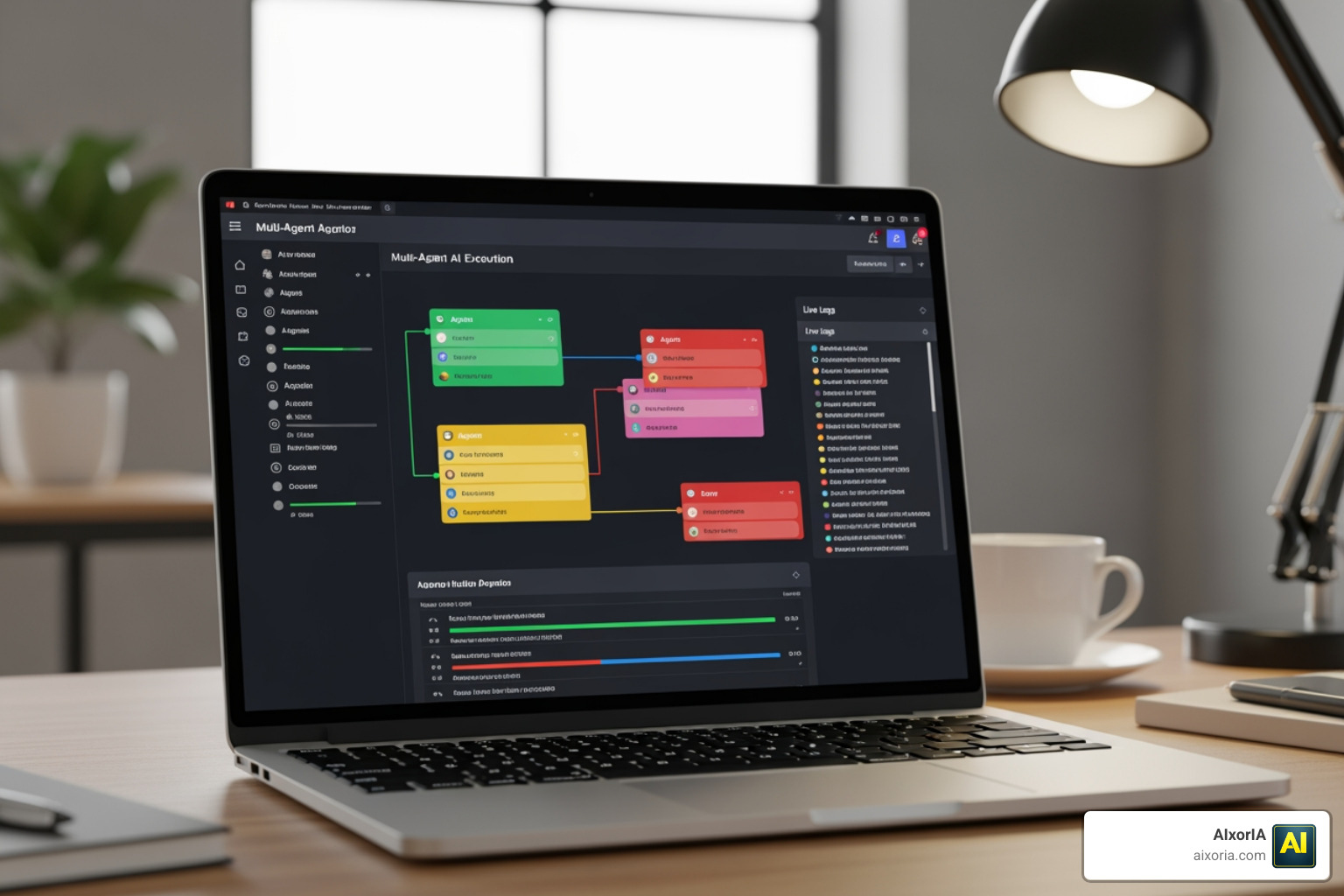
As we move through 2026, a few names consistently rise to the top of the top AI orchestration tools for enterprises list.
- Zapier Central: This has become the gold standard for no-code AI. With connections to 9,000+ apps, it allows business users to build complex agents that can “talk” to their CRM, Slack, and email without writing a single line of code.
- Amazon Bedrock Agents: For those already in the AWS ecosystem, Bedrock is a beast. It offers access to over 83 different LLMs and allows you to build agents that handle resource provisioning automatically.
- LangGraph: This is the “pro” version of LangChain. It uses a graph-based approach (nodes and edges) to map out exactly how an AI should think and act, which is perfect for complex, multi-step research or coding tasks.
For a deeper dive into these frameworks, see our Top 9 AI Agent Orchestration Frameworks in 2026. If you need something that scales to “internet-size” workloads, Conductor OSS: Internet-scale workflow engine is the continuation of the Netflix Conductor project and is designed specifically to separate orchestration logic from business logic.
Enterprise Workflow Systems and Low-Code Integration
Legacy systems are the “final boss” of AI adoption. Platforms like UiPath and Workato are essential because they bridge the gap between modern AI and older ERP systems. Orkes Conductor: Unified Application Platform takes this further by providing a visual builder that can handle workflows lasting anywhere from seconds to years.
We also have newcomers like Boomi Orchestrate, which allows you to describe a business problem in plain language and then uses AI agents to assemble a visual blueprint of the solution. This is a game-changer for reducing the “blank page” problem in workflow design. You can find more about these in our article on What are the Best Tools for AI Orchestration.
Developer-First Frameworks for Custom AI Solutions
If your goal is to build a proprietary AI product, you need developer frameworks. Prefect is excellent for data-heavy AI tasks, while CrewAI excels at “role-based” orchestration—where you assign one agent to be the “Manager,” another to be the “Researcher,” and another to be the “Writer.”
Testing these platforms is crucial. We’ve done the legwork in our Best AI Agent Builder Software in 2026 Tested guide.
Essential Capabilities for Production-Ready Orchestration
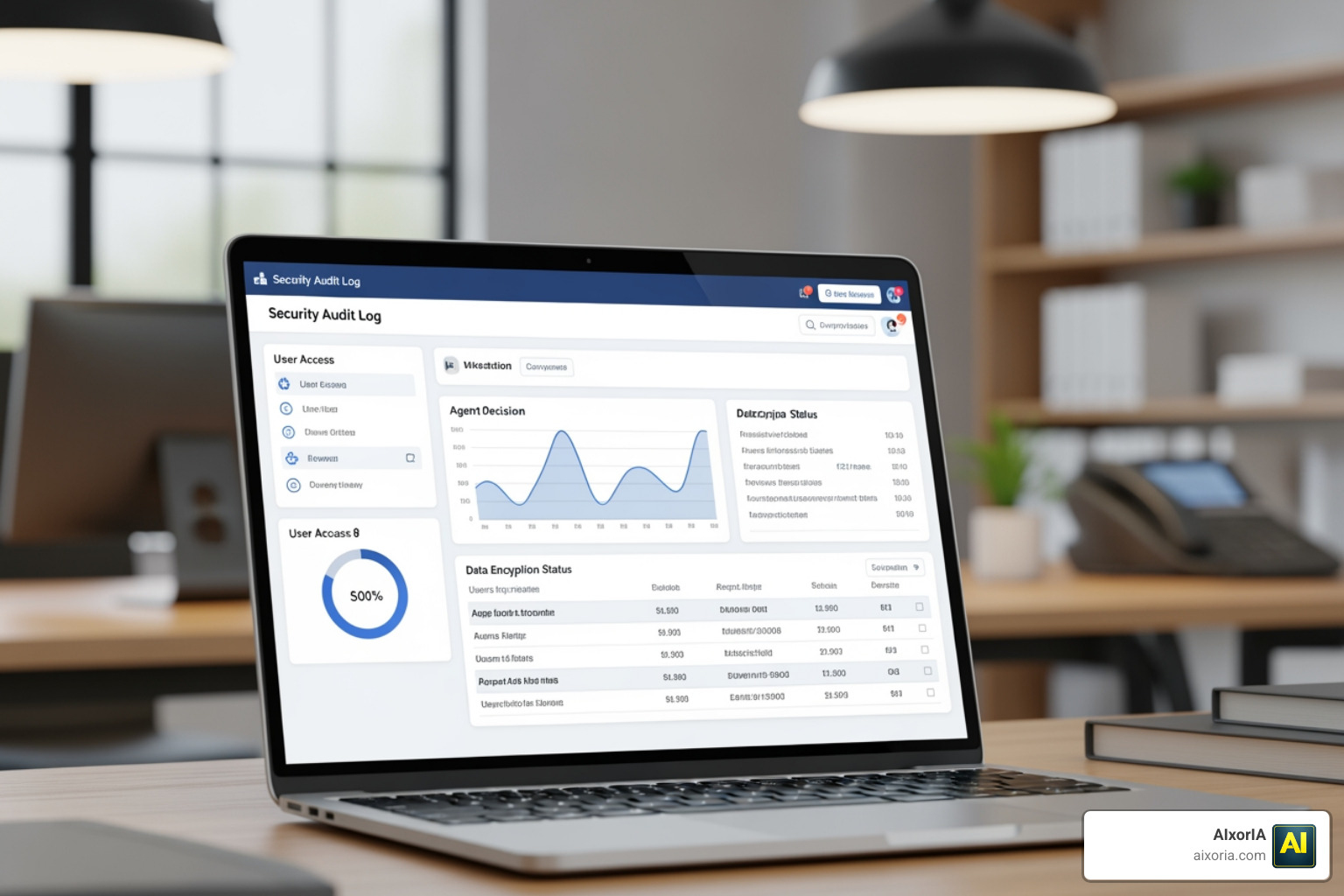
When we move AI out of the lab and into production, the requirements change. You can’t just have an AI that is “smart”; it must be safe and auditable. We recommend looking for these four pillars in any of the Top AI Orchestration Tools for Enterprises in 2026:
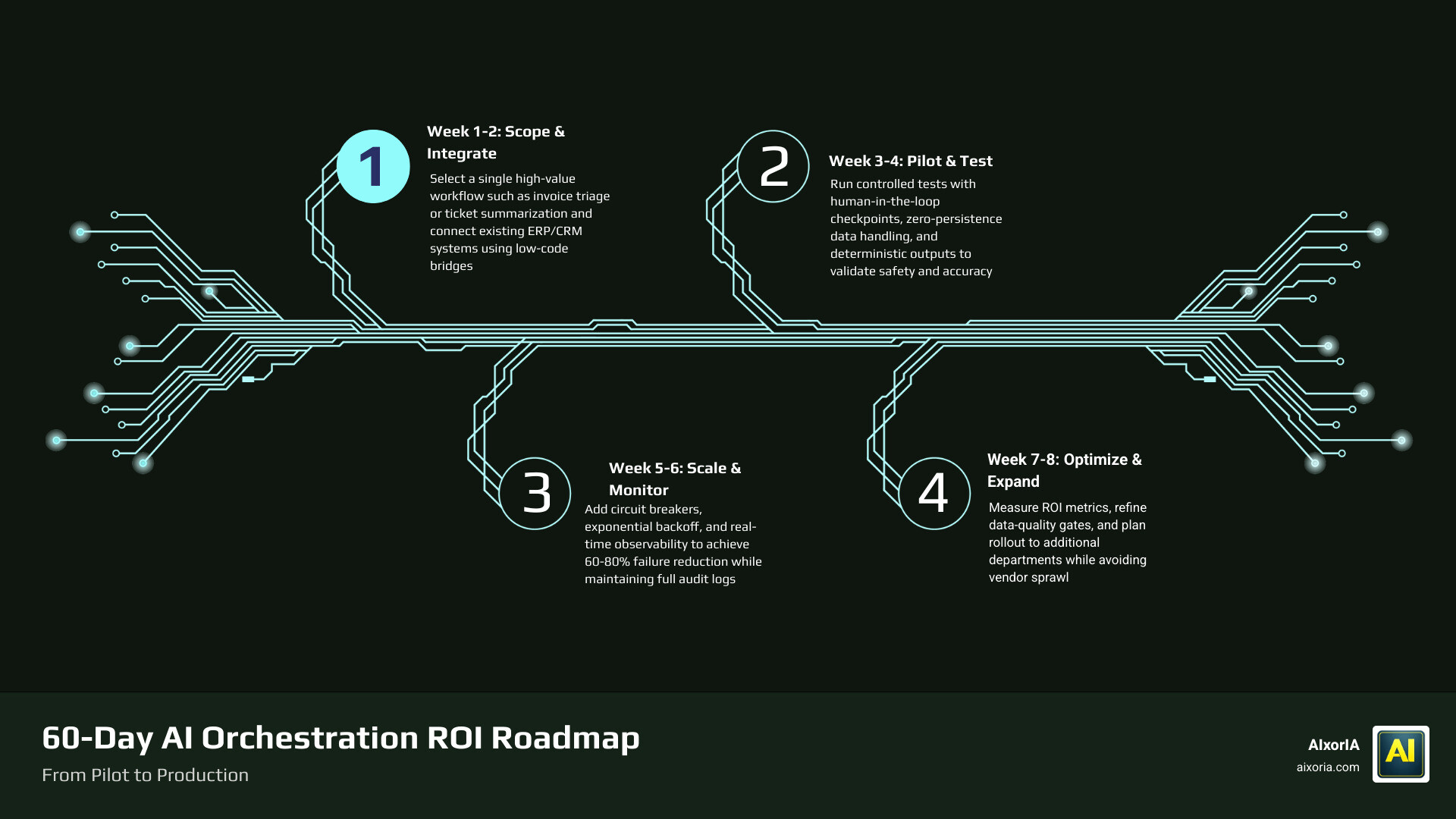
- Zero Persistence Architecture: This means the platform never stores or trains on your data. It queries it in real-time and then “forgets” it. This is non-negotiable for regulated industries like finance or healthcare.
- Human-in-the-Loop (HITL): High-stakes decisions (like approving a $50,000 loan) should never be fully autonomous. The best tools have built-in checkpoints where a human must click “Approve.”
- Full Auditability: You need a log of every decision the AI made, what data it looked at, and why it chose a specific path.
- Deterministic Control: For compliance, you often need the same input to produce the same output every time.
Governance, Security, and Data Sovereignty
Enterprises must satisfy SOC 2, HIPAA, and GDPR. We often point our clients toward Scientific research on Flyte security best practices to understand how to build strongly-typed, validated interfaces that prevent “bad data” from ever entering the system.
Observability and Error Handling in Multi-Agent Systems
In a complex system, things will break. The difference is how the system handles it. Orchestrated workflows that implement “circuit breakers” and “exponential backoff” (automatically retrying a failed task with increasing wait times) see a 60-80% drop in failure rates.
Achieving ROI and Avoiding Implementation Pitfalls
The goal for any enterprise should be to achieve measurable ROI within 30 to 60 days. We suggest starting with one scoped workflow—like automating invoice triage or summarizing support tickets—rather than trying to “AI-enable” the whole company at once.
Common Pitfalls in AI Orchestration Selection
- Vendor Sprawl: Buying five different tools for five different departments.
- Loose Data-Quality Gates: Allowing “dirty” data to trigger AI actions, which leads to “hallucinations at scale.”
- Ignoring Infrastructure: Most orchestration frameworks require a high-speed backend. We often recommend Redis for state management because it offers the sub-millisecond latency needed for real-time agent coordination.
To avoid technical debt, we recommend studying Scientific research on Flyte’s resilient architecture, which shows how to build workflows that survive crashes and network failures.
Frequently Asked Questions about AI Orchestration
What is the difference between AI orchestration and AI automation?
Automation handles single, repetitive tasks (if X happens, do Y). Orchestration coordinates multiple agents, human decisions, and business rules to manage an entire end-to-end process (e.g., managing an entire employee onboarding journey across HR, IT, and Finance).
How does Zero Persistence architecture protect enterprise data?
Zero Persistence ensures the orchestration platform acts only as a “pass-through.” It queries your data where it lives (like in your secure database), processes it, and then deletes the temporary data. It never stores your customer info or uses it to train future models.
Can AI orchestration tools integrate with legacy ERP and CRM systems?
Yes! In fact, that is one of their primary jobs. Tools like UiPath, Workato, and Boomi are designed specifically to use APIs or “screen scraping” (RPA) to connect modern AI models to older systems that weren’t built for the AI age.
Conclusion
At AIxorIA, we know that choosing from the top AI orchestration tools for enterprises can feel overwhelming. Whether you need a custom AI solution, a performance audit of your current setup, or a hands-on tool training workshop, we are here to help. Our mission is to provide simple language help and affordable services to ensure your business doesn’t just survive the agentic pivot—but thrives in it.
Ready to see real results? Start your enterprise AI journey with our ROI guide and let’s build something incredible together.
4 thoughts on “Top AI Orchestration Tools for Enterprises in 2026”