Why Choosing the Right Email Newsletter Platform Can Make or Break Your Startup

Email newsletter platforms for startups are one of the highest-ROI tools you can add to your growth stack — but only if you pick the right one from the start.
Here are the top options to know in 2026:
| Platform | Free Tier | Best For |
|---|---|---|
| Kit | 10,000 subscribers, unlimited sends | Creators and newsletter builders |
| Sender | 15,000 emails/month | Budget-conscious startups |
| MailerLite | 12,000 emails/month, 1,000 subscribers | Simple automation |
| EmailOctopus | 10,000 emails/month, 2,500 subscribers | Bloggers and lean teams |
| Brevo | 9,000 emails/month, unlimited contacts | Growing lists on zero budget |
| Mailchimp | 1,000 emails/month, 500 contacts | Brand recognition, e-commerce |
| Sequenzy | 5,000 emails/month, 1,000 subscribers | SaaS with Stripe automation |
Every startup needs to communicate with its audience. Email is still the most reliable way to do that — you own the list, no algorithm can take it away from you.
But here’s the problem most founders run into: they sign up for a tool that looks free, send a few campaigns, and then hit a wall. Suddenly they’re paying $50/month for a list of 600 people, or they realize automation is locked behind a premium tier they can’t afford yet.
The stakes are real. Getting email wrong early — like landing in spam folders or burning your sender reputation — can hurt your startup more than not sending at all.
This guide cuts through the noise. Whether you’re pre-launch, just hitting product-market fit, or scaling to your first 10,000 subscribers, there’s a platform built for exactly where you are right now.
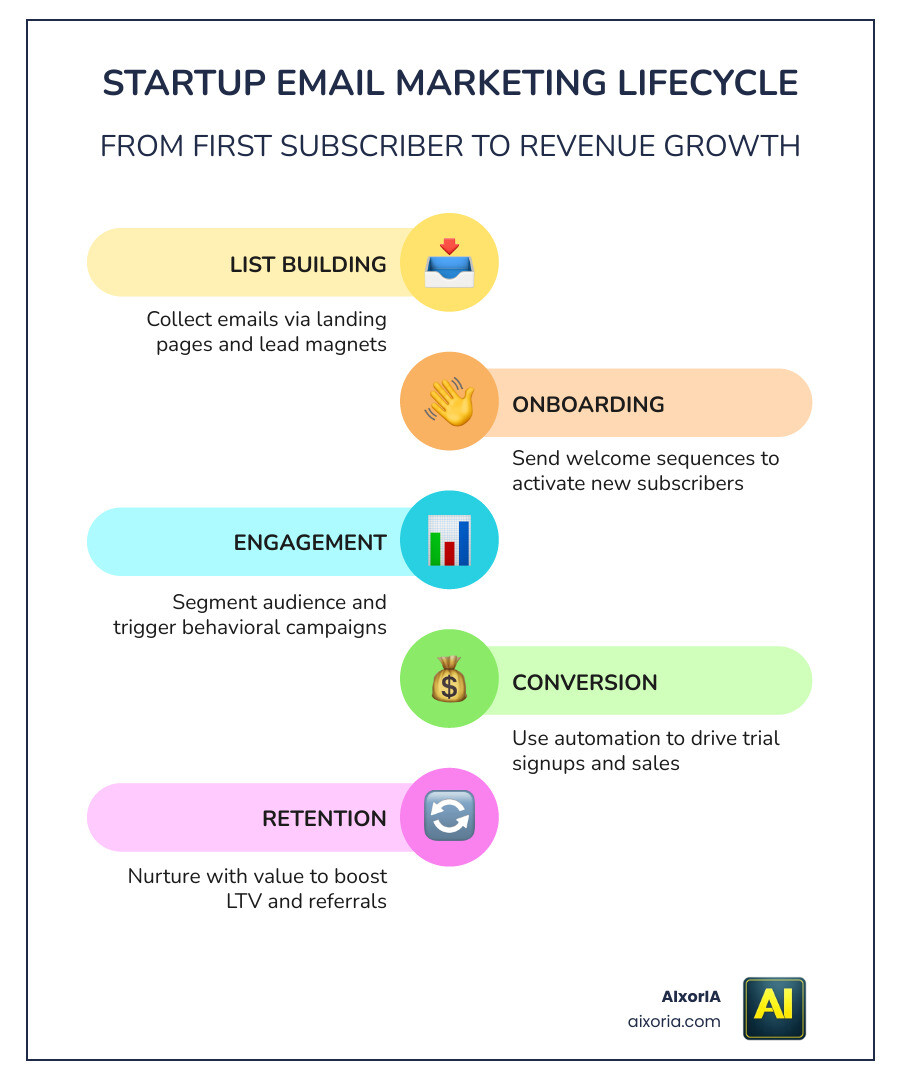
Key Criteria for Evaluating Email Newsletter Platforms for Startups
When we evaluate email newsletter platforms for startups, we look past the shiny landing pages. As early-stage teams, we do not have the time or the budget to waste on over-engineered tools. Instead, we focus on a few key pillars:
- Deliverability: If your emails land in the promotions tab or the spam folder, your beautifully crafted copy is useless.
- Pricing Scalability: We need tools that let us start for free or cheap but do not punish us with astronomical price jumps when our list grows.
- Automation: We need “always-on” workflows to handle welcome sequences, trial onboarding, and abandoned carts while we sleep.
- Ease of Use: A clean drag-and-drop builder with ready-to-use templates is crucial. We do not have time to code custom HTML.
- Integrations: The platform must seamlessly talk to our CRM, payment gateways (like Stripe), and database tools.
To dive deeper into the general landscape of platforms, you can read our comprehensive review of The Best Email Newsletter Platforms and Software in 2026.
Scalability and Deliverability of Email Newsletter Platforms for Startups
Deliverability is the quiet engine of email marketing. For example, platforms like Kit boast an industry-leading 99.8% delivery rate and average open rates above 40%. When you are choosing a tool, you are also choosing their sender reputation. If other users on the platform send spam, your inbox placement can suffer.
For startups that want to send with absolute confidence, dedicated developer-friendly tools like Community Platform for Startups | Notify offer a 99.9% deliverability rate and a generous free tier of 3,000 emails per month. This is particularly useful for managing transactional emails—like password resets, invoice receipts, and account confirmations—which must arrive instantly to maintain a good user experience.
Automation and Segmentation Features
The true power of email marketing lies in sending the right message to the right person at the right time. Basic lists treat everyone the same, but modern startups rely on behavioral triggers. If a user signs up for your SaaS trial but does not create a project within 48 hours, an automated nudge can bring them back.
Using segmentation, we can group users by their actions, subscription status, or engagement. For a detailed breakdown of how platforms stack up on these features, check out our list of the 9 Best Email Newsletter Platforms For Startups In 2026.
Comparing Free vs. Paid Startup Email Tiers
Many platforms offer enticing free tiers, but we must look at what happens when our startup outgrows those limits. Here is how some of the most popular options compare:
| Platform | Free Tier Limits | Paid Tier (Starts At) | Key Gaps in Free Tier |
|---|---|---|---|
| Sender | 15,000 emails/mo | $7/month | Advanced segmentation limits |
| EmailOctopus | 10,000 emails/mo | $10/month | Platform branding on emails |
| Brevo | 9,000 emails/mo (300/day limit) | $29/month | Basic reporting, daily send limits |
| Sequenzy | 5,000 emails/mo, 1,000 subs | Custom pricing | Advanced custom triggers |
| Mailtrap | 4,000 emails/mo | $15/month | Limited marketing automation |
If you are a small business looking to balance budget with professional features, our guide on the 9 Best Email Newsletter Software For Small Business In 2026 breaks down these trade-offs in detail.
Genuinely Free Tiers vs. Freemium Bait
As founders, we need to distinguish between three types of free offers:
- Genuinely Free Tiers: Tools like Sender or EmailOctopus that let you use core features indefinitely up to a high subscriber count.
- Free Trials: Full feature access that expires in 14 to 30 days, forcing you to pay before you have built an audience.
- Freemium Bait: Highly restrictive free plans (like Mailchimp’s 500-contact limit) that force you onto expensive paid plans the moment you get any real traction.
If you want to avoid commercial platform lock-in entirely, you might want to look into self-hosted or open-source solutions. Learn more in our guide to 9 Open Source Email Newsletter Software In 2026.
Top Platform Categories for Different Startup Use Cases

Different startups have vastly different email needs. A direct-to-consumer (D2C) e-commerce store needs heavy visual design and abandoned cart sequences, while a B2B SaaS needs event-driven behavioral emails.
Best Email Newsletter Platforms for Startups in SaaS and B2B
SaaS startups live and die by their product metrics. If you are building a software product, you need a platform that connects directly to your billing engine. For instance, Sequenzy offers full automation—including Stripe integrations for failed payment recovery (dunning sequences) and trial-to-paid conversions—on its free tier for up to 1,000 subscribers.
Similarly, Email Marketing for Startups — Pro Features, Startup Pricing | Spreeflo provides startup-friendly pricing starting at just $13/month. It includes event-based automation and visual workflow builders designed specifically to help software companies onboard users quickly.
All-in-One Growth Engines and CRM Integrations
For solo founders and lean teams, managing five different tools is a recipe for burnout. This has led to the rise of all-in-one growth engines that combine your landing pages, CRM, pipeline tracking, and email newsletters in one place.
A great example of this is Startr – AI-Powered CRM for Solo Founders and Indie Hackers, which functions as an AI growth command center. It helps founders capture leads on waitlist pages, organize them in a pipeline, and generate personalized follow-ups automatically.
If you want to run your entire newsletter business from a single dashboard, platforms like Newsletter Platform & Software for Startups – Venturz provide custom form builders, contact segmentation, and subscription payment tracking without requiring any third-party integrations. For those focusing heavily on audience acquisition, Breaker | The newsletter platform built for growth uses algorithmic matching to help you automatically attract your ideal customer profile (ICP).
Frequently Asked Questions about Startup Email Marketing
What are the hidden costs of free email marketing tools?
While a plan may say “free,” the hidden costs usually come in the form of feature gating (locking crucial features like automated sequences behind paywalls), branding (forcing you to display their logo in your footer), and subscriber taxes (counting unsubscribed or duplicate contacts toward your billing limit).
How do transactional emails differ from marketing newsletters?
Marketing newsletters are bulk emails sent to build relationships or promote products (e.g., weekly updates). Transactional emails are one-to-one, system-triggered messages (e.g., sign-up verifications or purchase receipts). Transactional emails bypass marketing opt-out lists and require high-priority API delivery to ensure they arrive instantly.
Why is email deliverability critical for early-stage startups?
If your early emails land in spam, major inbox providers (like Google and Yahoo) will flag your domain. A bad domain reputation is incredibly difficult to repair and can prevent your regular business emails from reaching investors, partners, and customers.
Conclusion

Choosing the right email newsletter platform in 2026 is about balancing your current budget with your future growth. Whether you need the creator-focused power of Kit, the developer-friendly API of Notify, or the all-in-one CRM capabilities of Venturz and Startr, the goal is to build an asset you own: your subscriber list.
At AIxorIA, we help early-stage teams navigate the rapidly evolving landscape of digital tools. We provide custom AI solutions, tool training workshops, and performance audits designed to streamline your operations and maximize your growth. If you are ready to automate your workflows and scale your startup without burning through your runway, explore our guide on AI Tools for Business in 2026 or reach out to us today!
3 thoughts on “7 Best Email Newsletter Platforms for Startups (2026 Guide) – Free & Scalable Tools”