ETL (Extract, Transform, Load) tools are the backbone of modern data pipelines. For developers, they are not just about moving data—they are about building reliable, scalable systems that clean, transform, and deliver data across applications, warehouses, and analytics platforms.
In 2026, the landscape of ETL tools has evolved significantly. Many platforms now offer free tiers, open-source models, and AI-assisted pipeline building, making it easier for developers to build production-grade data workflows without heavy upfront costs.
This guide breaks down the best free ETL tools for developers, focusing on flexibility, scalability, ease of use, and the growing role of AI in data engineering.
Table of Contents
What Makes the Best ETL Tools for Developers?
Not all ETL tools are developer-friendly. The best tools typically offer:
Code-first or flexible development environments
Developers often prefer writing transformations in SQL or Python rather than relying entirely on visual builders.
Scalability and performance
Even free tools should handle growing data volumes and integrate with modern data stacks (cloud warehouses, APIs, streaming systems).
Open-source or free-tier access
Cost matters, especially for startups, indie developers, or early-stage projects.
Integration ecosystem
Support for databases, APIs, cloud platforms, and data warehouses is essential.
AI-assisted pipeline development
Modern ETL tools are increasingly adding AI to help generate queries, debug pipelines, and optimize transformations.
The Best Free ETL Tools for Developers at a Glance
| Tool | Best For | Key Strength |
|---|---|---|
| Apache Airflow | Workflow orchestration | Python-based scheduling |
| Talend Open Studio | Visual ETL | Drag-and-drop pipelines |
| Apache NiFi | Data flow automation | Real-time data streaming |
| Singer | Lightweight ETL | Simple connectors |
| dbt | Data transformation | SQL-based workflows |
| Airbyte | Open-source ELT | Connector ecosystem |
| Pentaho | Enterprise ETL | Data integration suite |
Best Free ETL Tool for Workflow Orchestration
Apache Airflow
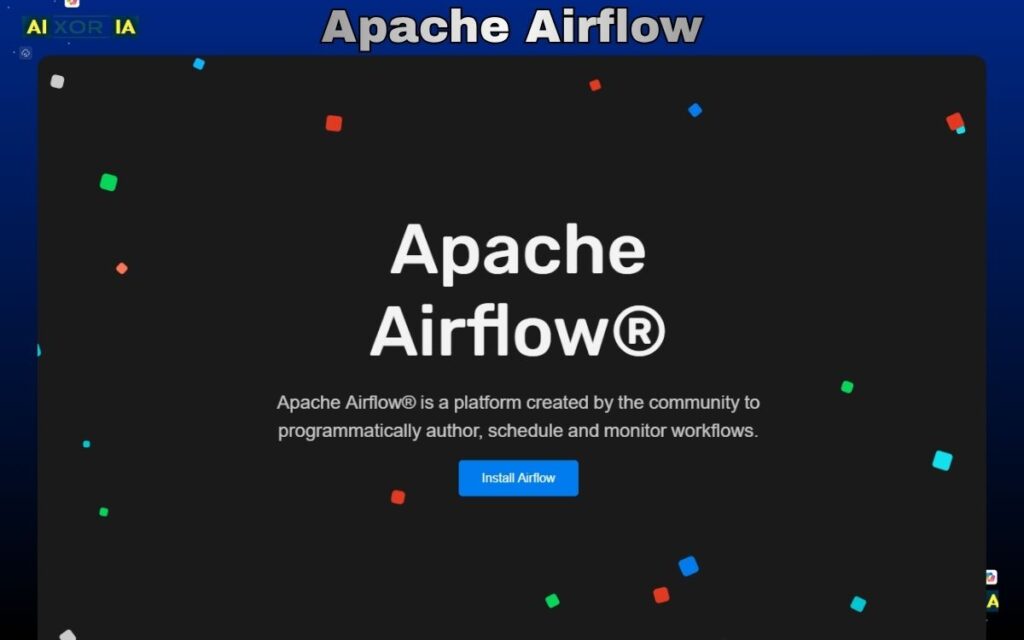
Apache Airflow is one of the most widely used open-source tools for orchestrating ETL pipelines. Instead of being a traditional ETL tool, it focuses on scheduling and managing workflows programmatically using Python.
Developers define workflows as DAGs (Directed Acyclic Graphs), which makes Airflow highly flexible and suitable for complex pipelines. It integrates with a wide range of data systems, including cloud platforms, APIs, and databases.
Airflow’s ecosystem has also started incorporating AI-assisted features through plugins and integrations. Developers can use AI tools to generate DAG structures, optimize scheduling logic, and debug pipeline failures more efficiently. In large-scale environments, AI-driven monitoring helps identify bottlenecks and suggest performance improvements.
Best for: Developers who prefer code-first pipeline orchestration
Limitation: Requires setup and infrastructure management
Best Free ETL Tool for Visual Pipeline Building
Talend Open Studio
Talend Open Studio is a powerful open-source ETL tool that provides a visual interface for building data pipelines. It allows developers to design workflows using drag-and-drop components while still supporting custom code when needed.
It supports a wide range of connectors, making it easy to integrate databases, cloud services, and enterprise systems. This makes it a strong option for developers who want a balance between visual design and technical control.
Talend has been integrating AI capabilities into its broader ecosystem, including data quality suggestions, anomaly detection, and pipeline optimization. Even in its free version, developers can benefit from smarter data profiling and transformation suggestions that reduce manual effort and improve accuracy.
Best for: Developers who prefer visual workflows with flexibility
Limitation: Interface can feel heavy for lightweight use cases
READ MORE – Best ETL Tools in Data Warehouse
Best Free ETL Tool for Real-Time Data Flows
Apache NiFi
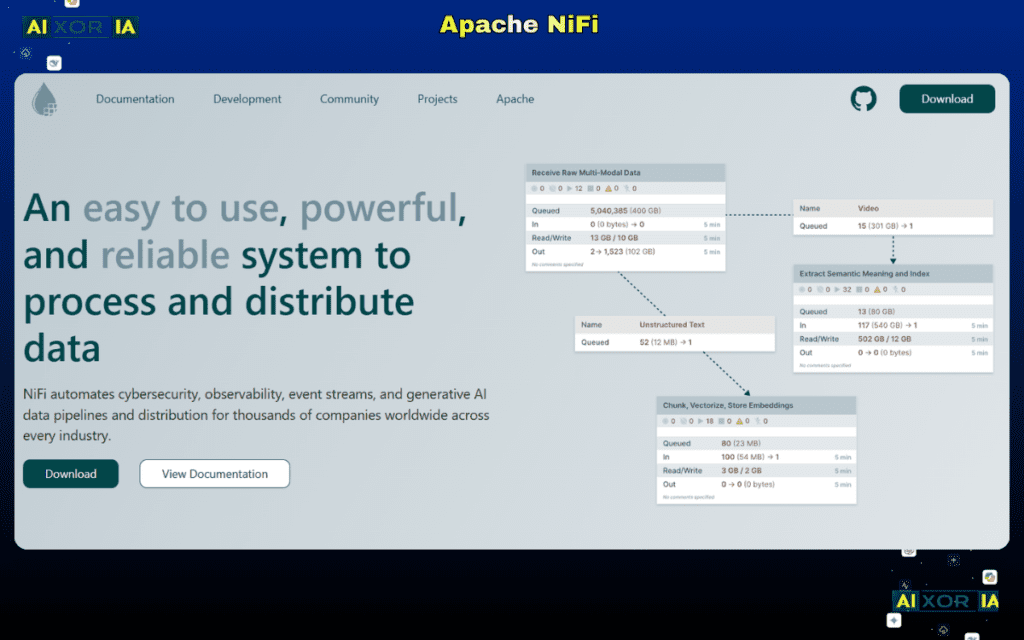
Apache NiFi is designed for automating the flow of data between systems, especially in real-time or near real-time scenarios.
It offers a highly intuitive UI where developers can design data flows, monitor performance, and manage data movement visually. NiFi excels in handling streaming data, making it ideal for use cases like IoT, log processing, and event-driven architectures.
AI is increasingly being used alongside NiFi for intelligent data routing, anomaly detection, and predictive flow management. Developers can integrate machine learning models into pipelines to automatically classify, filter, or transform data based on patterns.
Best for: Real-time data pipelines and streaming workflows
Limitation: Can be resource-intensive
Best Lightweight Free ETL Tool for Simplicity
Singer
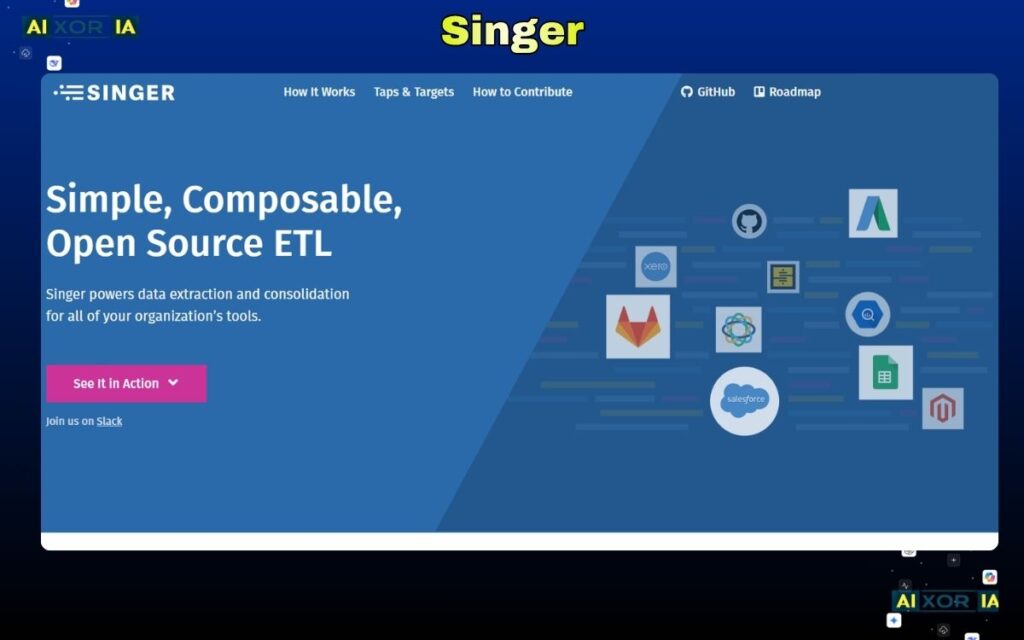
Singer is a simple, open-source ETL framework that uses a standardized approach with “taps” (data sources) and “targets” (destinations).
It’s lightweight and easy to set up, making it ideal for developers who want to build simple pipelines without heavy infrastructure. The modular approach allows you to combine different taps and targets as needed.
While Singer itself doesn’t include built-in AI features, developers often pair it with AI-powered tools for data transformation and validation. For example, AI can be used to generate transformation scripts, validate schemas, or detect inconsistencies in data pipelines built with Singer.
Best for: Lightweight and modular ETL pipelines
Limitation: Limited built-in features compared to larger platforms
Best Free ETL Tool for Data Transformation
dbt
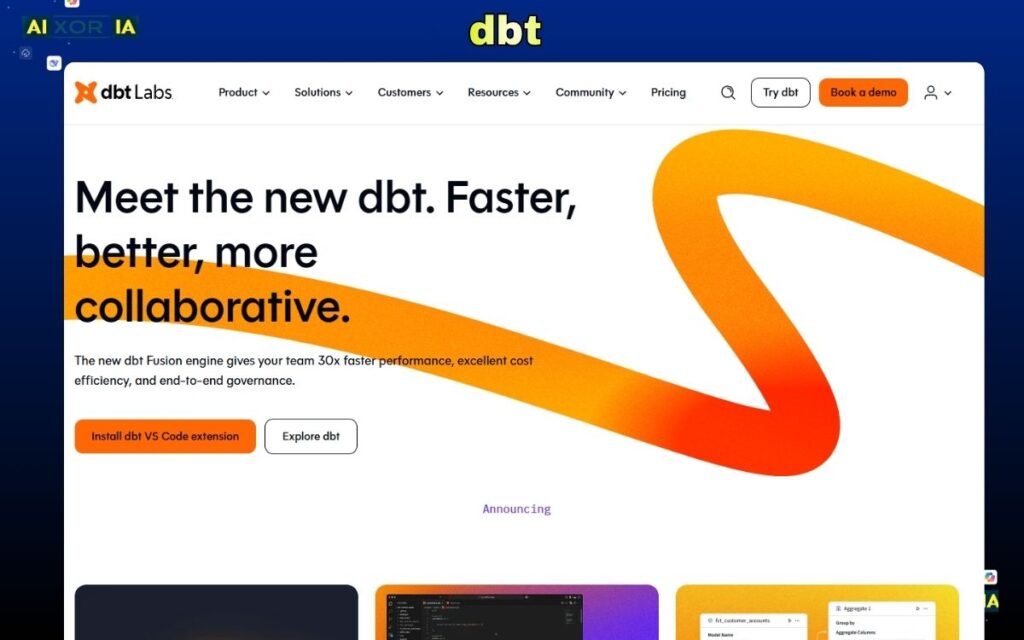
dbt (data build tool) focuses specifically on transforming data within your data warehouse using SQL.
It allows developers to write modular SQL transformations, test data models, and document workflows. dbt is widely used in modern data stacks where ELT (Extract, Load, Transform) is preferred over traditional ETL.
AI is becoming a major part of dbt workflows. Developers use AI to generate SQL queries, optimize transformations, and document models automatically. AI-assisted analytics can also help identify inefficient queries and suggest improvements, making dbt more powerful for large-scale data projects.
Best for: SQL-based transformations in modern data stacks
Limitation: Does not handle extraction or loading directly
Best Open-Source ETL Tool with Strong Connector Ecosystem
Airbyte

Airbyte is one of the fastest-growing open-source ETL/ELT tools, known for its extensive library of connectors.
It allows developers to move data between sources and destinations with minimal setup, and it supports custom connector development. This makes it highly flexible and scalable.
Airbyte is actively integrating AI into its platform. AI is used to automate connector creation, map schemas intelligently, and detect data inconsistencies. Developers can also use AI to monitor pipeline health and predict failures before they occur.
Best for: Developers who need flexible data integration
Limitation: Some advanced features require paid plans
READ MORE – Best ETL Tools for SaaS Companies
Best Free ETL Tool for Enterprise Data Integration
Pentaho

Pentaho (Community Edition) is a comprehensive ETL and data integration platform designed for enterprise use.
It provides a visual interface for building pipelines, along with support for complex transformations and large datasets. Pentaho is particularly useful for organizations that need robust data processing capabilities.
AI is being integrated into enterprise ETL workflows with tools like Pentaho to enhance data preparation, automate transformations, and improve data quality. Developers can leverage AI for predictive analytics, anomaly detection, and intelligent data mapping.
Best for: Enterprise-level data integration
Limitation: Setup and maintenance can be complex
How to Choose the Right ETL Tool
The best ETL tool depends on your development style and use case:
- Code-first workflows → Apache Airflow
- Visual pipelines → Talend Open Studio
- Real-time data → Apache NiFi
- Lightweight pipelines → Singer
- SQL transformations → dbt
- Data integration → Airbyte
- Enterprise solutions → Pentaho
Many developers combine tools—for example, using Airflow for orchestration and dbt for transformation.
The Role of AI in ETL Tools (2026)
AI is transforming ETL development by reducing manual work and improving efficiency.
Modern ETL tools now support:
- Automatic pipeline generation
- Intelligent schema mapping
- Query optimization
- Error detection and debugging
- Predictive monitoring
This allows developers to focus more on logic and architecture rather than repetitive tasks.
Final Thoughts
The best free ETL tools for developers in 2026 are no longer limited by cost—they are defined by flexibility, scalability, and intelligence.
Open-source and free-tier tools now offer capabilities that rival enterprise platforms, especially when combined with AI-assisted workflows.
The right choice depends on your needs:
- Simplicity vs complexity
- Real-time vs batch processing
- Code-first vs visual design
In most cases, the best approach is to build a modular ETL stack using multiple tools that complement each other.
It’s truly very complex in this busy life to listen news on Television,
thus I just use internet for that reason, and get the latest information.
Hey great blog! Does running a blog like this require a massive amount work?
I have no expertise in computer programming but I was hoping to start my own blog in the near future.
Anyway, if you have any suggestions or techniques for new blog owners please share.
I understand this is off topic nevertheless I just needed to ask.
Appreciate it!
Aw, this was an incredibly nice post. Taking a few
minutes and actual effort to produce a great article… but what can I say… I hesitate
a whole lot and don’t manage to get nearly anything
done.
Quality articles is the crucial to be a focus for the people
to go to see the web page, that’s what this site is providing.
First of all I want to say superb blog! I had a quick question that I’d like to ask if you don’t mind.
I was interested to know how you center yourself and clear your head prior
to writing. I have had a tough time clearing my mind in getting
my ideas out there. I do take pleasure in writing however it just seems like the
first 10 to 15 minutes are generally lost simply just trying to figure out how to begin. Any recommendations or tips?
Appreciate it!
Hi friends, nice post and good arguments commented at this place,
I am really enjoying by these.