Enterprise data environments are more complex than ever. Data flows across cloud platforms, on-premise systems, SaaS tools, and real-time pipelines. In this environment, ETL (Extract, Transform, Load) tools are not just about moving data—they are responsible for data reliability, governance, scalability, and performance at scale.
For enterprises, reliability is the defining factor. A failed pipeline, delayed transformation, or inconsistent dataset can impact reporting, decision-making, and even core business operations. The right ETL tool must ensure data accuracy, fault tolerance, observability, and seamless orchestration across systems.
This guide breaks down the most reliable ETL tools for enterprise data in 2026, focusing on scalability, fault tolerance, integrations, and AI-driven automation.
Table of Contents
What Makes an ETL Tool Reliable for Enterprise Use?
Reliability in ETL is not just uptime—it’s about consistency, monitoring, and control.
Scalability and performance
Enterprise tools must handle large volumes of structured and unstructured data across distributed systems without performance degradation.
Fault tolerance and recovery
Automatic retries, error handling, and pipeline recovery are critical to avoid data loss or inconsistencies.
Data governance and security
Support for compliance standards, role-based access, encryption, and audit logs is essential.
Observability and monitoring
Teams need full visibility into pipeline health, logs, and performance metrics.
AI-assisted automation
Modern ETL tools now integrate AI to optimize pipelines, detect anomalies, and automate transformations.
READ MORE – Best ETL Tools in Data Warehouse
The Most Reliable ETL Tools for Enterprise Data at a Glance
| Tool | Best For | Key Strength |
|---|---|---|
| Talend | Data integration & governance | Enterprise-grade reliability |
| Informatica | Large-scale data ecosystems | Advanced automation + AI |
| Apache NiFi | Real-time data flows | Strong control and tracking |
| Microsoft Azure Data Factory | Cloud-native ETL | Deep Azure integration |
| AWS Glue | Serverless ETL | Scalable and automated |
| Fivetran | Managed pipelines | Zero-maintenance reliability |
| Matillion | Cloud data warehouses | High-performance transformation |
| Stitch | Simplicity | Lightweight ETL pipelines |
Best ETL Tool for Enterprise Data Integration and Governance
Talend
Talend has long been recognized as a reliable enterprise ETL platform, especially for organizations that prioritize data governance and compliance alongside integration.
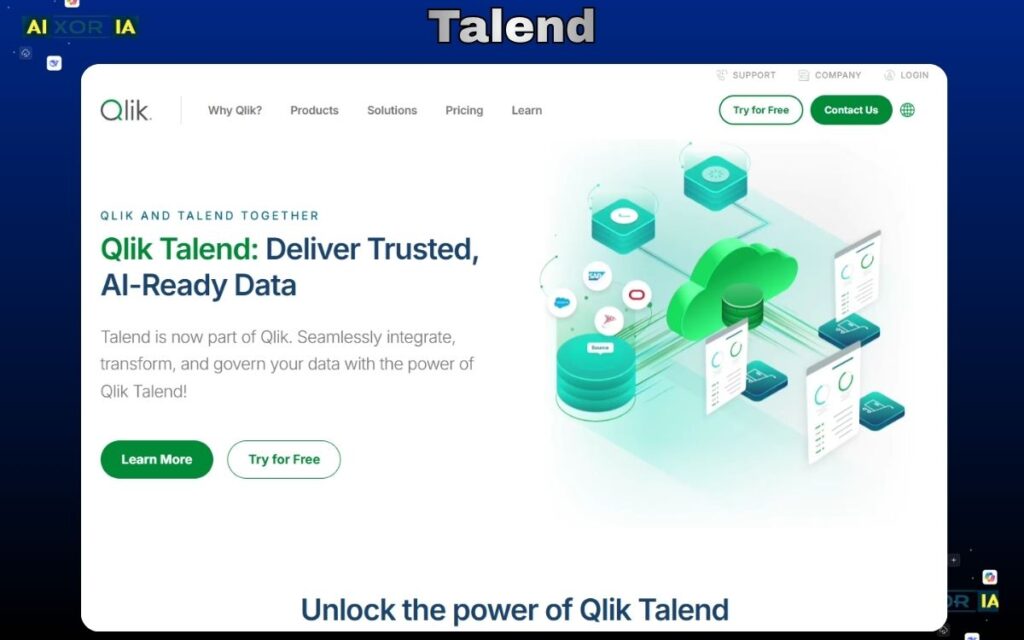
It offers a comprehensive environment for building, managing, and monitoring data pipelines across cloud and on-premise systems. Its architecture is designed to handle high-volume workloads while maintaining consistency and data quality across pipelines.
Talend’s reliability comes from its strong data validation, built-in quality checks, and detailed monitoring capabilities. Enterprises can enforce governance policies while maintaining flexibility in how pipelines are built and deployed.
In terms of AI, Talend integrates machine learning to assist with data mapping, anomaly detection, and pipeline optimization. It can automatically suggest transformations, detect inconsistencies in datasets, and improve data quality workflows over time. This reduces manual intervention and increases long-term reliability.
Best for: Enterprises needing strong governance and compliance
Limitation: Requires setup and technical expertise
Best ETL Tool for Large-Scale Enterprise Data Ecosystems
Informatica
Informatica is one of the most established ETL platforms in enterprise environments, known for handling complex, large-scale data ecosystems.
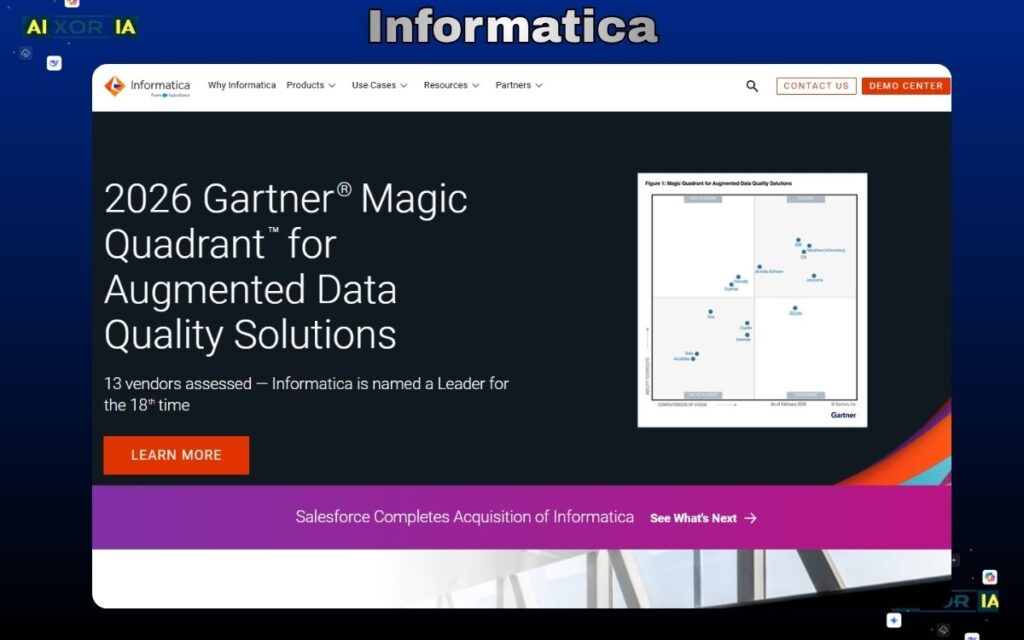
It provides end-to-end data integration, data quality, and data governance capabilities within a unified platform. Its cloud-native architecture supports hybrid environments, making it suitable for enterprises transitioning between on-prem and cloud systems.
Reliability is a core strength—Informatica offers advanced error handling, data lineage tracking, and enterprise-grade monitoring. It ensures that pipelines are traceable, auditable, and consistent across all stages.
Its AI engine, often referred to as CLAIRE AI, enhances automation by recommending data transformations, identifying data relationships, and optimizing pipeline performance. It can also detect anomalies in real time, helping teams proactively address issues before they affect downstream systems.
Best for: Large enterprises with complex data infrastructure
Limitation: High cost and complexity
Best ETL Tool for Real-Time Data Flow Management
Apache NiFi
Apache NiFi is designed for real-time data ingestion and flow management, making it highly reliable for streaming data use cases.
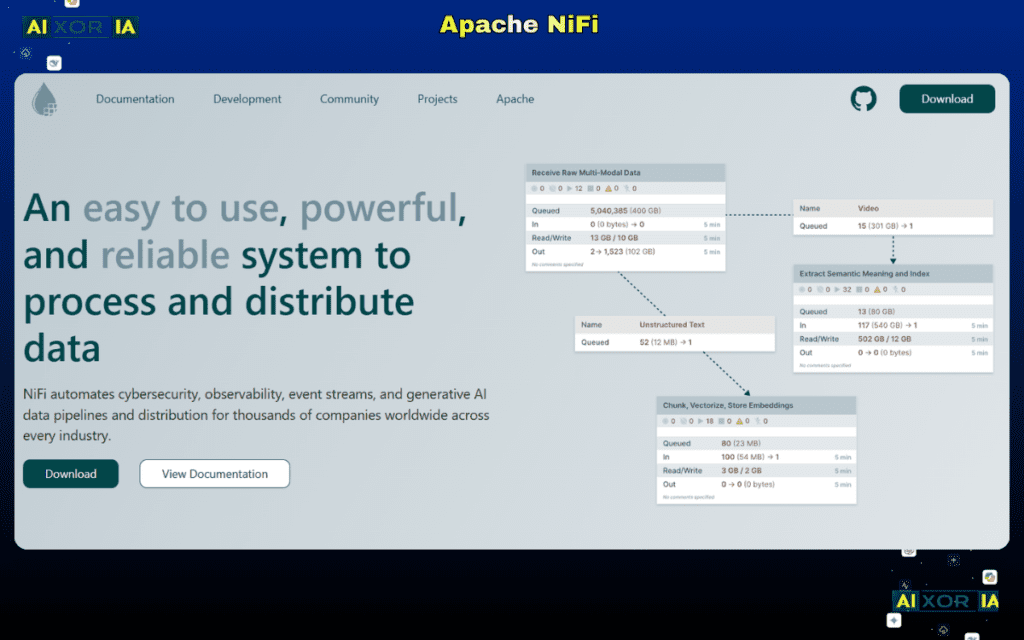
It provides fine-grained control over data movement, with visual flow-based programming that allows teams to design, monitor, and manage pipelines in real time. Its architecture supports backpressure, prioritization, and guaranteed delivery, which are critical for reliability.
NiFi’s built-in tracking ensures complete visibility into data lineage—every piece of data can be traced through the system.
While not traditionally AI-first, NiFi can be integrated with machine learning systems to enable intelligent routing, anomaly detection, and predictive pipeline management. This allows enterprises to extend its capabilities into AI-driven workflows.
Best for: Real-time and streaming data pipelines
Limitation: Requires technical expertise to manage at scale
Best Cloud-Native ETL Tool for Microsoft Ecosystem
Microsoft Azure Data Factory
Azure Data Factory is a fully managed ETL and data integration service designed for enterprises operating within the Microsoft ecosystem.
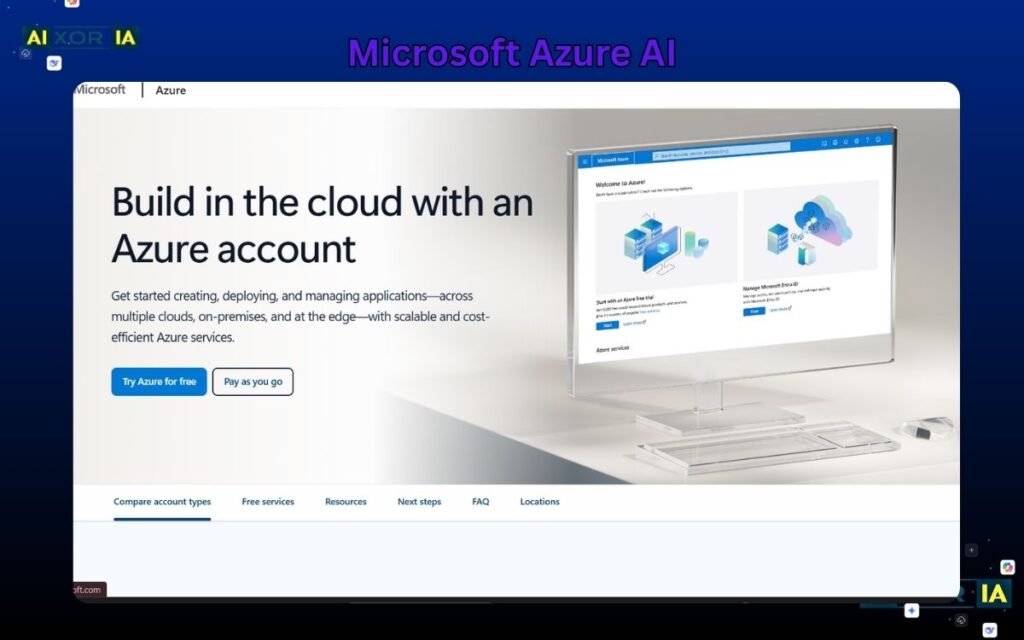
It enables organizations to build, schedule, and orchestrate data pipelines across cloud and hybrid environments. Its tight integration with Azure services ensures seamless data movement and transformation.
Reliability is supported through built-in monitoring, retry mechanisms, and pipeline orchestration features. It also provides strong security and compliance capabilities aligned with enterprise standards.
AI plays a growing role through integration with Azure’s machine learning services. Data Factory can automate data transformations, optimize workflows, and enable intelligent data processing pipelines using AI models.
Best for: Microsoft-centric enterprises
Limitation: Less flexible outside Azure ecosystem
Best Serverless ETL Tool for Scalable Data Pipelines
AWS Glue
AWS Glue is a serverless ETL service that allows enterprises to build and run data pipelines without managing infrastructure.
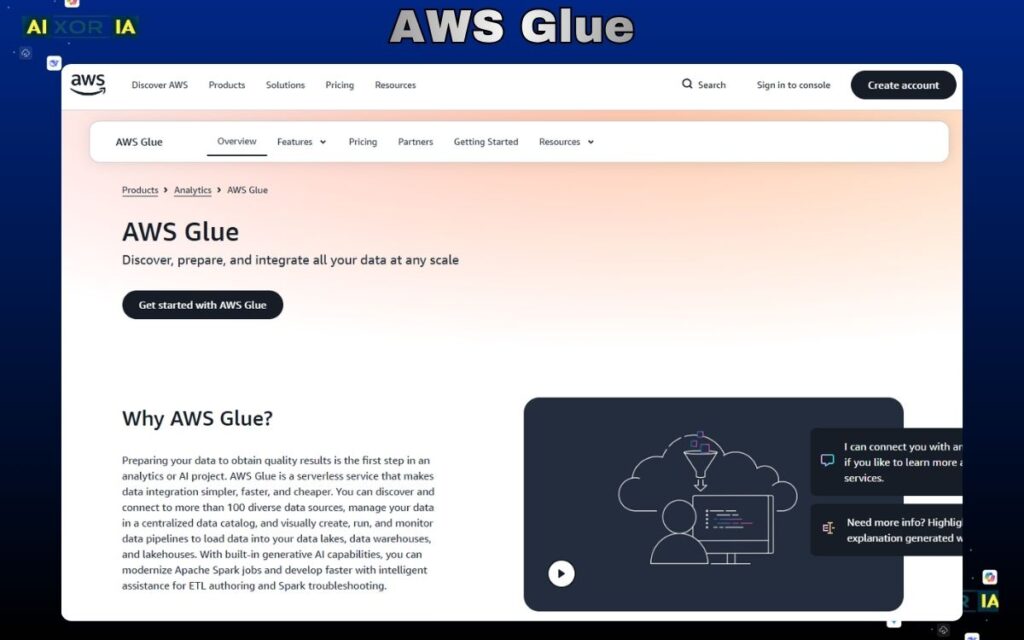
It automatically scales based on workload, making it highly reliable for variable data volumes. Glue integrates deeply with the AWS ecosystem, including data lakes, analytics services, and machine learning tools.
Its reliability comes from automation—schema discovery, job scheduling, and error handling are largely managed by the platform.
Glue also incorporates AI features such as automated schema inference, data classification, and transformation suggestions. These capabilities reduce manual effort and improve pipeline efficiency over time.
Best for: AWS-based enterprises needing scalability
Limitation: Best suited for AWS environments
READ MORE – Best ETL Tools for SaaS Companies
Best Fully Managed ETL Tool for Reliability and Simplicity
Fivetran
Fivetran is built around one core idea: fully managed data pipelines with minimal maintenance.
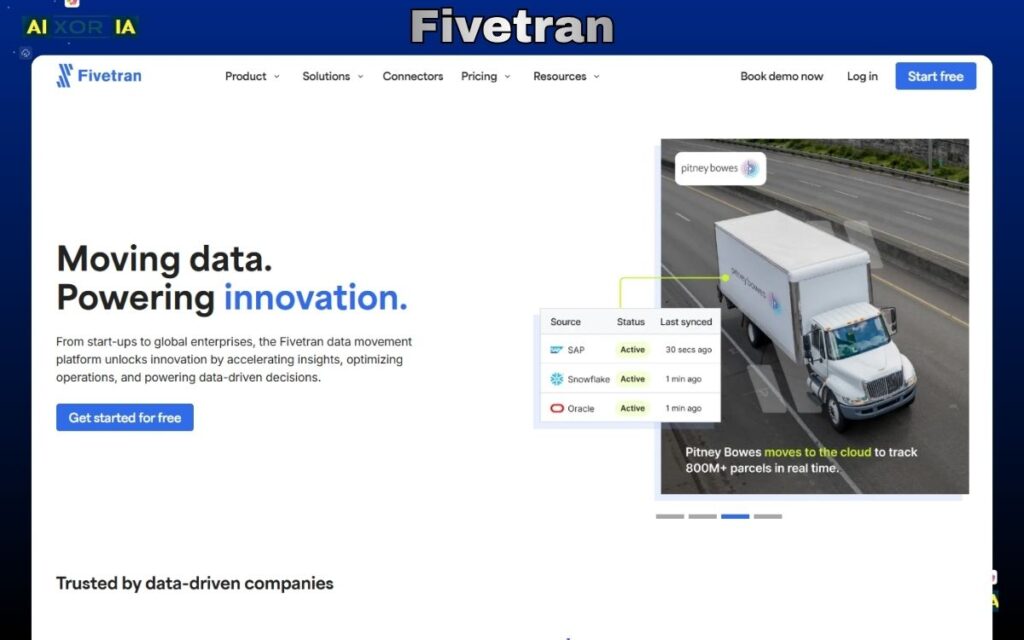
It automatically extracts data from various sources, transforms it, and loads it into data warehouses with high reliability. Its pipelines are designed to be self-healing, with automatic retries and schema updates.
Fivetran’s reliability is particularly valuable for teams that want to reduce operational overhead and avoid manual pipeline management.
Its AI capabilities include automated schema evolution, anomaly detection, and optimization of data sync processes. This ensures that pipelines remain stable even as data structures change.
Best for: Low-maintenance, highly reliable pipelines
Limitation: Less customization compared to traditional ETL tools
Best ETL Tool for Cloud Data Warehouses
Matillion
Matillion is optimized for cloud data warehouses like Snowflake, BigQuery, and Redshift.

It provides high-performance data transformation capabilities, allowing enterprises to process large datasets efficiently within their warehouse environments.
Its reliability comes from tight integration with cloud platforms, ensuring consistent performance and scalability.
Matillion also incorporates AI-driven features for pipeline optimization, transformation suggestions, and workflow automation. These features help reduce development time and improve efficiency.
Best for: Cloud data warehouse environments
Limitation: Limited outside supported platforms
Best Lightweight ETL Tool for Simplicity
Stitch
Stitch offers a simplified approach to ETL, making it a reliable choice for smaller enterprise teams or less complex data needs.
It provides straightforward data extraction and loading capabilities with minimal setup. While it lacks the advanced features of larger platforms, it delivers consistent performance and ease of use.
AI capabilities are limited compared to other tools, but Stitch focuses on stability and simplicity rather than advanced automation.
Best for: Simple and lightweight ETL pipelines
Limitation: Limited scalability for complex enterprise use cases
How to Choose the Most Reliable ETL Tool
The right ETL tool depends on your enterprise environment:
- For governance and compliance → Talend or Informatica
- For real-time data flows → Apache NiFi
- For Microsoft ecosystems → Azure Data Factory
- For AWS environments → AWS Glue
- For managed pipelines → Fivetran
- For cloud warehouses → Matillion
- For simple use cases → Stitch
Many enterprises use a combination of tools to handle different data workflows.
The Role of AI in ETL Tools (2026)
AI is transforming ETL from manual pipeline building to intelligent data orchestration.
Modern ETL tools can:
- Automatically detect schema changes
- Suggest transformations
- Identify anomalies in data pipelines
- Optimize performance dynamically
- Reduce manual intervention
This shift allows data teams to focus more on strategy and less on maintenance.
Final Thoughts
Enterprise ETL is no longer just about moving data—it’s about ensuring reliability, scalability, and intelligence across complex systems.
The most reliable ETL tools in 2026 combine:
- Strong infrastructure
- Advanced monitoring
- AI-driven automation
- Seamless integrations
The best choice depends on your architecture, data volume, and operational needs. In many cases, enterprises benefit from combining tools to create a flexible and resilient data ecosystem.
3 thoughts on “Most Reliable ETL Tools for Enterprise Data in 2026”