As AI writing tools become more accessible, educators are facing a new challenge: how to evaluate student work in a world where content can be generated instantly. The goal is no longer just detecting plagiarism—it’s identifying whether a piece of writing reflects genuine student understanding.
AI content detectors aim to solve this problem by analyzing patterns, language structures, and probability signals to estimate whether text was generated by AI. But for teachers, accuracy, transparency, and ease of use matter just as much as detection itself.
This guide breaks down the best AI content detectors for teachers in 2026, focusing on reliability, classroom usability, reporting clarity, and how well each tool fits into real academic workflows.
Table of Contents
What Makes the Best AI Content Detector for Teachers?
AI detection is not perfect, and no tool can guarantee 100% accuracy. That’s why the best tools for educators focus on supporting judgment, not replacing it.
Here’s what matters most:
Detection accuracy and consistency
Teachers need tools that minimize false positives (flagging human writing as AI) and false negatives (missing AI-generated content). Consistency across different writing styles is critical.
Clear reporting and explanations
A percentage score alone is not enough. The best tools highlight specific sections, explain why content may be AI-generated, and provide interpretable insights.
Ease of use
Teachers should be able to check submissions quickly without complex setup or technical knowledge.
Integration with academic workflows
Support for LMS platforms, document uploads, and batch checking can save significant time.
Privacy and compliance
Student data protection is essential, especially in U.S. educational environments where compliance standards matter.
READ MORE – Best AI Content Detection Tools
The Best AI Content Detectors for Teachers at a Glance
| Tool | Best For | Key Strength |
|---|---|---|
| Turnitin | Academic institutions | Deep integration + reporting |
| GPTZero | Classroom use | Simple and fast detection |
| Originality.ai | High-accuracy checks | Advanced detection models |
| Copyleaks | AI + plagiarism detection | Dual detection system |
| Writer.com Detector | Quick checks | Lightweight and free |
| Sapling AI Detector | Grammar + detection | Multi-purpose tool |
| ZeroGPT | Free usage | Accessibility |
Best AI Content Detector for Academic Institutions
Turnitin
Turnitin is one of the most widely used academic integrity platforms in the United States, and it has expanded beyond plagiarism detection to include AI writing detection.
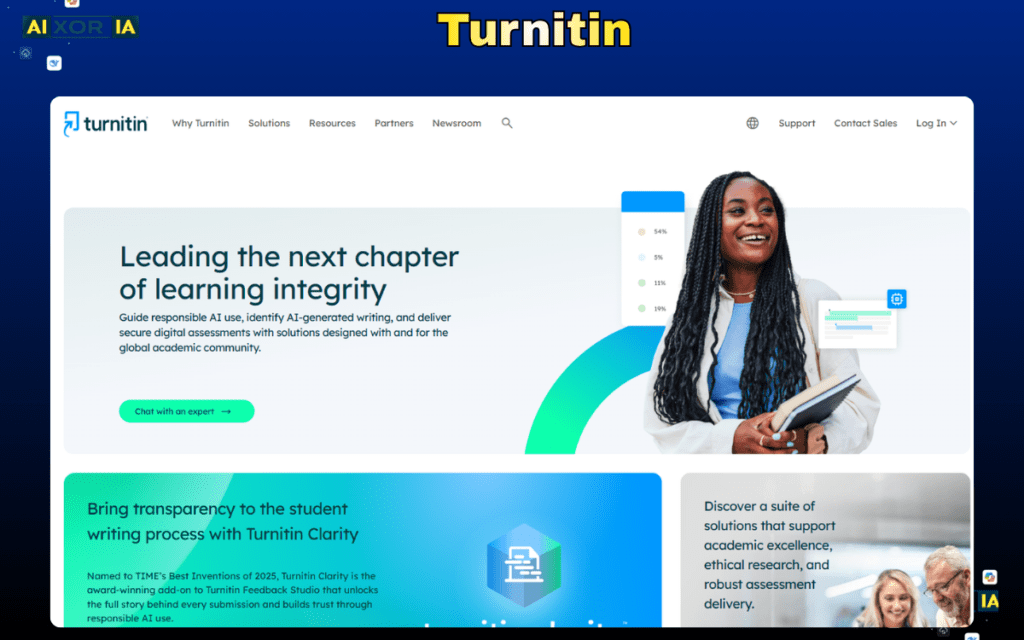
For teachers, the biggest advantage of Turnitin is its deep integration into educational systems. It connects directly with learning management systems (LMS), allowing assignments to be checked automatically during submission. This eliminates the need for manual uploads and keeps the workflow consistent.
Turnitin’s AI detection model provides a percentage estimate along with highlighted sections that may be AI-generated. More importantly, it presents results within a familiar reporting interface that educators already trust.
Because it is designed for institutions, Turnitin also emphasizes compliance, data security, and scalability—making it a strong choice for schools, colleges, and universities.
Best for: Institutional use and large classrooms
Limitation: Requires subscription and institutional access
Best AI Content Detector for Simple Classroom Use
GPTZero
GPTZero was one of the first tools built specifically to detect AI-generated text, and it remains popular among teachers due to its simplicity.
The tool focuses on two core metrics: perplexity and burstiness—signals that attempt to distinguish human writing from AI-generated patterns. Teachers can paste text directly into the interface and receive a quick evaluation.
GPTZero also highlights specific sentences that may be AI-generated, making it easier for educators to review and interpret results rather than relying on a single score.
It’s particularly useful for quick checks, essays, and classroom assignments where speed and accessibility are important.
Best for: Quick, accessible classroom checks
Limitation: May require cross-verification for high-stakes decisions
Best AI Content Detector for High Accuracy
Originality.ai
Originality.ai is designed for users who prioritize detection accuracy and detailed analysis.
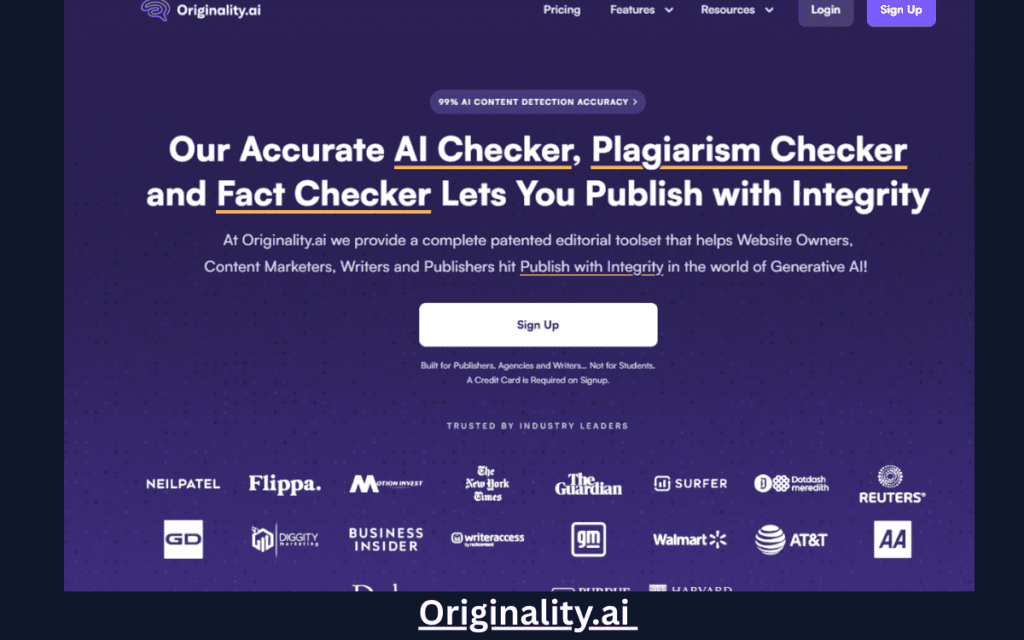
It uses advanced models trained specifically to identify AI-generated content across multiple writing styles. The tool provides a confidence score along with sentence-level highlighting, helping teachers understand which parts of a document may be AI-assisted.
Another advantage is its ability to detect content generated by newer AI models, which some older detectors struggle with. This makes it a strong option for educators dealing with increasingly sophisticated AI writing tools.
Originality.ai also includes team features and reporting tools, which can be useful for institutions or educators managing multiple submissions.
Best for: High-accuracy detection and detailed analysis
Limitation: Paid tool with usage-based pricing
Best Combined AI + Plagiarism Detection Tool
Copyleaks
Copyleaks offers a dual approach: it detects both AI-generated content and traditional plagiarism within the same platform.
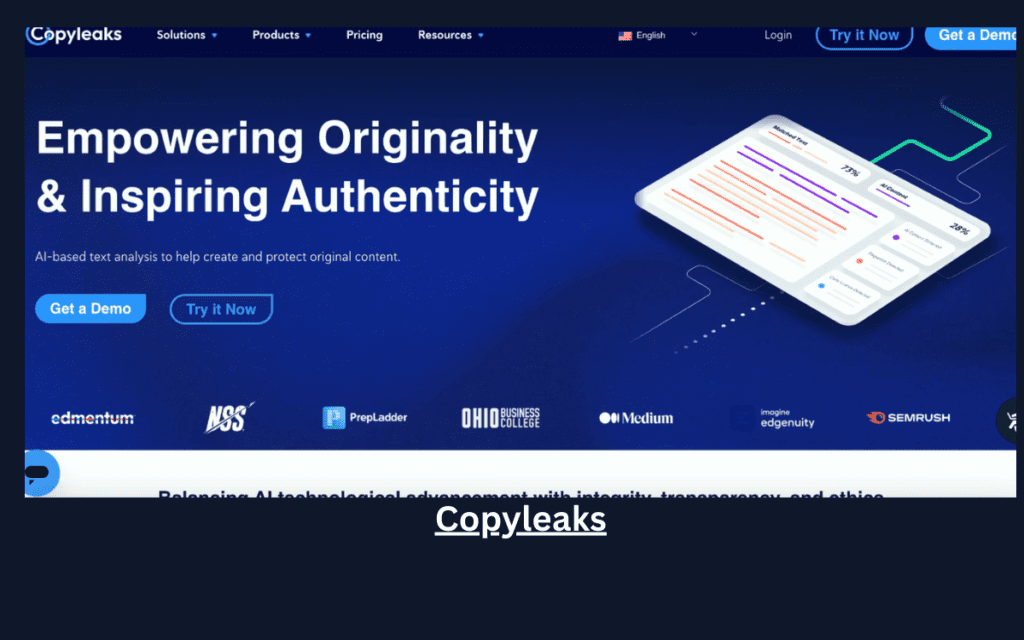
For teachers, this is particularly valuable because academic integrity involves more than just AI usage. Copyleaks allows educators to run comprehensive checks without switching tools.
The platform provides detailed reports, highlighting AI-generated sections and matching sources for plagiarism. It also supports API integrations and LMS compatibility, making it suitable for schools and institutions.
Copyleaks continues to update its detection models to keep up with evolving AI systems, which is critical for maintaining accuracy over time.
Best for: Combined AI and plagiarism detection
Limitation: Interface may feel complex for new users
READ MORE – Best AI Content Detectors for SEO
Best Free AI Content Detector for Quick Checks
Writer.com AI Content Detector
Writer.com offers a simple, free AI content detector that is useful for quick evaluations.
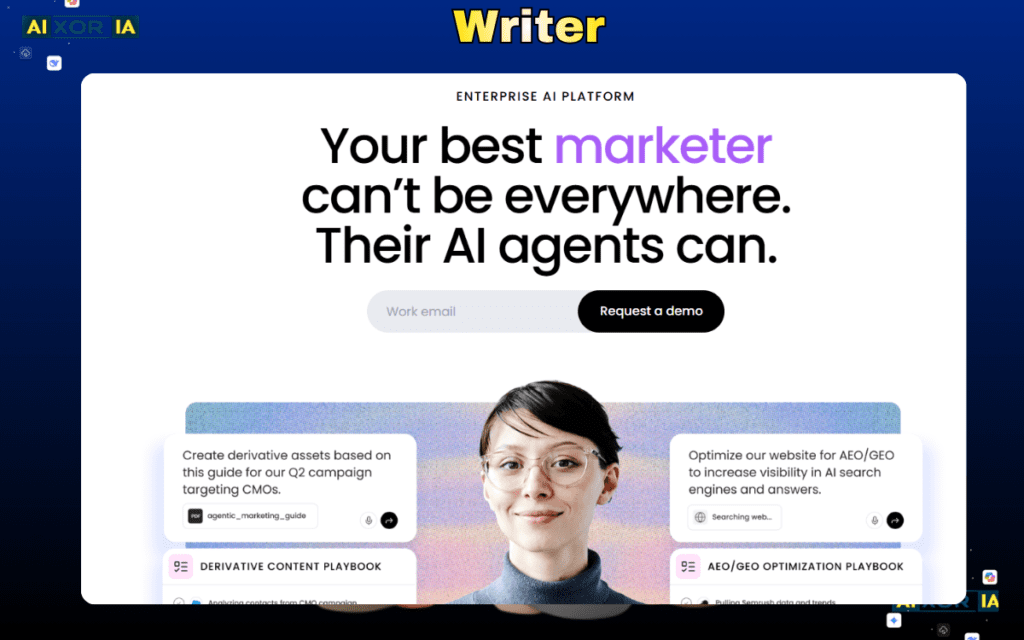
Teachers can paste text into the tool and receive an immediate assessment without creating an account. This makes it convenient for occasional checks or initial screening.
While it does not offer the depth or reporting features of premium tools, it serves as a lightweight option for identifying obvious AI-generated content.
Best for: Free and fast checks
Limitation: Limited accuracy and reporting depth
Best Multi-Purpose AI Writing Assistant with Detection
Sapling AI Detector
Sapling combines grammar checking, writing assistance, and AI detection into a single platform.
For teachers, this can be useful when reviewing assignments—not just for authenticity, but also for writing quality. The AI detection feature analyzes text and provides a probability score along with highlighted sections.
Sapling is particularly helpful in environments where educators want both feedback and detection in one place.
Best for: Combined writing feedback and detection
Limitation: Detection is not as specialized as dedicated tools
Best Accessible AI Content Detector
ZeroGPT
ZeroGPT is a widely accessible tool that offers free AI detection with minimal barriers to entry.
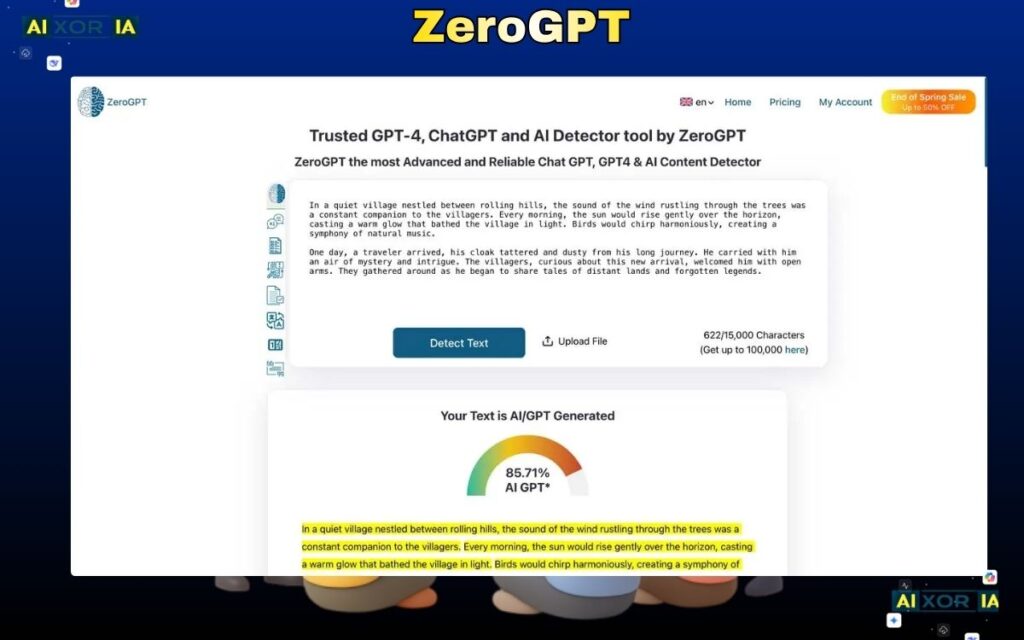
It supports multiple languages and provides quick results, making it useful for educators working with diverse student groups. The interface is simple, and no advanced setup is required.
However, like many free tools, accuracy can vary, and results should be interpreted carefully.
Best for: Free and accessible detection
Limitation: Lower reliability compared to premium tools
READ MORE – Best AI Content Detectors for Arabic Text
How Teachers Should Use AI Content Detectors
AI detectors should be used as support tools, not final decision-makers.
Best practices include:
- Cross-checking results with multiple tools
- Reviewing flagged sections manually
- Comparing writing style with previous student work
- Using detectors as part of a broader academic integrity process
This approach reduces the risk of false accusations and ensures fair evaluation.
Limitations of AI Content Detection
Even the best tools have limitations:
- False positives (human writing flagged as AI)
- False negatives (AI content not detected)
- Difficulty detecting heavily edited AI text
- Variability across writing styles and subjects
Because of these limitations, human judgment remains essential.
The Role of AI in Education
AI is not just a challenge—it’s also an opportunity.
Instead of focusing only on detection, many educators are shifting toward:
- Teaching students how to use AI responsibly
- Designing assignments that require critical thinking
- Evaluating understanding rather than just output
AI detectors play a role in this transition, but they are only one part of a larger strategy.
Final Thoughts
The best AI content detectors for teachers in 2026 are those that balance accuracy, usability, and transparency.
- For institutions: Turnitin offers the most integrated solution
- For quick checks: GPTZero and Writer.com are practical options
- For accuracy: Originality.ai stands out
- For combined detection: Copyleaks provides a complete solution
Ultimately, no tool replaces a teacher’s judgment. The most effective approach combines technology with thoughtful evaluation and clear academic policies.
2 thoughts on “Best AI Content Detectors for Teachers in 2026”