AI-generated content is everywhere—and so is the need to verify it. For SEO teams, agencies, and publishers in the U.S., the question is no longer whether AI is being used, but how to ensure content remains original, human-aligned, and compliant with search quality standards.
AI content detectors aim to solve that problem. They analyze text patterns, predict whether content is machine-generated, and help maintain editorial integrity. But not all detectors are equally reliable, and none are perfect.

This guide breaks down the best AI content detectors for SEO in 2026, based on real-world use cases, strengths, and limitations—so you can choose the right tool for your workflow.
Table of Contents
What is an AI Content Detector?
An AI content detector is a tool that analyzes text and estimates whether it was written by a human or generated by an AI model. These tools typically rely on:
- Statistical patterns (perplexity, burstiness)
- Language predictability
- Machine learning classifiers trained on AI vs human text
For SEO, detectors are used to:
- Audit freelance or outsourced content
- Maintain editorial standards
- Reduce risk of low-quality AI-generated pages
- Ensure originality and human value
What Makes the Best AI Content Detector for SEO?
For SEO-focused teams, a good detector must go beyond basic scoring. The best tools provide:
Accuracy and consistency
Reliable detection across different writing styles and AI models.
Transparency in scoring
Clear explanation of why content is flagged.
Scalability
Ability to analyze large volumes of content (important for agencies).
Integration into workflows
API access or compatibility with CMS and editorial tools.
False positive control
Human-written content should not be incorrectly flagged.
The Best AI Content Detectors for SEO
1. Originality.ai — Best for SEO teams and agencies
Originality.ai is one of the most widely used tools among SEO professionals. It is built specifically for publishers, agencies, and content-heavy websites.
Key features:
- AI detection with percentage scoring
- Built-in plagiarism checker
- Team management and scan history
- API for bulk scanning
Why it stands out:
Originality.ai focuses on real SEO workflows. It allows agencies to scan entire batches of content and track results across writers, making it ideal for scaling content operations.
Limitations:
- Can occasionally flag highly structured human content
- Paid-only model
Best for:
SEO agencies, niche site builders, and publishers managing large content volumes.
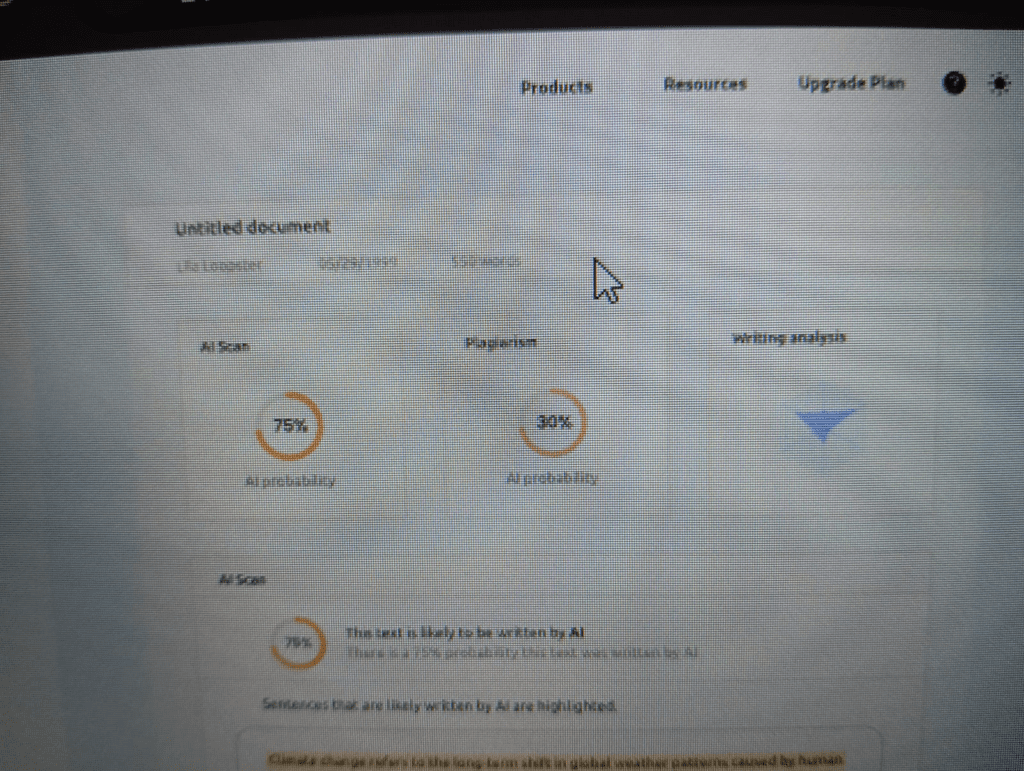
2. GPTZero — Best for simple, quick checks
GPTZero became popular for its straightforward interface and fast results. It evaluates text using perplexity and burstiness metrics.
Key features:
- Sentence-level AI detection
- Highlights AI-written sections
- Simple dashboard
Why it stands out:
It’s easy to use and effective for quick validation, especially for editors reviewing individual articles.
Limitations:
- Less reliable for heavily edited AI content
- Not built for large-scale SEO operations
Best for:
Bloggers, editors, and small teams.
3. Copyleaks — Best for enterprise and compliance
Copyleaks offers both plagiarism detection and AI content detection, with a strong focus on enterprise use.
Key features:
- AI detection with detailed reports
- LMS and enterprise integrations
- Supports multiple languages
Why it stands out:
Copyleaks is designed for organizations that need compliance and documentation, making it suitable for enterprise SEO teams.
Limitations:
- Interface can feel complex
- Requires setup for full functionality
Best for:
Enterprise publishers, educational platforms, and compliance-driven teams.
4. Writer.com AI Content Detector — Best for brand-safe content
Writer.com is primarily a content governance platform, but it includes AI detection as part of its suite.

Key features:
- AI detection integrated with style guidelines
- Brand voice enforcement
- Enterprise-level controls
Why it stands out:
It combines AI detection with editorial quality control, which is valuable for maintaining consistent brand voice across large teams.
Limitations:
- Requires adoption of the full platform
- Not a standalone lightweight tool
Best for:
Enterprises focused on brand consistency and editorial governance.
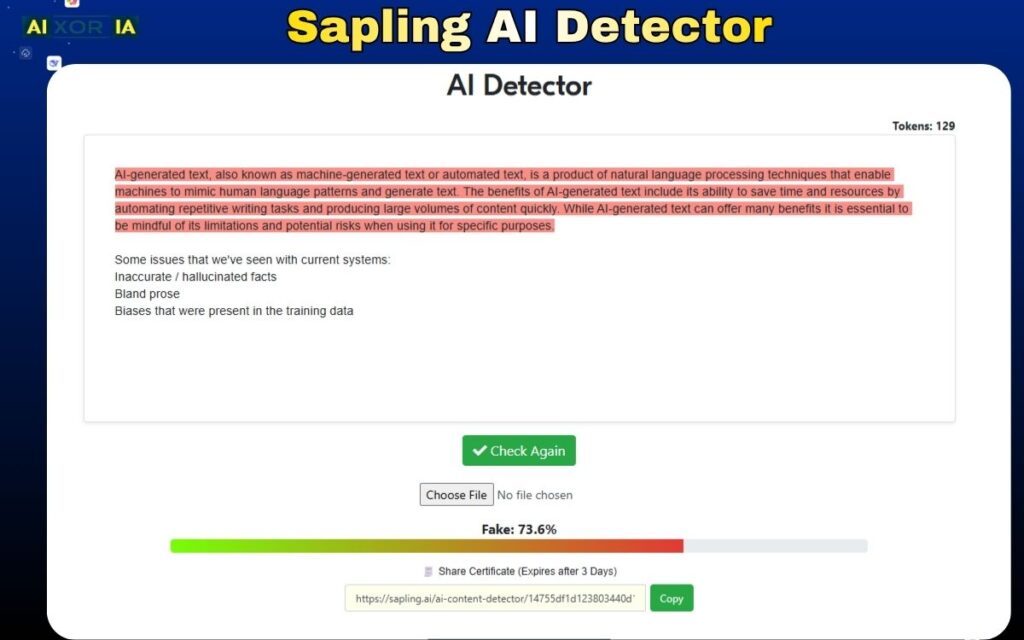
5. Sapling AI Detector — Best for real-time detection
Sapling offers a lightweight AI detection tool alongside its writing assistant features.
Key features:
- Real-time detection
- Browser-based tool
- Simple scoring system
Why it stands out:
Fast and accessible, making it useful during the editing process.
Limitations:
- Limited depth compared to advanced tools
- Not ideal for large-scale audits
Best for:
Freelancers and editors doing quick checks.
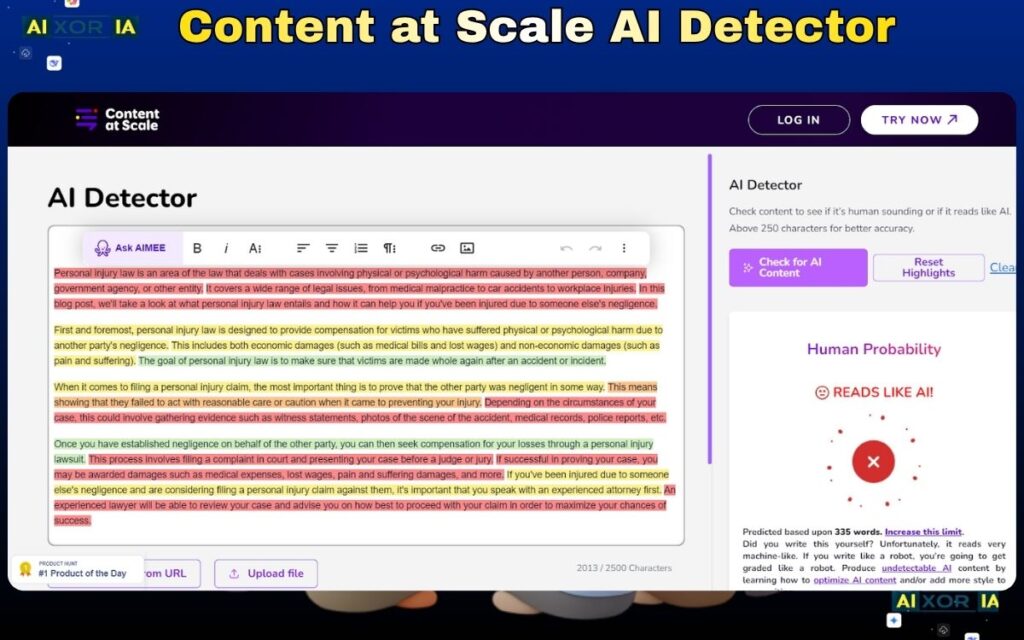
6. Content at Scale AI Detector — Best for content marketers
Content at Scale offers a detector designed specifically for marketers concerned with ranking risks.
Key features:
- Human content scoring
- Readability analysis
- SEO-focused feedback
Why it stands out:
It positions itself as a “human content checker,” focusing on whether content feels natural and engaging.
Limitations:
- Detection accuracy varies
- More qualitative than technical
Best for:
Content marketers and niche site creators.
7. ZeroGPT — Best free option
ZeroGPT is a free AI detector that provides quick analysis without requiring payment.
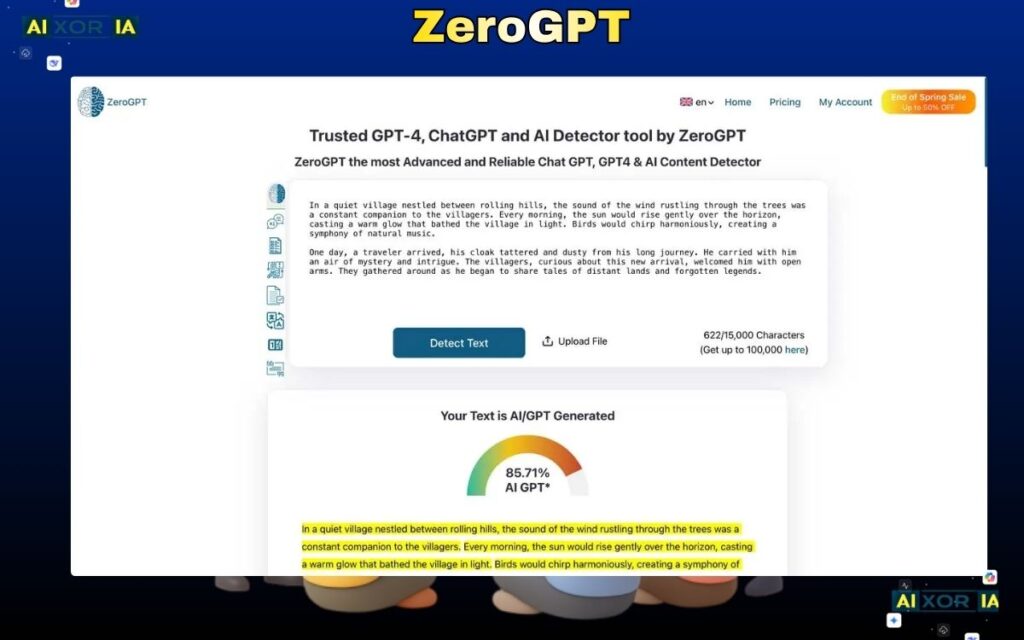
Key features:
- Free usage
- Instant results
- Basic AI probability score
Why it stands out:
Accessible for beginners or low-budget users.
Limitations:
- Lower accuracy compared to premium tools
- Limited features
Best for:
Beginners and casual users.
Are AI Content Detectors Reliable for SEO?
This is where most people misunderstand the role of these tools.
AI detectors are not 100% accurate. Even the best tools can:
- Flag human-written content as AI
- Miss well-edited AI-generated text
For SEO, Google does not penalize content simply for being AI-generated. What matters is:
- Helpfulness
- Originality
- Depth
- User value
AI detectors should be used as support tools, not final decision-makers.
How to Use AI Detectors in an SEO Workflow
A practical workflow looks like this:
- Draft or receive content
- Run it through a detector (e.g., Originality.ai)
- If flagged, review manually
- Improve:
- Add real examples
- Include expert insights
- Rewrite generic sections
- Re-check and publish
This ensures content meets both quality and originality standards.
Which AI Content Detector Should You Choose?
The right tool depends on your use case:
- For agencies: Originality.ai
- For quick checks: GPTZero
- For enterprise: Copyleaks or Writer.com
- For budget users: ZeroGPT
- For marketers: Content at Scale
Many SEO teams use a combination—for example, Originality.ai for bulk scans and GPTZero for manual reviews.
Final Thoughts
AI content detectors are becoming a standard part of modern SEO workflows. But they are not a ranking factor on their own.
The real advantage comes from how you use them.
If your content is:
- Original
- Useful
- Based on real insight
- Written for humans
Then it will perform—regardless of whether AI was involved in the process.
Use detectors to maintain quality, not to chase perfection.
5 thoughts on “Best AI Content Detectors for SEO in 2026”