Search has changed. Traditional SEO is no longer just about keywords and backlinks—it now includes how content performs inside AI-driven search systems, from conversational answers to summarized results.
For content creators, this shift introduces a new challenge: how to optimize content not just for search engines, but for AI-powered discovery and ranking systems.
AI search optimization tools are designed to solve that problem. They help you research intent, structure content for visibility, analyze competitors, and optimize for both human readers and AI-driven algorithms.
In this guide, we’ll break down the top AI search optimization tools for content creators in 2026, including what they do best, where they fall short, and how to choose the right one based on your workflow.
Table of Contents
What Are AI Search Optimization Tools?
AI search optimization tools go beyond traditional SEO platforms. Instead of focusing only on keywords and backlinks, they use machine learning and natural language processing to help you:
- Understand search intent at a deeper level
- Optimize content structure for readability and AI extraction
- Generate content briefs and outlines
- Analyze competitors in real time
- Improve topical authority across your site
These tools are especially useful for creators who want to rank in:
- Google Search (including featured snippets)
- AI-generated answers (like conversational search results)
- Voice and semantic search environments
What Makes a Great AI SEO Tool for Content Creators?
Before choosing a tool, it’s important to understand what actually matters for ranking in 2026.
1. Search Intent Analysis
The best tools don’t just give keywords—they tell you why users are searching and what format your content should follow.
2. Content Optimization Guidance
Look for tools that provide:
- Heading structure recommendations
- Content scoring
- NLP-based keyword suggestions
3. Competitor Insights
Top tools analyze:
- What’s ranking
- Why it’s ranking
- What your content is missing
4. AI Writing + Optimization Balance
Some tools generate content, but the best ones focus on improving quality, not just producing text.
5. Scalability for Creators
Whether you’re running a blog or managing multiple sites, the tool should support:
- Content workflows
- Topic clustering
- Performance tracking
The Best AI Search Optimization Tools for Content Creators
1. Surfer SEO
Best for data-driven content optimization
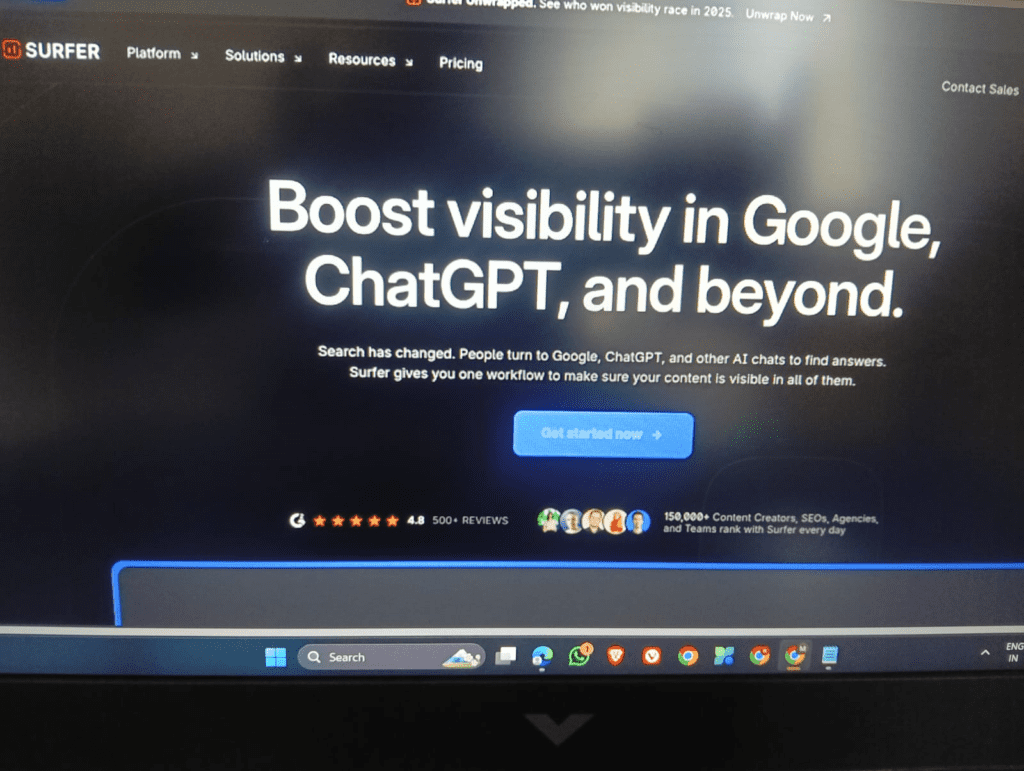
Surfer SEO is one of the most widely used AI SEO tools for content creators who want precise, data-backed optimization. It analyzes top-ranking pages and provides a structured guideline for improving your content.
Key features
- Content editor with real-time scoring
- NLP keyword suggestions based on SERP data
- SERP analyzer for competitor breakdown
- Audit tool for updating existing content
How it helps with AI search optimization
Surfer structures your content in a way that aligns with how search engines interpret relevance. Its scoring system ensures that your article covers all necessary subtopics and semantic variations.
Limitations
- Can feel overly data-driven if you prefer creative writing
- Requires manual editing for tone and engagement
Best use case
Ideal for creators who want high-ranking, structured articles backed by competitive data.
READ MORE – 20 Best SEO Tools I’m Using in 2026
2. Clearscope
Best for content clarity and topical relevance
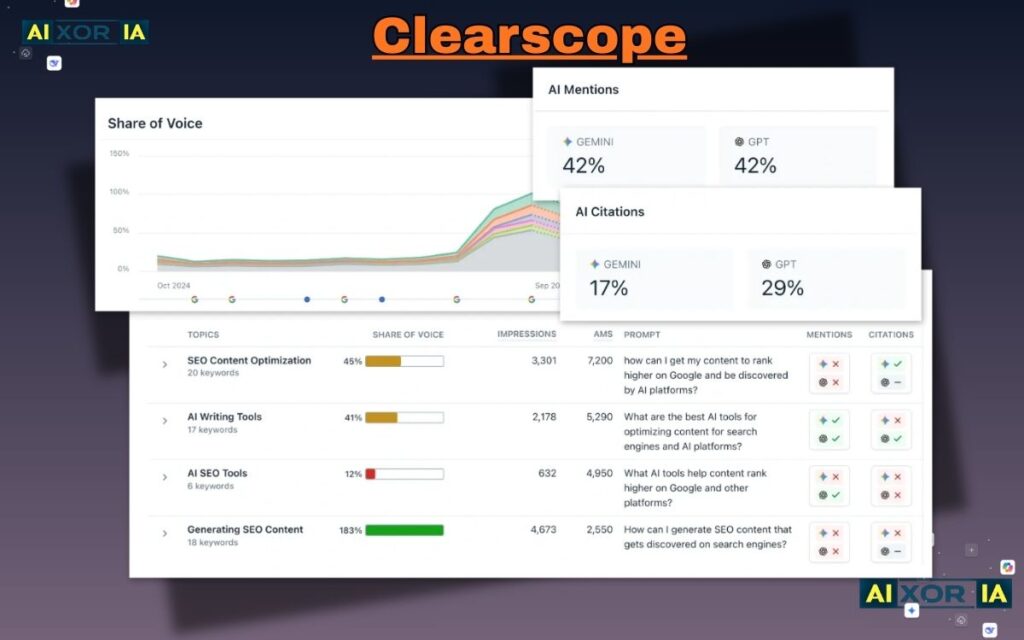
Clearscope focuses on improving the quality and comprehensiveness of your content rather than just optimizing for keywords.
Key features
- Content grading system
- Keyword relevance suggestions
- Clean, distraction-free interface
- Google Docs integration
How it helps with AI search optimization
Clearscope emphasizes semantic coverage, which is critical for AI-driven search systems that rely on context rather than exact keywords.
Limitations
- Higher pricing compared to alternatives
- Limited workflow features
Best use case
Best for writers and teams focused on high-quality editorial content that ranks consistently.
3. Frase
Best for research and content brief generation
Frase is designed to speed up the research phase of content creation. It helps you build detailed briefs based on real search data.
Key features
- AI-generated content briefs
- Question-based SERP analysis
- Outline builder
- AI writing assistant
How it helps with AI search optimization
Frase identifies the questions users are asking and helps you structure content to answer them directly—important for featured snippets and AI summaries.
Limitations
- AI writing requires editing for quality
- Content scoring is less precise than some competitors
Best use case
Great for creators who want to scale content production without losing structure.
READ MORE – How Does Ziptie.ai Compare to Other AI Search Tools in 2026?
4. MarketMuse
Best for topical authority and content planning
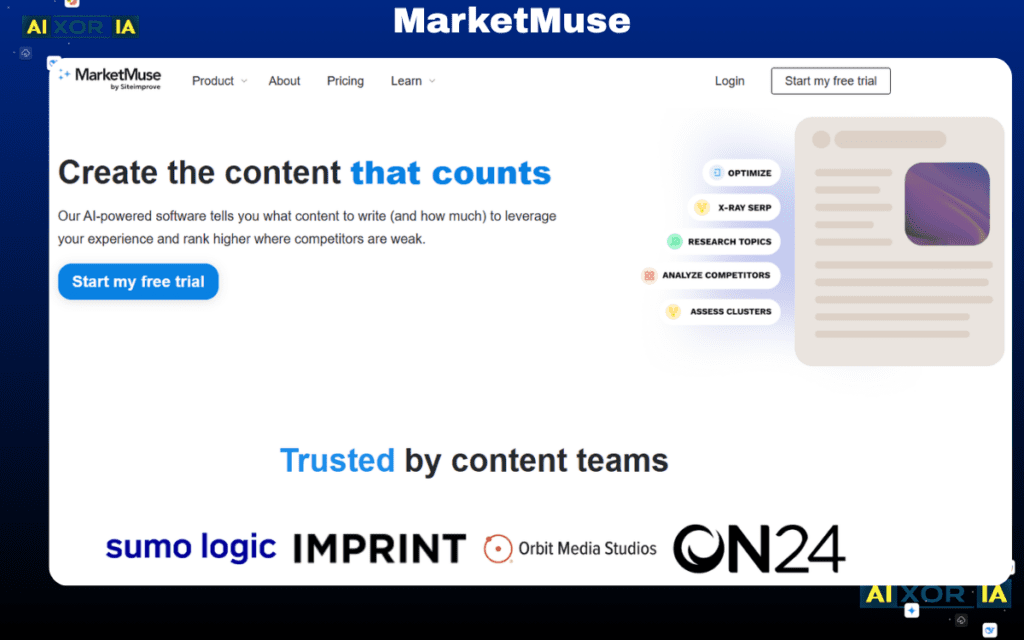
MarketMuse is more than a content tool—it’s a full content strategy platform designed to build authority across entire websites.
Key features
- Topic modeling and content gaps
- Content briefs with depth scoring
- Inventory analysis
- Predictive ranking insights
How it helps with AI search optimization
MarketMuse helps you build topic clusters, which are critical for ranking in competitive niches and establishing authority in AI-driven search systems.
Limitations
- Complex interface for beginners
- Premium pricing
Best use case
Best for creators and businesses focused on long-term SEO growth and authority building.
5. SEMrush
Best all-in-one SEO platform with AI features
SEMrush is a comprehensive platform that includes keyword research, competitor analysis, and AI-powered content tools.
Key features
- Keyword research and intent analysis
- Content template generator
- SEO writing assistant
- Competitive domain analysis
How it helps with AI search optimization
SEMrush combines traditional SEO with AI insights, helping you understand both search demand and competitive positioning.
Limitations
- Can be overwhelming due to feature depth
- Higher learning curve
Best use case
Ideal for creators who want an all-in-one SEO ecosystem.
6. Ahrefs
Best for backlink and competitor intelligence
Ahrefs remains one of the most powerful tools for analyzing competitors and understanding why certain content ranks.
Key features
- Keyword explorer
- Content gap analysis
- Backlink tracking
- SERP overview
How it helps with AI search optimization
While not purely AI-focused, Ahrefs provides the data foundation needed to create content that competes effectively.
Limitations
- Limited AI writing features
- Focuses more on analysis than content creation
Best use case
Best for creators who prioritize competitive research and SEO data.
READ MORE – Why Choose Ziptie AI Search Performance Tool?
7. Jasper AI
Best for AI-assisted content creation

Jasper AI is primarily a content generation tool, but it integrates with SEO platforms to improve output quality.
Key features
- AI content generation
- Templates for blogs and marketing copy
- Integration with Surfer SEO
- Brand voice customization
How it helps with AI search optimization
Jasper speeds up content creation while allowing integration with optimization tools for better ranking performance.
Limitations
- Requires strong editing for originality
- Not a standalone SEO tool
Best use case
Useful for creators who want to scale content production quickly.
How to Choose the Right Tool
The best tool depends on your workflow and goals.
- If you want data-driven optimization, choose Surfer SEO
- If you prioritize content quality, go with Clearscope
- If you need fast research and briefs, use Frase
- If your focus is topical authority, MarketMuse is ideal
- If you want an all-in-one platform, SEMrush is a strong choice
- If you need deep competitor analysis, Ahrefs is essential
- If you want AI writing support, Jasper AI fits well
In many cases, creators use a combination of tools rather than relying on just one.
Common Mistakes to Avoid
Even with the best tools, many creators fail to rank due to these issues:
- Over-optimizing for keywords instead of users
- Publishing AI-generated content without editing
- Ignoring search intent
- Lack of internal linking
- No topical authority strategy
AI tools should support your thinking, not replace it.
Conclusion
AI search optimization is no longer optional—it’s becoming the foundation of how content is discovered and ranked.
The tools listed above each serve a different purpose, from content optimization to strategy and automation. The key is not just choosing the most popular tool, but selecting the one that aligns with your content goals and workflow.
For most content creators, the winning approach is a combination of:
- Strong human-written content
- AI-assisted optimization
- Consistent publishing
- Clear topical authority
If you apply these principles and use the right tools strategically, ranking on the first page becomes significantly more achievable—even in competitive niches.
Frequently Asked Questions
What is AI search optimization?
AI search optimization is the process of improving content so it performs well in AI-driven search systems, including semantic search and generated answers.
Are AI SEO tools enough to rank on Google?
No. Tools help with structure and insights, but content quality and user value remain the most important ranking factors.
How many tools should a content creator use?
Most creators use 2–3 tools:
- One for research
- One for optimization
- One for writing or scaling
Which tool is best for beginners?
Frase or Surfer SEO are good starting points due to their ease of use and structured guidance.
3 thoughts on “Top AI Search Optimization Tools for Content Creators (2026 Guide)”