Scr0ll d0wn to D0VVNL0AD
Why the UhoeBeans Software Update Feels Painfully Slow
If you’ve ever clicked “update” and watched the progress bar barely move, why is UhoeBeans software update so slow is a completely fair question — and you’re far from alone.
Here’s the short answer:
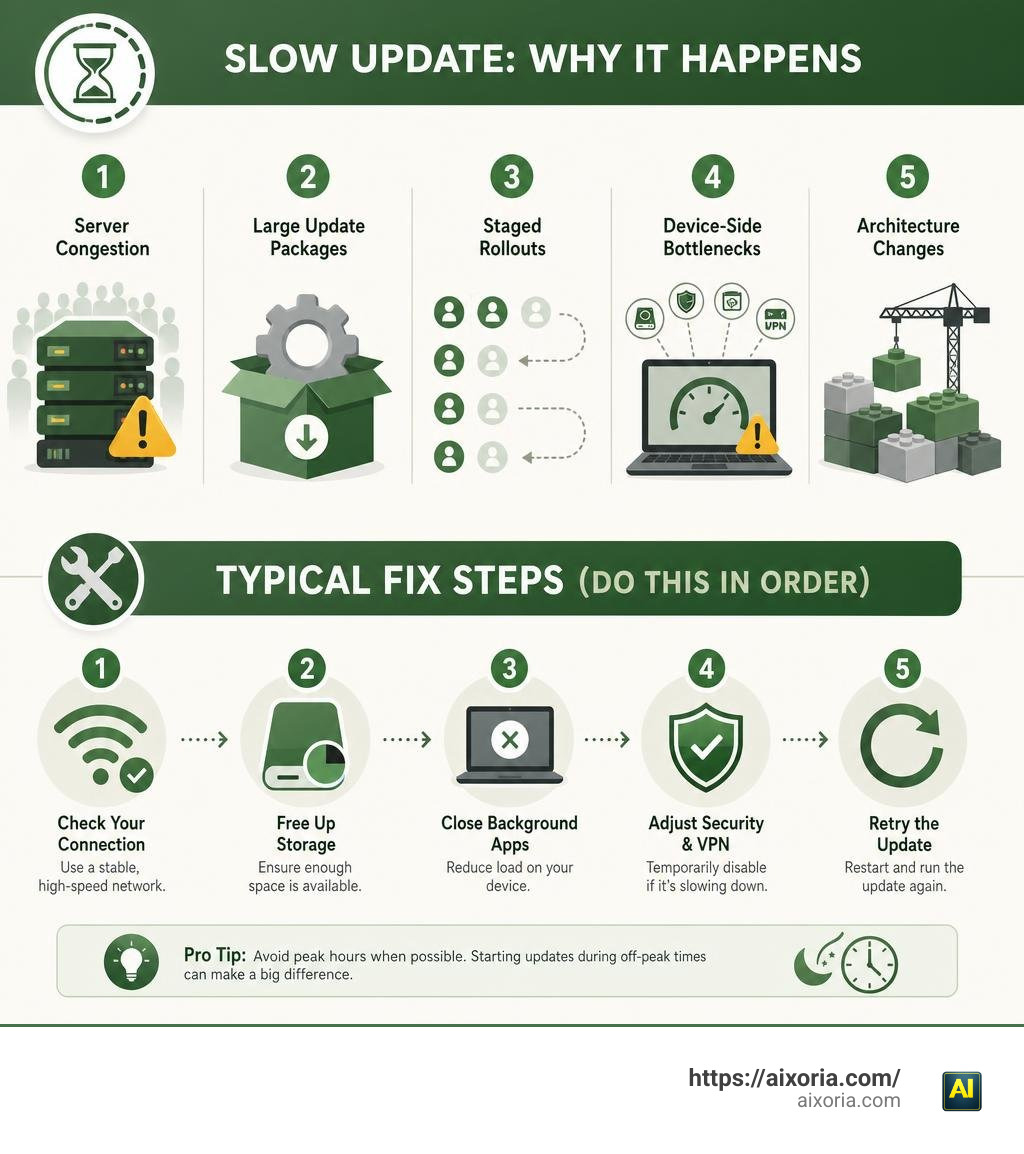
- Server congestion — UhoeBeans servers get hammered when a new version rolls out, especially during peak hours
- Large update packages — UhoeBeans is an all-in-one platform (project management, collaboration, analytics), so updates are big
- Staged rollouts — not everyone gets the update at the same time; you might simply be in a later batch
- Device-side bottlenecks — low storage, background apps, antivirus scanning, and VPNs all add time
- Architecture changes — some updates involve deep foundational rebuilds, not just surface-level patches
Under normal conditions, a UhoeBeans update takes 10 to 45 minutes. But with a congested network, peak-hour timing, and low storage, that can stretch to 90 minutes or more.
The good news? Most of these causes are fixable on your end — and this guide walks you through exactly how.
Understanding Why Is Uhoebeans Software Update So Slow
To understand why Uhoebeans updates take their sweet time, we have to look under the hood of both the software itself and the infrastructure that delivers it. Uhoebeans is not just a simple note-taking app; it is a massive, multi-faceted ecosystem combining intensive database operations, real-time collaboration engines, and deep analytics. When you trigger an update, your device is not just copying a few files — it is often restructuring how it interacts with the cloud.
One of the primary technical reasons behind these sluggish updates is a massive architectural transition. Historically, Uhoebeans utilized a monolithic software architecture. In a monolithic system, everything is interconnected. If you change a single button or add a minor security feature, the system has to check every single connection point across the entire application to ensure nothing breaks. It is like trying to replace a single wobbly block at the bottom of a Jenga tower.
Recently, the development team has been transitioning the software to a modern modular architecture. While this transition will ultimately make future updates 60% to 70% smaller, the initial process of rewriting the core logic and implementing next-generation security layers is incredibly resource-intensive.
On top of this architectural overhaul, server congestion plays a massive role. When Uhoebeans releases a new patch, hundreds of thousands of active users ping the central update servers at the exact same time. Even with global Content Delivery Networks (CDNs) in place, these sudden spikes in traffic create massive digital bottlenecks. To keep their servers from crashing entirely, the developers use a phased or staged rollout strategy. This means updates are delivered in controlled waves. If you are placed in a later batch, your system might repeatedly check for the update or experience artificial bandwidth throttling as it waits in a virtual queue.
Your local device hardware and network environment also heavily influence the speed. Outdated operating systems, insufficient RAM, and background processes competing for bandwidth can easily double your update time. Furthermore, security protocols like real-time antivirus scanning and VPN routing latency add extra verification handshakes to every single file package downloaded.
To see how these different factors influence your actual wait time, let’s take a look at the typical update speeds under various conditions:
| Network & System Condition | Estimated Update Time | Primary Bottleneck |
|---|---|---|
| Wired Ethernet, Off-Peak Hours, Optimized System | 5 to 12 minutes | Standard installation and local file replacement |
| Stable Wi-Fi, Peak Hours, Active Background Apps | 15 to 45 minutes | Server traffic and local CPU/RAM competition |
| Unstable Wi-Fi, Active VPN, Antivirus Scanning | 45 to 90 minutes | VPN routing latency and real-time security sandboxing |
| Low Storage Space, High Network Congestion, Outdated OS | 90+ minutes | Drive thrashing (virtual memory paging) and server timeouts |
For a deeper dive into the engineering choices behind these rollouts, you can read the official insights on Why Is Uhoebeans Software Update so Slow – Uhoebeans.
Common Symptoms of a Stuck Update
It is one thing for an update to be slow, but it is another thing entirely for it to be completely stuck. How can you tell if your update is just taking its time or if it has completely frozen?
Here are the most common symptoms users experience:
- The Frozen Progress Bar: The download or installation progress bar gets stuck at a specific percentage (frequently at 47% or 72%) and does not budge for over 20 minutes. This usually indicates a corrupted temporary file or a server handshake timeout.
- Error Code 0x8F2E: This is a classic connection and verification error. It means the updater client was unable to establish a secure, uninterrupted handshake with the CDN.
- Rollback Loops: The update progress bar reaches 99%, only to suddenly freeze, fail, and roll all the way back to the beginning, leaving you with the older version of the software. This happens when the built-in validation checks fail at the very last second.
- Infinite Data Integrity Verification: The download finishes, but the software hangs indefinitely on “Verifying Files…” or “Applying Patches…”. During this phase, the system is performing delta patch verification, which can choke if your local CPU is overwhelmed or if your drive is out of storage space.
Why is uhoebeans software update so slow on fast internet?
We often hear users complain: “I have a gigabit fiber connection, so why is my Uhoebeans update still crawling at a snail’s pace?”
It is a frustrating paradox, but it highlights that network speed is only one link in the chain. When you have fast internet, the bottleneck simply shifts from your download pipe to other areas.
First, the issue is often server-side. If the central update servers or regional CDN edge nodes are overloaded, they will throttle the download speed of individual clients to prevent a total server outage. No matter how fast your local internet is, you cannot download data faster than the server is willing to send it.
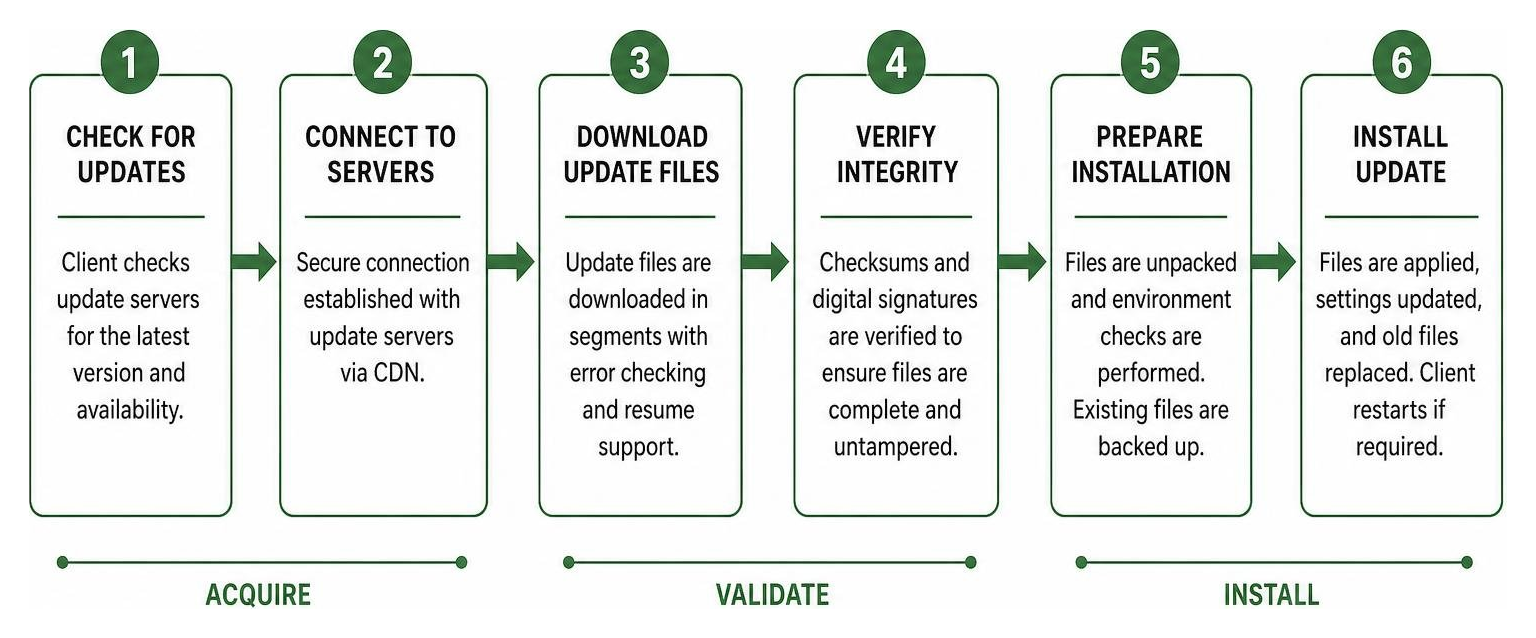
Second, modern updates use what are called “delta patches.” Instead of downloading the entire software from scratch, the updater only downloads the specific files that have changed. Once these files are downloaded, your computer’s CPU and storage drive have to do the heavy lifting of unpacking, verifying, and patching those changes into the existing software structure. This local file reconstruction is highly CPU-intensive. If your processor is busy or your storage drive is slow, the update will drag on even if the download itself took only five seconds.
For a complete breakdown of these hidden server-side and local bottlenecks, check out the guide on Why Is Uhoebeans Software Update So Slow? 9 Hidden Reasons.
How to Fix a Slow Uhoebeans Update in 5 Easy Steps
Now that we know what is causing the slowdown, let’s get down to business. If you are tired of staring at a frozen progress bar, we have compiled five straightforward, highly effective steps to get your Uhoebeans software updated quickly and painlessly.
For a quick reference on resolving these performance bottlenecks, you can also consult Why Is Uhoebeans Software Update So Slow – gfxtek.com.

Step 1: Free Up Storage and Close Background Apps
The installation phase of a Uhoebeans update requires a surprising amount of temporary workspace. The updater downloads compressed packages, extracts them, creates backup copies of your current files (in case the update fails and needs to roll back), and then writes the new files to your drive.
To do this safely, you need to maintain at least 20% free disk space on the drive where Uhoebeans is installed. If your drive is nearly full, the installer is forced to constantly swap temporary files back and forth, which slows the process down to a crawl.
Additionally, background applications compete heavily for your system’s RAM and CPU cycles. If you have memory-hungry applications, web browsers with dozens of open tabs, or heavy cloud-syncing services running in the background, your processor will struggle to allocate the resources needed for file patching.
Before starting your update:
- Delete temporary files, empty your recycle bin, and free up at least 2 to 3 GB of storage space.
- Open your Task Manager (Windows) or Activity Monitor (macOS) and close all non-essential applications.
Stat Check: Closing all non-essential applications before starting the update can cut installation time by 30% to 50% in many cases!
Step 2: Optimize Your Network and Disable VPNs
Wireless connections are highly susceptible to micro-interruptions. Even if your Wi-Fi feels fast when browsing the web, tiny packet drops can disrupt the continuous stream of data required by the Uhoebeans updater, forcing it to repeatedly pause and verify file integrity.
Furthermore, Virtual Private Networks (VPNs) are notorious for slowing down software updates. A VPN reroutes your internet traffic through distant encrypted servers, adding extra routing hops and latency to every single data handshake.
To optimize your network connection:
- If possible, plug your device directly into your router using a physical wired Ethernet cable.
- If you must use Wi-Fi, switch to a 5GHz band instead of 2.4GHz, and move closer to your router.
- Temporarily disable your VPN and proxy servers before launching the update. Once the installation is complete, you can safely turn them back on.
Step 3: Temporarily Pause Antivirus and Firewalls
Your security software is designed to protect you, but sometimes it can be a little too protective. When Uhoebeans downloads new executable files and system libraries, your antivirus software scans every single file in real time to ensure it is safe.
This continuous scanning sandboxes the updater, causing massive installation delays. In corporate environments, strict firewalls or Group Policies might even block the update scripts entirely, resulting in silent installation failures.
To resolve this:
- Temporarily pause your antivirus program’s real-time scanning feature just before running the update.
- If you are on a corporate network, check to make sure your firewall is not blocking connections to the Uhoebeans update domains (such as
updates.uhoebeans.comorcdn.uhoebeans.io). - Alternatively, add the Uhoebeans updater executable to your antivirus program’s whitelist or exclusion list. Remember to re-enable your real-time protection as soon as the update finishes!
Step 4: Clear the Update Cache and Temp Files
If your update has frozen completely, the culprit is likely a corrupted update cache. If a download is interrupted by a network drop, the partial file can become corrupted, and the updater will keep trying to read the broken file instead of downloading a fresh one.
Clearing the local update cache forces the software to start the process with a clean slate.
Here is how to clear the cache on Windows:
- Close Uhoebeans completely.
- Navigate to your local app data folder (usually
%LOCALAPPDATA%\Uhoebeans\cache\updates). - Delete all files inside this temporary directory.
- Restart your computer and try running the update again.
If you are comfortable with technical troubleshooting, you can check the update logs located at %LOCALAPPDATA%\Uhoebeans\logs\ to look for specific exit codes (like Exit Code 1603 or HRESULT 0x80070005), which can point you directly to the underlying file permission or registry issue.
Step 5: Schedule Updates During Off-Peak Hours
If you try to update Uhoebeans at 9:00 AM on a Tuesday morning, you are competing with thousands of other professionals who are starting their workdays. This peak demand creates massive server congestion.
Instead of fighting the crowd, schedule your updates for off-peak hours when server traffic is at its lowest. Running updates late at night (such as between 2:00 AM and 3:00 AM) or during weekends ensures you get maximum bandwidth from the CDN edge servers. You can easily enable automatic background updates in the settings to let the software handle this while you sleep.
Why Keeping Uhoebeans Updated is Worth the Wait
We get it — waiting for an update to finish is about as exciting as watching paint dry. But before you decide to skip updates altogether, it is important to understand why these installations are absolutely vital to your daily workflow and overall digital security.
If you are experiencing persistent issues where updates fail entirely, it is worth exploring the diagnostic breakdowns on Why Is Uhoebeans Software Update Failing – jotechgeeks.com and Why Is Uhoebeans Software Update Failing – techhubprohacks.com to make sure your system is healthy.
Why is uhoebeans software update so slow but critical for security?
The slow, thorough update process Uhoebeans uses is not a sign of neglect; it is a deliberate quality assurance and security measure. In the cybersecurity world, timely patch management is the first line of defense against data breaches and ransomware attacks.
When Uhoebeans updates take a long time, it is often because they are implementing next-generation encryption protocols and performing multi-stage data validation checks. The software handles highly sensitive project data, client communications, and financial analytics. Rushing an update without rigorous testing could introduce critical vulnerabilities that hackers could exploit.
Furthermore, these slower, comprehensive updates lay the foundation for long-term system stability. By rebuilding the core logic from a monolithic system to a modular one, the developers are ensuring that future patches will be significantly smaller and faster to install.
Additionally, tests on similar software architecture overhauls show that once the foundational update is complete, devices experience battery life improvements of 15% to 20% and UI response times that drop by nearly half. In short: a little patience today leads to a much faster, safer, and more responsive application tomorrow.
Frequently Asked Questions about Uhoebeans Updates
How long should a normal Uhoebeans update take?
For most devices, the Uhoebeans software update process typically takes between 10 and 45 minutes. Smaller incremental patches can finish in as little as 10 to 15 minutes. However, larger major feature updates or foundational architectural overhauls may take 30 to 45 minutes or longer. If your update is taking more than an hour under standard conditions, it is a strong indicator of network congestion, local hardware limitations, or a corrupted cache.
Can I safely cancel or interrupt a slow Uhoebeans update?
We highly advise against interrupting an active software update. While it is technically possible to close the updater or force-restart your computer, doing so risks corrupting critical system files. Uhoebeans uses complex file-patching routines. If you cut the power or close the process mid-update, you may end up with a wobbly, half-installed application that refuses to launch, requiring a complete manual reinstallation of the software.
Will Uhoebeans updates get faster in the future?
Yes! The development roadmap for late 2026 includes several major performance upgrades. Once the transition to a fully modular architecture is complete, the software will support highly optimized delta updates, meaning future patch sizes will drop by 60% to 70%. Additionally, the team is deploying AI-predictive prefetching and expanding their CDN edge server coverage to deliver lightning-fast, seamless update experiences globally.”https://www.mediafire.com/file/6wozy0cdr7zmkty/Realistic_Biomes_1.3_BY_MCMPDL.mcaddon/file“;
Conclusion
At Aixoria, we know that keeping your work tools running smoothly is essential to staying productive. While a slow Uhoebeans update can certainly try your patience, understanding the technical reasons behind it — and knowing how to optimize your system — can save you hours of frustration. By freeing up storage, closing background apps, disabling VPNs, and choosing the right time to update, you can cut your wait times in half.
To stay ahead of the curve with the latest tech insights, software optimization guides, and cutting-edge industry news, Check out Aixoria’s AI updates for more expert tips!