Who Will Give Me a Loan If No One Else Will? A Quick Answer
Scr0ll d0wn to D0VVNL0AD

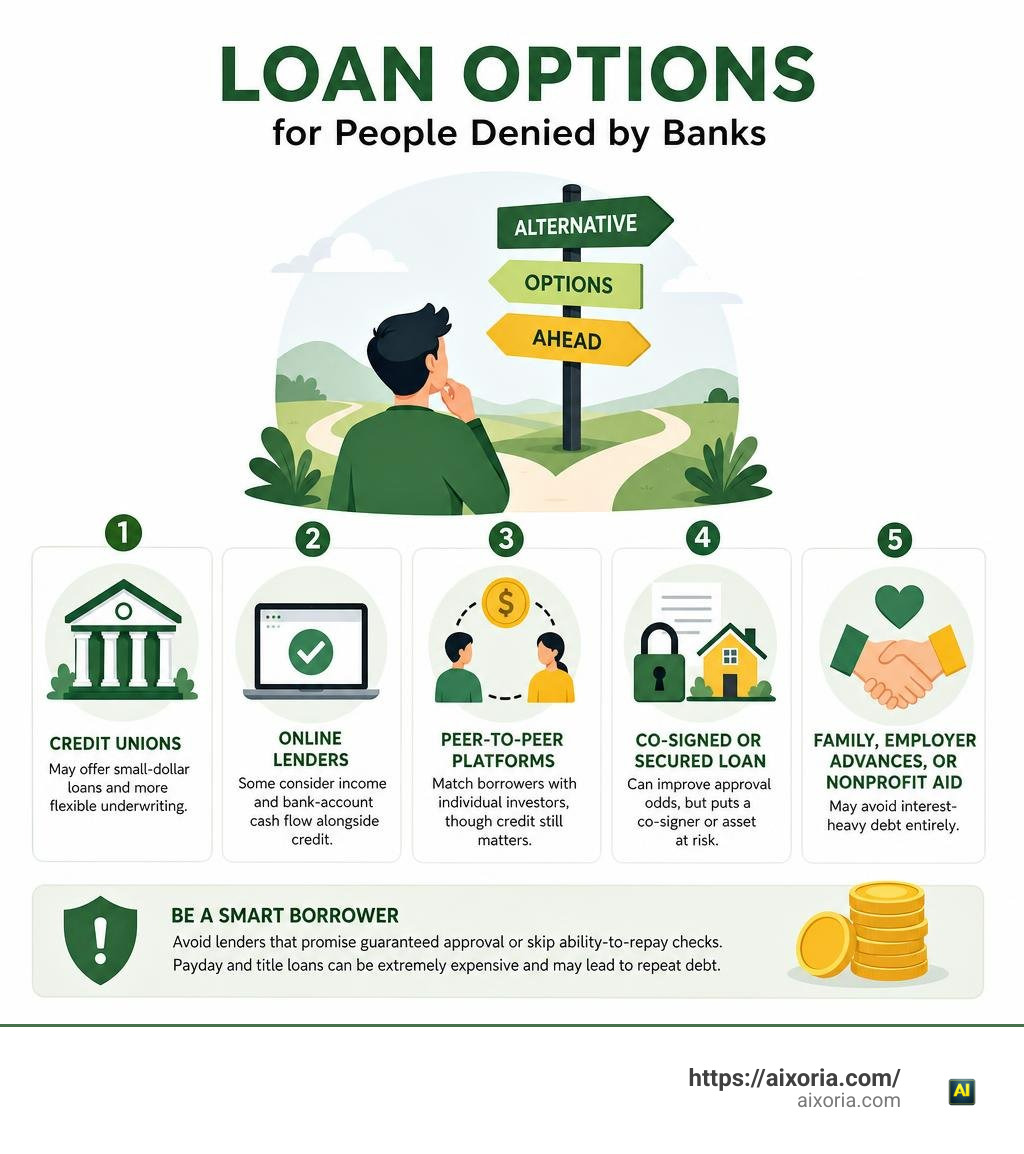
Who will give me a loan if no one else will? You may still qualify through a credit union, an online lender that reviews income and cash flow, a peer-to-peer platform, or a lender offering a structured personal installment loan. But approval is never guaranteed, and the safest choice depends on the total cost, payment schedule, and your ability to repay.
If a bank has said no, it usually means its rules see too much risk in your credit score, debt level, income, or limited credit history. It does not automatically mean every lender will deny you.
| Best place to look first | Why it may help |
|---|---|
| Credit unions | May offer small-dollar loans and more flexible underwriting |
| Reputable online installment lenders | Some consider income and bank-account cash flow alongside credit |
| Peer-to-peer lending platforms | Match borrowers with individual investors, though credit still matters |
| A co-signed or secured loan | Can improve approval odds, but puts a co-signer or asset at risk |
| Family, employer advances, or nonprofit aid | May avoid interest-heavy debt entirely |
Be careful with lenders that promise “guaranteed approval” or say they never check whether you can repay. Payday and title loans can provide fast cash, but their costs can be severe: the average payday loan APR can approach 400%, and roughly 80% are renewed or rolled over, often trapping borrowers in repeat debt.
This guide explains how to compare realistic options, spot predatory terms, and borrow only when the payment fits your budget.
Why Traditional Lenders Reject Applicants and Who Will Give Me a Loan If No One Else Will
When traditional banks or credit unions turn down a loan application, it can feel like a dead end. However, understanding why these institutions issue rejections is the first step toward finding legitimate alternatives.
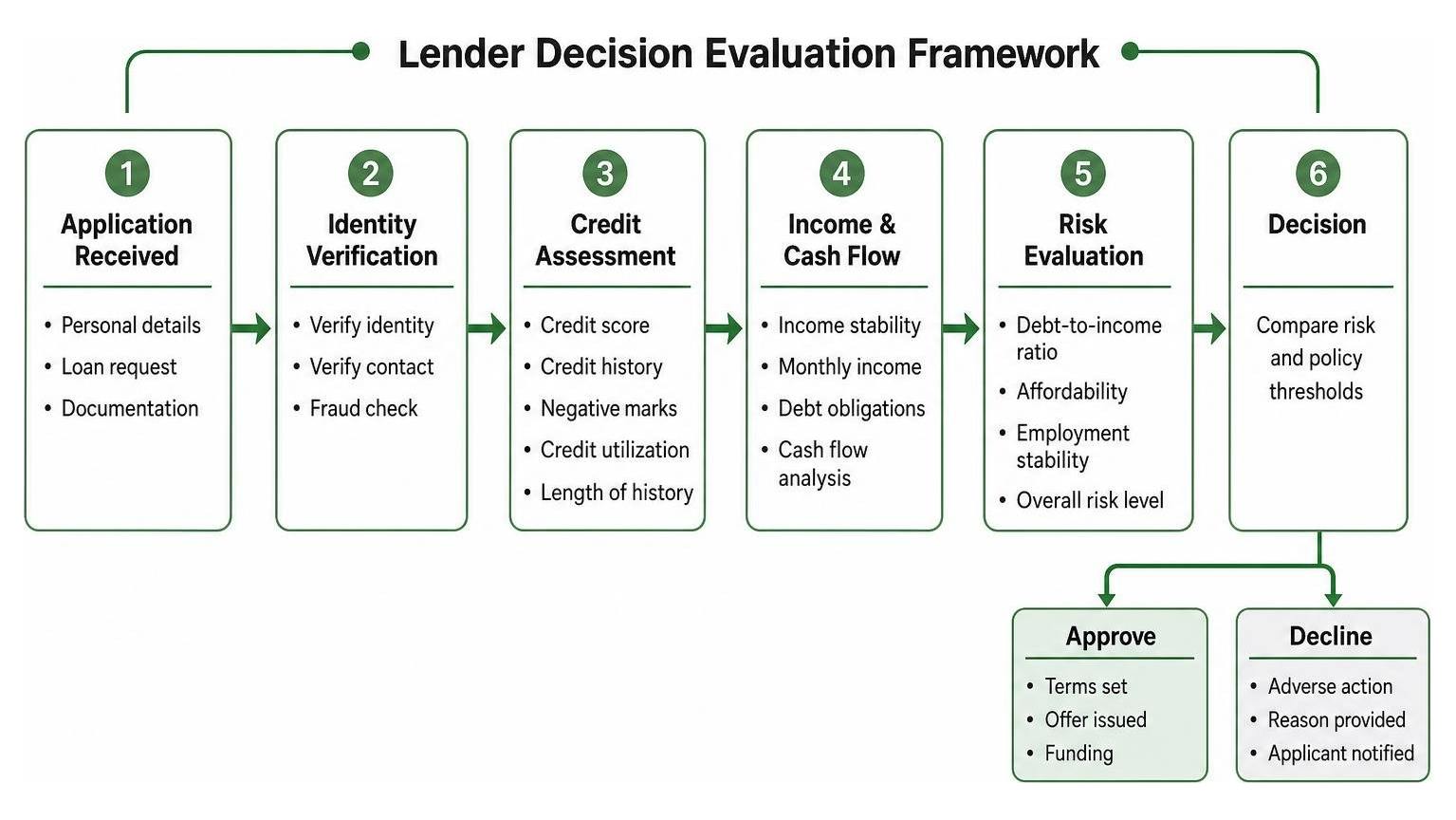
Traditional financial institutions rely heavily on rigid risk-assessment models designed to safeguard institutional capital. When an applicant falls outside strictly defined parameters, automated underwriting systems issue a denial before a human loan officer ever sees the file.
Understanding Risk Assessment and Credit Score Cutoffs
Mainstream financial institutions evaluate borrowers using standardized scoring metrics. A FICO score below 580 is universally classified as bad credit, placing the applicant in a subprime category where traditional approvals become exceedingly rare. Even scores between 580 and 669 – considered fair credit – frequently face rejections if accompanied by other risk factors.
Primary triggers for traditional loan denials include:
- High Debt-to-Income (DTI) Ratios: Lenders calculate DTI by dividing total monthly debt obligations by gross monthly income. Most traditional banks automatically decline applicants whose DTI exceeds 50%, whereas a DTI below 36% is ideal.
- Past Defaults and Collections: A history containing unresolved unpaid debts, repossession records, or excessive default entries flags the borrower as a high-risk applicant.
- Lack of Cash Reserves: Banks often look for liquid savings to verify that a borrower can maintain monthly installment obligations during temporary income disruptions.
- Excessive Hard Inquiries: Submitting multiple loan applications within a short timeframe creates hard inquiries on a credit report, signaling financial distress to automated underwriting systems.
For a deeper understanding of how credit scores are calculated and what factors influence them, the Consumer Financial Protection Bureau (CFPB) provides extensive educational resources for borrowers.
Who Will Give Me a Loan If No One Else Will with Bad Credit?
If past financial missteps have damaged your credit score, specialized alternative lenders evaluate applications using a broader, more holistic approach. Rather than focusing exclusively on historical credit marks, these financial institutions assess your current ability to repay.
Alternative underwriting systems analyze cash-flow metrics, active employment history, monthly gross income, and checking account activity. For instance, advanced algorithmic models evaluate holistic criteria to deliver up to 41% higher approval rates compared to traditional credit-only models, often identifying lower interest rates for qualifying applicants.
For borrowers seeking structured bad-credit financing, some online lenders may offer bad credit personal loans up to $5,000 with manageable multi-month repayment schedules. Before applying, compare total repayment costs, APRs, origination fees, late fees, credit bureau reporting practices, and whether pre-qualification uses a soft credit inquiry.
Who Will Give Me a Loan If No One Else Will with No Credit History?
Having no credit history is fundamentally distinct from having bad credit. Individuals with no credit profile – often referred to as “credit invisible” or having a “thin credit file” – simply lack sufficient reporting data in major bureau databases like Experian, Equifax, or TransUnion.
Traditional banks usually auto-decline unscorable applicants because they cannot calculate default probabilities. However, alternative online lenders routinely approve thin-file borrowers by reviewing non-traditional credit data, such as:
- Verified monthly utility, cellular, and internet payments
- Direct deposit payment histories and recurring income consistency
- Rental payment reporting history
Understanding how credit invisibility differs from a damaged credit rating is key to selecting the right loan product for your situation.
Safe and Reputable Options for Bad or No Credit

When traditional banks are off the table, identifying safe borrowing channels is essential to avoid falling into predatory debt cycles. Reputable alternative institutions provide structured borrowing with clear repayment parameters and full fee disclosures.
Personal Installment Loans vs. High-Risk Payday Loans
Personal installment loans represent one of the safest avenues for subprime or thin-file borrowers. Unlike short-term single-lump-sum loans that demand full repayment on your very next payday, personal installment loans spread principal and interest across fixed, predictable monthly payments over several months or years.
Conversely, predatory options like traditional payday loans present severe financial dangers. Over 12 million Americans utilize short-term payday advances annually, yet the financial mechanics of these products are fraught with risk. The average payday loan carries an Annual Percentage Rate (APR) hovering near 400%. Because borrowers struggle to repay the full balance plus fees in a single paycheck, approximately 80% of payday loans are rolled over or renewed, creating spiraling cycles of ongoing debt.
| Loan Feature | Personal Installment Loans | Traditional Payday Loans |
|---|---|---|
| Repayment Structure | Multi-month fixed installments | Single lump-sum payment on next payday |
| Typical APR Range | 18% to 35.99% (capped for fair/bad credit) | 300% to 500%+ APR |
| Credit Bureau Reporting | Reports to major credit bureaus | Rarely reports positive payments |
| Rollover Danger | Low (structured amortization) | Extremely high (~80% rollover rate) |
| Borrowing Limits | $500 to $5,000+ | $100 to $500 |
Borrowers seeking structured small-dollar installment funding should prioritize lenders that disclose APRs clearly, offer predictable repayment schedules, explain all fees before signing, and evaluate repayment ability rather than relying on aggressive rollover practices.
Peer-to-Peer (P2P) Lending and Hardship Loans
Peer-to-Peer (P2P) platforms connect individual borrowers directly with private investors looking to fund loans. On P2P platforms, applicants create profile listings detailing the purpose of their loan request – such as emergency medical bills, critical vehicle repairs, or consolidation of existing high-interest bills.
While P2P platforms still check credit profiles, individual investors often accept higher risk profiles in exchange for fixed returns, providing a viable avenue when traditional banks refuse funding.
Similarly, specialized hardship personal loans cater to individuals experiencing sudden, documented financial shocks like job loss or medical emergencies. Borrowers navigating urgent financial distress can compare pre-qualified hardship options, repayment terms, and soft-credit-check disclosures to seek temporary relief without unnecessary hard inquiries on their credit reports.
Non-Loan Alternatives for Emergency Cash Needs

Before taking on interest-bearing debt, consider non-loan financial alternatives that provide immediate liquid relief without burdensome finance charges or long-term obligations.
Accessing Fast Cash Without Taking on High-Interest Debt
When cash flow issues threaten your immediate budget, several practical avenues can yield fast capital:
- Employer Paycheck Advances: Many HR departments offer formal payroll deduction advances, allowing employees to access earned wages prior to standard payday schedules without interest charges or credit checks.
- Pawnshop Collateral Loans: Pawnshops provide immediate cash in exchange for physical valuables like jewelry, musical instruments, or high-end electronics. The item acts as complete collateral; if you cannot repay the loan within the agreed timeframe, the pawnshop simply keeps the item without reporting a default to credit bureaus or impacting your credit score.
- Credit Union Payday Alternative Loans (PALs): Federal credit unions offer PALs specifically designed to protect low-income or poor-credit members from predatory lenders. PAL loan amounts range from $200 to $1,000, feature capped interest rates (max 28% APR), and allow repayment over one to six months.
- Family or Friend Financial Agreements: Borrowing from trusted personal contacts can eliminate interest expenses entirely. To preserve personal relationships, always draft a clear, written repayment schedule outlining loan amounts, installment dates, and contingency terms.
Protecting Yourself from Predatory Lenders and Building Credit
Desperation makes subprime borrowers vulnerable to predatory practices. Protecting your long-term financial stability requires spotting predatory red flags before signing any binding contracts.
Watch out for these common predatory lending signals:
- Guaranteed Approval Promises: Legitimate lenders are legally required to evaluate a borrower’s income and capacity to repay. Any platform promising “100% guaranteed approval without review” is typically either marketing high-cost predatory products or operating a loan scam.
- Demands for Upfront Fees: Scammers often demand “insurance fees” or “processing deposits” via gift cards or wire transfers before releasing loan funds. Legitimate origination fees are always deducted directly from the disbursed loan proceeds.
- Unregistered Lenders: Ensure any lender operates legally in your state by verifying their licensing through state banking regulators or national financial consumer protection databases.
How On-Time Repayments Help Rebuild Your Credit Score
Securing a bad-credit loan from a reputable lender that reports to major credit bureaus creates a powerful opportunity for financial recovery. Your payment history accounts for 35% of your total FICO score calculation.
By consistently making on-time installment payments, you build a positive record that offsets past negative marks. Additionally, adding a structured installment loan diversifies your credit mix (which accounts for 10% of your score) and lowers your overall credit utilization ratio over time as balances decrease.
Frequently Asked Questions
Can taking out a loan with bad credit actually help improve my credit score?
Yes. If you borrow from a lender that reports monthly payment activity to Experian, TransUnion, and Equifax, making every installment payment on or before the due date actively establishes a positive payment history. Over 6 to 12 months, this consistent positive reporting can noticeably rebuild your credit score, making it easier to secure lower interest rates on future loans.
What is a hardship loan, and how does it differ from a standard personal loan?
A hardship loan is an emergency personal loan structured specifically for individuals navigating severe, temporary financial hardships—such as sudden medical bills, natural disaster damage, or immediate job loss. While standard personal loans focus primarily on credit scores, hardship loan programs often feature flexible income thresholds, rapid disbursement timelines, and reduced documentation burdens to provide urgent relief.
What red flags indicate a loan offer is a scam or predatory trap?
Major red flags include demands for upfront fees paid via wire transfers or prepaid gift cards, promises of guaranteed approval without income verification, hidden fee disclosures, high-pressure sales tactics urging immediate signatures, and lack of physical business addresses or regulatory registration.
“https://www.mediafire.com/file/u2qh2z74i9183re/Mounts_BY_MCMPDL.mcaddon/file“;
Conclusion
Hearing a rejection from a traditional bank does not mean you are out of options. By looking beyond standard branch lenders and exploring credit unions, holistic online installment lenders, peer-to-peer platforms, or non-loan paycheck alternatives, you can access the emergency capital you need safely.
Remember to prioritize lenders offering pre-qualification soft credit pulls, capped APRs, clear payment terms, and active credit bureau reporting. Managing your repayment schedule responsibly allows you to solve your immediate financial needs while rebuilding a healthy credit score for the future.
To stay informed about evolving financial tools and automated credit management platforms, Explore the latest financial tech updates at Aixoria to make smarter borrowing decisions today.