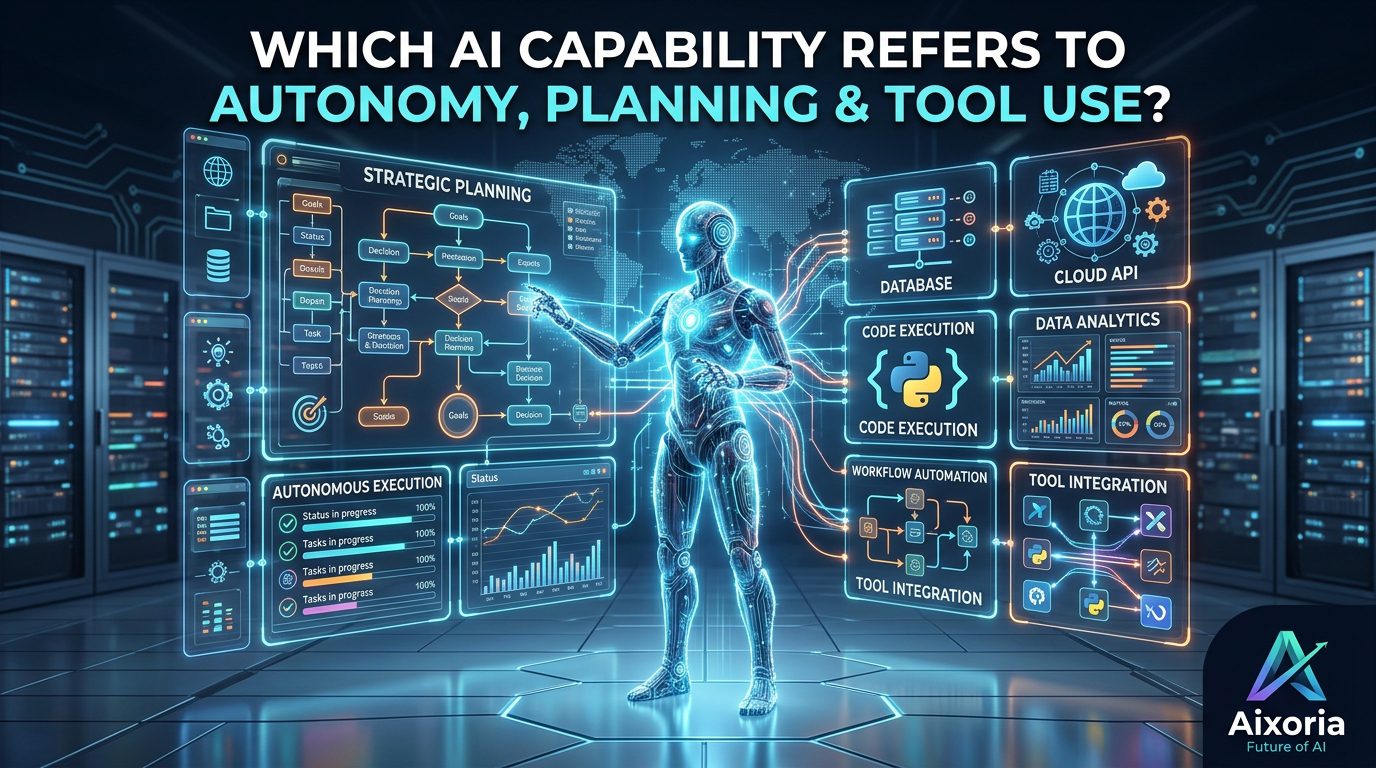
Artificial intelligence is rapidly moving beyond simple question-answer or prediction systems. Today’s advanced AI is expected to act independently, plan multi-step tasks, and use external tools or software to accomplish complex goals. This capability represents a major evolution from traditional AI models to agentic AI systems, which behave more like autonomous digital assistants capable of strategic reasoning.
These systems are designed not only to respond to prompts but to analyze problems, devise execution plans, interact with APIs or software tools, and complete tasks with minimal human intervention. In 2026, this capability is critical for businesses, developers, and researchers who want AI to operate intelligently across workflows without constant oversight.
This guide explores the AI capability that enables autonomy, planning, and tool use, explains how it works, and highlights leading AI tools that excel in this domain.
Table of Contents
Understanding the AI Capability Behind Autonomy, Planning, and Tool Use
The AI capability responsible for this level of functionality is commonly called agentic AI, implemented through AI agents.
An AI agent is designed to:
- Understand a goal – For example, “compile a market research report using multiple sources.”
- Break the goal into actionable steps – Planning each stage logically.
- Execute steps using tools – Accessing APIs, software platforms, or databases.
- Adapt based on results – Continuously refining actions to achieve the goal efficiently.
Unlike conventional AI that only generates responses, agentic AI systems function proactively. They monitor progress, adjust plans, and interact with multiple environments or tools, effectively becoming autonomous digital problem-solvers.
Core Components of Agentic AI Systems
To understand agentic AI fully, we can divide it into three pillars:
1. Autonomy
Autonomy enables AI to operate independently, requiring minimal human oversight. Once given a goal, it can progress through tasks without waiting for step-by-step instructions. This makes it suitable for enterprise environments where AI can manage repetitive or complex processes efficiently.
2. Planning
Planning allows the AI to decompose complex tasks into structured steps. For example, creating a content marketing plan may involve research, competitor analysis, drafting, editing, and distribution—all orchestrated autonomously by AI.
3. Tool Use
Tool use transforms AI from a passive assistant into an active executor. AI agents can interact with:
- APIs to pull or push data
- Databases to manage information
- Web browsers to gather live insights
- Software platforms like CRMs, automation tools, and analytics suites
This combination of autonomy, planning, and tool use enables AI to operate like a highly capable digital employee, completing tasks end-to-end.
Why Agentic AI Is Critical in 2026
Agentic AI is increasingly central to business, research, and development because it can:
- Automate complex workflows and multi-step processes
- Reduce manual intervention and human error
- Boost productivity across departments
- Make informed decisions based on real-time data
For enterprises, this means AI can orchestrate tasks across systems, allowing teams to focus on strategic goals rather than repetitive tasks.
READ MORE – What Are the Best AI Agent Orchestration Tools?
Best AI Tools for Autonomy, Planning, and Tool Use
Here are leading AI tools that implement agentic capabilities effectively, along with real-world insights:
1. OpenAI ChatGPT – General-Purpose Agentic AI
OpenAI’s ChatGPT is no longer just a conversational AI—it now functions as a semi-autonomous digital assistant. It can research topics, summarize data, generate reports, and even execute actions via integrated tools.
Real experience: I used ChatGPT to create a weekly market analysis workflow, connecting it to Google Sheets and Slack. It reduced task time by 70%, automatically sending insights to the team.
Pricing: Free plan available; paid plans from $20/month, enterprise options available
Pros: Highly versatile, strong reasoning, wide integration ecosystem, continuously updated
Cons: Full autonomy is still limited; complex workflows may require initial setup
2. Zapier – Workflow Automation with AI Agents
Zapier has evolved from automation into AI-driven workflow orchestration, connecting thousands of apps and executing multi-step tasks autonomously.
Real experience: Using Zapier’s AI agent to automate lead follow-ups and CRM updates saved multiple hours daily, allowing the marketing team to focus on strategy instead of repetitive tasks.
Pricing: Free plan available; paid plans from $19.99/month, enterprise tiers
Pros: Extensive app integration, no-code automation, scalable
Cons: Complex automations can be challenging to manage at scale
3. AutoGPT – Framework for Fully Autonomous Agents
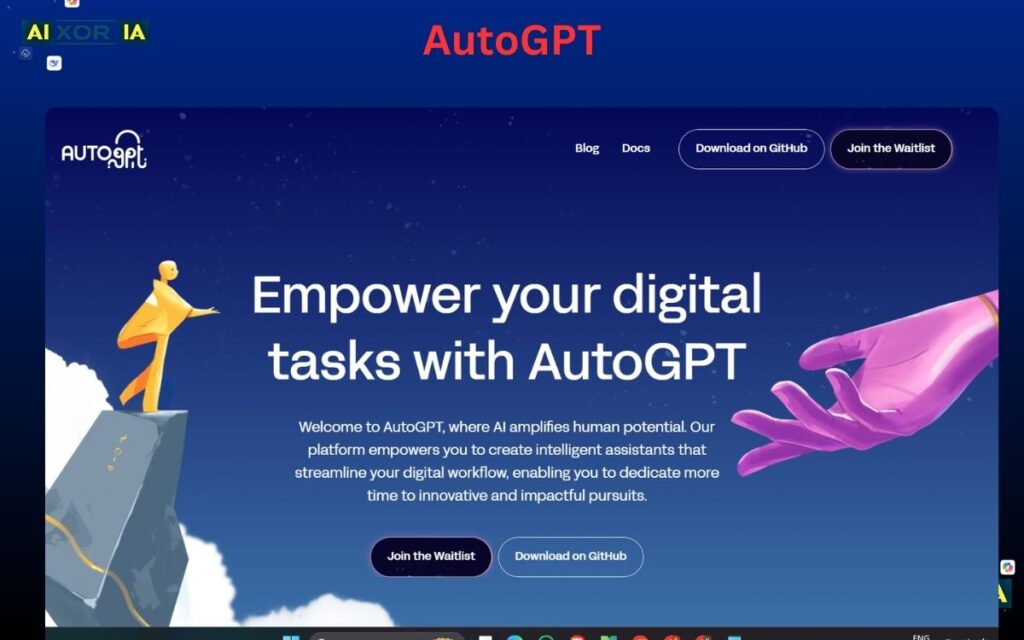
AutoGPT is an open-source framework for autonomous AI agents. It loops through tasks, evaluates results, and adjusts plans dynamically, providing high autonomy for developers.
Real experience: Using AutoGPT to gather and summarize competitor content online allowed me to generate detailed research reports overnight with minimal supervision.
Pricing: Free (open-source), API usage costs may apply
Pros: High autonomy, flexible, ideal for experimentation
Cons: Technical setup required; not production-ready for most businesses
4. CrewAI – Multi-Agent Collaboration
CrewAI enables multiple AI agents to work together, simulating real-world team collaboration. Each agent can have a distinct role, improving execution of complex projects.
Real experience: Implemented CrewAI for a multi-step content strategy where one agent researched topics, another drafted content, and a third performed SEO checks—dramatically reducing human workload.
Pricing: Typically open-source or usage-based
Pros: Multi-agent coordination, structured workflows, scalable
Cons: Setup complexity, evolving ecosystem
5. Microsoft Power Automate – Enterprise AI Automation
Power Automate integrates agentic AI into enterprise workflows, especially in Microsoft 365 environments. It supports automated approvals, data management, and intelligent decision-making.
Real experience: Using Power Automate to route documents between Teams, Outlook, and SharePoint reduced approval cycle times by 60%, streamlining enterprise operations.
Pricing: From $15/user/month for premium plans
Pros: Deep Microsoft integration, enterprise-grade security, scalable
Cons: Less flexible outside Microsoft ecosystem
6. LangFlow – Visual AI Workflow Builder
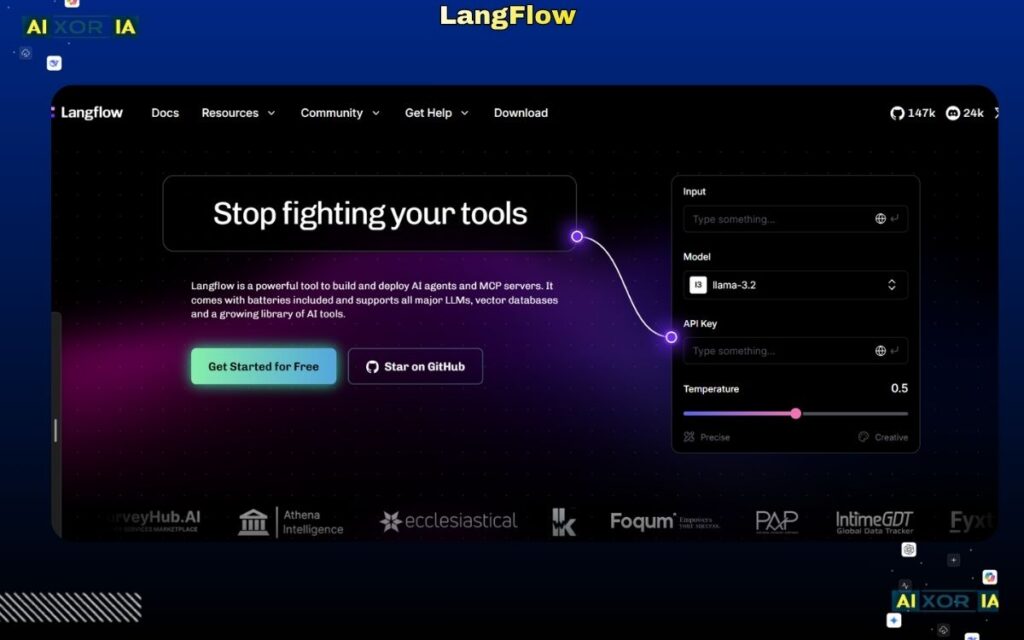
LangFlow provides a visual interface for designing agentic AI workflows, connecting multiple models, APIs, and tools into coherent pipelines.
Real experience: Designed a custom AI pipeline using LangFlow to combine ChatGPT outputs with real-time web data for research briefs—resulting in accurate, automated weekly reports.
Pricing: Varies; open-source or platform-specific
Pros: Visual workflow design, flexible, developer-friendly
Cons: Requires AI knowledge, not beginner-friendly
READ MOREA – Best AI Productivity Software in 2026 (Agentic AI Tested)
How to Choose the Right Agentic AI Tool
Your choice depends on goals and expertise:
- General-purpose flexibility: ChatGPT
- Business automation: Zapier
- Experimental, developer-focused autonomy: AutoGPT
- Multi-agent collaboration: CrewAI
- Enterprise-grade workflows: Microsoft Power Automate
- Custom AI pipelines: LangFlow
Most organizations combine multiple tools for full-scale automation and orchestration.
The Future of Agentic AI
Agentic AI is transitioning from experimental to essential in 2026. Key trends include:
- Long-running AI agents with better memory and reasoning
- Deeper integration with enterprise systems
- Smarter planning and decision-making capabilities
- Broader adoption across industries
This capability is no longer optional; organizations that leverage it can save time, reduce errors, and scale operations efficiently.
Conclusion
The AI capability that refers to autonomy, planning, and tool use is agentic AI, implemented via AI agents.
These systems are the next evolution of artificial intelligence, moving from reactive assistants to proactive, goal-oriented problem solvers. Understanding and adopting this technology is crucial for staying competitive in the rapidly advancing AI landscape.