AI orchestration has quickly become a core layer in modern enterprise architecture. As organizations adopt multiple AI models, automation systems, and data pipelines, the challenge is no longer just building AI—it’s coordinating how everything works together.
AI orchestration tools help enterprises design, connect, manage, and scale workflows that involve AI models, APIs, data systems, and human inputs. These platforms act as the control layer, ensuring that processes run efficiently, securely, and consistently across teams and systems.
For enterprises in 2026, the stakes are higher. You need tools that can handle complex workflows, governance, integrations, and AI-driven decision-making at scale. The right platform depends on your infrastructure, technical resources, and how deeply AI is embedded in your operations.
Table of Contents
What Is AI Orchestration?
AI orchestration refers to the coordination of multiple AI systems, tools, and workflows into a unified process. Instead of running isolated automations or models, orchestration platforms allow you to:
- Connect AI models with business workflows
- Automate decision-making processes
- Manage data flow across systems
- Monitor performance and outcomes
- Scale AI usage across departments
In simple terms, it’s the difference between using AI tools individually and running a fully automated, intelligent system across your organization.
What Makes the Best AI Orchestration Tool for Enterprises?
Not all automation platforms qualify as true orchestration tools. The best enterprise-grade solutions typically offer:
Scalability and governance
Enterprises require role-based access, audit logs, compliance standards (SOC 2, GDPR), and centralized control over workflows.
Multi-system integration
AI orchestration tools must connect with CRMs, ERPs, databases, APIs, and both cloud and on-prem systems.
AI-native capabilities
Support for LLMs, AI agents, prompt workflows, and decision automation is essential.
Ease of use with control
Low-code or no-code builders should allow business users to create workflows, while IT maintains oversight.
Real-time monitoring and optimization
Dashboards, logs, and performance tracking are critical for maintaining reliability at scale.
The Top AI Orchestration Tools for Enterprises (2026)
Zapier — Best for cross-app AI orchestration
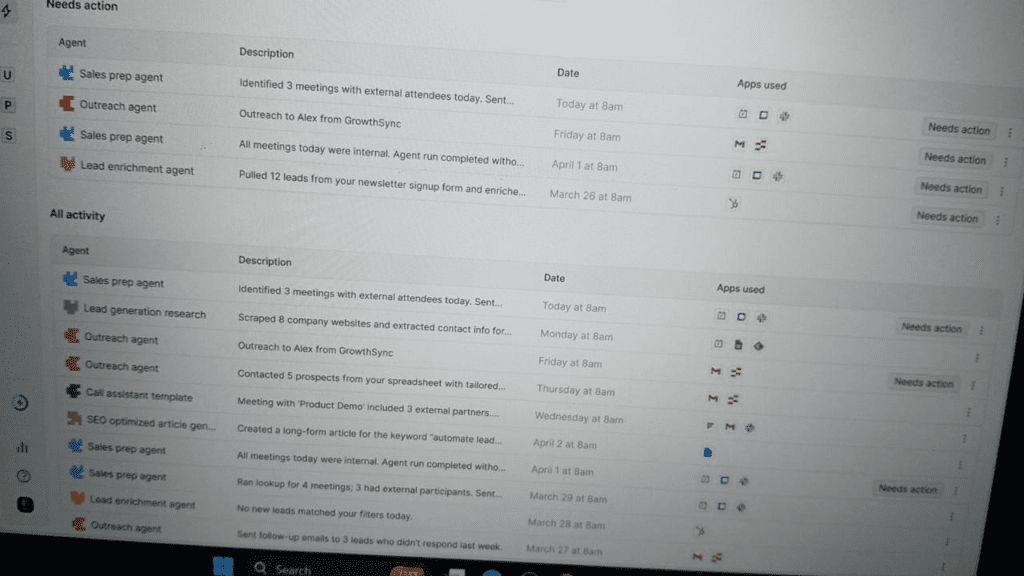
Zapier has evolved into a powerful AI orchestration layer that connects thousands of applications and enables fully automated workflows without requiring code. For enterprises managing workflows across marketing, sales, support, HR, and operations, Zapier acts as a central hub that connects systems and orchestrates AI-driven processes end to end.
One of its biggest strengths is its massive integration ecosystem, with support for over 8,000 applications. This allows enterprises to automate workflows that span multiple departments without building custom integrations. With AI features like Copilot and AI-powered agents, users can describe workflows in natural language and generate automation logic instantly.
Zapier also includes built-in tools such as forms, databases, and process mapping, making it more than just an integration tool—it becomes a full orchestration layer. Enterprise features include SSO, audit logs, and scalable deployment options, which are critical for governance and compliance.
Pricing: Free plan available; paid plans start from approximately $19.99/month; enterprise pricing available
Pros:
- Massive integration ecosystem
- No-code workflow builder with AI assistance
- Scales easily across teams
Cons: - Limited deep customization compared to developer-first tools
- No native mobile app experience
Boomi — Best for hybrid environments
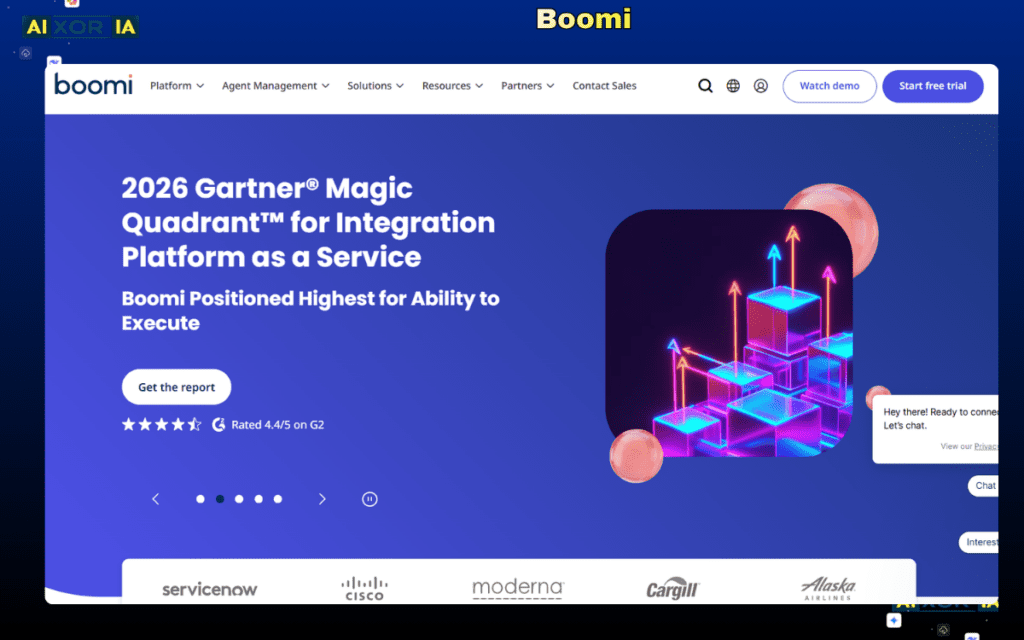
Boomi is designed for enterprises that operate across both cloud and on-premise systems. It specializes in integrating complex environments and orchestrating workflows that involve legacy systems, databases, and modern applications.
At its core, Boomi provides a unified platform for integration, data management, API management, and workflow automation. Its orchestration capabilities allow businesses to build workflows that connect AI models, enterprise systems, and data pipelines in a secure and scalable way.
Boomi also supports AI-driven automation and agent management, enabling enterprises to embed intelligence into workflows. However, it is more technical than no-code platforms and often requires developer or integration expertise to implement and maintain.
Pricing: Custom enterprise pricing; pay-as-you-go options may start around $99/month
Pros:
- Strong hybrid integration (cloud + on-prem)
- Enterprise-grade scalability and security
- Deep data and API management capabilities
Cons: - Steep learning curve
- Requires technical resources
ServiceNow — Best for IT and operations orchestration
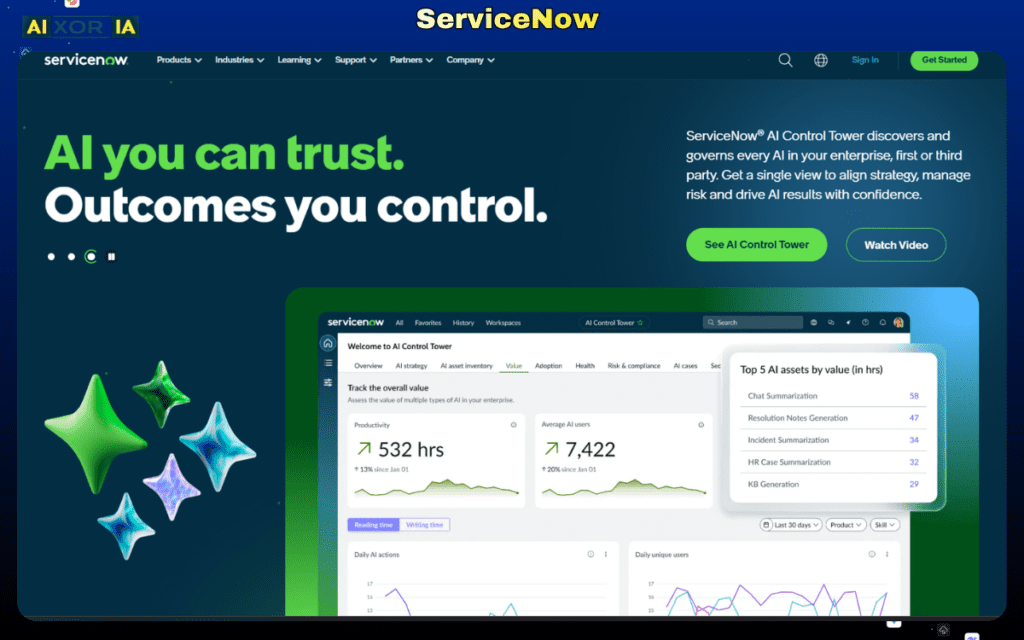
ServiceNow is a leading enterprise platform focused on IT service management and operational workflows. It provides powerful orchestration capabilities for managing incidents, requests, approvals, and enterprise services.
Its Flow Designer and automation engine allow organizations to build complex workflows that integrate AI-driven decision-making. ServiceNow has also introduced AI agents that can predict issues, automate responses, and optimize IT operations.
For enterprises where AI orchestration is centered around IT systems and operational processes, ServiceNow offers a robust and scalable solution. However, it is typically best suited for large organizations with dedicated IT teams and budgets.
Pricing: Custom enterprise pricing (by request)
Pros:
- Deep IT and operations integration
- Strong automation and AI capabilities
- Enterprise-grade governance and compliance
Cons: - High cost and complexity
- Requires significant setup and maintenance
Microsoft Power Automate — Best for Microsoft ecosystems
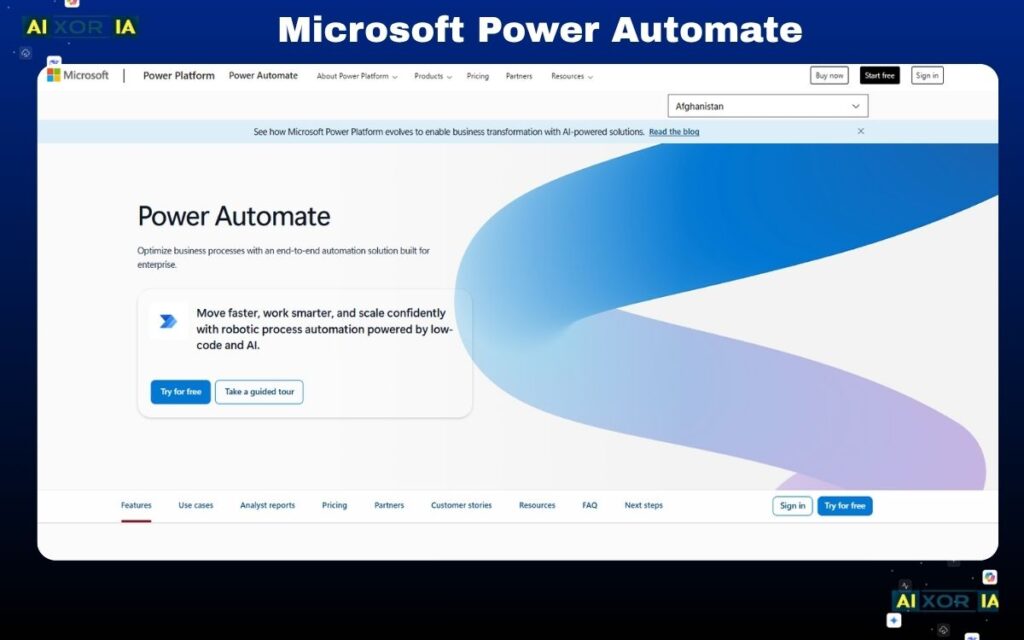
Microsoft Power Automate is a natural choice for enterprises already using Microsoft 365. It enables organizations to automate workflows across tools like Outlook, Teams, SharePoint, and Excel while integrating AI capabilities through Microsoft Copilot.
The platform supports both simple automations and complex orchestration scenarios involving approvals, document processing, and AI-driven workflows. With over 1,000 connectors, it can also integrate with non-Microsoft applications, although the experience is strongest within the Microsoft ecosystem.
Power Automate allows enterprises to build scalable workflows with governance and security aligned with Microsoft’s infrastructure, making it a practical choice for organizations already standardized on Microsoft tools.
Pricing: Starts from around $15/user/month for premium plans
Pros:
- Deep integration with Microsoft 365
- Built-in AI capabilities with Copilot
- Strong enterprise security and compliance
Cons: - Limited flexibility outside Microsoft ecosystem
- Can become complex for advanced workflows
UiPath — Best for AI + RPA orchestration
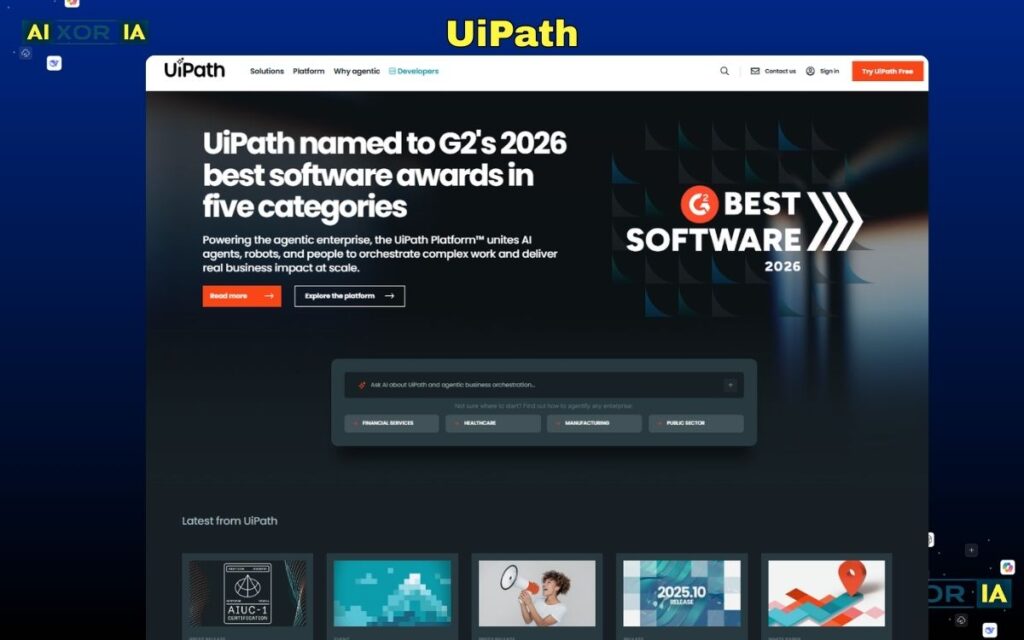
UiPath combines robotic process automation (RPA) with AI orchestration, making it ideal for enterprises looking to automate repetitive tasks alongside intelligent workflows.
It allows organizations to build end-to-end automation pipelines that include bots, AI models, and human interactions. UiPath’s orchestration layer manages task scheduling, execution, and monitoring, ensuring workflows run efficiently at scale.
With AI Center and automation cloud features, UiPath enables enterprises to deploy, manage, and optimize AI models within business processes. This makes it particularly useful for industries like finance, healthcare, and manufacturing.
Pricing: Custom enterprise pricing
Pros:
- Strong RPA + AI integration
- Scalable automation infrastructure
- Advanced monitoring and analytics
Cons: - Requires technical expertise
- Implementation can be time-intensive
DataRobot — Best for enterprise AI lifecycle orchestration
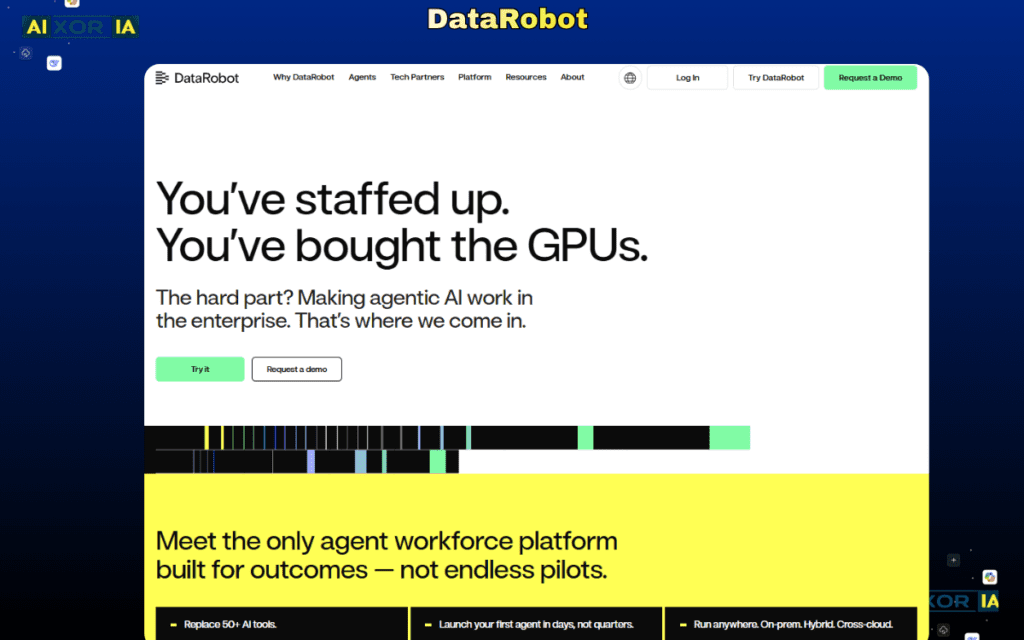
DataRobot focuses on orchestrating the full lifecycle of AI models, from development to deployment and monitoring. It is designed for enterprises that rely heavily on predictive models and machine learning workflows.
The platform provides tools for building, deploying, and managing AI models while ensuring governance, compliance, and performance tracking. Its orchestration capabilities help integrate models into real-world business processes.
DataRobot is particularly valuable for data-driven organizations that need to manage multiple AI models across departments and ensure consistent performance.
Pricing: Enterprise pricing (custom quotes)
Pros:
- End-to-end AI lifecycle management
- Strong governance and monitoring
- Built for data science teams
Cons: - Less focus on general workflow automation
- Requires specialized expertise
Apache Airflow — Best for developer-led orchestration
Apache Airflow is an open-source platform widely used for orchestrating data pipelines and AI workflows. It allows developers to define workflows as code, providing maximum flexibility and control.
Airflow is highly scalable and supports complex scheduling, dependencies, and integrations. It is commonly used in enterprises for managing data engineering and machine learning pipelines.
While it lacks a no-code interface, it is one of the most powerful orchestration tools for technical teams that need full control over their workflows.
Pricing: Free (open-source); enterprise support may involve infrastructure costs
Pros:
- Highly flexible and customizable
- Strong community support
- Ideal for data and AI pipelines
Cons: - Requires coding knowledge
- No built-in no-code interface
READ MORE – What Is the Best AI Orchestration Tool
How to Choose the Right AI Orchestration Tool
The best tool depends on your enterprise setup:
- For no-code, cross-app automation → Zapier
- For hybrid infrastructure → Boomi
- For IT operations → ServiceNow
- For Microsoft-based environments → Power Automate
- For RPA + AI workflows → UiPath
- For AI model lifecycle → DataRobot
- For developer-led pipelines → Apache Airflow
Many enterprises combine tools—for example, using Airflow for data pipelines and Zapier for cross-team automation.
The Role of AI Orchestration in 2026
AI orchestration is becoming the backbone of enterprise automation. Instead of isolated tools, organizations are building interconnected systems where AI models, workflows, and data operate together seamlessly.
Key trends include:
- Increased use of AI agents for decision-making
- Natural language workflow creation
- Real-time optimization of processes
- Deeper integration across business systems
Enterprises that adopt orchestration early gain a significant advantage in efficiency, scalability, and innovation.
Final Thoughts
There is no single “best” AI orchestration tool for every enterprise. The right choice depends on your systems, teams, and goals.
However, one thing is clear: AI orchestration is no longer optional. As workflows become more complex and AI adoption grows, enterprises need a central layer to manage everything effectively.
2 thoughts on “Top AI Orchestration Tools for Enterprises in 2026”