AI agents are quickly moving from simple task automation to fully autonomous systems capable of reasoning, decision-making, and multi-step execution. But as organizations deploy multiple agents across workflows, teams, and systems, a new challenge emerges: how do you coordinate and manage all these agents effectively?
That’s where AI agent orchestration tools come in.
AI agent orchestration is about designing, coordinating, and managing how multiple AI agents interact with each other, with data, and with business systems. These platforms provide the infrastructure to build, deploy, monitor, and scale AI-driven workflows across an organization.
For enterprises and advanced teams, choosing the right orchestration tool is critical. You need scalability, governance, integrations, and increasingly, native AI capabilities that go beyond basic automation.
This guide covers the best AI agent orchestration tools in 2026, with detailed breakdowns, use cases, pricing insights, and pros/cons to help you choose the right platform.
Table of Contents
What Makes the Best AI Agent Orchestration Tool?
Not all automation platforms qualify as true AI orchestration tools. The best ones typically offer:
Multi-agent coordination
The ability to manage multiple AI agents working together across tasks and workflows.
AI-native capabilities
Support for reasoning, decision-making, memory, and dynamic execution—not just rule-based automation.
Scalability and governance
Enterprise-grade features like role-based access, audit logs, monitoring, and compliance.
Integrations across systems
Support for APIs, databases, SaaS tools, and legacy systems.
Observability and control
Clear visibility into what agents are doing, how decisions are made, and how workflows perform.
READ MORE – What are the Best Tools for AI Orchestration?
The Best AI Agent Orchestration Tools at a Glance
| Tool | Best For | Key Strength | Pricing |
|---|---|---|---|
| Zapier | AI orchestration across apps | 8,000+ integrations + no-code AI agents | Free plan; paid from $19.99/month |
| LangChain | Developers building AI systems | Deep customization and agent frameworks | Free (open-source); enterprise pricing varies |
| AutoGen | Multi-agent collaboration | Advanced agent-to-agent communication | Free (open-source) |
| CrewAI | Structured multi-agent workflows | Role-based agent systems | Free + paid tiers emerging |
| Microsoft Semantic Kernel | Enterprise AI apps | Deep Microsoft ecosystem integration | Free + Azure-based pricing |
| Relevance AI | AI workforce automation | Business-ready AI agents | Custom pricing |
| Dust | Enterprise AI assistants | Internal knowledge + workflows | Custom pricing |
Best AI Agent Orchestration Tool for No-Code Automation
Zapier
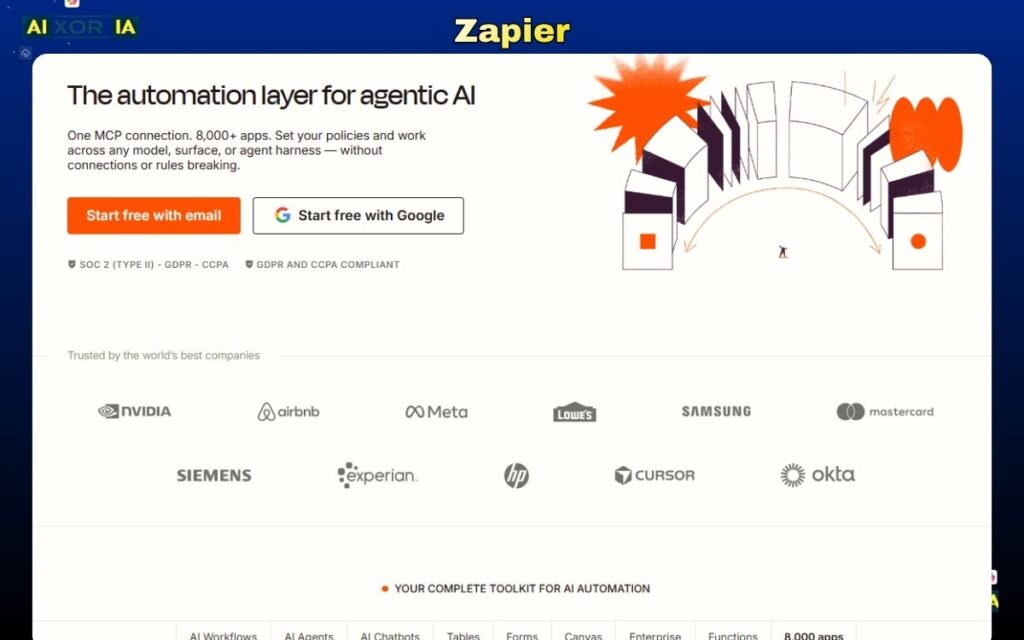
Zapier has evolved from a simple automation tool into a full AI orchestration platform capable of managing complex workflows across thousands of applications. It allows users to build AI-powered workflows—called Zaps—that can include triggers, actions, conditional logic, and now AI agents that can reason and take action.
One of Zapier’s biggest strengths is accessibility. Non-technical teams can build and deploy AI workflows without writing code, while still maintaining control through structured logic and governance features. With over 8,000 integrations, it acts as a central orchestration layer across marketing, sales, operations, HR, and support systems.
Zapier also includes built-in tools like databases, forms, and AI assistants, allowing organizations to create end-to-end workflows within a single platform. Its AI Copilot feature enables users to describe workflows in plain language and generate automation instantly.
For enterprises, Zapier supports security features like SSO, audit logs, and compliance standards, making it suitable for large-scale deployment.
Pricing: Free plan available; paid plans start at $19.99/month; enterprise pricing available
Pros:
- Extremely easy to use (no-code)
- Massive integration ecosystem
- Fast deployment of AI workflows
Cons: - Limited deep customization compared to developer tools
- Not ideal for highly complex multi-agent logic systems
Best AI Agent Orchestration Tool for Developers
LangChain
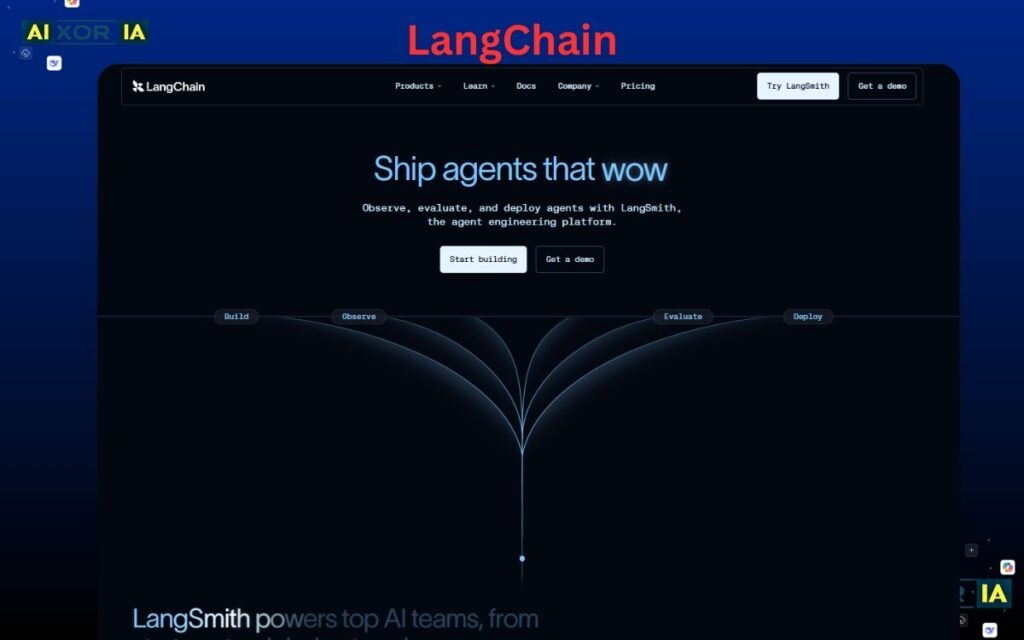
LangChain is one of the most widely used frameworks for building AI-powered applications and orchestrating agent workflows. It provides developers with the building blocks needed to create complex, multi-step AI systems that can reason, retrieve information, and interact with external tools.
Unlike no-code platforms, LangChain is designed for flexibility. Developers can define how agents think, how they use memory, and how they interact with APIs or databases. This makes it ideal for building custom AI systems tailored to specific business needs.
LangChain also supports advanced features like tool usage, document retrieval (RAG), and agent chaining, allowing multiple agents to collaborate on tasks. It integrates with a wide range of LLM providers and infrastructure tools.
However, this flexibility comes with complexity. It requires strong technical expertise and ongoing maintenance.
Pricing: Open-source (free); enterprise costs depend on infrastructure
Pros:
- Highly customizable
- Strong ecosystem and community
- Ideal for complex AI systems
Cons: - Requires development expertise
- Steeper learning curve
Best Tool for Multi-Agent Collaboration
AutoGen
AutoGen is a framework designed specifically for multi-agent collaboration. It allows developers to create systems where multiple AI agents communicate, negotiate, and collaborate to complete tasks.
This approach is particularly powerful for complex workflows that require different roles—such as planning, execution, validation, and iteration. Each agent can have a specific function, and the system coordinates their interactions dynamically.
AutoGen supports conversational workflows, where agents exchange messages to solve problems step by step. This makes it suitable for research, coding, automation, and decision-making systems.
While highly powerful, AutoGen is still evolving and requires technical setup and experimentation.
Pricing: Free (open-source)
Pros:
- Advanced multi-agent coordination
- Flexible conversational workflows
- Strong research and innovation potential
Cons: - Not beginner-friendly
- Limited enterprise-ready features out of the box
Best AI Agent Framework for Structured Workflows
CrewAI
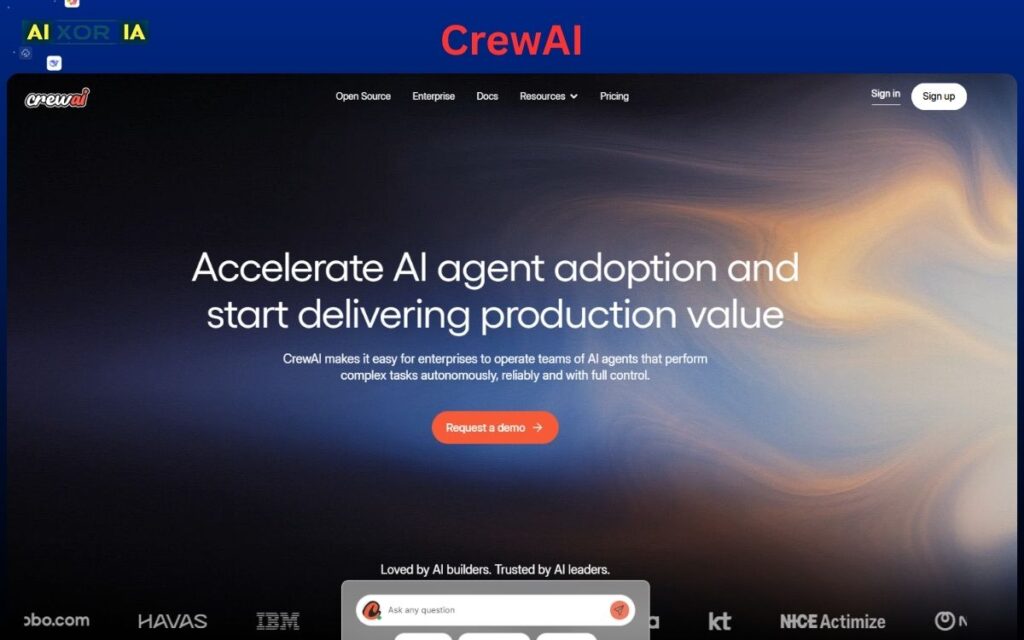
CrewAI focuses on structured multi-agent workflows, where each agent has a defined role, responsibility, and goal. This makes it easier to design predictable and repeatable AI systems.
Instead of loosely connected agents, CrewAI enforces a more organized approach. You can define roles like researcher, writer, analyst, and reviewer, and assign tasks accordingly. This is particularly useful for content creation, research automation, and business workflows.
CrewAI is gaining popularity because it simplifies multi-agent orchestration without sacrificing flexibility. It strikes a balance between developer control and structured design.
Pricing: Free (open-source); commercial offerings emerging
Pros:
- Clear structure for multi-agent systems
- Easier to manage than raw frameworks
- Good for workflow automation
Cons: - Still maturing
- Smaller ecosystem compared to larger tools
Best Enterprise AI Orchestration Tool in Microsoft Ecosystem
Microsoft Semantic Kernel
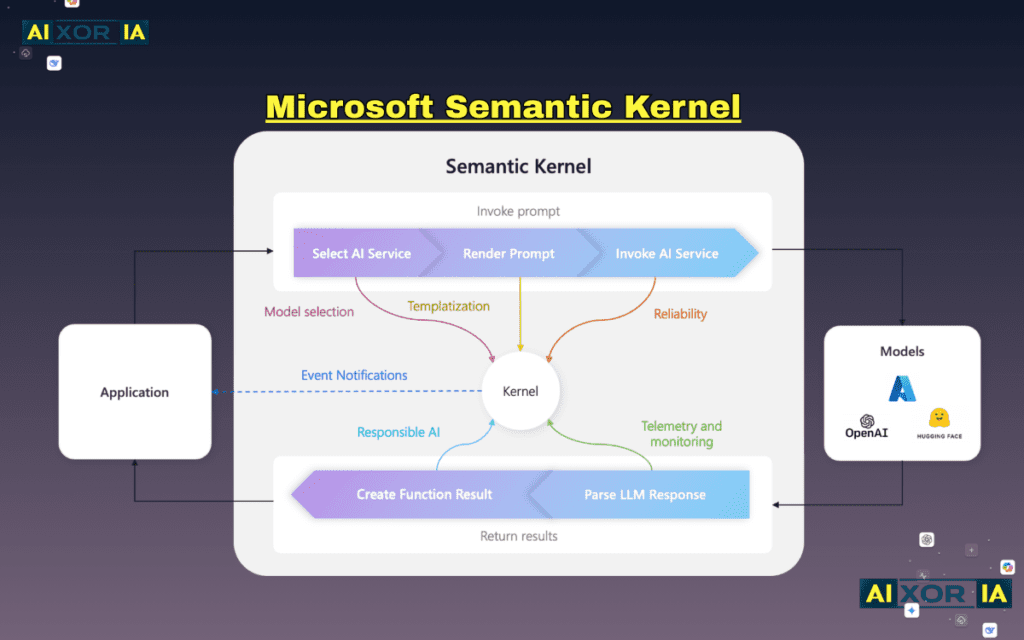
Microsoft Semantic Kernel is an AI orchestration SDK designed for building enterprise-grade AI applications. It integrates deeply with Azure services and supports multiple programming languages.
The platform allows developers to combine AI models with traditional code, enabling complex workflows that involve reasoning, memory, and external data sources. It also supports planning capabilities, where AI can determine the steps needed to complete a task.
For organizations already using Microsoft infrastructure, Semantic Kernel provides a natural extension for building AI-powered systems. It also integrates with tools like Microsoft 365, making it useful for enterprise automation.
Pricing: Free SDK; Azure usage-based pricing
Pros:
- Strong enterprise integration
- Flexible and scalable
- Backed by Microsoft ecosystem
Cons: - Requires technical expertise
- Best suited for Microsoft environments
Best AI Agent Platform for Business Automation
Relevance AI
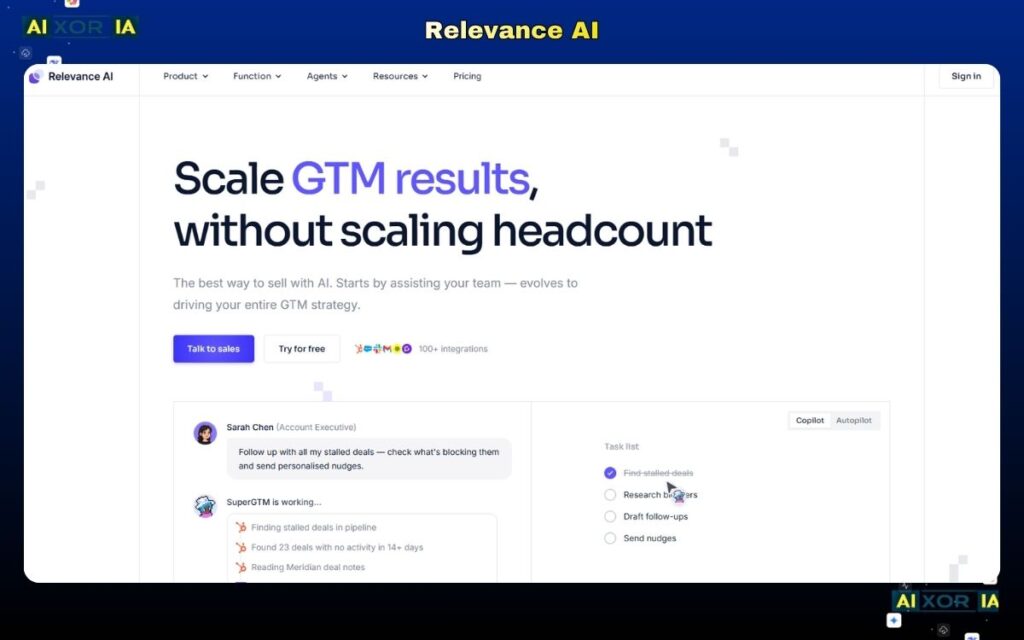
Relevance AI is designed to help businesses deploy AI agents as part of their operations. It focuses on creating “AI workforces” that can automate tasks across customer support, data analysis, and internal workflows.
The platform provides tools to build, train, and deploy AI agents with minimal coding. It also includes analytics and monitoring features, allowing teams to track performance and optimize workflows.
Relevance AI stands out for its business-first approach. Instead of focusing purely on technical flexibility, it emphasizes usability and real-world applications.
Pricing: Custom pricing (enterprise-focused)
Pros:
- Business-ready AI agents
- Strong analytics and monitoring
- Easier deployment compared to developer tools
Cons: - Less flexibility for deep customization
- Pricing not transparent
Best AI Agent Tool for Internal Knowledge and Workflows
Dust
Dust is an AI platform focused on building internal AI assistants that connect to company knowledge and workflows. It allows organizations to create agents that can access documents, databases, and tools to assist employees.
The platform is particularly useful for knowledge management, internal support, and productivity automation. Teams can build assistants that answer questions, generate insights, and automate repetitive tasks.
Dust emphasizes privacy, control, and enterprise readiness, making it a strong choice for organizations handling sensitive data.
Pricing: Custom enterprise pricing
Pros:
- Strong internal knowledge integration
- Enterprise-grade security
- Useful for productivity and support
Cons: - Limited public documentation
- Focused on internal use cases
READ MORE – The 7 Best-Rated AI Orchestration Tools in 2026
How to Choose the Right AI Agent Orchestration Tool
The best tool depends on your needs:
- For no-code automation → Zapier
- For custom AI development → LangChain
- For multi-agent collaboration → AutoGen
- For structured workflows → CrewAI
- For Microsoft environments → Semantic Kernel
- For business automation → Relevance AI
- For internal AI assistants → Dust
Many organizations use a combination—for example, developer frameworks for core systems and no-code tools for operational workflows.
The Role of AI Agent Orchestration in 2026
AI orchestration is becoming a core layer in modern tech stacks. Instead of isolated automations, organizations are building interconnected systems of agents that handle entire workflows.
This shift is driven by:
- Advances in large language models
- Increased demand for automation
- The need for scalable, intelligent systems
As AI continues to evolve, orchestration tools will play a critical role in managing complexity and ensuring reliability.
Final Thoughts
AI agents are powerful on their own, but their real value comes from how they work together. Orchestration tools provide the structure, control, and scalability needed to turn individual agents into fully functional systems.
The best AI agent orchestration tools in 2026 are not just about automation—they are about enabling organizations to design, manage, and scale intelligent workflows across every part of their business.
1 thought on “The 7 Best AI Agent Orchestration Tools in 2026”