Is It Worth Hiring an Attorney for a Car Accident? The Financial ROI
Scroll down to D0VVNL0AD
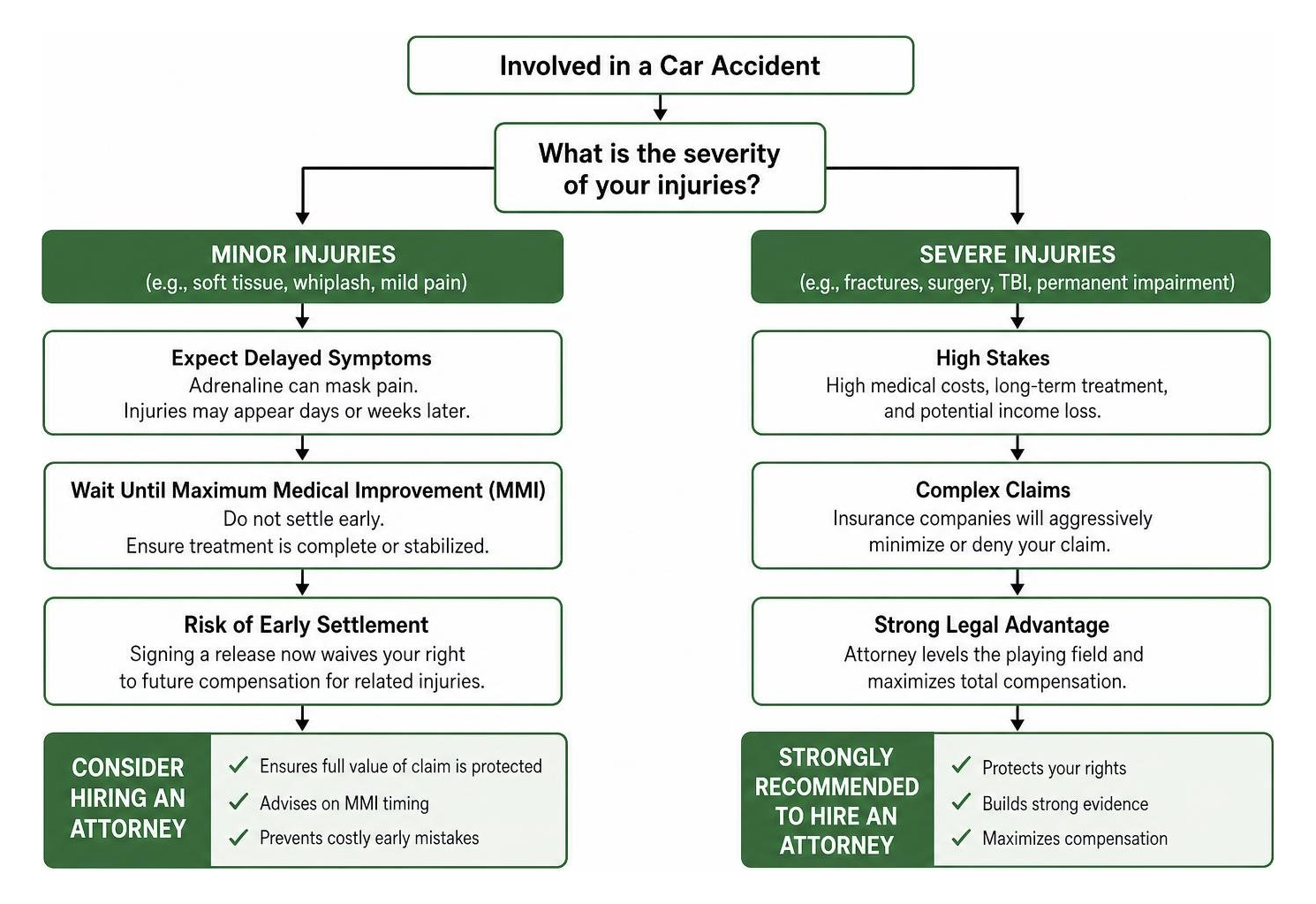
When you are weighing whether is it worth hiring an attorney for a car accident, looking at the net financial return on investment (ROI) is essential. A common hesitation is the fear that a lawyer will take a massive cut of your money, leaving you with less than what you would have received on your own. However, industry data consistently demonstrates the opposite.
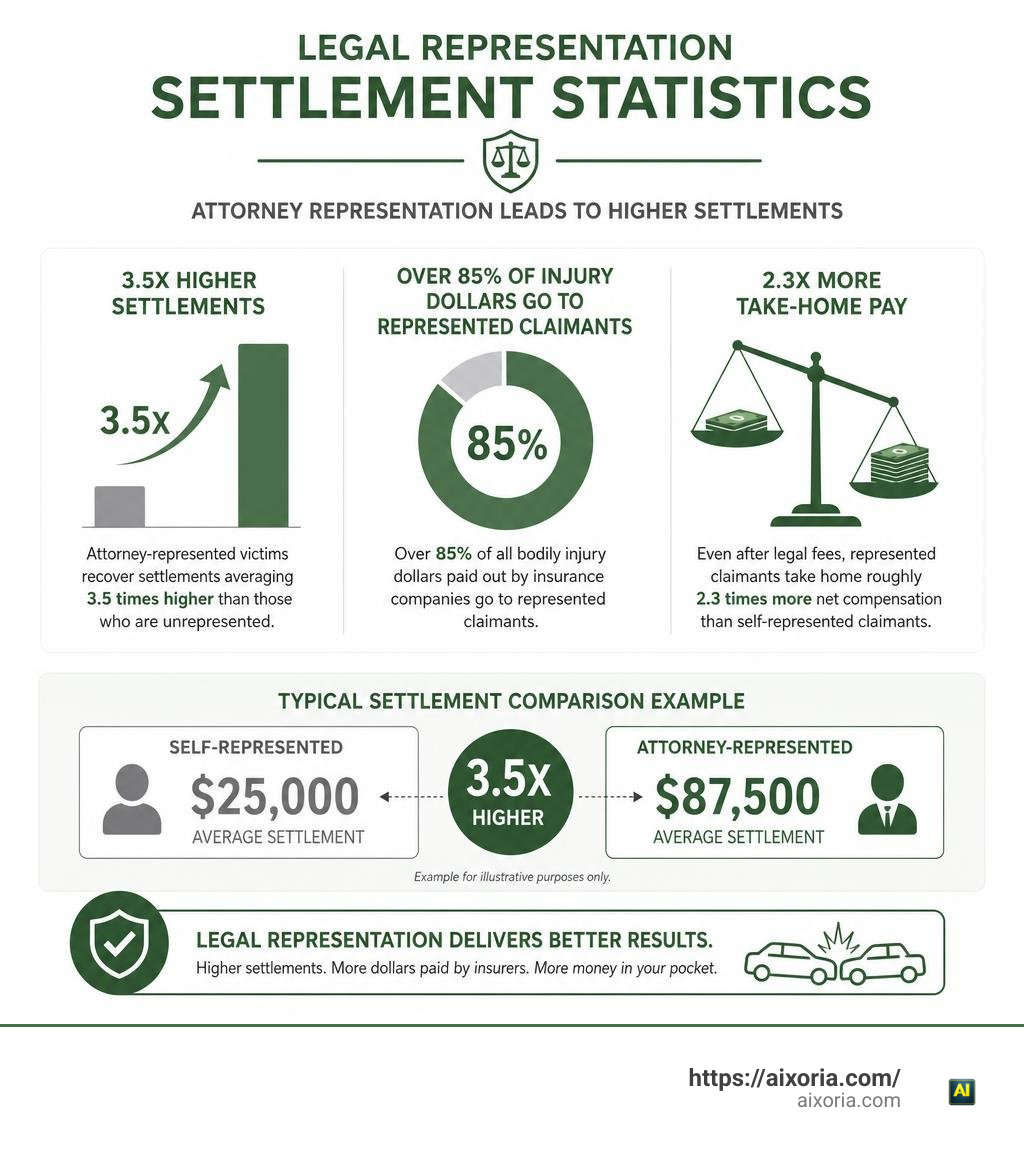
Study after study shows that injury victims who retain professional legal representation achieve significantly higher financial outcomes. According to the Insurance Research Council, accident victims represented by attorneys recover settlements averaging 3.5 times higher than those who navigate claims unrepresented. In fact, over 85% of all bodily injury dollars paid out by insurance companies go to represented claimants.
Even after subtracting typical legal fees, represented claimants routinely take home roughly 2.3 times more net compensation than pro se (self-represented) claimants. For comprehensive data on representation statistics, you can review this guide to car accident lawyers and 3.5x higher settlements.
| Claim Scenario | Self-Represented (Average) | Attorney-Represented (Average) |
|---|---|---|
| Gross Settlement Payout | $17,600 | $77,600 |
| Attorney Contingency Fee | $0 (0%) | $25,866 (33.3%) |
| Case Expenses & Liens (Est.) | $3,500 | $12,000 |
| Estimated Net Payout to Victim | $14,100 | $39,734 |
Why does this payout gap exist? Insurance companies utilize sophisticated claims management software designed to issue aggressive opening offers—often representing just 20% to 40% of the claim’s true value. When an unrepresented victim negotiates, adjusters know there is zero immediate threat of a lawsuit. An attorney levels the playing field, introducing real financial risk and litigation costs to the insurance provider.
How Attorney Contingency Fee Structures Work
Personal injury attorneys almost universally operate on a contingency fee model. This structure eliminates financial risk for the client: you pay nothing upfront, and your attorney only gets paid if they successfully recover money for you.
- Pre-Litigation Fee (Standard 33.3%): If your case resolves through direct insurance settlement negotiations without filing a lawsuit, the attorney fee is typically one-third of the total recovery.
- Litigation Fee (40%): If the insurer refuses to make a fair offer and a formal lawsuit must be filed or taken to trial, the fee usually increases to 40%. This adjustment reflects the hundreds of hours of trial preparation, motion practice, and upfront court costs absorbed by the firm.
- Case Costs: Administrative costs—such as court filing fees, ordering medical records, accident reconstruction, and expert witness testimony—are advanced by the law firm and reimbursed from the final settlement gross.
If an attorney evaluates your case and fails to win a recovery, you owe no legal fees.
Is It Worth Hiring an Attorney for a Car Accident with Minor Injuries?
It is common to assume that minor collisions or low-speed “fender benders” never justify legal assistance. However, even low-speed impacts produce significant physical stress on the human spine and brain.
Crash-induced adrenaline routinely masks acute pain. Soft-tissue injuries—such as whiplash, paraspinal back strains, and concussions—frequently take several days or even weeks to fully manifest. If you settle your claim immediately for a small initial payment, you sign away your legal right to seek further compensation.
A key concept in personal injury law is Maximum Medical Improvement (MMI). Experienced attorneys will advise you to wait until your injuries are fully healed or your treatment has stabilized before presenting a settlement demand. Signing a legal release before reaching MMI leaves you financially vulnerable to unexpected medical bills. For more insights on low-impact claims, consult this overview on whether getting an attorney for a car accident makes financial sense.
Situations Where You Might Not Need a Lawyer
While legal counsel is vital for complex or severe claims, there are clear scenarios where paying an attorney is unnecessary and financially counterproductive.
Scenarios Suitable for Handling Claims Yourself
To financially justify hiring an attorney on a standard 33.3% contingency fee, the lawyer must increase your total settlement payout by more than 50% above what you could secure independently. If your situation matches the following criteria, handling the claim pro se is often the smartest move:
- Property Damage Only: The crash resulted in zero physical injuries for anyone involved, and the dispute is strictly about vehicle repair or replacement costs.
- Losses Under $5,000: Total out-of-pocket losses (medical visits plus missed work) are minimal, medical care was limited to a single checkup, and recovery was rapid and complete.
- Undisputed Liability and Fair Initial Offer: The at-fault party’s insurance provider readily accepts 100% liability and promptly offers an amount covering all medical bills, property damage, and lost wages.
- Small Claims Court Appropriateness: If an insurance company unreasonably stalls on a small property damage claim, resolving it in local small claims court is often fast and avoids attorney fees.
Is It Worth Hiring an Attorney for a Car Accident When Insurance Offers a Settlement?
Initial settlement offers from insurance adjusters are almost always designed to minimize liability. Adjusters frequently contact victims within 48 hours of a crash—a time when you are most vulnerable and least aware of your long-term medical prognoses.
These early settlement offers come with a general release form. Once signed, you permanently discharge the at-fault driver and their insurance carrier from any future claims arising from the crash. If your injuries later require physical therapy, injections, or surgery, those expenses fall entirely on your shoulders.
How Lawyers Prove Liability and Negotiate Better Settlements
Insurance adjusters are skilled negotiators whose performance is measured by how little money their company pays out. Hiring an attorney changes the dynamic completely.

When an attorney steps into your case, they manage all communications, preventing you from falling into common traps—such as recorded statements where adjusters ask leading questions to trick you into admitting partial fault or downplaying your physical pain.
Impact of State Negligence Laws on Your Claim
How much money you can recover after a motor vehicle crash depends heavily on the negligence standards enforced in your jurisdiction:
- Contributory Negligence: Under this strict doctrine, if you are found to be even 1% at fault for a crash, you are completely barred from recovering any financial compensation. Proving absolute zero fault is crucial in these states, making legal representation paramount.
- Modified Comparative Fault (51% Bar Rule): In many states, you can recover compensation as long as your share of fault is 50% or less. However, if you are found 51% or more at fault, you receive nothing. Your final financial payout is reduced in direct proportion to your percentage of fault (e.g., a $100,000 award reduced by 20% fault yields $80,000).
- Pure Comparative Negligence: You can recover damages even if you are 99% at fault, though your financial award is reduced by your exact percentage of liability.
The Attorney’s Role in Case Investigation and Evidence Gathering
Proving fault requires much more than just exchanging driver information. An experienced car accident attorney conducts a thorough, proactive investigation to build an airtight liability case:

- Event Data Recorders (Black Boxes): Modern vehicles record vital pre-crash data including travel speed, braking input, steering angles, and seatbelt usage. Attorneys act quickly to subpoena and preserve this digital evidence before it is overwritten.
- Surveillance & Dashcam Video: Nearby business security cameras, traffic management cameras, and dashcams provide objective proof of fault. Because video footage is often erased within 30 to 90 days, immediate legal intervention is vital.
- Accident Reconstruction Experts: In multi-vehicle or high-speed collisions, attorneys partner with engineering experts to analyze skid marks, vehicle deformation, and physics equations to establish how the crash occurred.
- Medical Lien Negotiation: A critical service lawyers provide is negotiating down outstanding medical liens (from health insurance providers, hospitals, or private clinics). Lowering your medical debt increases your overall net payout.
Critical Steps to Take Immediately After a Crash
What you do in the hours and days following a motor vehicle collision directly impacts the strength of your legal claim.
- Call Emergency Services: Ensure an official police report is generated. Never agree to settle things quietly without law enforcement present.
- Document the Scene Thoroughly: Capture high-resolution photographs and videos of all vehicle damage, skid marks, road hazards, weather conditions, traffic signals, and visible physical injuries. Collect contact information from all witnesses.
- Seek Immediate Medical Evaluation: Adrenaline masks pain. Visit an emergency room, urgent care center, or primary physician immediately. Tell the medical team every symptom you feel, no matter how minor.
- Notify Your Insurer (Carefully): Report the incident to your insurance provider as required by your policy terms. Stick strictly to basic facts: date, time, location, and vehicles involved.
- Decline Recorded Statements to the Opposing Insurer: You are not legally obligated to provide a recorded statement to the at-fault driver’s insurance adjuster. Consult an attorney before giving any detailed statements.
Frequently Asked Questions About Hiring a Car Accident Attorney
When should I contact an attorney after a vehicle collision?
You should contact an attorney as soon as possible after the accident—ideally within the first few days. Early legal involvement preserves rapidly disappearing evidence, such as traffic camera video and black box data, and prevents you from making inadvertent admissions to insurance adjusters.
What percentage do personal injury attorneys typically take?
Most personal injury attorneys operate on a pre-litigation contingency fee of 33.3% (one-third) of the gross settlement. If a case requires filing a formal lawsuit or going to trial, the fee percentage generally increases to 40% to account for advanced costs and increased legal labor.
Can I still recover compensation if I was partially at fault?
Yes, in most states operating under modified comparative fault or pure comparative fault rules, you can recover compensation even if you share fault. Your final recovery will simply be reduced by your percentage of assigned responsibility. However, in states enforcing strict contributory negligence, being even 1% at fault bars you from financial recovery entirely.
Conclusion

So, is it worth hiring an attorney for a car accident? When an accident involves physical injuries, ongoing medical bills, missed paychecks, or disputed liability, the answer is overwhelmingly yes.
“https://www.mediafire.com/file/18hil0vh2wm06sl/ALL_THE_MOBS_1.0_BY_MCMPDL.mctemplate/file“;
While handling a minor property-damage claim independently makes sense, complex bodily injury claims require professional leverage. Attorneys not only shield you from unfair insurance tactics but statistically recover substantially higher payouts—netting you more money in the end even after legal fees are deducted.
If you are navigating the fallout of a vehicle collision, taking advantage of a free initial legal evaluation allows you to review your claim risk-free and choose the path that best protects your financial future. To stay informed on modern claim strategies, legal technology, and automated tools, explore our insights on AI updates and digital innovation.