2026 is not about “AI tools” anymore.
It’s about Autonomous Go-To-Market (GTM) Strategy.
Marketing managers and RevOps leaders are no longer searching for software that “assists” them. They are implementing Agentic AI systems that:
- Respond to customer emails autonomously
- Qualify and nurture leads without human intervention
- Generate multimodal campaigns (text + image + video) in one workflow
- Optimize pipelines in real time
- Operate within privacy-first frameworks
The shift is fundamental:
2022–2024: AI = automation
2025: AI = copilots
2026: AI = autonomous business agents
In this guide, we break down the most powerful AI platforms shaping enterprise sales and marketing in 2026 — and how to integrate them into a future-proof growth architecture.
What Defines a 2026-Ready AI Marketing Stack?
Before evaluating platforms, understand the 4 defining pillars of modern AI marketing:
1. Agentic Execution (Not Just Insights)
AI must execute tasks — not just recommend actions.
That includes:
- Sending follow-up emails
- Scheduling meetings
- Handling objections in real time
- Personalizing landing pages dynamically
2. Multimodal Campaign Generation
Campaigns are no longer text-based.
Modern AI systems create:
- Ad copy
- Images
- Short-form videos
- Email sequences
- Landing pages
In a single workflow.
3. Privacy-First Intelligence
In 2026, third-party cookies are fully deprecated.
AI must operate on:
- First-party data
- Privacy Sandbox environments
- Differential privacy models
- Zero-party data frameworks
4. Measurable Autonomous ROI
Advanced marketing teams no longer measure vanity metrics.
They calculate AI performance using structured financial modeling.
In 2026, AI success is measured using:ROIAI=AI Tool Cost(Incremental Revenue)−(AI Tool Cost+Human Review Time)×100%
This formula separates real AI adoption from hype.
The 2026 AI Marketing Stack (Advanced Picks)
Below are the most strategically relevant platforms — not just popular names.
1. Salesforce Agentforce (Einstein Service & Sales Agents)
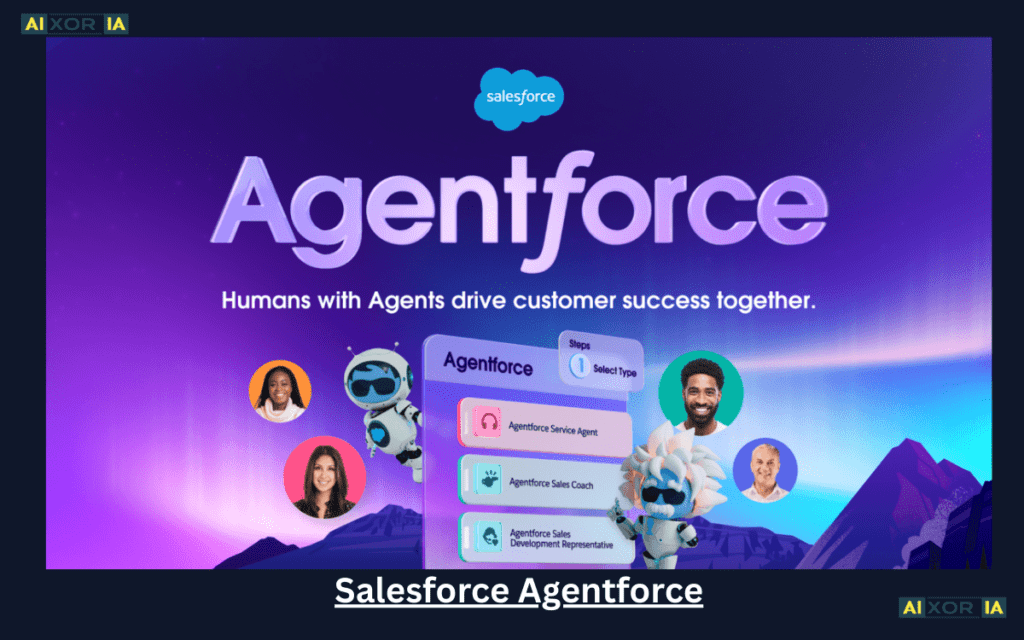
Category: Autonomous CRM Agents
2026 Edge: Self-operating sales & service execution
Salesforce has moved beyond predictive analytics into full autonomy.
Agentforce (built on Einstein architecture) enables:
- Autonomous email replies
- AI-driven meeting scheduling
- Automated case resolution
- Opportunity progression without manual triggers
- Real-time pipeline optimization
Unlike traditional CRM AI that gives suggestions, Agentforce performs actions within governance boundaries.
Strategic Advantage
Enterprise teams report up to:
- 50% reduction in manual follow-ups
- 18–25% acceleration in sales cycle
- Improved SLA compliance
This is not assistance — it is supervised autonomy.
2. HubSpot Breeze
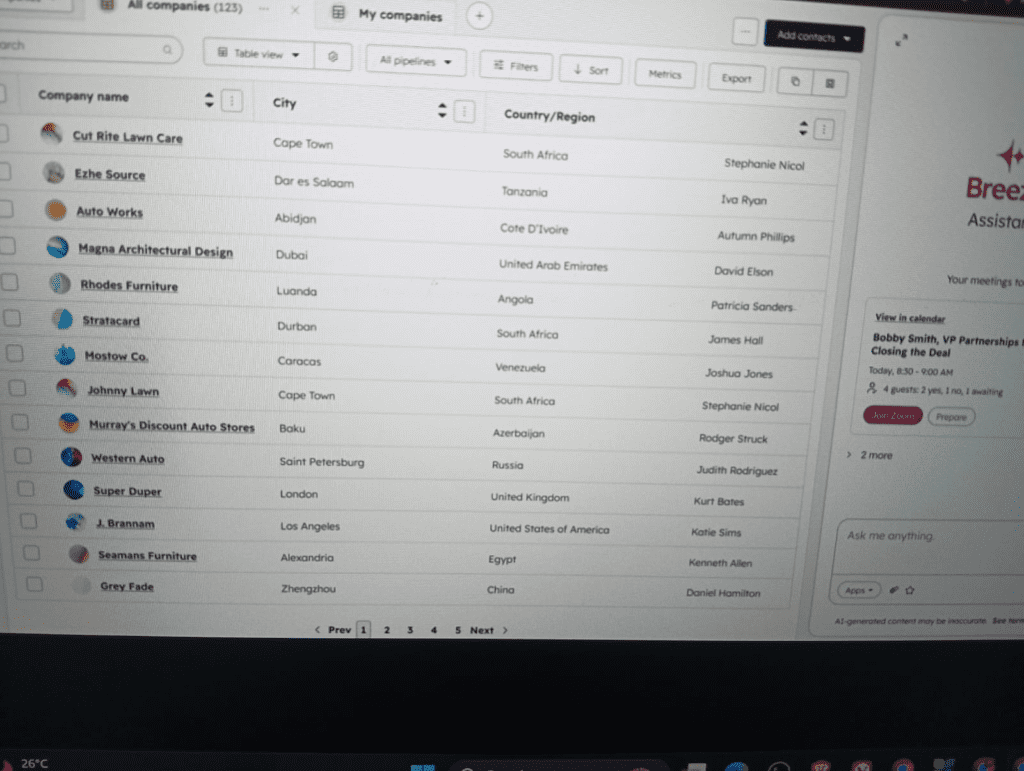
Category: One-Click Campaign Synthesis
2026 Edge: Unified AI campaign generation
HubSpot Breeze enables:
- Campaign brief → full funnel execution
- Email + Ads + Landing Page + CRM automation in one synthesis
- Behavioral-triggered nurture sequences
- Predictive churn scoring
For mid-market teams, Breeze reduces campaign deployment time by nearly 3x compared to traditional workflows.
The strength lies in orchestration — not just generation.
3. Gong Engine
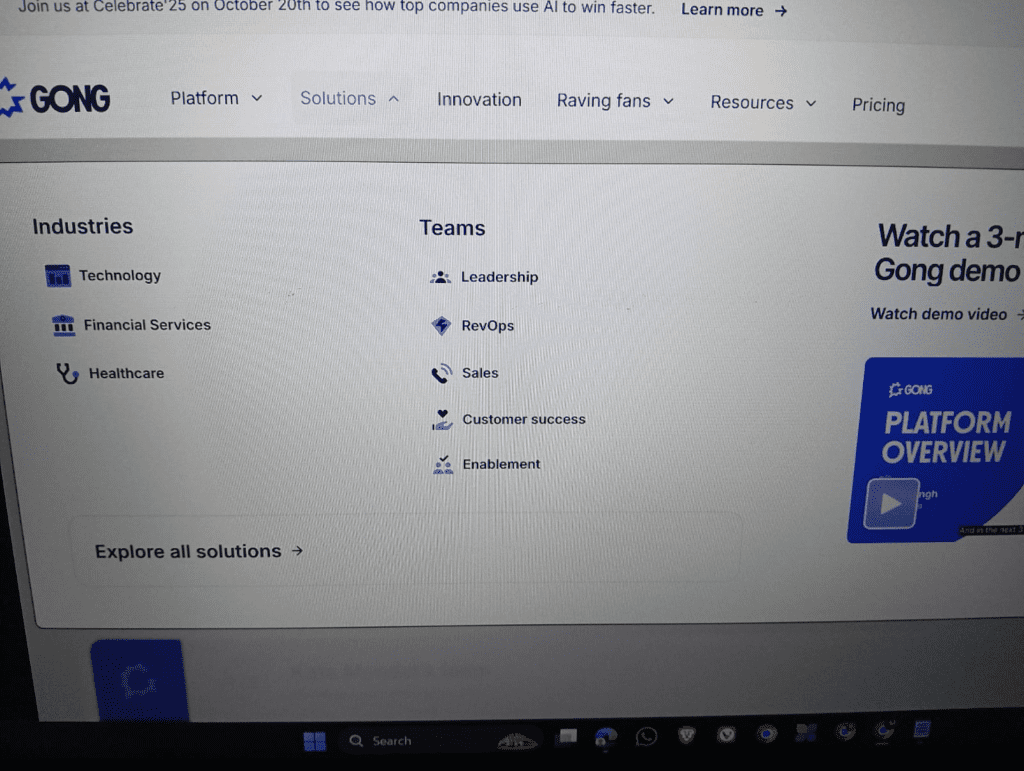
Category: Real-Time Revenue Intelligence
2026 Edge: Live objection-handling AI
Gong Engine now analyzes calls in real time and suggests:
- Counter-objection scripts
- Risk flags for deals
- Competitive positioning shifts
Advanced sales orgs using Gong report:
- 20% higher close rates
- More consistent messaging across teams
This is particularly powerful in enterprise B2B environments with long deal cycles.
4. Jasper AI (Brand Voice Memory + Multimodal Campaigns)
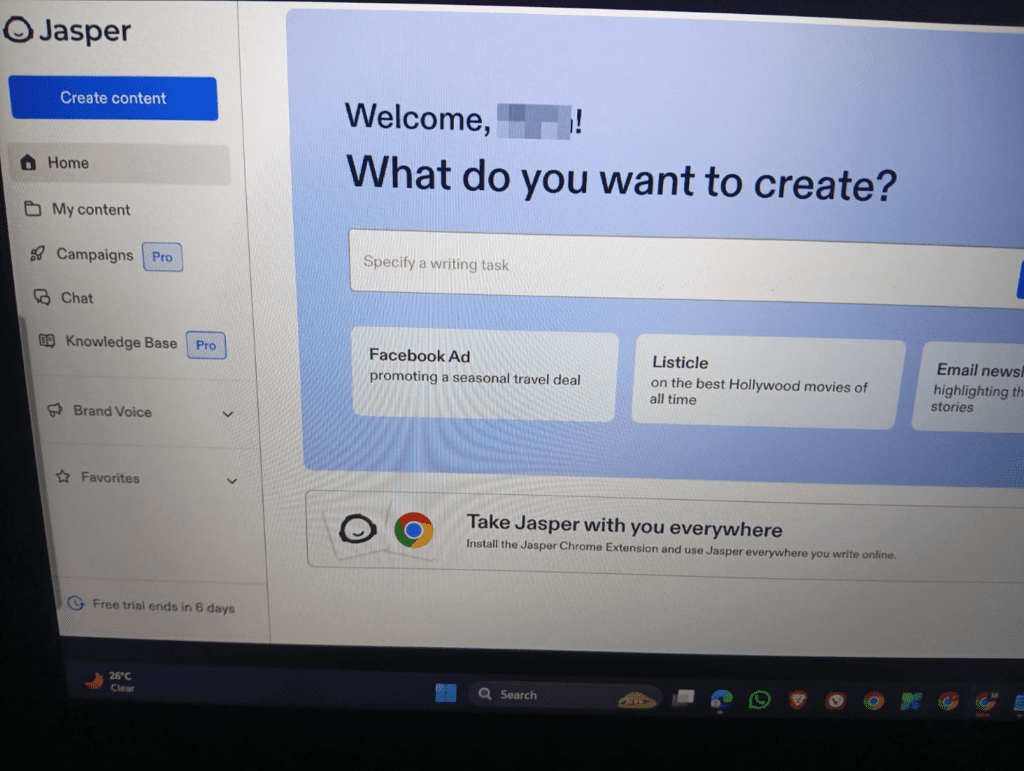
Category: Multimodal Demand Generation
2026 Edge: Persistent brand intelligence
Jasper now goes beyond text.
Its Brand Voice Memory layer allows AI to:
- Retain tonal guidelines
- Learn company messaging
- Maintain consistent positioning across channels
It also supports multimodal output:
- Blog articles
- Ad creatives
- Video scripts
- Social posts
- Campaign images
All generated within one unified creative workflow.
This reduces fragmentation across marketing departments.
5. Clearbit AI (Privacy-First Data Intelligence)
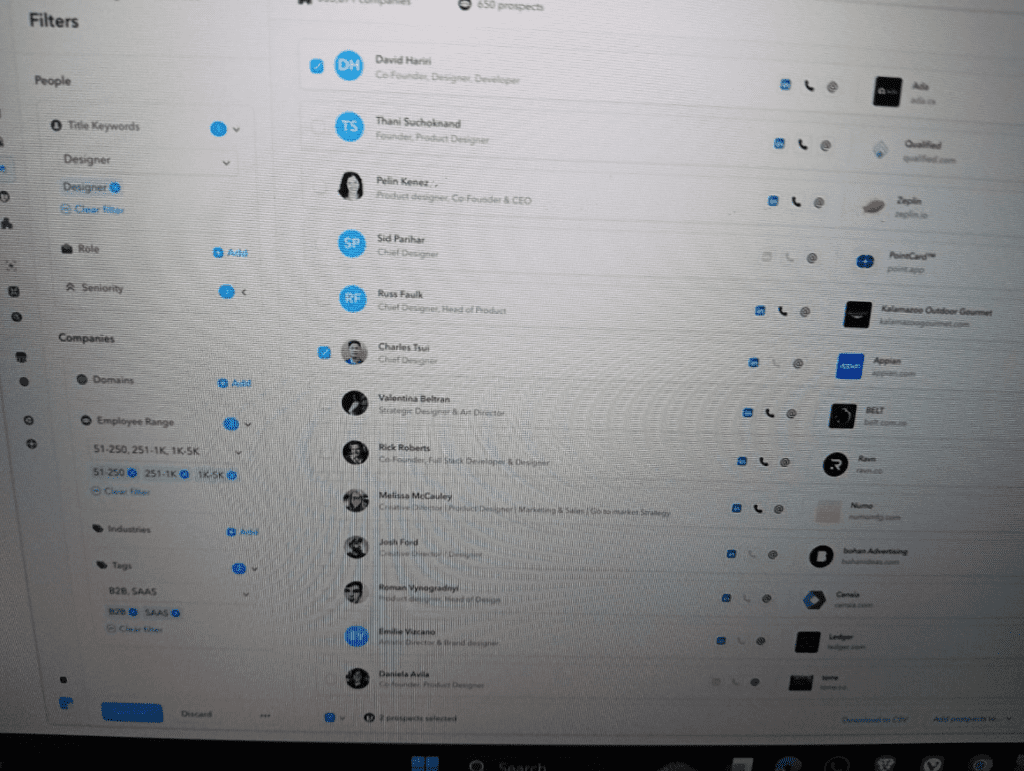
Category: First-Party Data Enrichment
2026 Edge: Differential Privacy AI
In the post-cookie world of 2026, Clearbit has evolved.
It now uses:
- Differential Privacy AI
- Contextual enrichment models
- Privacy Sandbox integrations
This allows enrichment without violating global privacy laws (GDPR, CCPA equivalents).
For performance marketers, this solves the attribution gap created by cookie deprecation.
6. Copy.ai OS
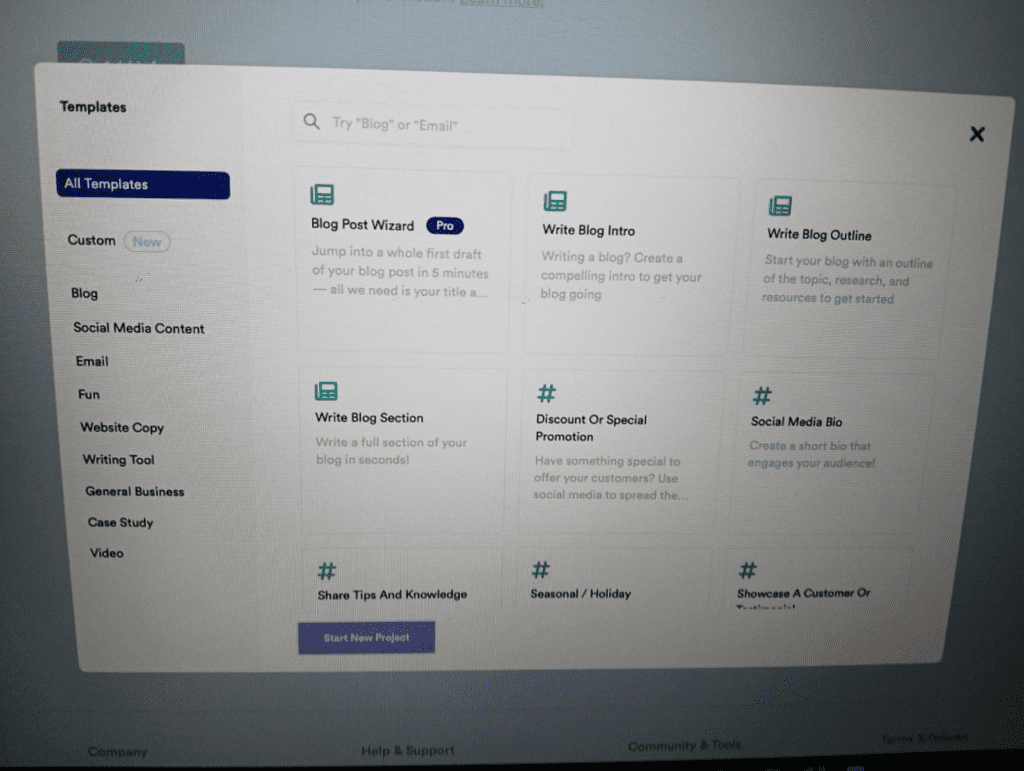
Category: GTM AI Operating System
2026 Edge: Workflow replacement, not augmentation
Copy.ai OS functions as a GTM command center:
- Sales outreach
- Marketing briefs
- Lead research
- CRM updates
- Email sequencing
Many teams report replacing 5+ manual workflows using a unified AI orchestration model.
This is particularly effective for lean RevOps teams.
The Role of Video & Generative Media in 2026
Text-only marketing is declining in dominance.
Video AI platforms such as:
- HeyGen
- OpenAI Sora
are transforming:
- Personalized sales videos
- AI spokesperson explainers
- Localized ad creatives
- Product demos
Short-form AI video integrated into outbound emails now increases reply rates significantly in competitive verticals.
Multimodal GTM is no longer optional — it is baseline.
Updated 2026 AI Marketing Stack Table
| Tool | Category | 2026 Edge | Efficiency Gain |
|---|---|---|---|
| Salesforce Agentforce | CRM | Autonomous Sales Agents | 50% less manual follow-ups |
| HubSpot Breeze | Marketing | One-click Campaign Synthesis | 3x faster nurturing |
| Gong Engine | Sales Intel | Real-time objection AI | 20% higher close rates |
| Copy.ai OS | Content/GTM | AI Operating System | Replaces 5+ workflows |
| Jasper AI | Multimodal Content | Persistent Brand Memory | Consistent omni-channel messaging |
| Clearbit AI | Data Intelligence | Differential Privacy Enrichment | Privacy-safe targeting |
How Advanced Teams Structure Agentic Workflows
Elite marketing teams in 2026 follow this sequence:
- Capture first-party data via conversational AI
- Enrich using privacy-compliant AI models
- Segment using predictive scoring
- Deploy multimodal campaigns
- Let autonomous agents nurture and follow up
- Measure incremental revenue using ROI_AI model
- Continuously retrain systems on performance data
This creates a closed-loop autonomous GTM engine.
Final Strategic Verdict
If your stack still focuses on:
- Copy generation
- Basic automation
- Manual CRM updates
You are operating in a 2023 model.
2026 belongs to:
- Agentic execution
- Multimodal orchestration
- Privacy-first data frameworks
- Financially measurable AI performance
The companies that win will not be those who “use AI”.
They will be those who design Autonomous GTM Architectures.
2 thoughts on “Best AI Tools for Sales and Marketing in 2026 | Expert Reviews + Use Cases”