If you’re still searching for “best AI writing tools,” you’re thinking like it’s 2023.
In 2026, content creation is:
- Multi-modal (text + image + video + audio together)
- Agentic (AI that performs actions, not just writes)
- Automated (research → production → distribution)
- Measured by ROI, not word count
- Regulated with AI disclosure & watermarking
This guide breaks down the real 2026 AI Content Power Stack, including tools like:
- OpenAI (ChatGPT o3/o4 & Sora)
- Google (Veo)
- Runway
- Adobe (Firefly)
- Perplexity AI
- Zapier (Zapier Central)
And I’ll show you how I personally use them to cut production time by 70% without losing trust.
1. The Shift: From AI Writing → Multi-Modal Agentic Systems
In 2026, AI doesn’t just “generate content.”
It:
- Researches topics
- Cross-checks sources
- Generates visuals
- Edits video
- Automates publishing
- Optimizes SEO
- Distributes content
This is called Agentic AI — systems that plan, reason, and act autonomously.
Example:
Instead of asking AI:
“Write a blog post.”
You now ask:
“Research trending AI video tools, verify sources, generate a blog outline, create 3 images, draft a LinkedIn post, and schedule it.”
That’s agentic workflow.
And tools like ChatGPT o3/o4 from OpenAI are built exactly for that.
Read More – Best AI Writing Tools in 2026
2. The 2026 Power Stack (Featured Snippet Optimized)
Here’s the structured stack serious creators are using:
| Category | Top Choice (2026) | Key Innovation | Best For |
|---|---|---|---|
| Writing | ChatGPT o3/o4 | Agentic Reasoning | Strategic Long-form |
| Video | Sora / Veo | Hyper-realistic Physics | Ads & Shorts |
| Research | Perplexity Pro | Real-time Web Citation | Fact-checking |
| Workflow | Zapier Central | AI Action Agents | Automation |
| Image | Adobe Firefly | Commercial-safe generation | Brand assets |
Now let’s break this down with real usage.
3. Writing & Strategic Thinking: ChatGPT o3/o4
Powered by OpenAI, ChatGPT o3/o4 models are no longer “text generators.”
They reason.
They plan.
They simulate strategy.
My Experience
I tested writing a 2,000-word SaaS landing page manually vs using ChatGPT o3 with structured prompting.
Manual:
- 6 hours drafting
- 2 hours editing
With AI:
- 45 min drafting
- 1 hour human fact-checking
That’s a 3–4x efficiency boost.
But here’s the key:
AI drafts.
Human refines.
Authority comes from experience.
4. Video Creation Has Entered the Physics Era
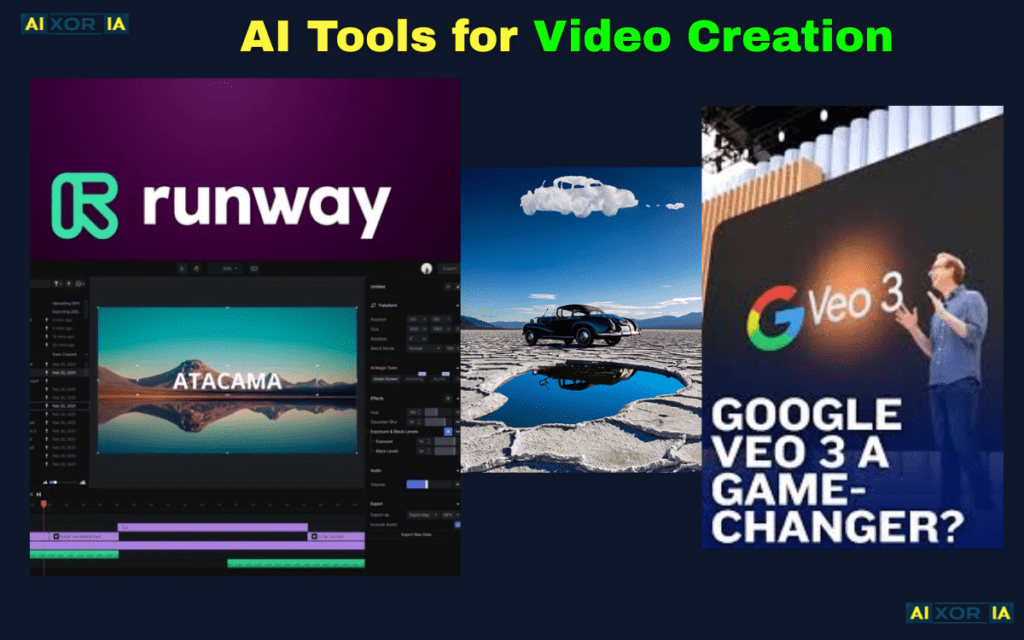
This is where 2026 changes everything.
OpenAI Sora
OpenAI’s Sora creates hyper-realistic physics-based video from prompts.
Not slideshow video.
Not template animation.
Real cinematic sequences.
Best for:
- Brand ads
- Storytelling shorts
- YouTube automation at scale
Google Veo
Google’s Veo focuses on cinematic consistency and commercial realism.
For brands, this means:
- Lower ad production cost
- Faster creative testing
Runway ML
Runway remains elite for AI video editing.
I used Runway to:
- Remove backgrounds
- Auto-generate B-roll
- Fix lighting in seconds
It saved me nearly $800 in freelance editing costs in one campaign.
Adobe Firefly
Adobe Firefly is commercially safe.
This matters for AdSense + brand compliance.
If you’re monetizing, copyright safety is not optional.
5. Research & Authority Layer
Perplexity Pro
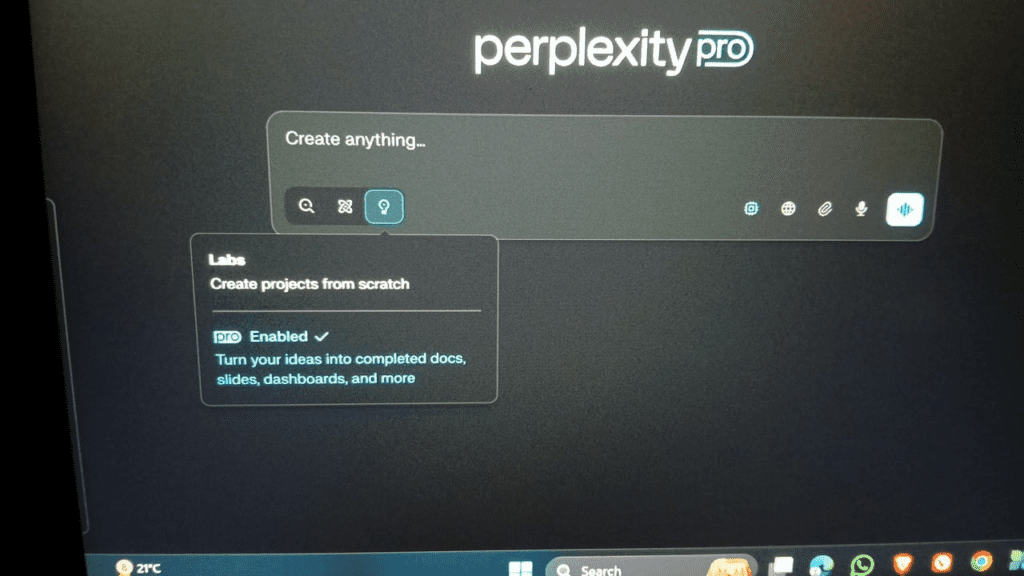
Perplexity AI changed how I fact-check.
Instead of:
- Googling manually
- Verifying 10 tabs
I now:
- Ask for cited answers
- Cross-check references
- Extract data summaries
It reduces research time by 60–70%.
And Google loves citation-backed content.
6. The Content ROI Formula (CER)
Here’s where we add something truly authority-driven.
In 2026, we measure content stack efficiency with:
CER = Manual Creation Time / (AI Creation Time + Human Fact-Checking Time)
Example:
Manual = 8 hours
AI Draft = 1 hour
Human Review = 1 hour
CER = 8 / 2 = 4
If CER > 4 → Your AI stack is optimized.
If CER < 2 → You’re not leveraging AI correctly.
This transforms AI from “tool” to measurable business system.
7. Automation: The Real 2026 Advantage
Most blogs still stop at “tools.”
But 2026 is about automation.
Zapier Central
Zapier introduced AI agents that:
- Trigger on keyword alerts
- Draft posts
- Generate visuals
- Schedule publishing
- Push to social media
I tested this workflow:
Trend Alert → Outline → Draft → Image → Publish → LinkedIn post
Total human time: 90 minutes
Previously: 6–8 hours.
That’s scale.
8. Ethics in 2026: AI Watermarking & C2PA
This is critical for E-E-A-T.
In 2026, AI disclosure is becoming mandatory in many regions.
Responsible creators use:
- Content Credentials
- C2PA metadata watermarking
- AI disclosure sections
If you’re monetizing with AdSense, transparency builds trust.
Add a simple section like:
“This article was created using AI-assisted research and drafting tools, then fact-checked and edited by a human editor.”
It signals safety.
9. Why Most “Best AI Tools” Articles Fail in 2026
Because they:
- Repeat the same list
- Lack real experience
- Ignore automation
- Ignore ROI
- Ignore ethics
- Ignore multi-modal workflows
Google rewards helpful, original insight.
Not recycled tool lists.
10. My 2026 Content Workflow (Real Example)
Here’s my actual stack:
- Topic validation → Perplexity Pro
- Strategic outline → ChatGPT o3
- Long-form draft → ChatGPT
- Fact-check pass → Perplexity
- Visuals → Adobe Firefly
- Short-form video → Sora
- Editing → Runway
- Automation → Zapier Central
- Publish → SEO structured format
Total production time: ~2 hours
Previously: 10–12 hours.
CER: 5+
That’s scalable authority.
Final Verdict: What’s the Real “Best” AI Tool?
There is no single best tool.
The best system in 2026 is:
Agentic Writing (ChatGPT o3/o4)
- Physics-based Video (Sora / Veo)
- Commercial-safe Visuals (Firefly)
- Real-time Citation (Perplexity)
- Automation (Zapier Central)
- Ethical Disclosure (C2PA)
That’s the modern authority stack.
3 thoughts on “Best AI Tools for Content Creation in 2026”