How to Choose the Best AI Tool for College Students on a Budget

The best AI tool for college students depends on the task. For most students on a budget, the strongest approach is not paying for one all-in-one app. It is using a small free stack:
- NotebookLM for asking questions about your own lecture slides, readings, and PDFs with source-based answers.
- Perplexity for finding starting points for research and checking sources.
- Grammarly Free for clearer, more polished writing.
- Anki or an AI study tool with flashcards and quizzes for active recall and spaced repetition before exams.
General AI assistants such as ChatGPT and Gemini are flexible for brainstorming, explanations, and study guides. Specialized study tools are better when you need course-file-based notes, flashcards, quizzes, progress tracking, or repeated review.
The key is to let AI reduce busywork, not do your thinking. Use it to explain a hard concept, turn notes into practice questions, or spot unclear sentences. Then verify facts, read the original sources, and follow your instructor’s AI policy before submitting work.
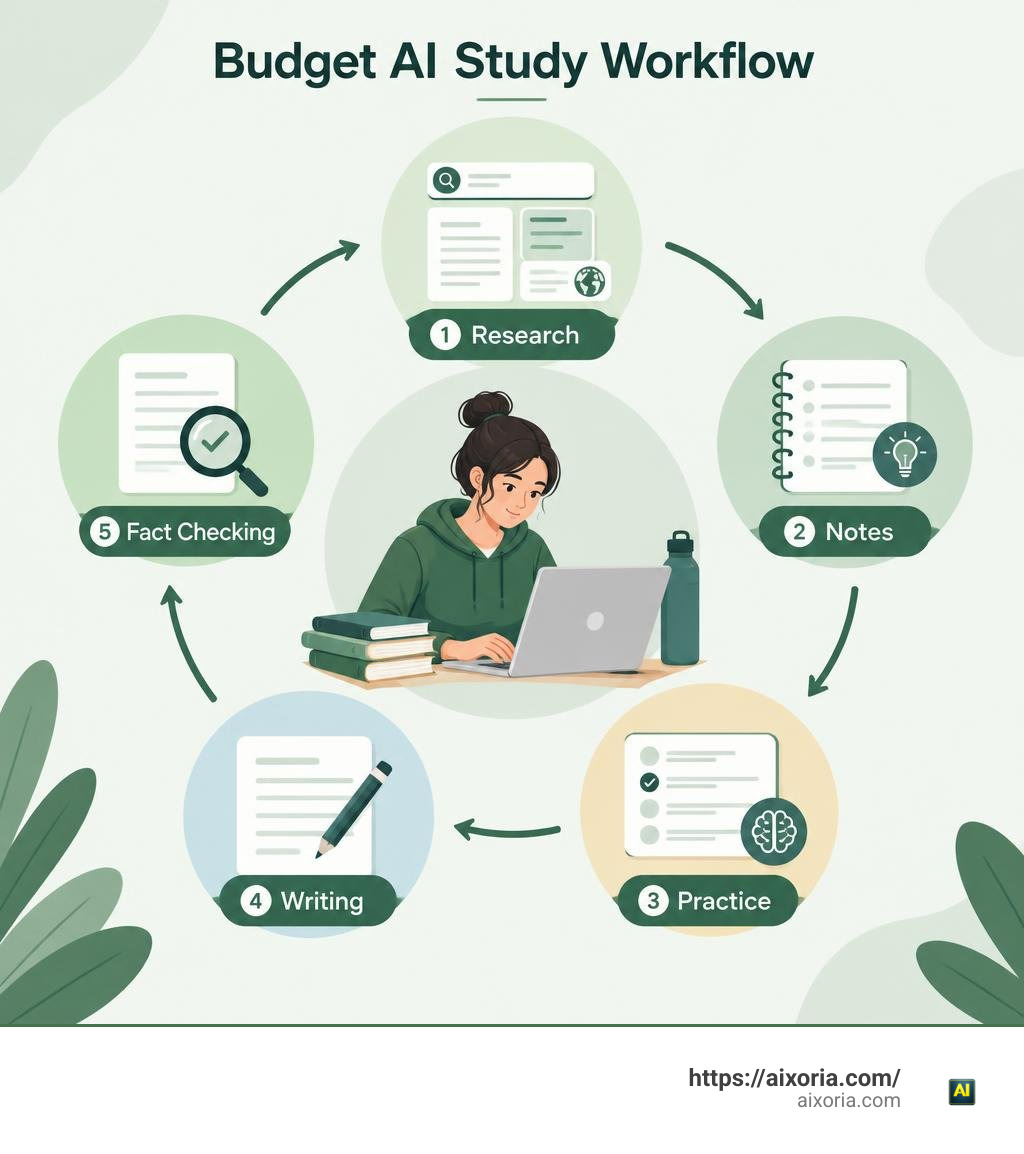
Finding the Best AI Tool for College Students Across Key Academic Tasks

When we evaluate digital study aids, we look at real-world utility: does an application actually help you master dense coursework, or does it just add another subscription to your bank account? Navigating higher education requires juggling disparate demands, from reading hundred-page treatises to preparing for high-stakes exams. Choosing the right tool depends on understanding what are the best AI tools for students in 2026 to study smarter with AI across different learning challenges.
| Tool | Primary Category | Core Academic Strengths | Best Free Feature | Pricing Model |
|---|---|---|---|---|
| Google NotebookLM | Note-Taking & Synthesis | Source-grounded notes, exact citations, audio discussion | Full access via Google Workspace | Completely Free |
| Perplexity AI | Academic Research | Live web search, numbered citations, discovery | Real-time search with citations | Free tier / Pro option |
| CuFlow | Exam Preparation | Flashcards, automated quizzes, mind maps | Core flashcards and study features | Free tier available |
| Grammarly | Writing & Editing | Tone detection, grammar, clarity enhancement | Browser and desktop integrations | Generous Free tier |
| NaturalReader | Accessibility & Audio | Text-to-speech across 50+ languages, 200+ voices | Web-based voice reading | Free tier / Paid voices |
| Google Gemini | General Assistant | Concept brainstorming, step-by-step problem solving | Unlimited chats & image uploads | Free / Pro plan |
| Charley AI | Writing Assistant | Essay outlining, rubric alignment, style matching | Up to 1,500 words per essay free | Freemium |
| YouScience | Career Discovery | Aptitude testing, skill tracking, career exploration | Basic assessment access | Freemium / Paid tests |
Note-Taking and Synthesis: AI Note-Taking and Study Tools
The most challenging bottleneck in undergraduate education is processing large volumes of course material. Tools specializing in document ingestion allow you to upload messy lecture PDFs, syllabi, and assigned book chapters directly into a closed environment.
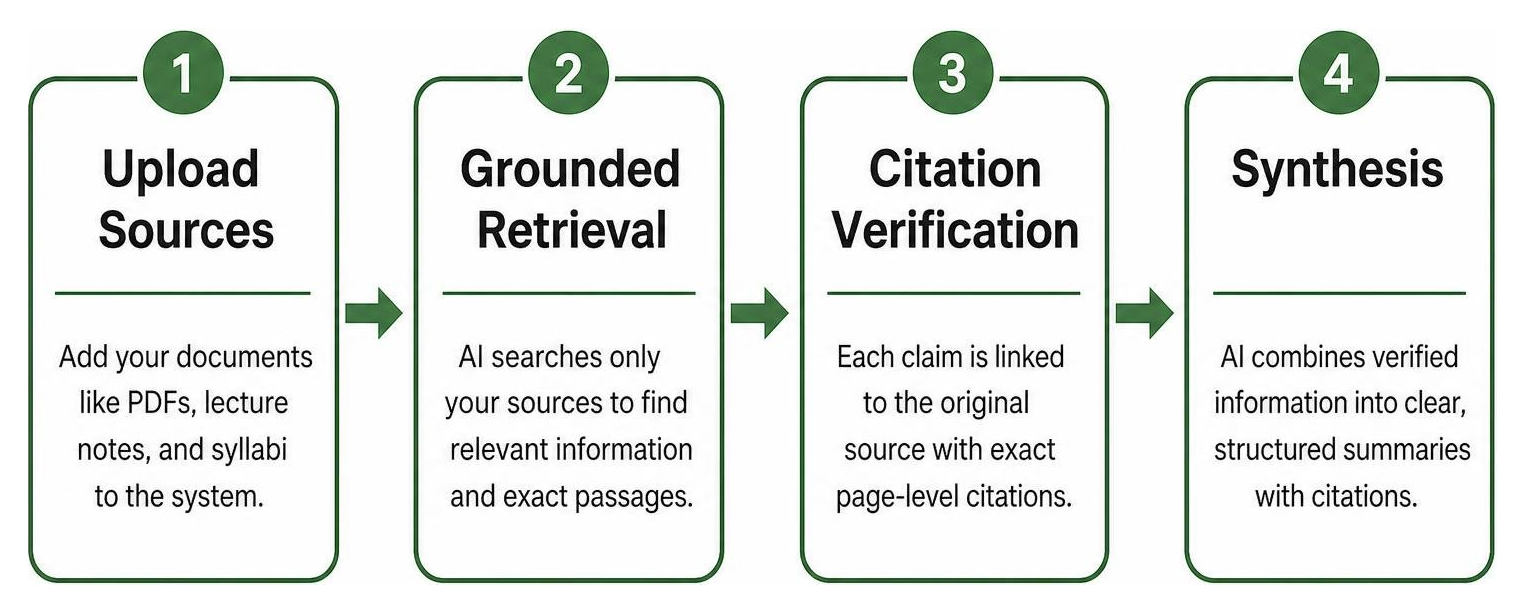
Google NotebookLM stands out by grounding its intelligence strictly in the source materials you provide. Rather than guessing, it returns direct quotes and page-level citations. One standout feature is its conversational audio overview, which turns dry lecture outlines into dynamic, podcast-style discussions between two hosts—perfect for listening during a commute.
Specialized platforms like Studion OS — One Workspace for Your Entire Degree organize an entire semester by parsing syllabi, mapping deadlines, and generating structured summaries. Similarly, solutions like CuFlow create visual concept maps that help visual learners see connections between disparate modules without manual diagramming.
Academic Research and Fact-Checking: AI Research Assistants
Generic web searches often surface sponsored articles or outdated blogs instead of peer-reviewed data. Modern AI research assistants solve this by performing systematic online retrieval.
Perplexity AI indexes the web in real time, delivering synthesized summaries accompanied by numbered citations that link straight to primary academic sources. This capability makes it indispensable for building an initial bibliography. For deep thematic exploration across scholarly repositories, using dedicated best AI tools for academic research in 2026 saves hours of manual searching while maintaining complete transparency over where each data point originated.
Top Contenders for the Best AI Tool for College Students in Exam Prep
Passive reading is notoriously inefficient for long-term retention. The premier study tools focus on active recall and adaptive testing. Platforms like Mindgrasp—trusted by over 5 million learners worldwide—and College AI: All-in-One AI Study Partner | AskSia transform uploaded lecture recordings, video URLs, and PDFs into instant flashcards and practice quizzes.
These platforms identify knowledge gaps before midterm week. Instead of re-reading an entire 40-page chapter, you can take an auto-generated multiple-choice or short-answer quiz that flags which formulas or historical timelines require focused review.
Writing, Editing, and Accessibility: AI Writing and Accessibility Tools
Writing in college requires precision, clarity, and strict adherence to structural norms. Grammarly’s free tier remains a staple, integrating directly into Google Docs, Microsoft Word, and learning management systems like Canvas or Blackboard to flag awkward phrasing, grammar mistakes, and tone inconsistencies.
For students needing help with initial outlines and topic exploration, tools like Charley AI – The Best Homework Tool offer structured assistance that helps break down complex assignment rubrics into manageable sections. If you are synthesizing dozens of papers for a thesis or capstone, leveraging specialized AI tools for literature review in 2026 keeps your quotes organized and references properly attributed.
Accessibility is another area where modern tools excel. Auditory learners and non-native English speakers can rely on NaturalReader, which provides text-to-speech support across more than 50 languages and 200 distinct AI voices. It reads dense textbook chapters aloud, making long reading assignments far more manageable.
General-Purpose Chatbots vs. Specialized Study Workspaces
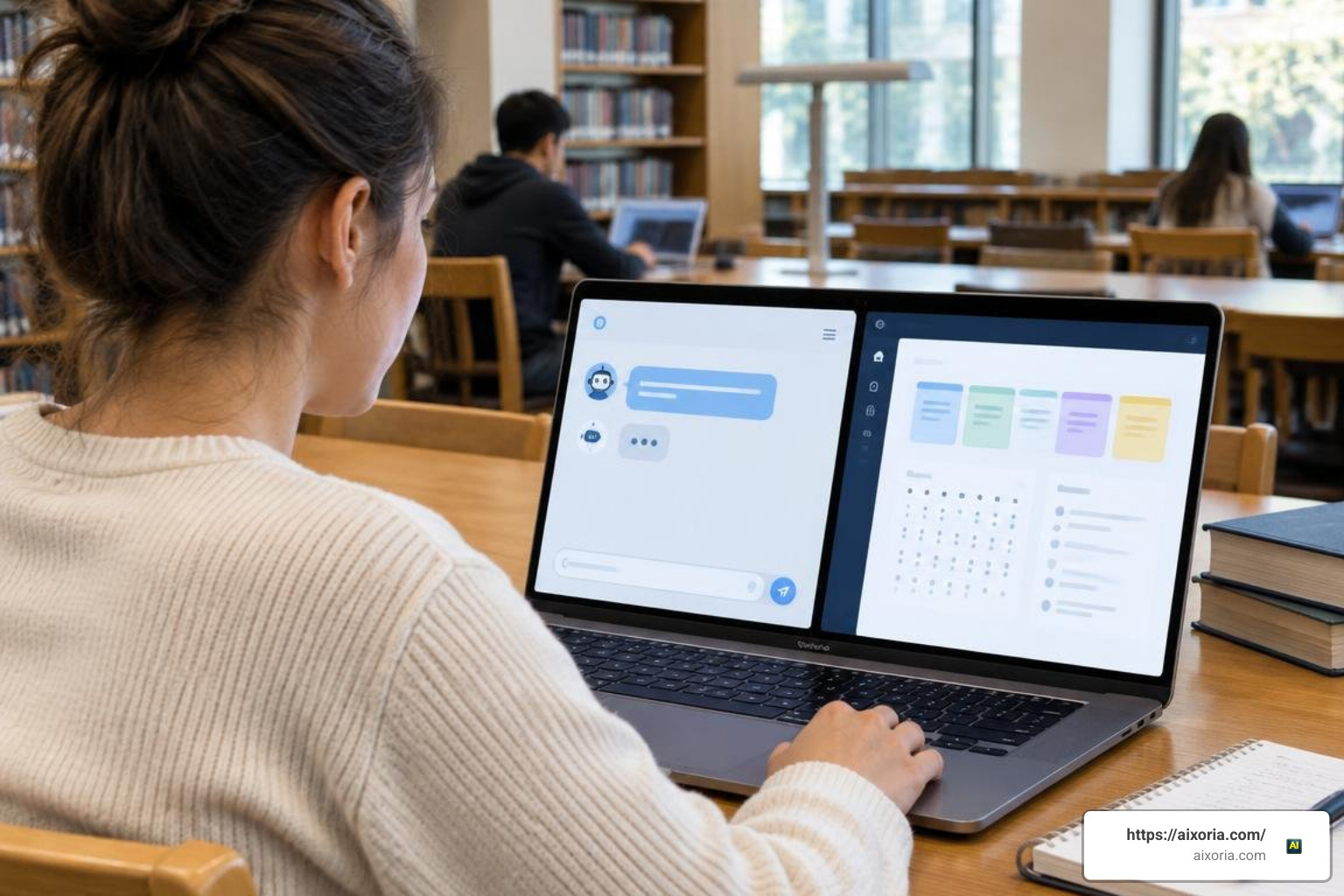
Students often debate whether to rely on broad conversational models or adopt specialized study platforms. Broad foundation models like ChatGPT (which famously gained 1 million users within five days of launch and now serves over 180 million users) and Google Gemini (featuring Gemini for Students — your AI study buddy from Google) are outstanding for open-ended brainstorming, role-playing oral exams, and breaking down complicated equations step-by-step.
However, general chatbots lack context about your specific degree requirements. They do not know your exam dates, and they can produce hallucinations if asked to summarize obscure academic papers.
In contrast, dedicated academic workspaces ground their answers strictly within your uploaded course documents. They integrate active learning mechanisms directly into their user interfaces, providing flashcard decks, interactive progress checklists, and syllabus-matched timelines. For a comprehensive look at the ecosystem, browse our guide to AI tools for students to match specific software architectures to your study habits.
Selecting the Best AI Tool for College Students on a Free Tier
Attending college on a tight budget means you should rarely need to pay upfront for premium AI subscriptions. Most premier platforms offer generous free tiers that supply all the functionality an undergraduate needs if used strategically.
- Google NotebookLM: Offers completely free access to source-grounded note-taking, document synthesis, and audio overviews.
- Perplexity AI Free: Provides unlimited standard searches with linked web citations.
- Grammarly Free: Covers baseline grammar, spelling, and clarity across all web applications.
- CuFlow Free: Supplies basic flashcard and quiz generation from uploaded materials.
- Google Gemini Free: Delivers unlimited text generation, image inputs, and step-by-step problem-solving.
To explore additional budget-conscious approaches for university coursework, see our curated roundup of the best AI tools for studying in 2026.
How to Build an Effective Budget AI Tool Stack
Rather than seeking one tool that claims to handle every academic responsibility, the most successful students build a complementary, lightweight tool stack. By assigning one dedicated tool to each phase of the academic cycle, you eliminate subscription fees while avoiding cognitive overload.
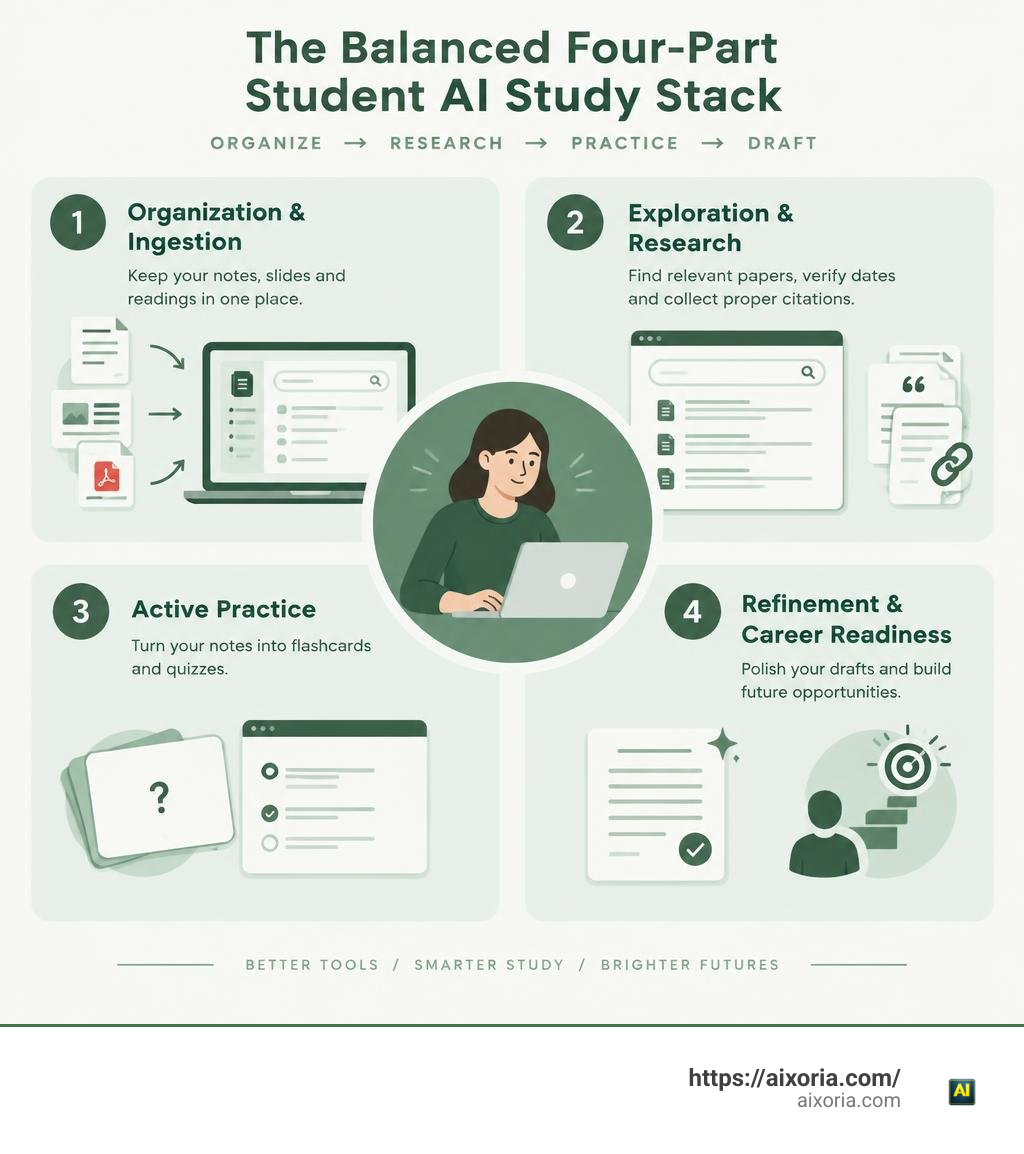
- Organization & Ingestion: Drop your syllabus, lecture slides, and assigned PDFs into Google NotebookLM or Microsoft Copilot for Students to keep notes centralized and searchable.
- Exploration & Research: Use Perplexity AI to discover relevant papers, verify dates, and collect primary citations for research projects.
- Active Practice: Convert your weekly notes into flashcards and quizzes using CuFlow or Anki to leverage spaced repetition and active recall.
- Refinement & Career Readiness: Use Grammarly to polish your final drafts. When preparing for internships, platforms like YouScience help assess your skills and match your aptitudes with concrete career paths.
Always maintain academic integrity. AI should act as an interactive tutor—explaining concepts, testing your recall, and finding sources—not as an automated ghostwriter. Verify every generated citation against original texts to protect your academic standing.
Frequently Asked Questions About AI Study Tools
Can using AI study tools violate university academic integrity policies?
Yes, if used inappropriately. Submitting AI-generated prose as your own work or using automated tools during closed-book assessments violates standard honor codes. However, using AI to brainstorm ideas, explain difficult passages, generate study flashcards, or proofread grammar is generally accepted as ethical study support. Always check your specific course syllabus for instructor guidelines.
What is the most versatile free AI tool for college coursework in 2026?
Google NotebookLM is widely regarded as the most versatile free academic tool because it eliminates AI hallucinations by answering questions strictly from the materials you upload, complete with exact citations and audio discussion overviews.
How do AI flashcard and quiz generators improve exam retention?
AI flashcards leverage two fundamental principles of cognitive science: active recall (forcing the brain to retrieve information from memory) and spaced repetition (reviewing concepts at calculated intervals). By converting passive reading into interactive testing, students retain significantly more information over the course of a semester.
Conclusion: Maximizing Academic Performance on a Student Budget
Achieving top grades does not require an expensive software suite. By combining specialized, free-tier AI tools for research, document synthesis, active recall, and writing polish, you can build a streamlined academic workflow that saves hours each week while deepening your comprehension. To discover more purpose-built applications tailored for higher education, explore our full directory of AI tools to optimize your studies this semester.