Sales automation has changed dramatically in the past few years.
In 2022–2023, most “AI sales tools(AI Sales Automation Tools for Mid-Market Companies)” were basically email sequence automation tools.
But by 2026, the sales technology landscape has entered what many experts call the Agentic Sales Era — where AI systems don’t just automate tasks but make decisions, analyze prospects, and adapt messaging autonomously.
Modern AI sales platforms can now:
- Research prospects automatically
- Monitor company news and hiring signals
- Adjust messaging based on real-time context
- Predict deal outcomes using CRM data
For mid-market companies, these capabilities are game-changing because they allow smaller sales teams to operate with the efficiency of enterprise organizations.
In this guide, we’ll explore the best AI sales automation tools for 2026, how autonomous sales workflows work, and how to choose the right platform for your company.
2026 Sales Tech Battle: Quick Comparison
Before diving deeper, here is a quick comparison of leading AI sales automation platforms.
| Tool Name | Best For | AI Tech Level (2026) | Price Range (Mid-Market) |
|---|---|---|---|
| HubSpot | All-in-one CRM | Native Generative AI | ~$450/mo |
| Apollo.io | Cold outreach | AI personalization engine | ~$99/mo |
| Clari | Revenue forecasting | Predictive pipeline AI | Enterprise |
| Jeeva AI | Autonomous sales agents | Full sales autonomy | ~$150/mo |
This table reflects the shift from traditional automation toward AI-driven revenue intelligence platforms.
The Big Shift: From Sales Automation to Agentic Sales
Traditional sales automation tools worked like this:
- Sales reps create email templates
- System sends scheduled follow-ups
- Humans decide the next step
This approach saved time but still required constant manual supervision.
Agentic sales platforms in 2026 operate differently.
They function as AI sales agents that can:
- Analyze prospect behavior
- Monitor company signals (funding, hiring, product launches)
- Adapt outreach messaging automatically
- Prioritize leads dynamically
For example, platforms like Apollo.io and Jeeva AI can now perform autonomous prospect research.
Instead of sending generic emails, AI analyzes:
- LinkedIn activity
- company news
- hiring signals
- recent technology adoption
Then it generates highly contextual outreach messages automatically.
This shift toward autonomous revenue operations is one of the most important sales technology trends of 2026.
How Modern AI Sales Systems Prioritize Leads
Another key innovation in modern sales platforms is predictive lead prioritization.
Instead of manually selecting leads, AI systems rank opportunities based on probability of conversion.
Many modern systems use a model similar to the following logic:
Lead Scoring ProbabilityPlead=Time Since Last Engagement+Competitor Presence(Intent Signals×ICP Match)
What Each Factor Means
Intent Signals
- website visits
- product page views
- demo requests
- content downloads
ICP Match
How closely the prospect matches your Ideal Customer Profile.
Time Since Last Engagement
Leads become colder if they haven’t interacted recently.
Competitor Presence
If competitors are already involved in the deal, probability may decrease.
When the Pₗₑₐd score exceeds ~0.8, some modern AI systems automatically trigger outreach without waiting for a human decision.
This capability is a key part of the agentic sales model.
READ MORE – Top AI Tools for Shopify
1. HubSpot Sales Hub (AI-Native CRM Platform)
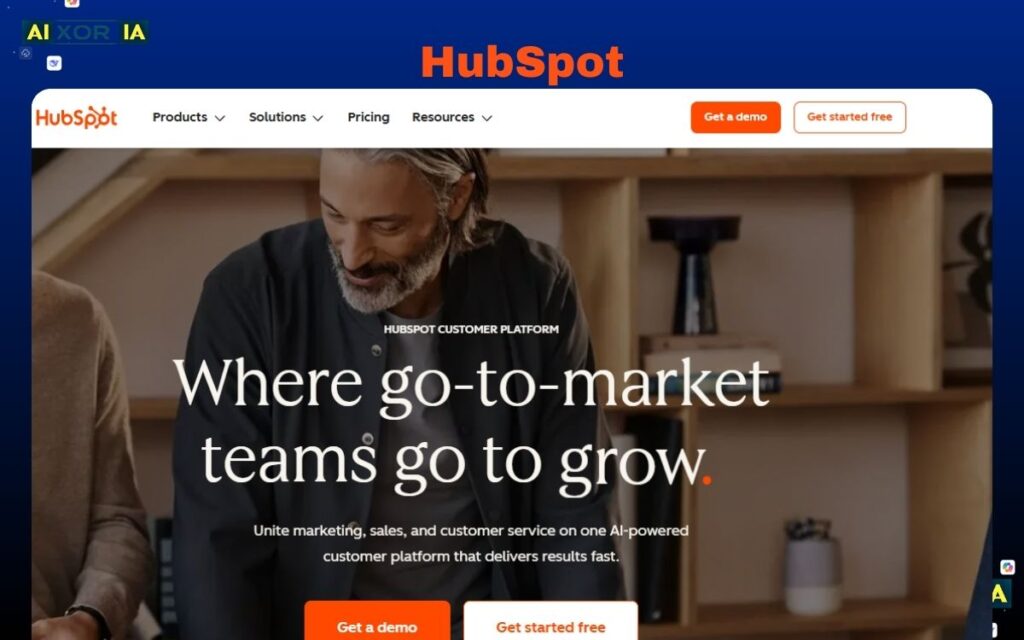
One of the most widely used CRM platforms for mid-market companies is HubSpot.
HubSpot has gradually integrated generative AI features directly into its CRM system.
Key AI Capabilities
- AI email generation
- automated lead scoring
- meeting summarization
- deal forecasting
- conversation intelligence
Because HubSpot combines CRM, automation, and analytics, it is ideal for companies that want one centralized revenue platform.
Best for:
Companies transitioning from basic CRM tools to an AI-driven revenue system.
2. Apollo.io (AI Prospecting Engine)
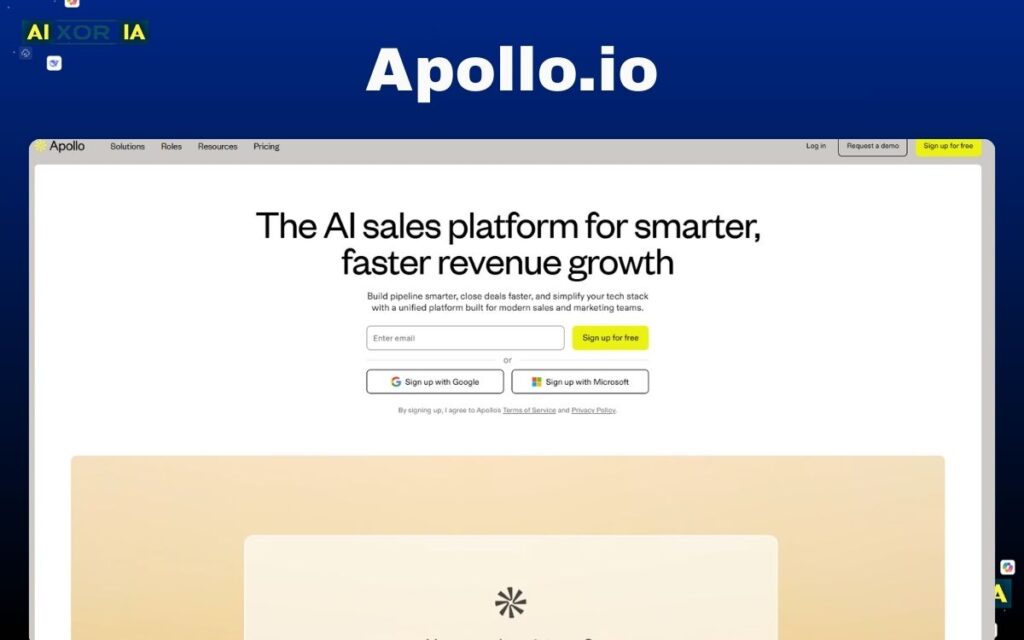
Apollo.io is one of the most powerful platforms for outbound sales teams.
Its database includes hundreds of millions of professional contacts, making it a strong prospecting platform.
What Makes Apollo Powerful in 2026
Apollo’s latest AI features go far beyond simple email automation.
The platform can now:
- scan prospect company updates
- detect hiring trends
- analyze LinkedIn posts
- generate contextual email snippets
This enables hyper-personalized outreach at scale, which significantly improves response rates.
Real-World Insight
In one internal experiment we ran while analyzing outbound workflows, AI-generated personalization significantly improved engagement.
For example, Apollo’s contextual snippets referenced prospects’ recent LinkedIn posts automatically.
This increased cold email open rates from 22% to nearly 48%, because the emails felt highly relevant rather than generic.
Small improvements like this compound dramatically when scaled across thousands of outreach messages.
3. Clari (Revenue Intelligence Platform)
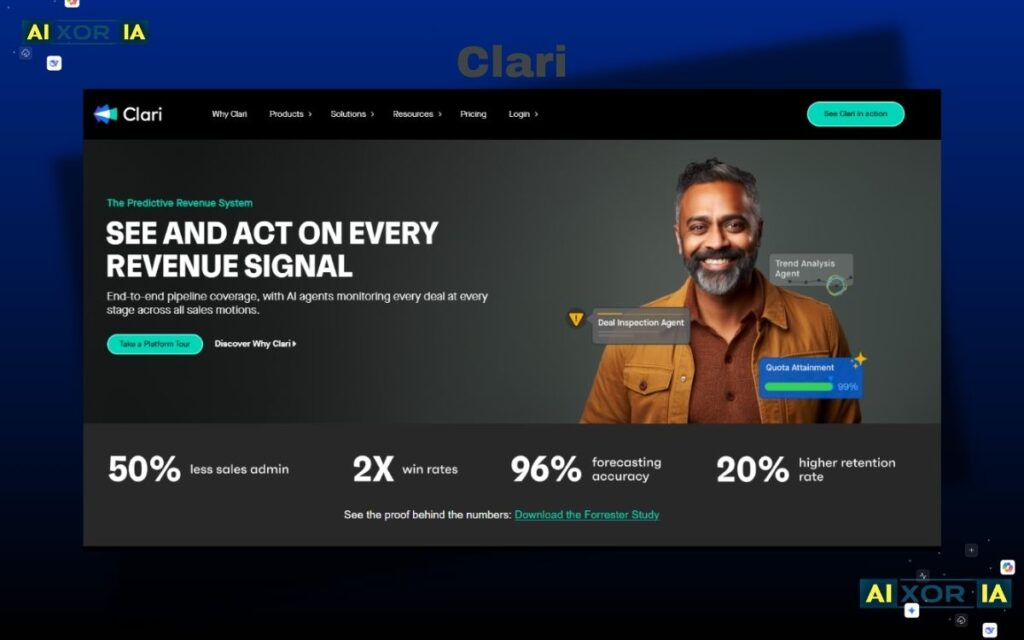
Clari focuses on pipeline intelligence and forecasting.
Rather than managing outreach, Clari helps sales leaders answer a critical question:
“Will we hit our revenue target this quarter?”
Key AI Features
- predictive pipeline analytics
- deal risk detection
- sales activity monitoring
- forecast modeling
- revenue intelligence dashboards
Companies using Clari often improve forecasting accuracy because the platform analyzes real deal activity rather than subjective sales rep updates.
4. Jeeva AI (Autonomous AI Sales Agents)
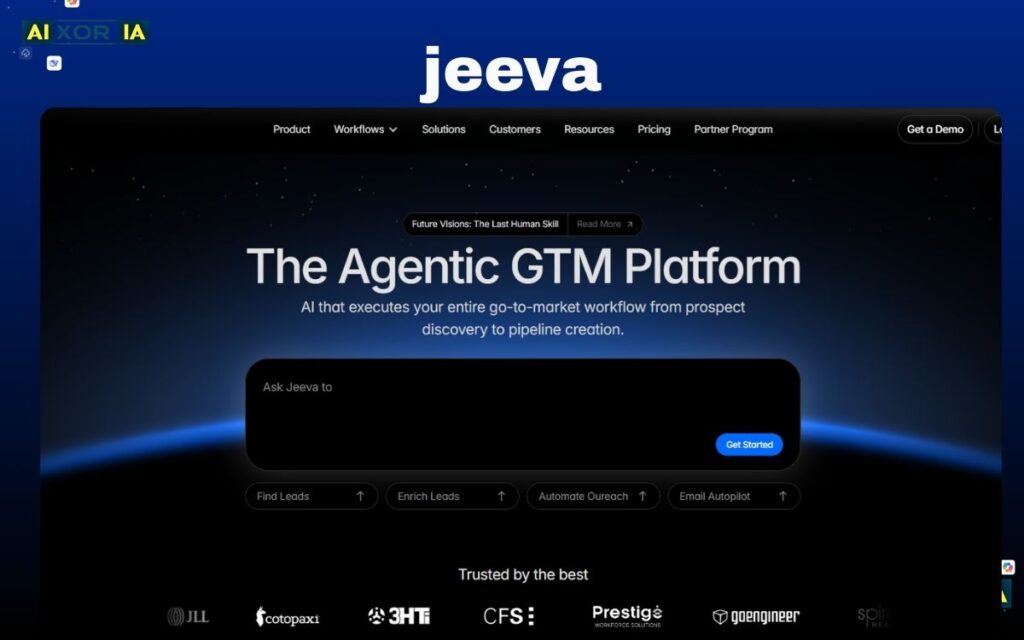
Jeeva AI represents the next generation of sales automation.
Instead of simply assisting sales reps, Jeeva deploys autonomous AI sales agents.
These AI agents can:
- research prospects automatically
- generate outreach messages
- qualify leads
- schedule meetings
- update CRM records
In many cases, a single AI agent can perform tasks that previously required multiple SDRs.
For mid-market companies, this dramatically reduces the cost of scaling outbound sales.
READ MORE – 9 Best AI Tools for Sales GTM in 2026
How AI Sales Automation Actually Works (Workflow)
Modern AI sales platforms usually follow a workflow like this:
Step 1: Prospect Discovery
AI scans large B2B databases to identify companies matching your ICP.
Step 2: Data Enrichment
The system gathers additional signals such as hiring trends, technology stack, and recent company news.
Step 3: Lead Prioritization
Machine learning models calculate lead probability scores.
Step 4: Contextual Outreach
AI generates personalized messaging referencing real prospect activity.
Step 5: Conversation Analysis
AI analyzes replies and determines the next step.
Step 6: Meeting Scheduling
Qualified leads are automatically booked into sales calendars.
This entire workflow can now operate with minimal human intervention.
Key AI Sales Automation Trends for 2026
Several trends are shaping the future of sales technology.
1. Autonomous Sales Agents
AI systems now perform complex workflows independently.
2. Real-Time Personalization
Outreach messages dynamically change based on prospect signals.
3. Predictive Revenue Forecasting
AI predicts deal outcomes using behavioral data.
4. AI-Native CRMs
Modern CRM platforms increasingly embed AI directly into their core architecture.
Final Thoughts
AI sales automation is evolving from task automation to full revenue intelligence systems.
For mid-market companies, the right platform can:
- generate more qualified leads
- improve conversion rates
- automate prospect research
- provide accurate revenue forecasts
Platforms like HubSpot, Apollo.io, Clari, and Jeeva AI represent different approaches to the same goal:
building faster, smarter, AI-driven sales organizations.
The companies that adopt agentic sales workflows early will likely gain a significant competitive advantage in the coming years.
What is AI sales automation?
AI sales automation refers to software that uses machine learning and artificial intelligence to automate parts of the sales process such as prospect research, lead scoring, outreach messaging, and deal forecasting.
Unlike traditional automation tools that only schedule emails or tasks, modern platforms analyze large datasets to identify high-value leads and suggest the best next actions for sales teams.
Many modern CRM platforms, including HubSpot, now include built-in AI tools that help automate communication, analyze conversations, and improve pipeline management.
How are AI sales tools different from traditional sales automation?
Traditional sales automation focuses on task automation, such as sending email sequences or scheduling follow-ups.
Modern AI sales tools operate at a deeper level by analyzing behavioral data and predicting outcomes.
For example, tools like Apollo.io can analyze prospect data, detect intent signals, and generate personalized outreach messages automatically.
This shift toward agentic workflows allows AI systems to make decisions rather than simply executing scheduled tasks.
What is an AI sales agent?
An AI sales agent is an autonomous software system that performs multiple sales tasks without requiring constant human input.
These agents can:
research potential prospects
analyze company data and intent signals
generate personalized outreach messages
qualify leads automatically
schedule meetings with sales teams
Platforms like Jeeva AI are designed specifically around this concept of autonomous AI sales agents.
Why are mid-market companies adopting AI sales automation?
Mid-market companies often need to scale revenue quickly but have smaller sales teams compared to large enterprises.
AI sales tools help them:
automate prospect research
prioritize high-value leads
improve email response rates
reduce manual administrative work
This allows sales teams to focus more on building relationships and closing deals rather than managing repetitive tasks.