AI-Generated Content Is Everywhere — Here’s How to Keep Your SEO Safe
Scr0ll d0wn to D0VVNL0AD
The best AI content detectors for SEO in 2026 are tools that help you verify content authenticity before it hurts your search rankings. Here’s a quick overview of the top picks:
| Tool | Best For | Accuracy |
|---|---|---|
| Originality.ai | Enterprise teams & agencies | 97–99%+ |
| Winston AI | High-accuracy scanning | 99.98% (claimed) |
| QuillBot | Detecting AI-refined/hybrid content | 98–100% (tested) |
| Pangram Labs | Minimizing false positives | 1 in 10,000 FPR |
AI writing tools have gotten very good. So good that studies suggest 30–40% of content online may already be AI-generated without anyone knowing. For small business owners publishing blogs, product pages, or service content, that’s a real problem.
Google’s guidelines are clear: using automation to manipulate search rankings violates their spam policies. And while Google focuses on content quality rather than how something was written, low-quality AI content can absolutely hurt your rankings.
The challenge? You can’t always tell with your eyes. That’s where AI content detectors come in.
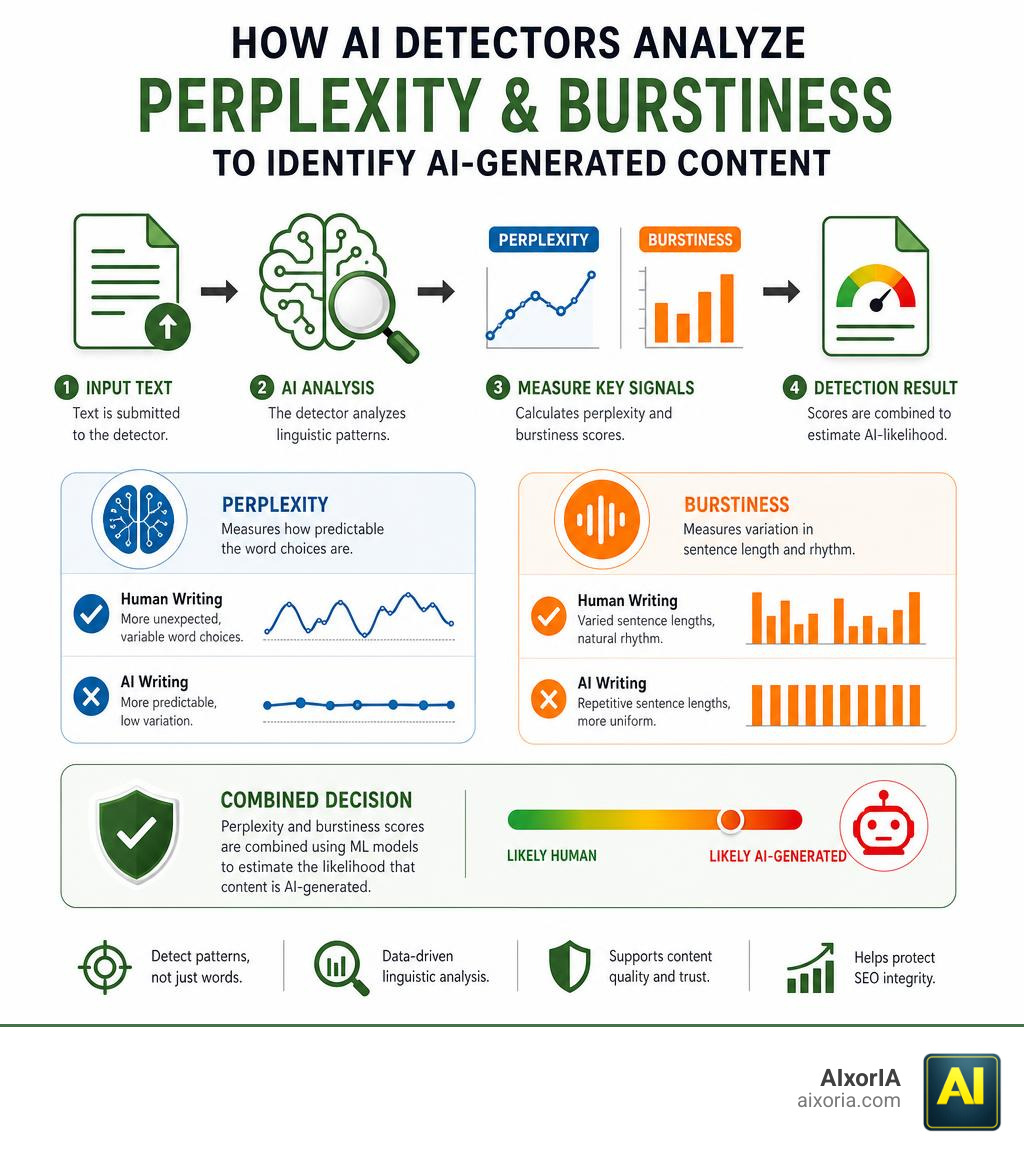
These tools scan text for patterns that give away machine-generated writing — things like predictable word choices (called perplexity) and repetitive sentence rhythm (called burstiness). Together, those signals help separate human writing from AI output.
But not all detectors are equal. Some miss humanized AI text. Some flag real human writing as AI. And some are built for academics, not SEO teams.
This guide cuts through the noise so you can pick the right tool for your workflow — without needing a technical background.
Why AI Content Detection Matters for Modern SEO
In May 2026, search engine optimization is more competitive than ever. While we love using AI to brainstorm and outline, relying on pure, unedited AI drafts is a risky game.
According to Google’s official guidance on AI-generated content, search rankings reward high-quality, original content that demonstrates E-E-A-T (Experience, Expertise, Authoritativeness, and Trustworthiness). If your site is flooded with low-effort, repetitive AI text, Google’s algorithms will eventually catch on, leading to sudden ranking drops.
Additionally, the web ecosystem is actively pushing back against unchecked AI scraping. Nearly 20% of the top 1,000 websites in the world are currently blocking crawler bots that gather web data for AI services. As the line between human and machine writing blurs, maintaining content integrity is your best defense against algorithmic updates. Using the best AI content detectors for SEO ensures your content remains uniquely human, highly engaging, and safe from search penalties.
Key Features to Look For in the Best AI Content Detectors for SEO
Before you buy a subscription, you need to know what makes a detector actually useful for an SEO workflow. It is not just about a single percentage score; it is about how the tool fits into your daily editing process.
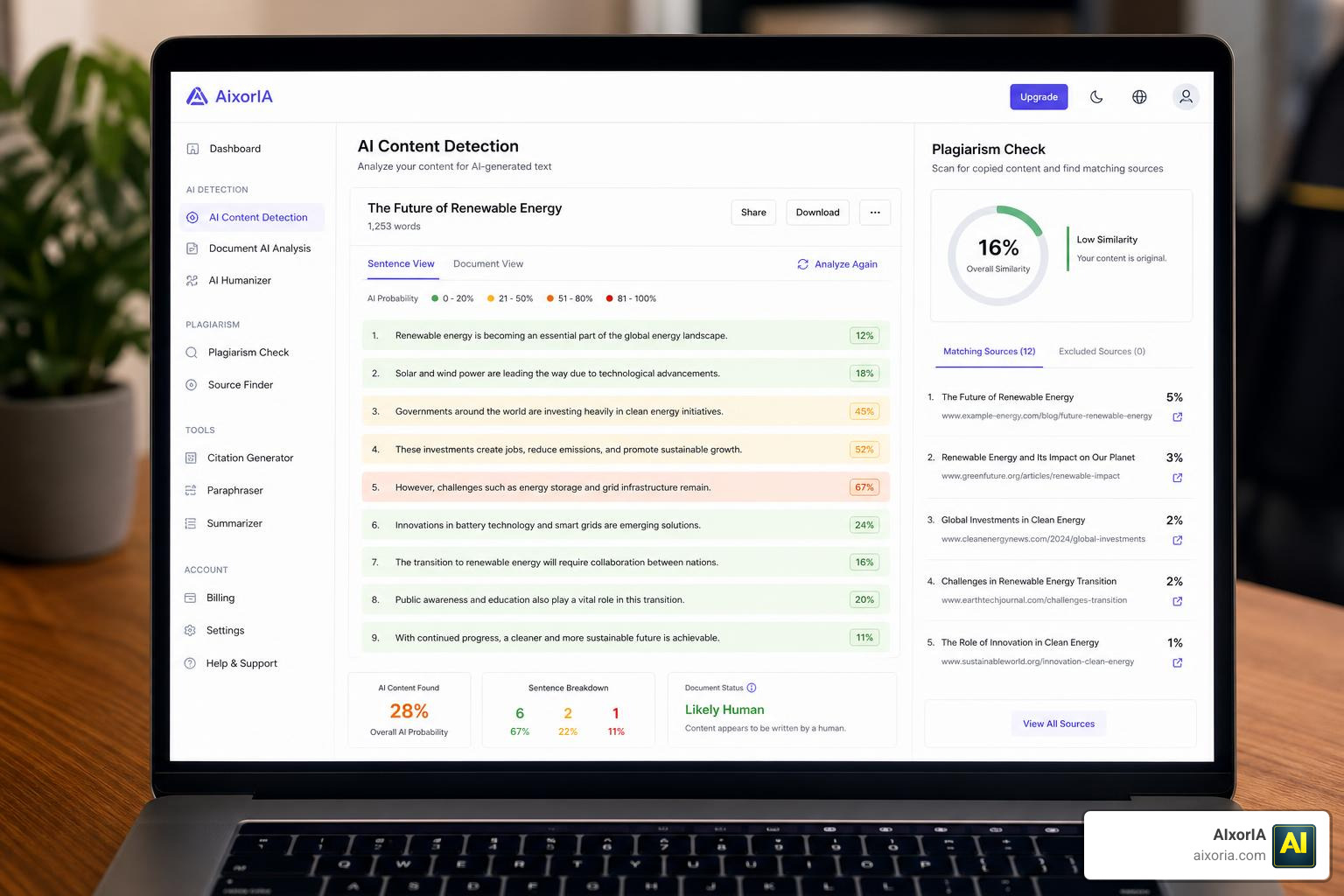
Here are the non-negotiable features your team should look for:
- Sentence-Level Analysis: A good detector should highlight the exact sentences that look robotic. This allows your editors to rewrite only the flagged parts instead of starting from scratch.
- Plagiarism Integration: AI tools can accidentally copy existing web text. Combining AI detection with a robust plagiarism checker saves time and protects your site’s authority.
- Bulk Scanning: If you are auditing an entire website or managing a large team of freelance writers, scanning articles one by one is a nightmare. You need bulk upload capabilities.
- API Access: For larger agencies, integrating the detector directly into your custom content management systems (CMS) or editorial dashboards is a massive productivity booster.
- Multi-Language Support: If you publish content globally, your detector must support languages beyond English without losing its accuracy.
Top AI Content Detectors for SEO in 2026
Let’s explore the top-performing tools on the market this year, comparing how they handle accuracy, pricing, and practical SEO agency value.
Originality.ai: The Best AI Content Detectors for SEO for Enterprise Teams
Originality.ai is widely considered the gold standard for professional publishers and SEO agencies. It is built specifically for web content creators rather than classroom teachers.
In independent evaluations, including peer-reviewed studies and University of Chicago research on AI detection, Originality.ai consistently ranks at the top, boasting a 97.09% accuracy rate on established datasets.
Key Features:
- Lite vs. Turbo Modes: Use the Lite model (99% accuracy) for low false-positive rates on lightly edited content, or switch to the Turbo model (99%+ accuracy) for strict “no-AI” policies.
- Writing Replay: This brilliant Chrome extension lets you watch a character-by-character replay of how a document was written in Google Docs. It is the ultimate proof that a human actually typed the article.
- WordPress Integration: Scan your posts directly inside your WordPress Gutenberg editor before hitting publish.
Winston AI: The Best AI Content Detectors for SEO for High Accuracy
Winston AI is incredibly popular among publishers who require near-perfect certainty. It claims an industry-leading 99.98% accuracy rate in identifying content generated by ChatGPT, Claude, and Google Gemini.
Key Features:
- Advanced OCR Support: Winston can read and analyze text from images or scanned PDFs, making it incredibly versatile.
- Sentence-Level Precision: It provides a beautifully color-coded map of your text, showing exactly which sentences need a human touch.
- Shareable Reports: Easily generate PDF reports to show clients or stakeholders that your content is 100% original.
QuillBot: Best for Identifying AI-Refined and Hybrid Content
If you are dealing with writers who use AI to polish their own drafts, QuillBot is the tool you want. Unlike binary detectors that only say “AI” or “Human,” QuillBot is excellent at identifying “AI-refined” text.
Key Features:
- Nuanced Feedback: It accurately distinguishes between fully AI-generated text and human writing that has simply been edited using AI assistants.
- Generous Free Tier: You can scan up to 1,200 words per scan for free, making it highly accessible for small teams.
- Integrated Rewrite Tools: If a section is flagged, you can use QuillBot’s built-in editor to rephrase and improve the flow on the spot.
Pangram Labs: Best for Minimizing False Positives
There is nothing worse than accusing a talented human writer of using AI when they didn’t. Pangram Labs solves this issue with an industry-leading false positive rate of just 1 in 10,000.
Key Features:
- Academic Verification: Its accuracy has been verified by researchers at the University of Chicago and the University of Maryland.
- Enterprise Governance: Built for large scale platforms, it is ideal for brands that need to maintain strict safety standards without alienating their creative teams.
- Highly Consistent: It maintains its precision even when analyzing complex, technical, or niche subjects.
Accuracy, Limitations, and the Reality of False Positives
While the best AI content detectors for SEO are incredibly advanced in 2026, they are not magic. No tool is 100% accurate.
AI detectors look for mathematical patterns. Sometimes, human writers write in a highly structured, predictable way — especially when writing technical guides, legal documents, or academic essays. This can trigger a “false positive,” where human writing is incorrectly flagged as AI.
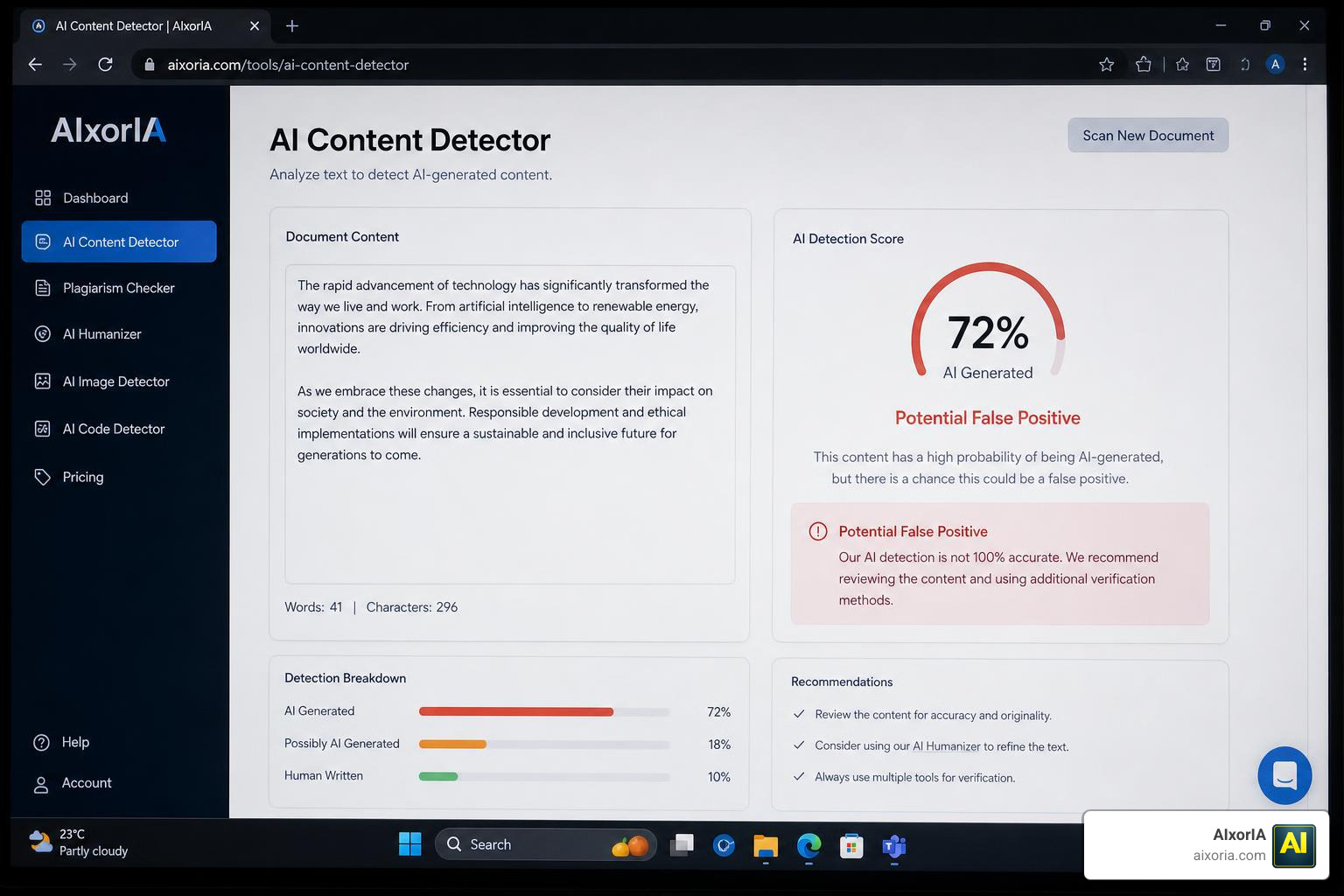
This issue is particularly common for non-native English speakers. Studies show that false positive rates can exceed 20% for ESL (English as a Second Language) writers because they tend to use more predictable grammatical patterns.
Furthermore, “stealth AI” humanizers and paraphrasing tools are constantly evolving to bypass detectors on benchmarks like the RAID benchmark.
How SEO Teams Can Responsibly Integrate AI Detection into Workflows
To avoid friction and maintain a healthy creative environment, we recommend these best practices:
- Keep a Human in the Loop: Never use an AI detector score as a final, automated “pass/fail” grade. Use it as a helpful signal that points editors toward sections that might need more personality, unique examples, or better formatting.
- Verify with Writing History: Instead of arguing over percentage scores, ask writers to use tools like Originality’s Chrome extension to show their natural writing and editing process.
- Combine with Plagiarism Checks: Always run a plagiarism scan alongside your AI check to ensure total content originality.
- Set Clear Guidelines: Define what “acceptable AI use” means for your team. Is using AI for outlines okay? What about using it to rephrase a clunky paragraph? Having a clear policy prevents misunderstandings.
Frequently Asked Questions about AI Content Detection
Can Google detect and penalize AI-generated content?
Google’s algorithms do not penalize content simply because it was written by AI. However, Google can easily detect low-quality, repetitive, and unhelpful patterns common in raw AI outputs. If your content lacks original value, search rankings will drop as Google prioritizes helpful, human-curated content.
How accurate are AI detectors against “humanized” AI text?
While advanced “stealth” paraphrasing tools try to bypass detection, top-tier detectors like Originality.ai and Winston AI are trained on adversarial datasets. They can still identify underlying machine patterns, even after the text has been run through a humanizing tool.
Why do AI detectors sometimes flag human-written content?
This is known as a false positive. It usually happens when a human writes with very simple, highly structured, or predictable phrasing. Technical writers and non-native English speakers are flagged more often because their writing style naturally aligns with the high-uniformity patterns that AI models generate.
Conclusion
Navigating AI content does not have to be stressful. By choosing the right tools, understanding their limitations, and keeping human creativity at the heart of your publishing process, you can build a highly successful, future-proof SEO strategy.
At AIxorIA, we are passionate about helping businesses navigate this rapidly changing landscape. We provide custom AI solutions, tool training workshops, practical tutorials, and thorough performance audits to empower your team. With our simple language help, affordable services, and fast customer support, we make adopting cutting-edge technology stress-free.
Ready to scale your business safely? Explore our guide on AI tools for business in 2026 and learn how to implement smart, high-ROI workflows today!
1 thought on “Best AI Content Detectors for SEO in 2026”