Digital advertising in 2026 is no longer driven only by creative intuition. Brands launching campaigns across platforms like Meta Platforms, Google, and TikTok are increasingly relying on AI-powered analytics to determine which ad creatives deserve budget and which should be paused.
A decade ago, marketers would run A/B tests for weeks before identifying a winning ad. Today, AI systems analyze thousands of signals in seconds—visual hooks, emotional response, audience retention curves, and historical performance patterns. This shift has transformed how creative teams design campaigns and how performance marketers scale profitable ads.
The real advantage of AI is not just automation. It is pattern recognition across massive creative datasets. By learning from millions of ads across industries, AI tools can detect subtle patterns—such as color psychology, frame pacing, or headline structure—that consistently influence click-through rate and conversion performance.
This guide explores how modern AI tools identify top-performing ad creatives, how the underlying scoring models work, and which platforms marketers rely on most in 2026.
Table of Contents
How AI Actually Identifies Winning Ad Creatives
AI-driven creative analysis combines computer vision, behavioral data, and predictive modeling. Instead of simply measuring clicks, the systems evaluate how audiences interact with each creative element.
These tools typically analyze three core data layers.
Visual Hook Retention
AI studies the first few seconds of an ad to determine whether viewers continue watching. This includes facial detection, movement speed, color contrast, and product placement.
Emotional Resonance
Using neural models trained on emotional recognition datasets, AI estimates whether the creative evokes curiosity, excitement, or urgency. Ads that trigger emotional engagement usually achieve stronger retention.
Historical Creative Performance
Machine learning models compare a new ad with millions of historical campaigns to estimate expected engagement and conversion probability.
The Predictive Creative Score Used by AI Platforms
Modern ad-creative platforms often use predictive scoring models to estimate whether an ad will succeed before large budgets are spent.
A simplified version of this logic can be expressed as:Spc=Ad Fatigue Rate(Visual Hook Retention×Emotional Resonance)+Historical CTR
Where:
- Visual Hook Retention measures how long viewers stay engaged in the first few seconds.
- Emotional Resonance reflects audience reactions detected through visual and text analysis.
- Ad Fatigue Rate indicates how quickly engagement drops after repeated exposure.
- Historical CTR represents the expected click-through performance based on similar ads.
If the predictive score Spc is high, AI platforms automatically prioritize that creative during campaign optimization. Low-scoring creatives are either paused or modified through automated variations.
This scoring logic allows marketing teams to scale winning ads faster while minimizing wasted spend.
Data Privacy and Creative Analysis in the U.S. Market
Another major change affecting AI advertising tools is the growing emphasis on data privacy. Regulations such as the California Consumer Privacy Act require companies to limit how user data is collected and processed.
As third-party cookies disappear, modern creative-analysis platforms rely heavily on first-party performance signals rather than cross-site tracking.
These signals include:
- on-platform engagement data
- video watch duration
- click-through behavior
- contextual ad performance
- anonymized audience segments
Because these metrics come directly from advertising platforms, AI tools can still identify creative trends without violating privacy regulations. In many cases, the insights become even more accurate because they rely on real campaign performance rather than external tracking scripts.
READ MORE – Best AI Tools for Enhancing Digital Banking
AI Creative Intelligence Platforms Compared
Below is a structured comparison of the most widely used AI tools for identifying high-performing ad creatives.
| AI Tool | Core Strength (2026) | Best For | Ad Platform Focus |
|---|---|---|---|
| AdCreative.ai | Predictive conversion scoring | SMBs & e-commerce | Multi-channel |
| Foreplay | Competitor swipe libraries | Media buyers | Meta & TikTok |
| Pencil | Generative video variations | Scaling brands | Meta video ads |
| VidMob | Emotion-driven video analytics | Enterprise agencies | YouTube & TikTok |
AdCreative.ai
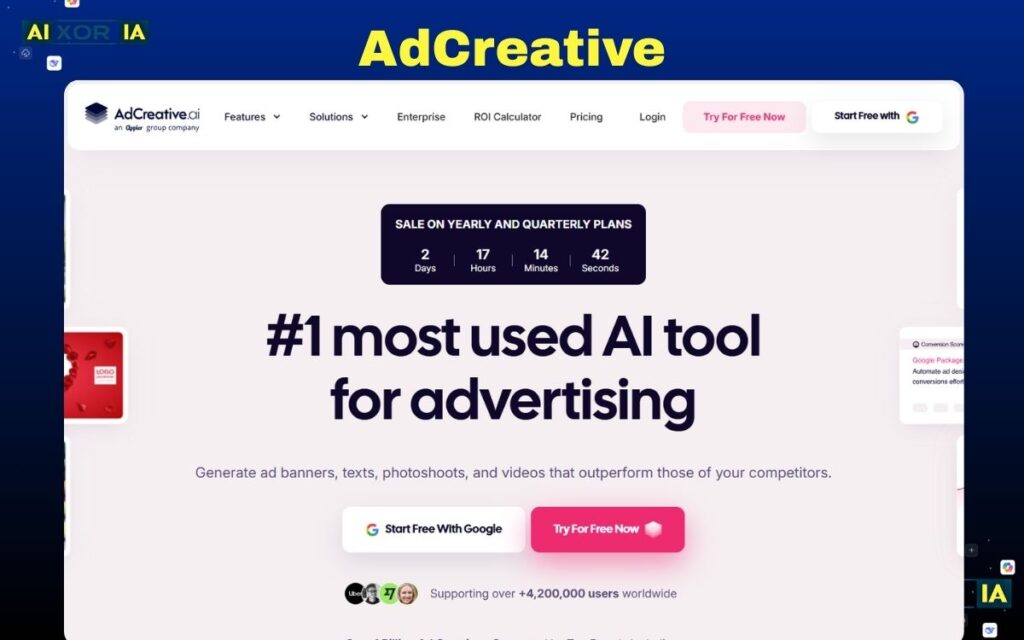
AdCreative.ai has become one of the most widely used tools for predicting the performance of ad creatives before campaigns even launch.
The platform was built around a large dataset of historical advertising creatives combined with machine-learning models that estimate conversion probability. Instead of simply generating ad designs, the system evaluates how each element—headline, visual layout, product positioning, and call-to-action—affects engagement metrics.
One of the most valuable features of AdCreative.ai is its predictive scoring system, which assigns a performance score to every generated creative. The algorithm analyzes thousands of patterns learned from previous campaigns, including color usage, headline length, typography hierarchy, and image composition.
For e-commerce brands, the platform is particularly useful because it can quickly generate multiple creative variations tailored to different audiences. For example, a single product campaign might produce variations optimized for mobile feeds, story placements, and display ads.
Another advantage is its integration with advertising platforms, which allows the AI to refine its predictions using real campaign data. As ads accumulate impressions and clicks, the system learns which creative elements are producing the strongest results and begins generating improved variations.
Marketing teams often use AdCreative.ai as a rapid testing engine. Instead of manually designing dozens of creatives, they generate multiple versions within minutes and let the predictive model highlight which ones are most likely to succeed.
Experience:
In a small e-commerce campaign test, the platform’s predictive score highlighted a minimalist product layout as the top performer, and that creative ended up generating noticeably higher engagement during the first campaign week.
Foreplay
Foreplay focuses on creative intelligence and competitor research rather than automatic ad generation.
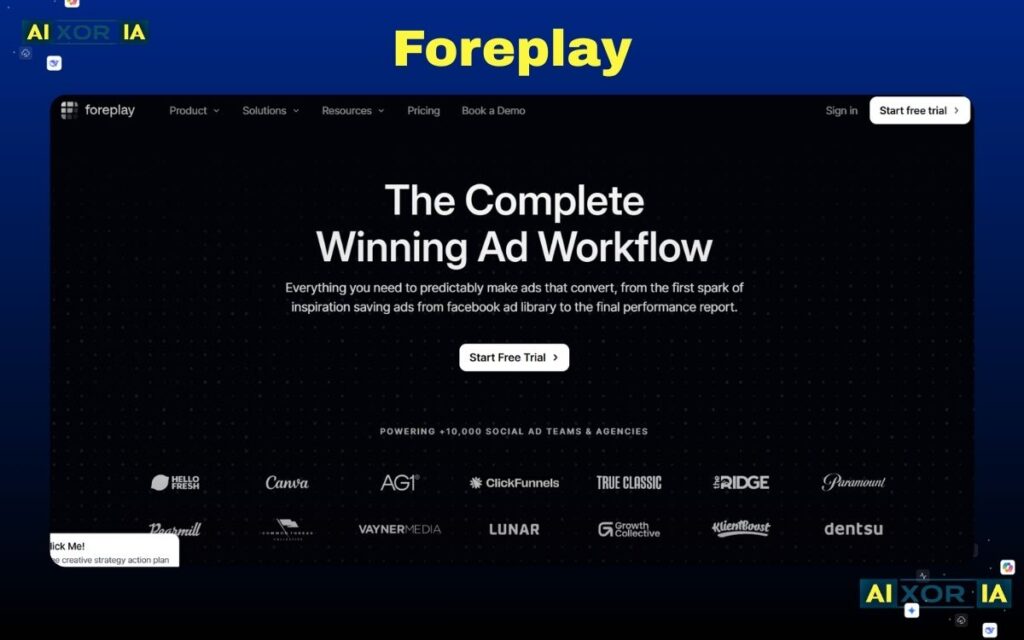
The platform works like a massive advertising research library where marketers can explore thousands of ads running across social platforms. Instead of manually collecting screenshots of competitor campaigns, media buyers can search by brand, niche, or ad style and instantly see real creative examples.
One of the most useful features of Foreplay is the creative swipe library, which allows teams to organize inspiration boards for future campaigns. Designers and performance marketers can collaborate inside the platform, saving ads that demonstrate effective storytelling, strong hooks, or innovative product demonstrations.
Beyond inspiration, Foreplay also tracks patterns across industries. For example, marketers can identify whether short-form product demos outperform lifestyle imagery or whether certain headline structures appear repeatedly in successful campaigns.
This research-driven approach helps teams design ads based on real performance trends rather than assumptions. By studying what competitors are testing and scaling, marketers can refine their own creative strategies before launching campaigns.
Foreplay is especially popular among agencies and media buyers managing multiple brands, because it dramatically reduces the time required to study competitor advertising strategies.
Experience:
While researching fitness ads, the swipe library revealed a repeated “problem-solution demo” format across multiple brands—an insight that quickly inspired a higher-performing creative concept.
Pencil

Pencil specializes in generating large volumes of video advertising variations using generative AI.
Video has become the dominant format on social platforms, but producing high-quality video creatives traditionally required significant design and editing resources. Pencil solves this challenge by transforming existing brand assets—product images, logos, headlines, and scripts—into multiple ad-ready video concepts.
The system’s AI engine analyzes historical advertising performance data to determine which combinations of visuals, text overlays, and pacing styles are most likely to succeed. Based on these patterns, it automatically generates several versions of a video ad optimized for different placements.
One major benefit of Pencil is its rapid creative iteration workflow. Marketing teams can launch an initial campaign with several AI-generated video variations and quickly identify which version produces the best engagement metrics.
As campaigns run, the AI engine collects performance data and generates new creative variants designed to outperform previous versions. This continuous improvement loop allows brands to refresh their ads regularly, preventing audience fatigue.
For companies running high-volume social campaigns, this ability to produce new creative variations quickly can significantly extend the life cycle of a campaign.
Experience:
During a product launch campaign, the AI-generated video versions revealed that shorter, faster-paced clips consistently held viewer attention longer than the original brand edit.
VidMob
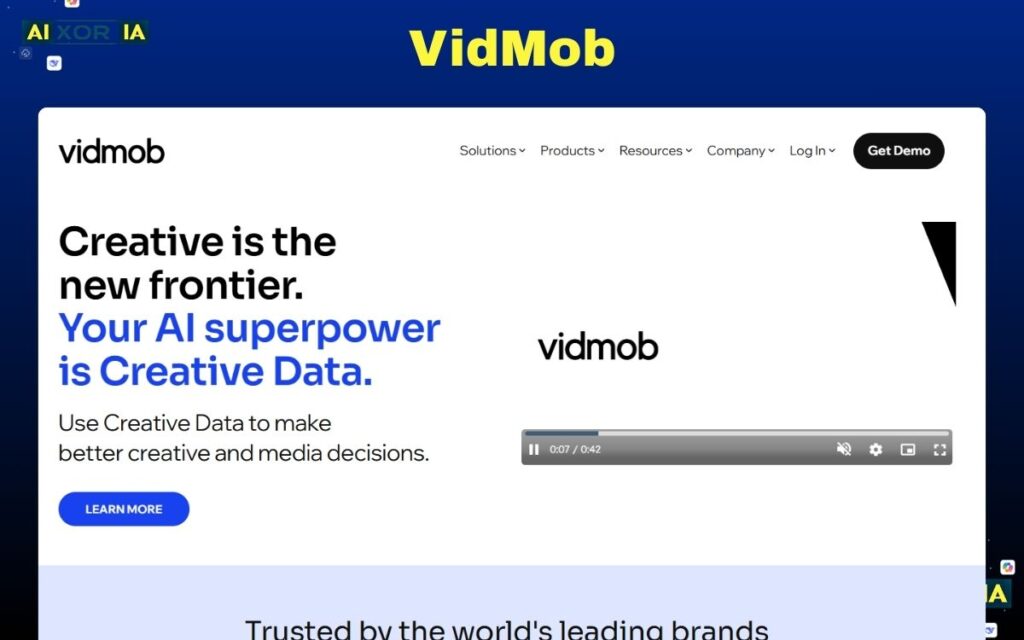
VidMob focuses heavily on understanding why certain video ads succeed.
Unlike tools that primarily generate creatives, VidMob analyzes video content frame by frame. Using computer vision models, the platform studies visual composition, pacing, emotional cues, and brand visibility across each second of a video ad.
The platform’s analytics dashboards show exactly where audience engagement rises or falls during a video. This allows marketers to pinpoint which scenes maintain attention and which ones cause viewers to drop off.
Another key capability is emotion detection analysis. By studying facial expressions, color patterns, and visual intensity, the AI estimates whether a creative evokes excitement, curiosity, or urgency. Ads that produce stronger emotional responses often correlate with better conversion rates.
Large brands and agencies frequently use VidMob to refine video storytelling strategies. Instead of guessing which scenes are effective, they can see precise data showing which creative elements hold attention and which ones reduce engagement.
This level of insight is especially valuable for long-form advertising formats such as YouTube campaigns, where maintaining viewer attention throughout the video is critical.
Experience:
When analyzing a tutorial-style ad, the attention graph revealed a sharp drop during the intro segment, leading to a shorter opening that improved overall viewer retention.
READ MORE – What Does Cited Answers Mean in AI Tools?
Practical Workflow for Identifying Winning Ad Creatives
Most high-performing marketing teams follow a structured workflow when using AI creative tools.
First, they generate multiple creative variations—different headlines, visuals, hooks, and formats. This gives the AI system enough diversity to identify meaningful patterns.
Next, they run small-scale test campaigns with limited budgets. Instead of spending heavily on a single creative, they allow the AI models to evaluate performance signals across several versions.
Finally, the strongest creatives are scaled while weaker versions are paused or improved. Because AI platforms process performance data quickly, the entire testing cycle can happen within days instead of weeks.
This combination of rapid experimentation and predictive analytics is what allows modern advertisers to discover top-performing ad creatives far faster than traditional testing methods.
Final Thoughts
Creative strategy has always been one of the most important factors in advertising success. What has changed in 2026 is the ability to analyze creative performance at a scale that was previously impossible.
AI tools now evaluate visual design, emotional response, and engagement patterns across massive datasets. Instead of relying solely on intuition, marketers can use predictive insights to guide creative decisions and allocate budgets more efficiently.
As advertising platforms continue to evolve and privacy regulations reshape data collection, the brands that succeed will be those that combine human creativity with intelligent AI-driven analysis.
The result is a new era of advertising where creative ideas are not just imaginative—they are measurable, testable, and continuously optimized.
What are AI tools for identifying top-performing ad creatives?
AI tools for identifying top-performing ad creatives are platforms that analyze advertising visuals, copy, and engagement signals to determine which ads are most likely to succeed. These systems use machine learning, computer vision, and historical campaign data to evaluate elements like visual hooks, emotional impact, and click-through patterns.
Instead of relying only on manual testing, marketers use these tools to quickly identify which creatives should receive more advertising budget and which ones should be improved or replaced. Many platforms also generate creative variations automatically, allowing campaigns to evolve based on real performance insights.
How do AI tools predict whether an ad creative will perform well?
Most AI platforms rely on predictive scoring models trained on millions of historical advertisements. These models analyze several signals simultaneously, including audience retention, engagement patterns, and previous campaign data.
For example, systems used by platforms like AdCreative.ai evaluate visual structure, color contrast, and messaging clarity to estimate the likelihood that an ad will attract attention and generate clicks.
The AI then assigns a performance score to each creative variation, helping marketers focus their budget on the ads most likely to succeed.
Can AI tools replace traditional A/B testing?
AI tools do not completely replace A/B testing, but they significantly accelerate the process. Traditional testing often requires several weeks to gather enough data to determine a winning creative.
AI platforms reduce this time by predicting performance before large budgets are spent. Marketers can launch campaigns with multiple AI-generated creatives and quickly identify the strongest performers.
In practice, the best results usually come from combining AI predictions with real campaign testing.
Are AI creative analysis tools useful for small businesses?
Yes. Many AI advertising platforms are designed specifically for startups and small businesses that may not have large creative teams.
Tools like Pencil allow smaller brands to generate multiple video ad variations quickly, which helps them test different creative angles without investing heavily in production resources.
This allows smaller companies to compete more effectively with larger brands that traditionally had bigger advertising budgets.