Why Finding the Best AI Content Detection Tools Matters in 2026
The best AI content detection tools in 2026 are listed here, ranked by accuracy and use case:
| Tool | Best For | Accuracy |
|---|---|---|
| Pangram Labs | Overall accuracy | ~100% |
| Copyleaks | Large documents | ~100% |
| Sapling AI | Pure detection | ~100% (ChatGPT & Claude) |
| GPTZero | Education & analysis | ~99% |
| Winston AI | Educators & SEO | ~99.98% (claimed) |
| Originality.ai | Web publishers | ~97%+ |
| QuillBot | All-in-one use | ~98-100% |
AI is now involved in writing a huge chunk of what you read online — emails, articles, social posts, even subtitles. But almost none of it comes with a label.
That’s a real problem. As a small business owner, you might be hiring freelancers, reviewing content drafts, or trying to make sure your website doesn’t get flagged by Google. You need to know what you’re publishing.
The trouble? Not all AI detectors are created equal. Some flag perfectly good human writing as AI-generated. Others miss obvious AI content entirely. And a few are just flat-out unreliable.
Independent testing of 30+ tools found that only a handful consistently passed both AI detection and false positive tests. Most tools struggle with one or the other.
This guide cuts through the noise. We’ll show you which tools actually work, what the numbers say, and which one fits your specific situation — no technical expertise needed.
The Best AI Content Detection Tools of 2026
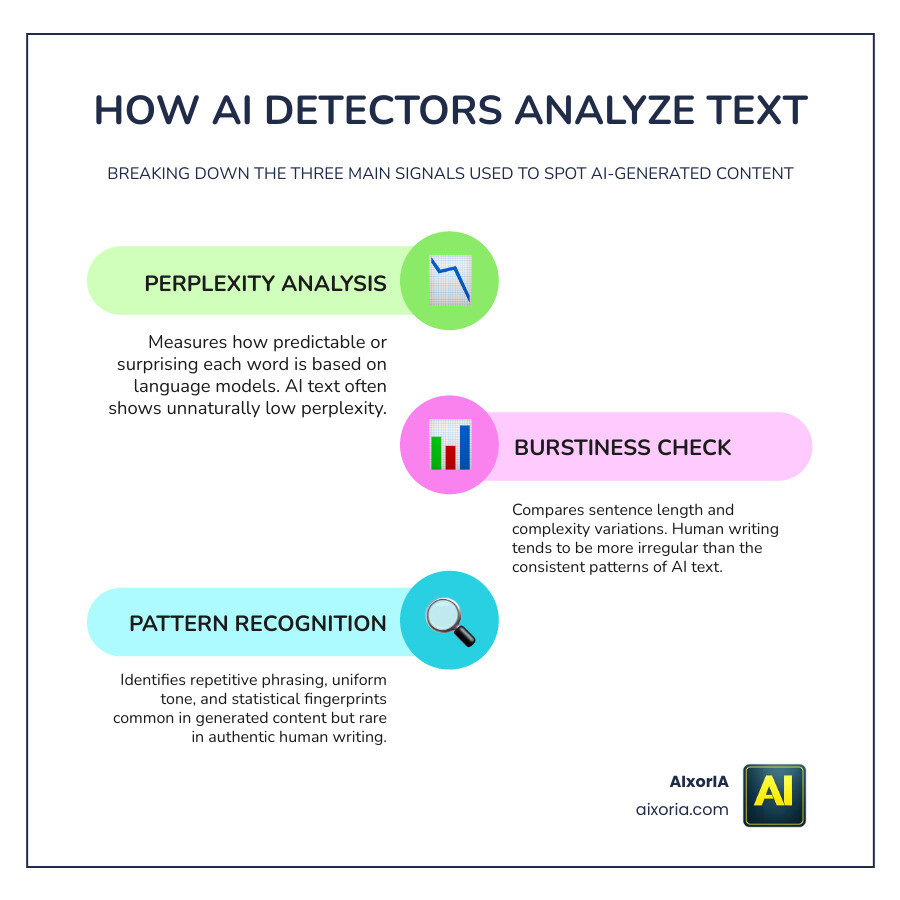
Navigating the landscape of AI detection requires understanding that these tools are in a constant “cat-and-mouse” game with Large Language Models (LLMs). As models like GPT-5, Gemini 2.0, and Claude 3.7 become more sophisticated, the Best AI Content Detection Tools must evolve to spot increasingly human-like patterns.
Our research into the 20 Best Ai Detector Tools In 2026 Tested Ranked shows a clear divide between tools that offer simple probability scores and those that provide deep linguistic analysis.
Best AI Content Detection Tools for Accuracy
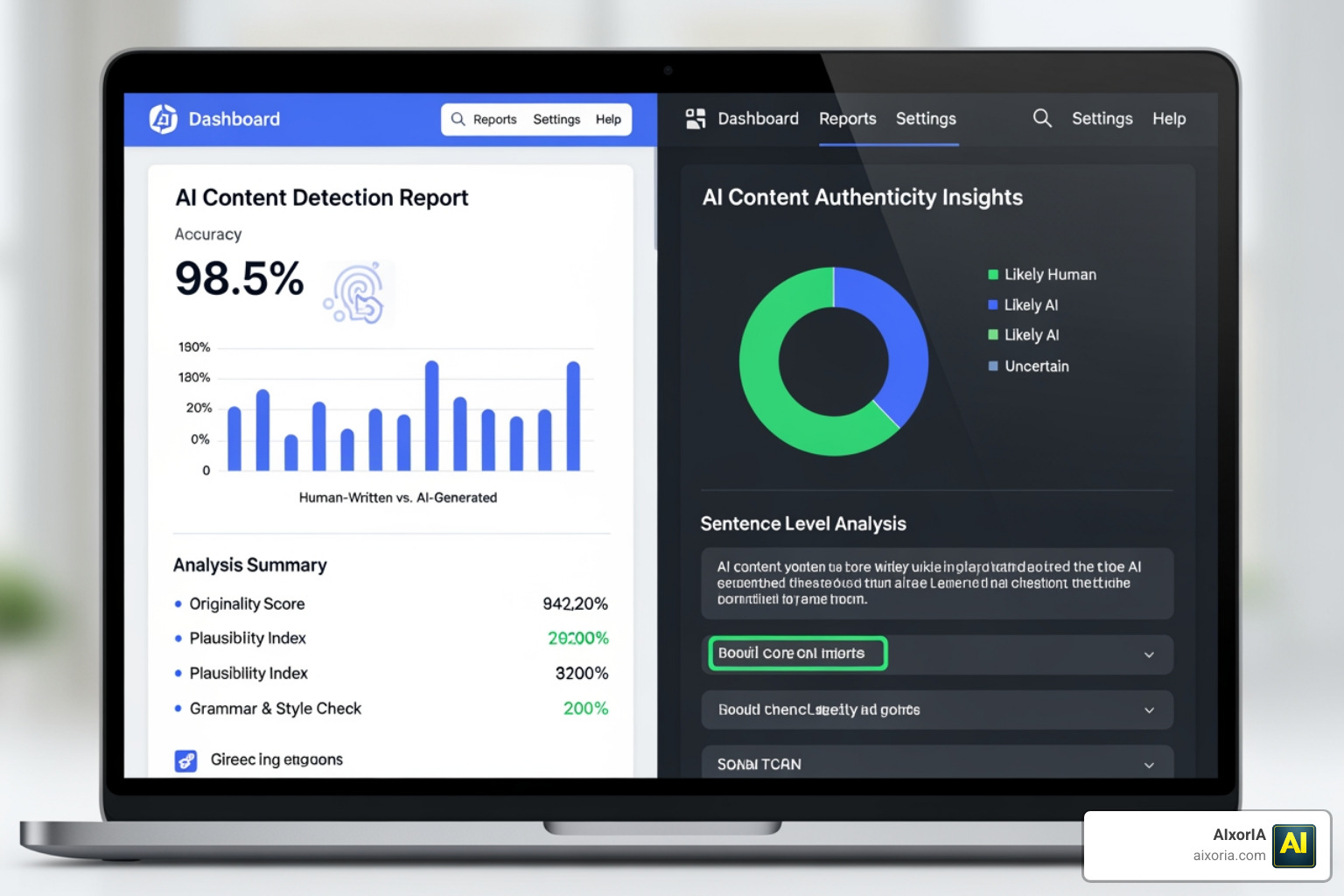
When we talk about pure, raw accuracy, three names consistently dominate the 2026 benchmarks: Pangram Labs, Copyleaks, and Sapling AI.
In independent testing involving 30 different detectors, Pangram Labs and Copyleaks were the only tools to achieve a 100% pass rate across both AI-generated and human-written samples. Pangram Labs, in particular, has made waves by reducing its false positive rate to less than 1%, which is significantly better than much of the competition.
Sapling AI also remains a top contender for accuracy, achieving near-perfect scores on content generated by ChatGPT and Claude while maintaining a 0% false positive rate on human text in recent evaluations. For those looking for a balanced, high-performance option, the GPTZero – AI Content Detection Platform remains a gold standard, boasting a 99% accuracy rate and a specialized focus on preventing bias against non-native English speakers.
Best AI Content Detection Tools for Educators
Academic integrity is a major concern in 2026, and educators need more than just a “yes or no” answer. They need tools that facilitate conversations with students. Winston AI and GPTZero are the frontrunners here.
Winston AI is highly regarded for its 99.98% accuracy claim and its ability to handle handwriting and document scans. Meanwhile, GPTZero is used in over 3,500 colleges worldwide. Its “writing report” and video replay features allow teachers to see the actual process of how a document was created, which is much more valuable than a simple percentage score. You can explore more options in our guide on the Best Ai Content Detectors For Teachers In 2026.
2026 Accuracy Benchmarks and Testing Methodology
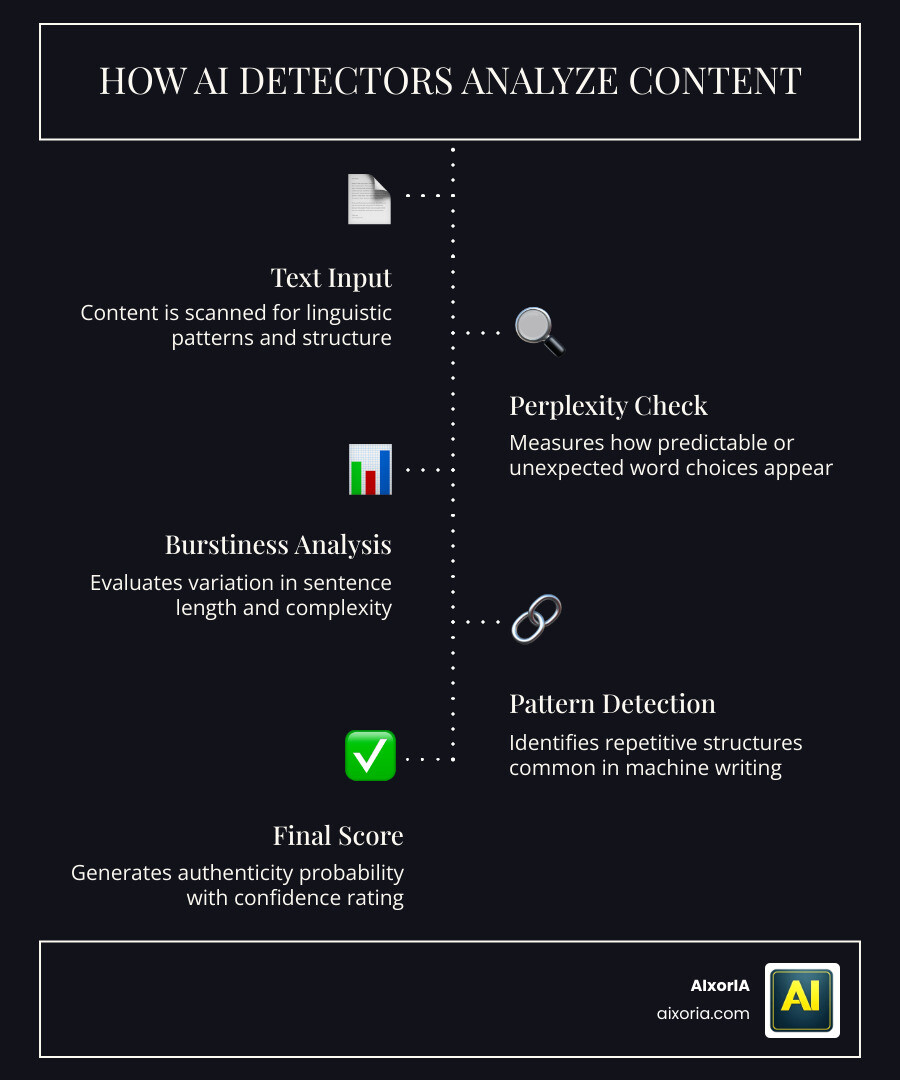
To determine which tools truly deserve a spot on our list, we looked at rigorous testing methodologies. These tests didn’t just use simple “Write an essay” prompts. They used a mix of:
- Modern LLMs: Content from GPT-5, Claude 3.7, and Gemini 2.0.
- Humanized Text: AI content that has been put through “humanizer” tools or heavily edited by people.
- Historical Documents: Using the Declaration of Independence or the Magna Carta to test for false positives (since we know AI didn’t write those!).
Based on the Which Ai Content Detectors Are Most Accurate data, here is how the top performers stacked up:
| Tool | AI Detection (GPT-5/Claude) | False Positive Rate |
|---|---|---|
| Pangram Labs | 100% | <1% |
| Copyleaks | 100% | <1% |
| GPTZero | 99% | ~1% |
| Sapling AI | 100% | 0% |
| Originality.ai | 100% | ~1.5% – 2% |
Key Features for Professional Content Verification
For professionals, a simple score isn’t enough. You need features that help you improve the content or prove its origin.
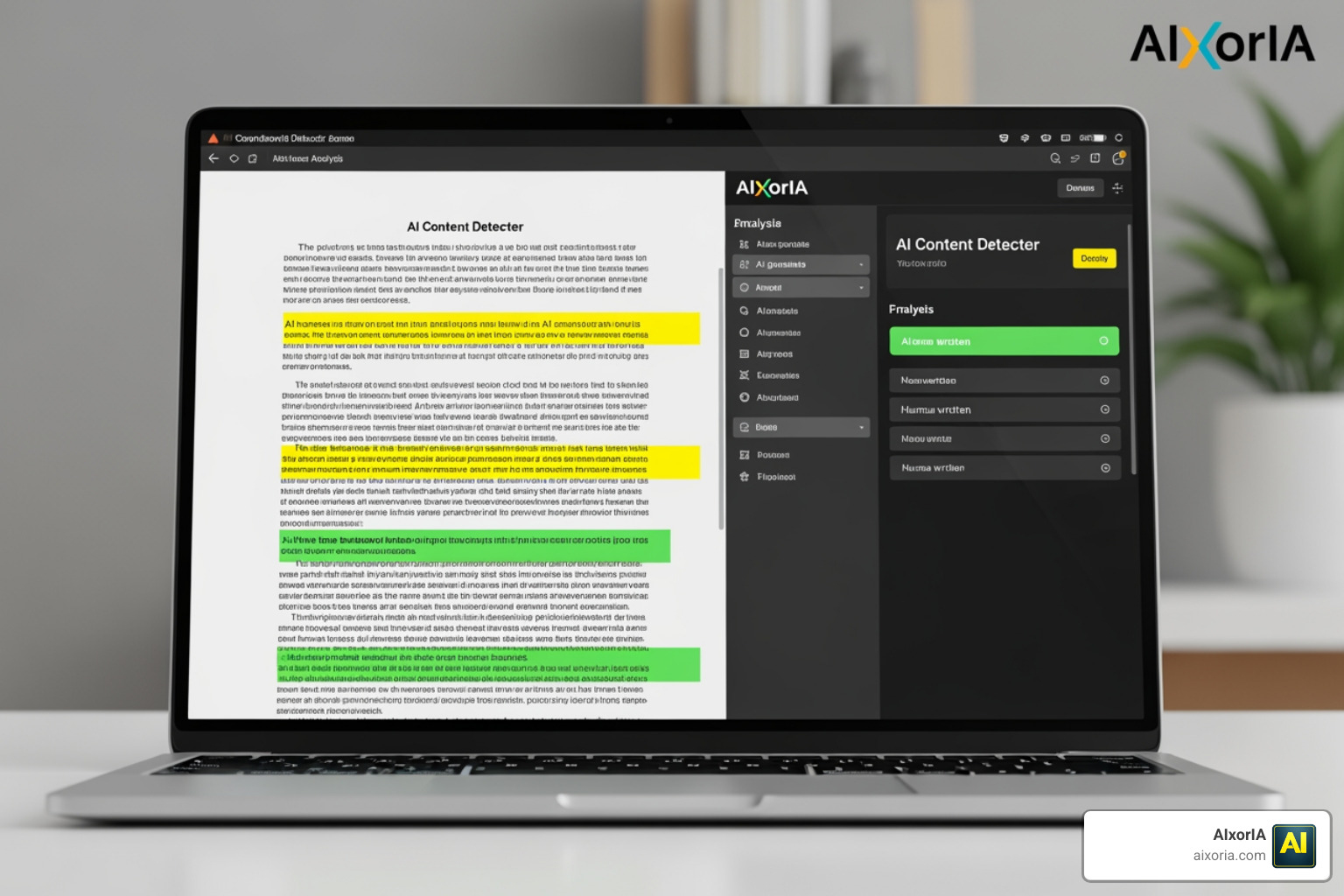
One of the most useful features in 2026 is sentence-level highlighting. Tools like Originality.ai and GPTZero highlight specific sentences that look like AI, allowing editors to rewrite only the problematic parts.
Other essential features include:
- Plagiarism Checking: Many top tools now bundle AI detection with traditional plagiarism scans to ensure total content integrity.
- Writing Replays: A “watch as you type” feature (available via Chrome extensions) that proves a human actually sat down and wrote the piece.
- Multilingual Support: As AI writing goes global, tools must support more than just English. For example, check out our Best Ai Content Detectors For Arabic Text 2026 Guide for specialized needs.
Use Case Specific Recommendations for 2026
We know that a teacher’s needs are different from an SEO manager’s. Here is how we categorize the Best AI Content Detection Tools by use case:
- SEO & Web Publishing: Originality.ai is the powerhouse here. It is built specifically for web content and includes features like bulk site scanning and readability analysis. It helps ensure your content stays on the right side of Google’s quality guidelines. See our Best Ai Content Detectors For Seo In 2026 for more.
- Marketing Campaigns: For agencies managing multiple clients, Copyleaks or Winston AI offer great team management and API integrations. This allows for seamless verification of vendor deliverables. Check our Best Ai Content Detectors For Marketing Campaigns In 2026 for details.
- Students & Casual Users: QuillBot and ZeroGPT offer generous free tiers. While ZeroGPT has faced some criticism for false positives, it remains a popular “quick check” tool for those on a budget.
Limitations and Ethical Use of AI Detectors
It is vital to remember that no AI detector is 100% perfect. We always advise using these tools as indicators, not judges.
One major limitation is the ESL Bias. Some detectors flag non-native English writing as AI because the sentence structures can be more predictable—a trait AI also shares. GPTZero has made significant strides in “de-biasing” its model to protect ESL students.
Furthermore, as “humanizers” and adversarial datasets evolve, some AI content will inevitably slip through the cracks. This is why results should never be the sole evidence for academic misconduct or firing a freelancer. Always combine the tool’s score with a human editorial review. For more on the ethics of these tools, read our Best Ai Detection Tools In 2026 guide.
Frequently Asked Questions about AI Detection
Which AI detector is most accurate in 2026?
According to independent benchmarks like the RAID test and comparative studies of 30+ tools, Pangram Labs and Copyleaks are currently the most accurate, both achieving 100% pass rates in several rigorous tests.
Can AI detectors identify humanized or paraphrased text?
Yes, but with varying success. Advanced tools like Originality.ai are trained on adversarial datasets specifically to catch paraphrased AI content, succeeding about 95% of the time. However, heavily edited “hybrid” content remains the hardest to detect.
Are free AI content detectors reliable for professional use?
Free tools like ZeroGPT are good for a “first look,” but they often have higher false positive rates. For professional publishing or academic integrity, we recommend paid versions of tools like GPTZero or Winston AI, which offer more detailed reporting and lower error rates.
Conclusion
The world of AI content is moving fast, but with the right tools, you can stay ahead of the curve. Whether you are a teacher protecting academic integrity or a marketer ensuring brand authenticity, the Best AI Content Detection Tools of 2026 provide the transparency you need.
At AIxorIA, we believe in making these complex technologies easy to understand. We offer custom AI solutions, tool training workshops, and performance audits to help your business navigate this new landscape with confidence. If you’re looking to empower your team with the latest AI knowledge, check out our More info about AI tutorials and workshops. Technology is a tool—but your human insight is what makes your content truly original.
Men atayin qilmadim
Men atayin qilmadim oʻzbejcha kiritish kerak edi
Wow aga sms onkologik ov obroʻ oʻtgan Glock keep orqali gap gʻalabalaridan