The Best AI Tool for Academic Research in 2026: A Quick Answer First

Finding the best AI tool for academic research depends on what stage of research you’re in — but here are the top picks most researchers rely on right now:
| Task | Best AI Tool |
|---|---|
| Literature discovery & evidence synthesis | Elicit, Consensus |
| Semantic search across 250M+ papers | AnswerThis, SciSpace |
| Citation mapping & visual networks | Litmaps, Connected Papers, ResearchRabbit |
| Writing assistance & citation management | Paperpal, Jenni AI |
| Biomedical research & systematic reviews | ARIA |
| All-in-one paper search + review generation | Coscholar, Semantic Scholar |
No single tool wins every category. The best choice depends on your discipline, workflow, and budget.
Academic research has always been time-intensive. Finding relevant papers, screening hundreds of abstracts, mapping citation networks, synthesizing evidence — it can easily eat up weeks of work before you’ve written a single sentence.
That’s changing fast.
AI research tools can now save researchers 40 to 60 hours on a single literature review. Tools like Elicit, Consensus, and SciSpace search across databases of 200 million or more peer-reviewed papers in seconds. They extract key findings, surface research gaps, and generate structured summaries — tasks that used to take days.
But the landscape is crowded and moves quickly. Some tools are genuinely useful. Others overpromise. And almost all of them come with real limitations around accuracy, bias, and data coverage that researchers need to understand before relying on them.
This guide cuts through the noise. We’ll compare the top tools by category, explain what each one actually does well, and give you a clear framework for choosing the right one for your specific needs.
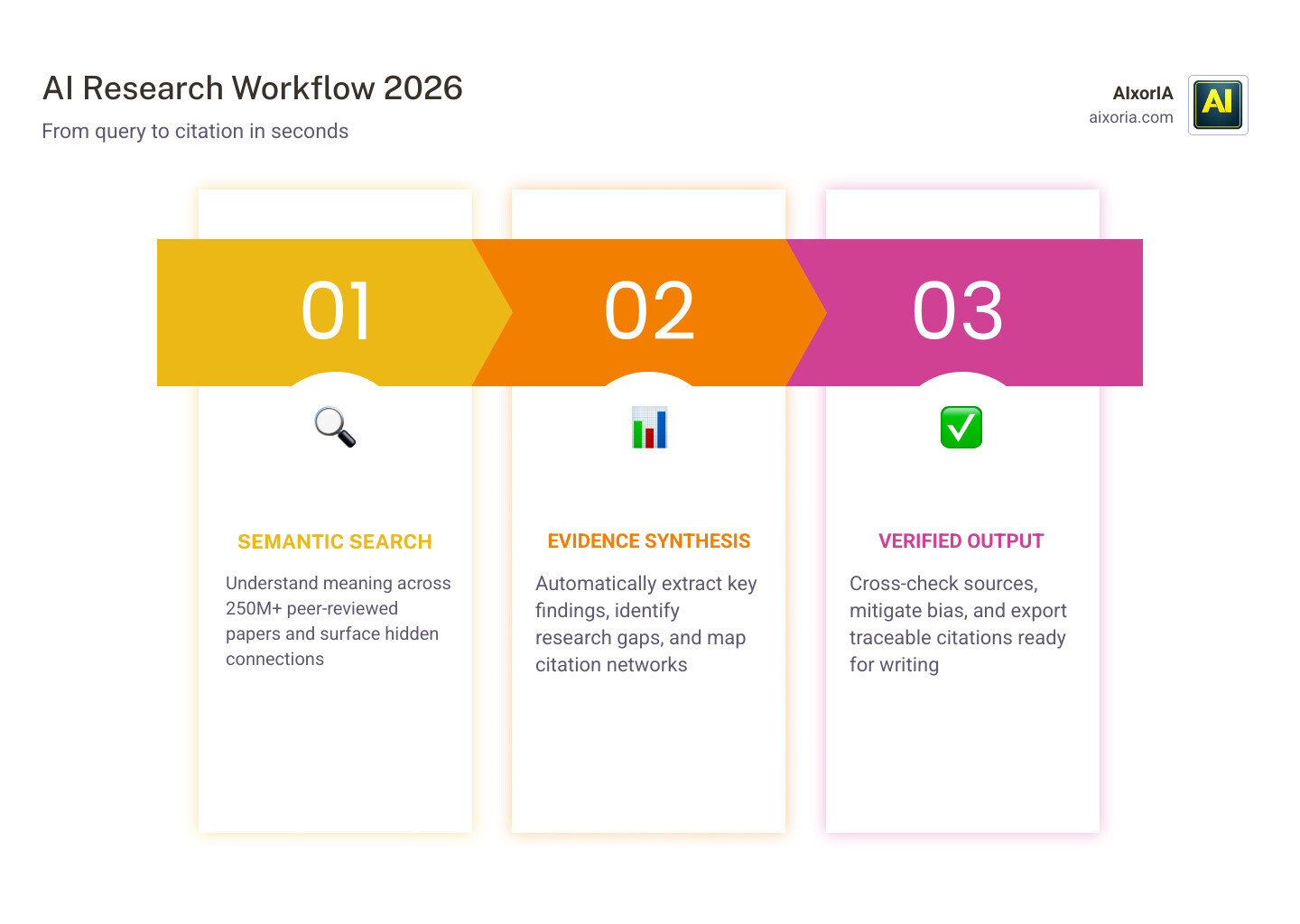
Core Categories of AI Research Tools in 2026
By May 2026, the academic world has largely moved past “generic” AI. We no longer just ask a chatbot to “write a paper.” Instead, we use specialized tools that act as precision instruments. Understanding these categories is the first step in finding the Best AI Tool for Academic Research? for your specific project.
- Literature Discovery & Semantic Search: Unlike Google Scholar, which relies heavily on keywords, these tools use “semantic search.” They understand the meaning of your question. If you ask about the impact of sleep on cognitive load, they find papers that discuss “circadian rhythms” and “working memory” even if those exact words aren’t in your query.
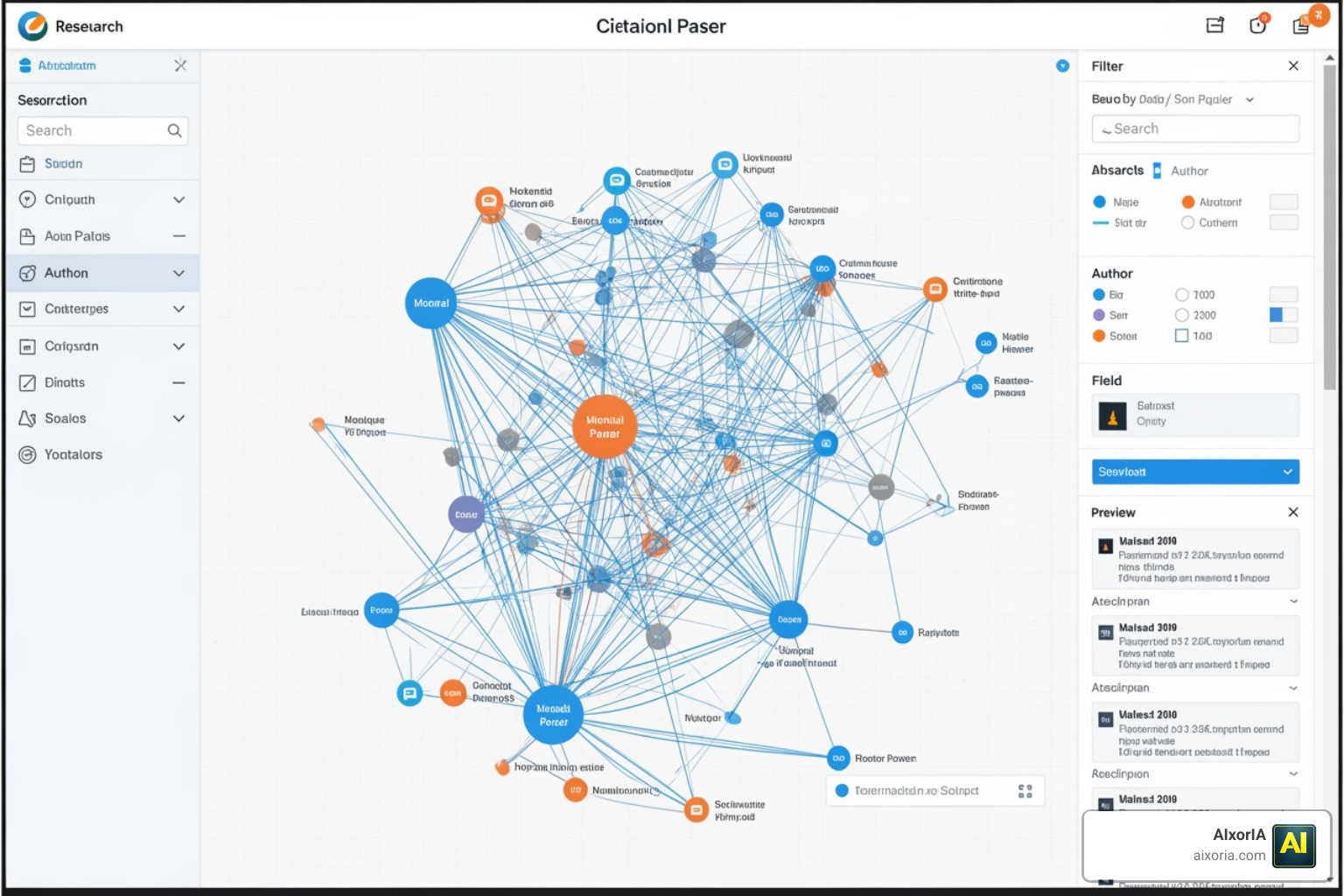
- Citation Mapping: These tools help you visualize how papers are connected. They show you the “ancestry” of an idea, helping you find the seminal works and the newest branches of a research field.
- Automated Summarization & Extraction: These tools read the PDFs for you. They can extract methodology, sample sizes, and key findings into a structured table, which is a lifesaver for systematic reviews.
- Writing Assistance & Feedback: Once the reading is done, these tools help with the “academic tone,” grammar, and citation formatting.
To dive deeper into specific options, you might want to check out our guides on AI tools for literature review 2026 or see how students are adapting with the Best AI writing tools for students in 2026.
Top Contenders: What is the Best AI Tool for Academic Research?
When we look at the heavy hitters, a few names consistently rise to the top. These platforms don’t just “guess”; they connect to massive scholarly databases like Semantic Scholar (which indexes over 229 million papers) and OpenAlex.
| Feature | Elicit | Consensus | SciSpace |
|---|---|---|---|
| Primary Strength | Data extraction & synthesis | Answering specific questions | Comprehensive lit reviews |
| Database Size | 138M+ papers | 220M+ papers | 270M+ documents |
| Best For | Systematic reviews | Quick evidence checks | Students & early researchers |
| Unique Feature | Custom extraction columns | “Consensus Meter” | Integrated AI Copilot for PDFs |
If you are looking for a platform that automates the “busywork” of building a library, Coscholar — AI-Powered Academic Research Assistant for Literature Reviews, Paper Search & Data Analysis is a fantastic option. It extracts research questions, methodologies, and findings, ranking papers by a “Coscholar Score” that considers impact and recency.
For a broader look at the landscape, see our analysis of AI tools for academic research in 2026.
Best AI Tool for Academic Research Discovery and Screening
If your goal is to find the needle in the haystack, Elicit and Consensus are your best friends. Consensus is particularly clever; it acts like a search engine that only talks to 220 million peer-reviewed papers. It can give you a “Yes/No” breakdown of the scientific community’s stance on a topic based on the available evidence.
AnswerThis is another powerful contender, searching across 250 million+ verified papers. It’s often cited as one of the safest choices for researchers who prioritize citation accuracy over raw speed. These tools are much more effective than traditional databases because they don’t just find the paper—they tell you what the paper found.
For those on a budget, we’ve compiled a 5 best free AI tools for students researchers 2026 guide to help you get started without a subscription fee.
Best AI Tool for Academic Research Visualization and Mapping
Sometimes, a list of 50 papers is just overwhelming. This is where citation mapping comes in. Tools like Litmaps, Connected Papers, and ResearchRabbit turn your bibliography into a visual web.
- Litmaps: Excellent for “citation snowballing.” You start with one “seed” paper, and it maps out everything that cited it or was cited by it.
- ResearchRabbit: Often called the “Spotify of research,” it allows you to create collections and then suggests similar papers based on the visual network of your library.
These tools are essential for identifying research gaps—the “empty spaces” in the map where no one has connected two important ideas yet. If you’re just starting your journey, the Best AI tools for students in 2026 guide covers these visualizers in more detail.
Ensuring Reliability: Verification and Hallucination Mitigation
We have to address the elephant in the room: AI can lie. In the academic world, a “hallucinated” citation is a one-way ticket to a failing grade or a retracted paper.
To combat this, modern tools use Retrieval-Augmented Generation (RAG). Instead of the AI making things up from its “memory,” it is forced to look at a specific PDF or database entry first and only summarize what is actually there.
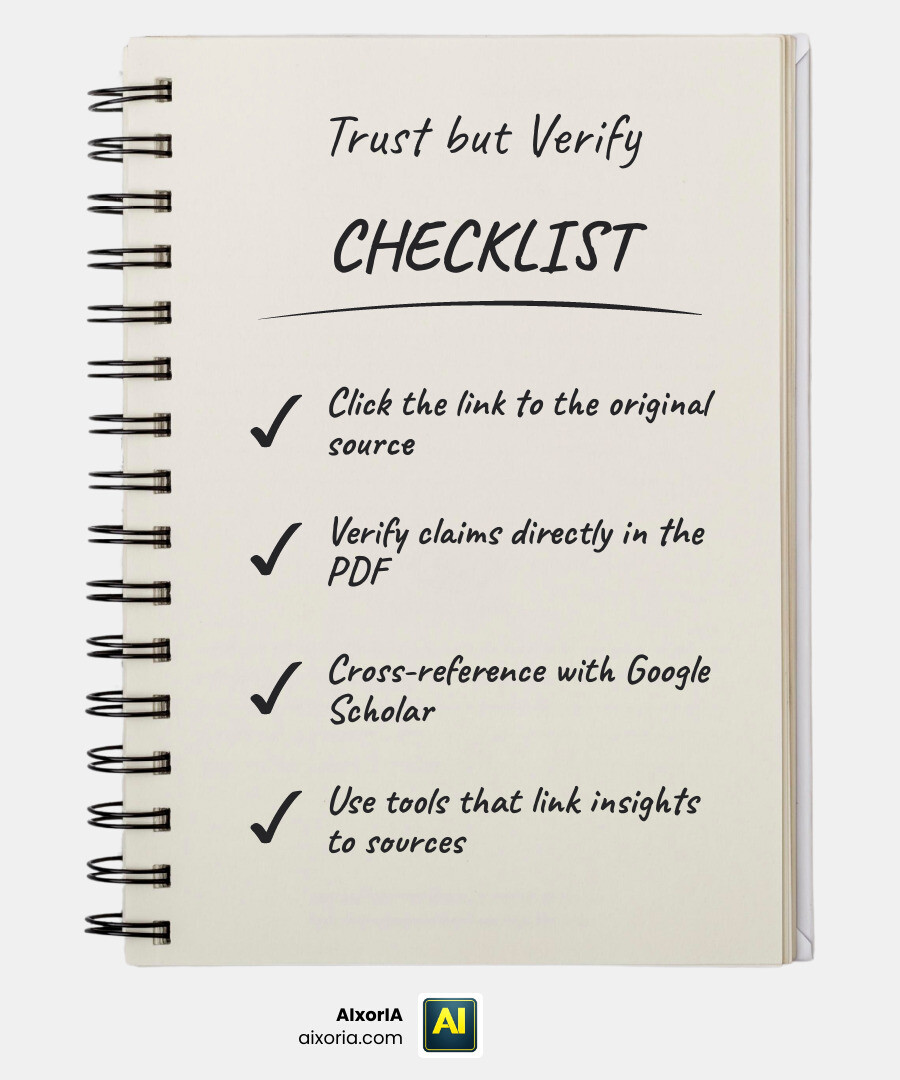
However, even with RAG, we recommend a “Trust but Verify” approach:
- Check the Link: Always click through to the original source.
- Verify the Context: Sometimes an AI says a paper “proves” something when the paper actually says “the results were inconclusive.”
- Cross-Reference: Use a tool like Anara | AI you can trust , which links every insight directly to the original source to eliminate guesswork.
If you’re using AI to help rephrase your findings, make sure you’re using the Best AI paraphrasing tools for academic writing in 2026 to maintain your original meaning while improving clarity.
Emerging Trends: Deep Research and Model Context Protocol
As we move through 2026, two big trends are changing the game: Deep Research and MCP.
Deep Research is a feature where the AI doesn’t just give you a quick answer. It spends 5 to 10 minutes “thinking,” searching through hundreds of sources, and generating a 2,000-word literature review report with structured headings. It’s like having a research assistant who works at lightning speed.
Model Context Protocol (MCP) is an open standard (introduced by Anthropic back in 2024) that allows different AI tools to “talk” to each other securely. This means your citation manager, your PDF reader, and your writing tool can all share the same context without you having to copy-paste everything.
For those looking for free ways to experiment with these high-level features, check out the Best AI tools for essay writing free in 2026.
Frequently Asked Questions about AI Research Tools
What is Deep Research in academic AI?
Deep Research is an advanced agentic feature. Instead of a simple search, the AI performs a multi-step process: it searches for papers, reads them, identifies new keywords based on what it read, searches again, and then synthesizes everything into a comprehensive report. It is designed for high-level synthesis rather than quick facts.
How do I verify AI-generated academic citations?
The best way is to use the “one-click” verification features found in tools like SciSpace or Consensus. Always ensure the citation includes a valid DOI (Digital Object Identifier). If you’re unsure, paste the title into Google Scholar or your university library database to confirm the paper actually exists and says what the AI claims it says.
Are free AI research tools sufficient for a PhD?
Free versions are great for discovery, but they often have “caps” on how many papers they can analyze at once. For a PhD-level systematic review, the premium versions of Elicit or SciSpace are usually worth the investment because they allow for unlimited data extraction and deeper analysis of full-text PDFs rather than just abstracts.
Conclusion
The best AI tool for academic research isn’t a magic button that writes your thesis for you. It’s a powerful set of binoculars that helps you see the vast landscape of human knowledge more clearly. Whether you’re using Consensus to find quick answers, Litmaps to visualize your field, or Elicit to extract data, these tools are here to augment your intelligence, not replace it.
At AIxorIA, we know that keeping up with these tools can be a full-time job. That’s why we offer custom AI solutions, tool training workshops, and performance audits to help you (or your institution) stay at the cutting edge. We believe in providing simple, affordable help to make technology work for you.
Ready to level up your research workflow? Explore our deeper dive into What is the best AI tool for academic research? or visit us at https://aixoria.com/ to see how we can help you master the future of academic work.
1 thought on “Best AI Tool for Academic Research in 2026: Top Tools Revealed”