CWhat Are the Top 20 Life Insurance Companies by Market Share in 2026?
Scr0ll d0wn to D0VVNL0AD
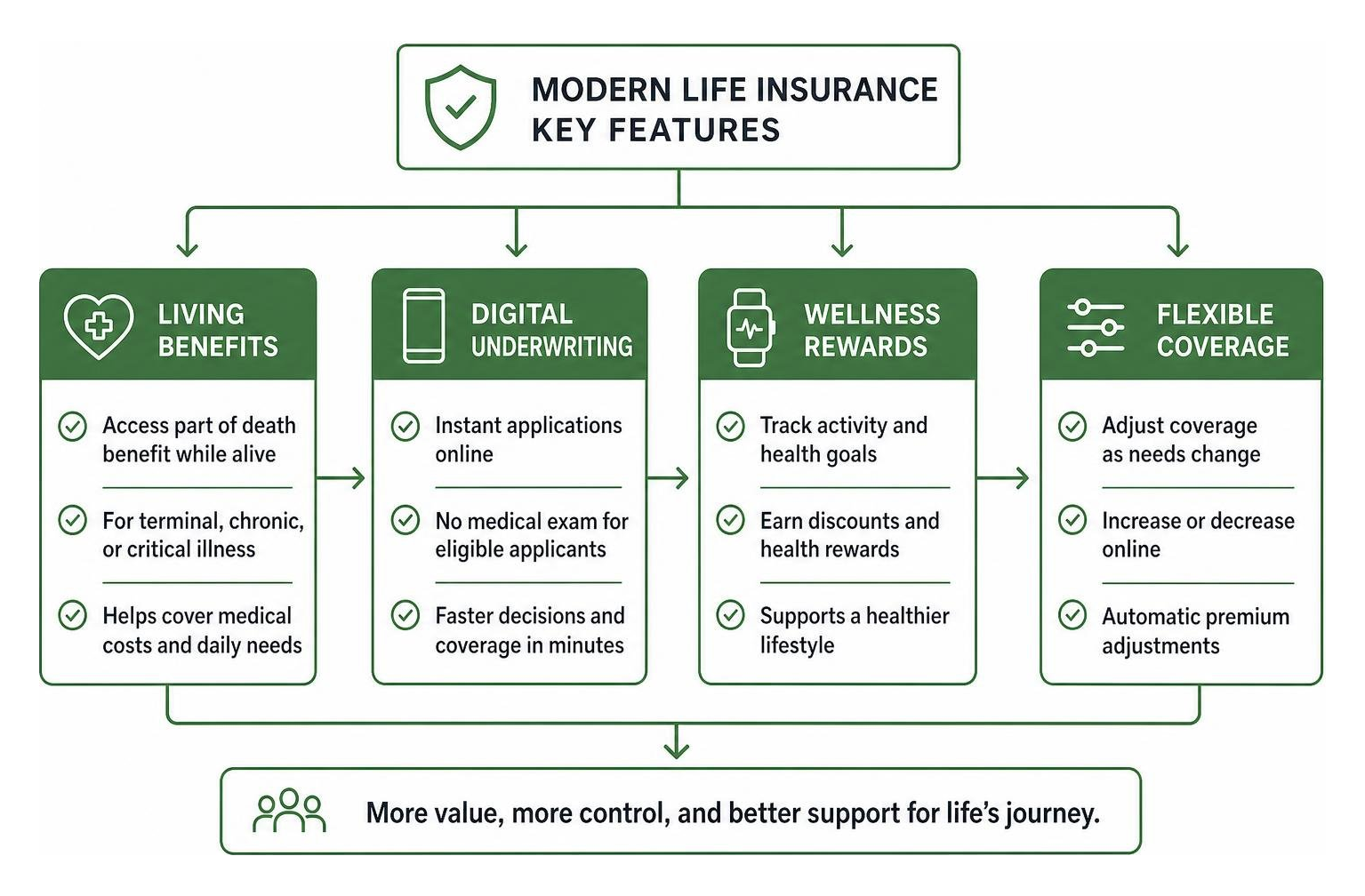
For Aixoria readers, life insurance is also a useful example of how data, automation, digital underwriting, and AI-assisted risk analysis are reshaping traditional financial services. The largest insurers are not only competing on premiums and financial strength, but also on faster applications, automated approvals, wellness data integrations, and digital policy management.
When consumers ask what are the top 20 life insurance companies?, market share is usually the first place to look. Market share reflects direct written premiums – the total amount of money policyholders pay into a company’s life insurance products over a given year.
In 2026, the U.S. life insurance market remains highly concentrated. The top 20 life insurance companies account for nearly 90% of the industry’s overall market share, while the top five carriers alone command roughly 30% of the entire market.
New York Life Group holds the leading market share position at 7.40%, followed closely by Northwestern Mutual at 6.75% to 6.80%, and MetLife (Metropolitan Group) at 6.19%. Mutual companies and legacy financial institutions dominate the top tier because they manage massive blocks of permanent policies that generate steady recurring premiums year after year.
Here is how the largest life insurers compare across market share, total admitted assets, and coverage in force based on aggregated industry rankings:
| Life Insurance Carrier | Market Share (%) | Total Assets (USD) | Primary Strength / Specialty | AM Best Financial Rating |
|---|---|---|---|---|
| New York Life | 7.40% | ~$400B+ | Whole Life & Senior Options | A++ (Superior) |
| Northwestern Mutual | 6.75% | ~$340B+ | Cash Value Growth & Dividends | A++ (Superior) |
| MetLife | 6.19% | ~$420B+ | Active Coverage in Force ($4.09T) | A+ (Superior) |
| Prudential Financial | 5.97% | $531.5B | Total Asset Management & Living Benefits | A+ (Superior) |
| Lincoln Financial | 4.36% | ~$300B+ | Universal & Estate Planning Policies | A+ (Superior) |
| MassMutual | 4.35% | ~$320B+ | Whole Life Guarantees & Dividends | A++ (Superior) |
| State Farm | ~3.50% | ~$100B+ | Individual Policy Volume & Service | A++ (Superior) |
| Nationwide | ~3.10% | ~$250B+ | Product Variety & Multi-Policy Bundles | A+ (Superior) |
| Guardian Life | 2.34% | ~$80B+ | Impaired Risk & Underwriting Flexibility | A++ (Superior) |
| Pacific Life | ~2.20% | ~$190B+ | Indexed Universal Life & Policy Caps | A+ (Superior) |
| Mutual of Omaha | ~2.10% | ~$50B+ | Senior Burial & Guaranteed Issue | A+ (Superior) |
| Aflac | ~1.90% | ~$130B+ | Supplemental Life & Payroll Deductions | A+ (Superior) |
| Transamerica | ~1.85% | ~$150B+ | Flexible Term & Universal Options | A (Excellent) |
| John Hancock | ~1.80% | ~$160B+ | Vitality Wellness Program Discounts | A+ (Superior) |
| Globe Life | ~1.75% | ~$25B+ | Direct-to-Consumer & Direct Mail Term | A (Excellent) |
| Protective Life | ~1.65% | ~$130B+ | Competitive 30-Year Term Pricing | A+ (Superior) |
| Banner Life (L&G) | ~1.60% | ~$50B+ | Low-Cost Term Life Insurance | A+ (Superior) |
| Ameritas | ~1.50% | ~$25B+ | Whole Life Dividends & Dental Bundles | A (Excellent) |
| Brighthouse Financial | ~1.45% | ~$220B+ | Annuities & Variable Life Products | A (Excellent) |
| Equitable Holdings | 1.41% | ~$230B+ | Financial Advisory & Universal Life | A (Excellent) |
What Are the Top 20 Life Insurance Companies for Term and Permanent Coverage?
While overall market share gives a bird’s-eye view of carrier size, individual policy categories reveal starkly different market leaders. A carrier that leads in total annualized premium may sell primarily whole life policies, while another provider might issue the highest raw number of individual policies through affordable term life insurance.
According to sales data tracking retail life insurance:
- Term Life Leaders: Banner Life (Legal & General America) and State Farm lead in individual term life sales. Banner Life captures market share through competitive pricing on 20-year and 30-year terms, while State Farm issues the highest total count of individual policies – issuing over 255,000 policies in early 2026 alone.
- Whole Life Leaders: Northwestern Mutual and New York Life dominate whole life sales. Whole life insurance accounts for approximately 39% of all new annualized premiums in the U.S. individual market, and these mutual giants command nearly 60% of that specific market segment.
- Universal Life Leaders: Pacific Life dominates the Indexed Universal Life (IUL) category, commanding high market share for policyholders seeking cash accumulation linked to market indices. Prudential Financial and Lincoln Financial maintain top positions in Fixed and Variable Universal Life (VUL) sales.
Key Features of What Are the Top 20 Life Insurance Companies Offering Today
The top 20 life insurers have evolved beyond simple death benefit payouts. Today’s market leaders compete heavily on technology, policy flexibility, and living benefits that policyholders can use while still alive.
Key innovations offered by modern industry leaders include:
- Accelerated Death Benefits (Living Benefits): Carriers like Prudential and Transamerica allow policyholders to access 25% to 80% of their policy’s death benefit early if diagnosed with a terminal, chronic, or critical illness.
- Interactive Wellness Programs: John Hancock’s Vitality program integrates with smartwatches and fitness trackers. Policyholders earn premium discounts, gift cards, and health rewards by logging daily steps and physical checkups.
- Digital Underwriting and Instant Approval: Automated underwriting algorithms allow healthy applicants aged 18 to 60 to secure up to $1 million to $3 million in term coverage within minutes, skipping traditional blood draws and physical exams entirely.
- Flexible Coverage Adjustments: Insurers like Ladder and USAA allow policyholders to scale their coverage amounts up or down online as their financial needs change, such as paying down a mortgage or putting kids through college, adjusting premiums automatically without re-underwriting.
Key Financial Metrics: Market Share, Total Assets, and Policies in Force
Evaluating an insurance company requires looking at several financial dimensions. Measuring a company solely by market share can be misleading if you do not also consider balance sheet strength, admitted assets, and total coverage in force.

From a technology and analytics perspective, these metrics also explain why large insurers have the resources to invest in modern data platforms, automated underwriting systems, customer portals, and fraud-detection tools. Scale does not guarantee the best policy for every consumer, but it often gives carriers more capacity to modernize the policyholder experience.
Three primary metrics define an insurer’s scale:
- Direct Written Premiums (Market Share): Total premium dollars collected from policyholders in a calendar year.
- Total Admitted Assets: The investment portfolio backing policyholder obligations. Prudential Financial leads the industry in total assets managed at over $531 billion, ensuring deep capital reserves to weather economic downturns.
- Coverage in Force: The cumulative dollar value of all active death benefits a company is currently contracted to pay. MetLife tops this metric with approximately $4.09 trillion in life coverage active across the globe.
Mutual vs Publicly Traded Life Insurers
When evaluating the top 20 companies, you will notice a fundamental structural divide: mutual life insurance companies versus publicly traded (stock) life insurance companies.
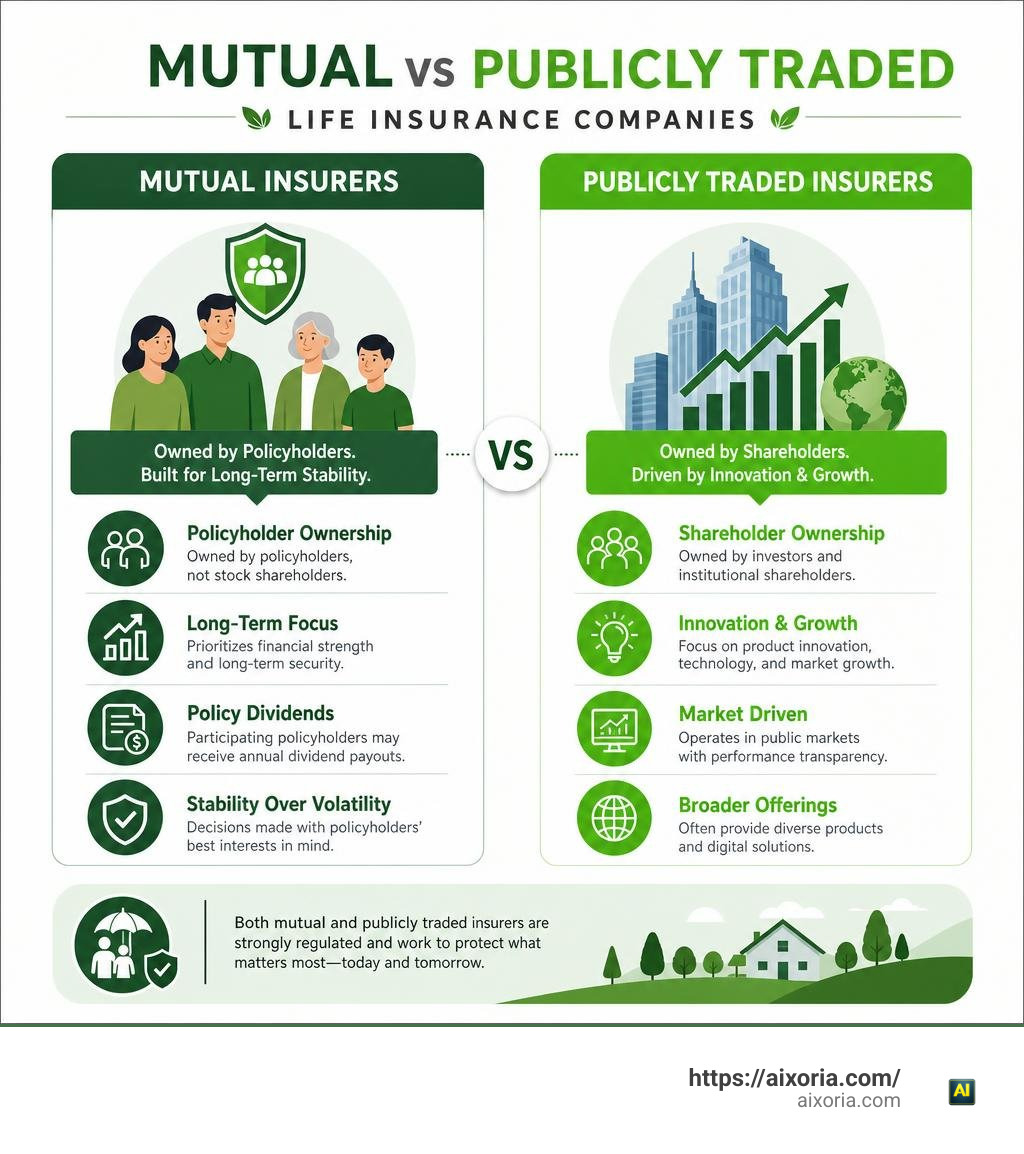
- Mutual Insurers (e.g., New York Life, Northwestern Mutual, MassMutual, Guardian Life): These carriers are owned directly by their policyholders rather than stock shareholders. Because they do not answer to Wall Street earnings demands, mutual insurers prioritize long-term capital stability. Participating policyholders are eligible to receive annual dividend payouts based on company earnings. Northwestern Mutual, for example, has paid policy dividends uninterrupted every year since 1872.
- Publicly Traded Insurers (e.g., MetLife, Prudential, Lincoln Financial, Equitable): These carriers are owned by private and institutional stock shareholders. They trade on public stock exchanges and focus on product innovation, competitive term pricing, and diverse financial services. Public stock carriers often offer broader digital tools and wider investment choices within variable universal life policies.
Customer Satisfaction and NAIC Complaint Ratios
Financial strength guarantees that a company can pay a claim, but customer satisfaction scores show how easy they make the process for grieving beneficiaries.
The National Association of Insurance Commissioners (NAIC) tracks consumer complaint ratios across all U.S. carriers. The national average baseline ratio is set at 1.00. A ratio below 1.00 means a company received fewer complaints than average for its size, while a score above 1.00 indicates a higher-than-average complaint volume.
Digital service quality now plays a growing role in these satisfaction outcomes. Online beneficiary forms, automated claim status updates, secure document uploads, and faster identity verification can reduce friction during stressful claim situations.
- Lowest Complaint Ratios: Northwestern Mutual, State Farm, and MassMutual consistently record NAIC complaint ratios below 0.50, demonstrating high customer satisfaction and low dispute rates on claims. State Farm also frequently ranks highest in J.D. Power individual life insurance customer satisfaction studies due to its extensive local agent network.
- Higher Complaint Ratios: Direct-to-consumer carriers or insurers specializing in guaranteed-issue senior policies sometimes register higher complaint ratios, ranging from 1.10 to 1.80, due to strict initial waiting periods or confusion surrounding graded death benefits.
Best Life Insurance Companies for Specific Coverage Needs
No single life insurance carrier is the perfect choice for every consumer. The ideal company depends on your age, health status, budget, and long-term financial goals.

This is where modern comparison tools and data-driven underwriting can be especially useful. Online quote engines, automated health-data checks, and digital application workflows make it easier to compare carriers by policy type instead of relying only on brand recognition.
Top Insurers for Term Life and Instant No-Exam Policies
Term life insurance is the most straightforward and affordable type of coverage. It provides protection for a set period, usually 10 to 30 years, and pays a tax-free cash benefit if you pass away during the term.
For a healthy 40-year-old nonsmoker, a $500,000, 20-year term policy costs an average of $26 per month. However, rates vary significantly across top carriers:
- Best overall value for term: State Farm, with sample rates starting around $18 to $20/month for healthy young adults, and Banner Life (Legal & General America), which specializes in lower rates for longer term limits.
- Best for instant no-exam coverage: Lemonade and Pacific Life. Digital platforms utilize algorithmic underwriting to approve term policies up to $1.5 million or $3 million in minutes without requiring medical exams, blood draws, or physical visits for healthy applicants.
Best Whole Life and Universal Life Providers for Cash Value
Permanent life insurance, such as whole life or indexed universal life (IUL), lasts your entire lifetime as long as premiums are paid, combining a death benefit with an accumulating cash value component.
- Best for whole life dividends: MassMutual, New York Life, and Northwestern Mutual. MassMutual offers strong guaranteed cash value growth rates, often 2.00% to 3.75%, alongside steady policyholder dividends, making it a favorite for long-term wealth building and estate planning.
- Best for universal life flexibility: Pacific Life and Lincoln Financial. Pacific Life is a market leader in Indexed Universal Life (IUL), allowing policyholders to tie cash growth to underlying market indexes like the S&P 500 with guaranteed downside floors to prevent loss of principal.
Leading Providers for Seniors and Special Health Conditions
As we age or manage chronic health conditions, securing traditional life insurance can become more difficult or expensive. Fortunately, specialized insurers cater directly to these demographics:
- Best for seniors and final expenses: Mutual of Omaha and Globe Life. Mutual of Omaha offers guaranteed-issue whole life policies for applicants aged 50 to 85 with no medical questions or health exams required. These policies provide $2,000 to $25,000 in coverage intended to pay for end-of-life expenses and burial costs.
- Best for pre-existing medical conditions: Guardian Life and Prudential. Guardian Life stands out in the market for offering accessible term underwriting guidelines for applicants living with pre-existing conditions like HIV or diabetes, while Prudential offers favorable risk assessment for applicants with controlled high blood pressure, sleep apnea, or past cancer recovery.
How to Evaluate and Choose the Right Life Insurance Provider
Choosing from among the top 20 life insurance carriers does not have to be overwhelming. Following a structured step-by-step process ensures you select an insurer that fits your long-term financial strategy.
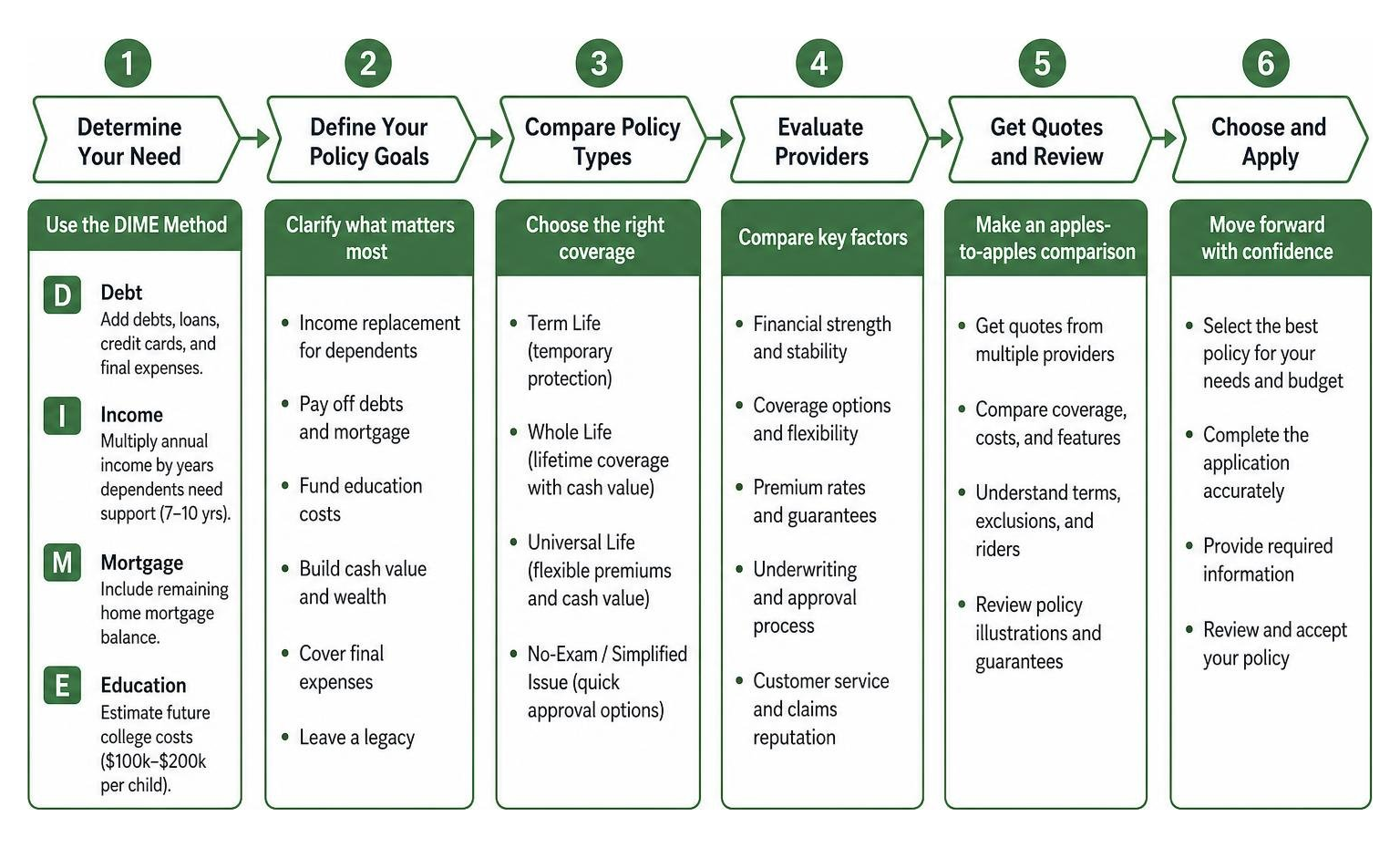
Modern insurance shopping is increasingly digital, but the core evaluation process remains the same: calculate your need, verify the company’s strength, compare transparent quotes, and understand how underwriting decisions are made.
- Calculate Your Exact Need Using the DIME Method:
- D (Debt): Add up all personal debts, credit cards, auto loans, and final medical expenses.
- I (Income): Multiply your annual income by the number of years your dependents will need support, typically 7 to 10 years.
- M (Mortgage): Calculate the remaining balance on your home mortgage.
- E (Education): Estimate future college tuition costs for your children, such as $100,000 to $200,000 per child.
- Verify Financial Strength Ratings: Always choose carriers with an AM Best financial strength rating of A (Excellent), A+ (Superior), or A++ (Superior). This helps confirm the company has sufficient financial reserves to pay out your policy decades down the road.
- Check Customer Complaint Data: Search the NAIC complaint index to ensure the carrier resolves claims efficiently and treats beneficiaries fairly.
- Compare Apples-to-Apples Quotes: Premium rates for identical applicants can vary by 30% to 50% between top carriers. Get quotes from at least three different providers for the exact same term length and death benefit amount before applying.
- Review the Digital Experience: If you prefer online account access, fast underwriting, electronic signatures, and automated policy servicing, compare each carrier’s digital tools before choosing. Convenience should not replace financial strength, but it can make policy management much easier over time.
Frequently Asked Questions About Life Insurance Companies
Which life insurance company holds the largest market share in 2026?
New York Life Insurance Group holds the largest overall market share in the U.S. life insurance market at 7.40%, followed closely by Northwestern Mutual (6.75%–6.80%) and MetLife (6.19%). However, when evaluating companies by total admitted assets, Prudential Financial leads with $531.5 billion, while MetLife leads in total life insurance coverage in force at $4.09 trillion.
What is the main difference between a mutual and stock life insurance company?
A mutual life insurance company (like New York Life, Northwestern Mutual, MassMutual, or Guardian) is owned entirely by its policyholders. Any surplus profits are redistributed to eligible policyholders as annual dividends. A stock life insurance company (like MetLife or Prudential) is owned by public stock investors, with profits distributed to equity shareholders. Mutual carriers generally focus on permanent whole life policies, while stock insurers often excel in low-cost term life and broad investment options.
How much does a standard 20-year term life insurance policy cost?
For a 40-year-old nonsmoking individual in excellent health, a 20-year term life insurance policy with a $500,000 death benefit costs an average of $26 per month. Younger, healthy applicants aged 25 to 30 can often secure the same $500,000 coverage limit for $15 to $18 per month through carriers like State Farm, Banner Life, or digital platforms.
Conclusion
Securing life insurance is one of the most effective steps you can take to protect your family’s financial future. While asking what are the top 20 life insurance companies? points you toward industry leaders like New York Life, Northwestern Mutual, MetLife, and MassMutual, the largest company is not automatically the best choice for your personal circumstances.
“https://www.mediafire.com/file/dyfrhs16xs012o0/The_Dawn_Era_1.2.1_BY_MCMPDL.mcaddon/file“;
If you are looking for simple, affordable family protection, a 20-year or 30-year term policy from a high-rated carrier like State Farm or Banner Life may be ideal. If you want cash value growth, estate planning, and annual dividends, mutual giants like MassMutual or Northwestern Mutual are hard to beat. Seniors needing quick final expense coverage can turn to trusted providers like Mutual of Omaha.
For Aixoria readers, the broader takeaway is that life insurance is becoming a technology-driven financial product. Digital underwriting, automated risk analysis, wellness data, online quote engines, and faster claims tools are changing how consumers compare and manage coverage. As financial services and insurance underwriting continue to evolve alongside digital automation and advanced data analytics, staying informed is essential.
To explore how technology and modern tools are reshaping industries, discover the latest AI and technology updates at Aixoria today. Take the time to calculate your coverage needs, compare multiple quotes, and choose a carrier that provides lasting financial peace of mind.