What Is Direct General Liability Auto Insurance? (And Why the Term Confuses Everyone)
Scr0ll d0wn to D0VVNL0AD
What is direct general liability auto insurance is one of those search terms that looks simple but actually blends two very different insurance concepts into one phrase. Before you read further, here is a quick answer:
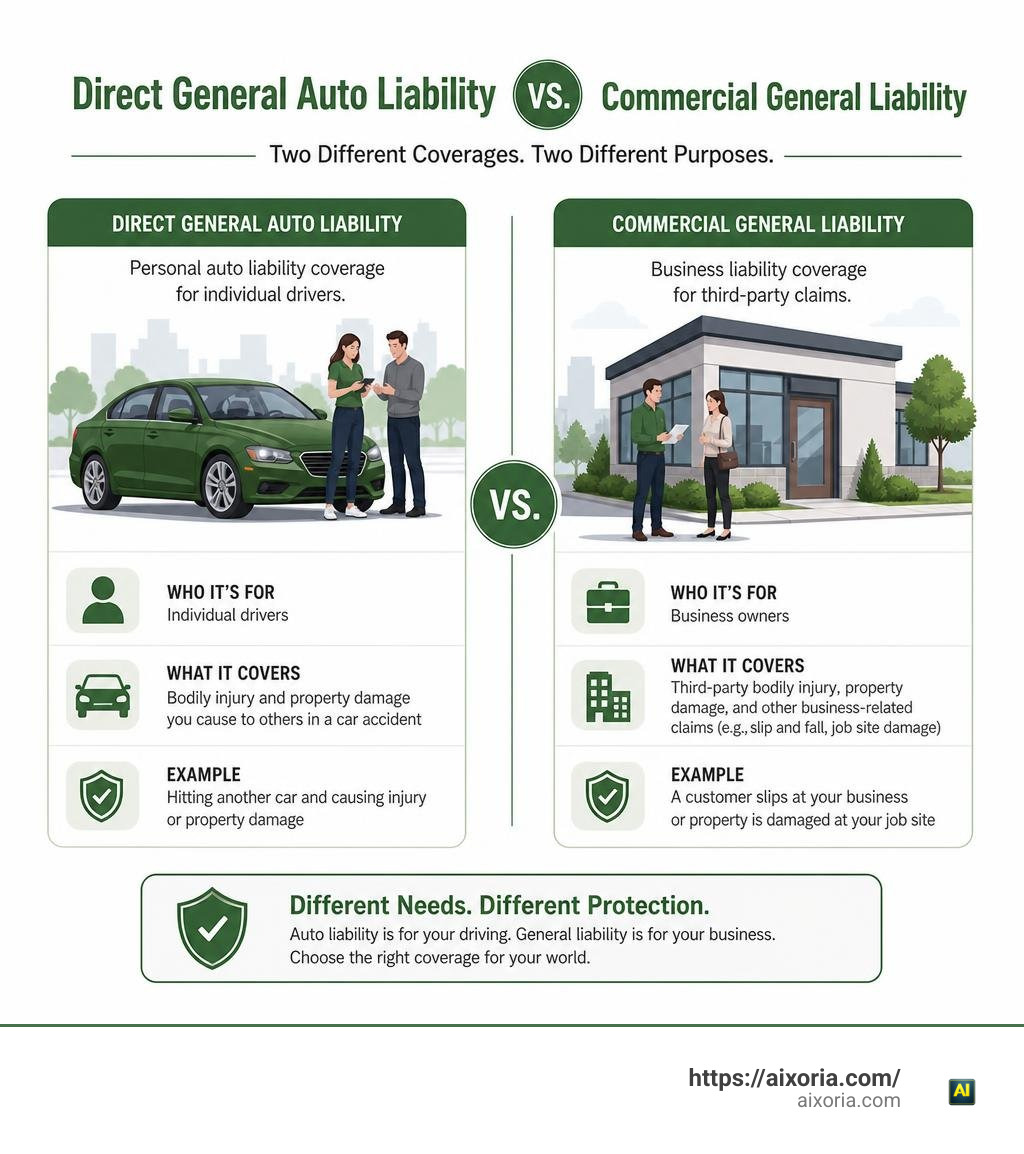
Direct General liability auto insurance refers to the auto liability coverage offered by Direct General Insurance (also known as Direct Auto) — a company that sells personal car insurance policies directly to drivers, including high-risk drivers. It is not the same as commercial general liability (CGL) insurance, which protects businesses from third-party claims.
Here is a simple breakdown of the two concepts the term can refer to:

| Term | What It Means | Who Needs It |
|---|---|---|
| Direct General auto liability | Personal auto liability coverage sold by Direct Auto/Direct General Insurance | Individual drivers |
| General liability insurance | Business insurance covering third-party bodily injury and property damage | Business owners |
| Commercial auto liability | Liability coverage for vehicles used for business purposes | Businesses with vehicles |
The confusion is understandable. The word “general” appears in both the company name (Direct General Insurance) and the type of coverage (general liability insurance). They are completely separate things.
- Auto liability insurance covers damage or injuries you cause to others in a car accident.
- Commercial general liability (CGL) covers a business against slip-and-fall claims, property damage at a job site, and similar third-party losses.
Neither covers your own vehicle repairs or your own medical bills.
This guide will untangle the terminology, explain exactly what each type of coverage does, and help you figure out which one applies to your situation.
What Is Direct General Liability Auto Insurance?

When people search for the phrase what is direct general liability auto insurance, they are usually experiencing a classic case of insurance “term conflation.” In the insurance industry, terms are often mashed together by search engines, leading to confusion.
To clear this up, we have to look at the two distinct paths this term can take: the personal auto insurance path (associated with the brand Direct General) and the commercial business path (associated with commercial general liability).
Direct General Insurance Agency, Inc. (commonly known today as Direct Auto Insurance) is a well-known insurance provider founded in 1991. The company specializes in providing non-standard personal auto insurance. This means they focus on coverage for drivers who might find it difficult to get insured elsewhere due to a history of violations, lapses in coverage, or poor credit.
When you purchase a basic policy from them, you are getting a direct-to-consumer auto liability policy. Over time, because the company’s legal name was Direct General, consumers naturally began searching for “Direct General liability auto insurance,” mixing up the company’s name with the standard commercial term “general liability.”
For a comprehensive breakdown of the company’s background, structure, and offerings, you can read our detailed Direct General Auto Insurance Guide. Understanding this distinction prevents you from accidentally buying a personal auto policy when what your business actually needs is a commercial general liability framework.
Demystifying the Term: What is Direct General Liability Auto Insurance in Personal Lines?
In personal lines, if you hear someone refer to “direct general liability auto insurance,” they are talking about personal auto liability coverage purchased directly from an insurer like Direct Auto.
This type of insurance is a legal requirement in almost every state. Its primary job is to protect your personal assets if you cause an accident that injures another person or damages their property. It is called “direct” because you buy it directly from the carrier (either online, over the phone, or at one of their physical store locations) rather than through an independent insurance broker who represents multiple companies.
Under a standard personal auto liability policy, the coverage is split into two primary components:
- Bodily Injury (BI) Liability: Pays for medical bills, lost wages, and legal defense costs if you injure someone else in an accident.
- Property Damage (PD) Liability: Pays to repair or replace another person’s property (their car, fence, mailbox, or building) that you damage with your vehicle.
If you have questions about how these coverages apply to your daily driving, the Direct Auto Insurance FAQ offers clear answers to common policyholder questions. Additionally, for those who want to see what a standard policy contract actually looks like, you can review this sample Personal Auto Policy document to understand the exact legal terms and exclusions.
For high-risk drivers, these direct policies are incredibly important. If you have been convicted of a DUI, have multiple speeding tickets, or let your previous insurance lapse, standard carriers might reject you. Providers like Direct Auto specialize in these scenarios, often helping drivers file SR-22 certificates to prove financial responsibility to the state and keep their driving privileges. You can read a complete analysis of their customer service track record and policy options in our Direct General Insurance Review & Complaints article.
Commercial Context: What is Direct General Liability Auto Insurance for Businesses?
If you are a business owner, searching for what is direct general liability auto insurance takes on a completely different meaning. In the commercial world, there is no single policy called “general liability auto insurance.” Instead, businesses must manage two separate risks: general premises liability and commercial auto liability.
Commercial General Liability (CGL) is the foundation of business insurance. It covers third-party claims of bodily injury or property damage that occur on your business premises or as a result of your daily operations. For example, if a customer slips on a wet floor in your retail shop, CGL handles the medical bills and legal defense. However, CGL explicitly excludes auto accidents.
If your business uses vehicles—whether it is a single delivery van or a fleet of service trucks—you need Commercial Auto Liability. This policy covers bodily injury and property damage claims resulting from accidents involving business-owned vehicles.
To help you visualize how these two coverages work side-by-side, look at this comparison:
| Coverage Feature | Commercial General Liability (CGL) | Commercial Auto Liability |
|---|---|---|
| Primary Focus | Slip-and-falls, product defects, advertising injuries, and general operations. | Accidents involving vehicles used for business purposes. |
| Location of Risk | On your business premises or active job sites. | On public roads and highways. |
| Typical Exclusions | Auto accidents, employee injuries (covered by Workers’ Comp). | Non-auto slip-and-falls, professional errors. |
| Key Addition | Often bundled into a Business Owner’s Policy (BOP). | Can include Hired and Non-Owned Auto (HNOA) coverage. |
What happens if your employees drive their personal cars to run business errands? This is where Hired and Non-Owned Auto (HNOA) insurance comes in. HNOA is an endorsement that can be added to your CGL or commercial auto policy. It protects your business if an employee gets into an accident while driving their personal vehicle for work-related tasks, such as picking up office supplies or delivering a package.
Key Coverages: Bodily Injury vs. Property Damage Liability
To truly understand any auto liability policy, you have to break down its two core pillars: Bodily Injury (BI) and Property Damage (PD). These are the coverages that keep you out of financial ruin if you are found at fault in an auto accident.
When you look at your insurance policy’s declarations page, you will usually see these coverages expressed as “split limits”—for example, 25/50/25. This shorthand represents the maximum amounts your insurer will pay in different scenarios:
- $25,000 Bodily Injury Per Person: The maximum amount the policy will pay for injuries to a single person in an accident you caused.
- $50,000 Bodily Injury Per Accident: The total maximum amount the policy will pay for all injured parties combined in a single accident.
- $25,000 Property Damage Per Accident: The maximum amount the policy will pay to repair or replace damaged property (vehicles, structures, etc.) in a single accident.
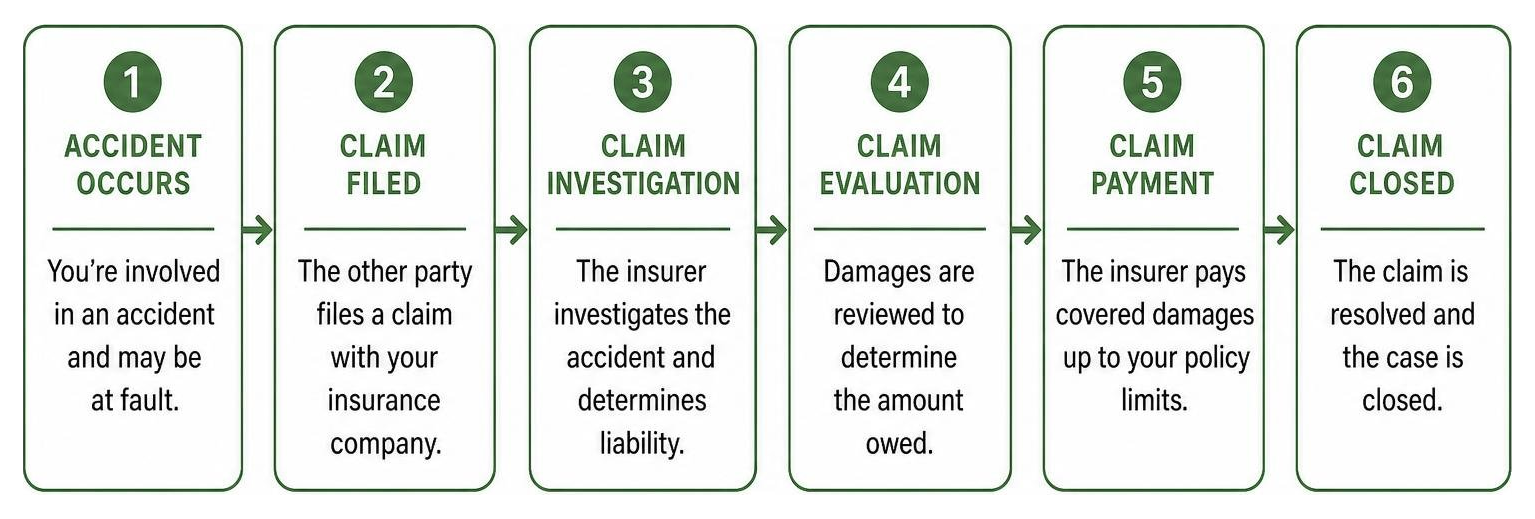
To understand how these limits flow in a real accident, review this step-by-step sequence of a liability claim:
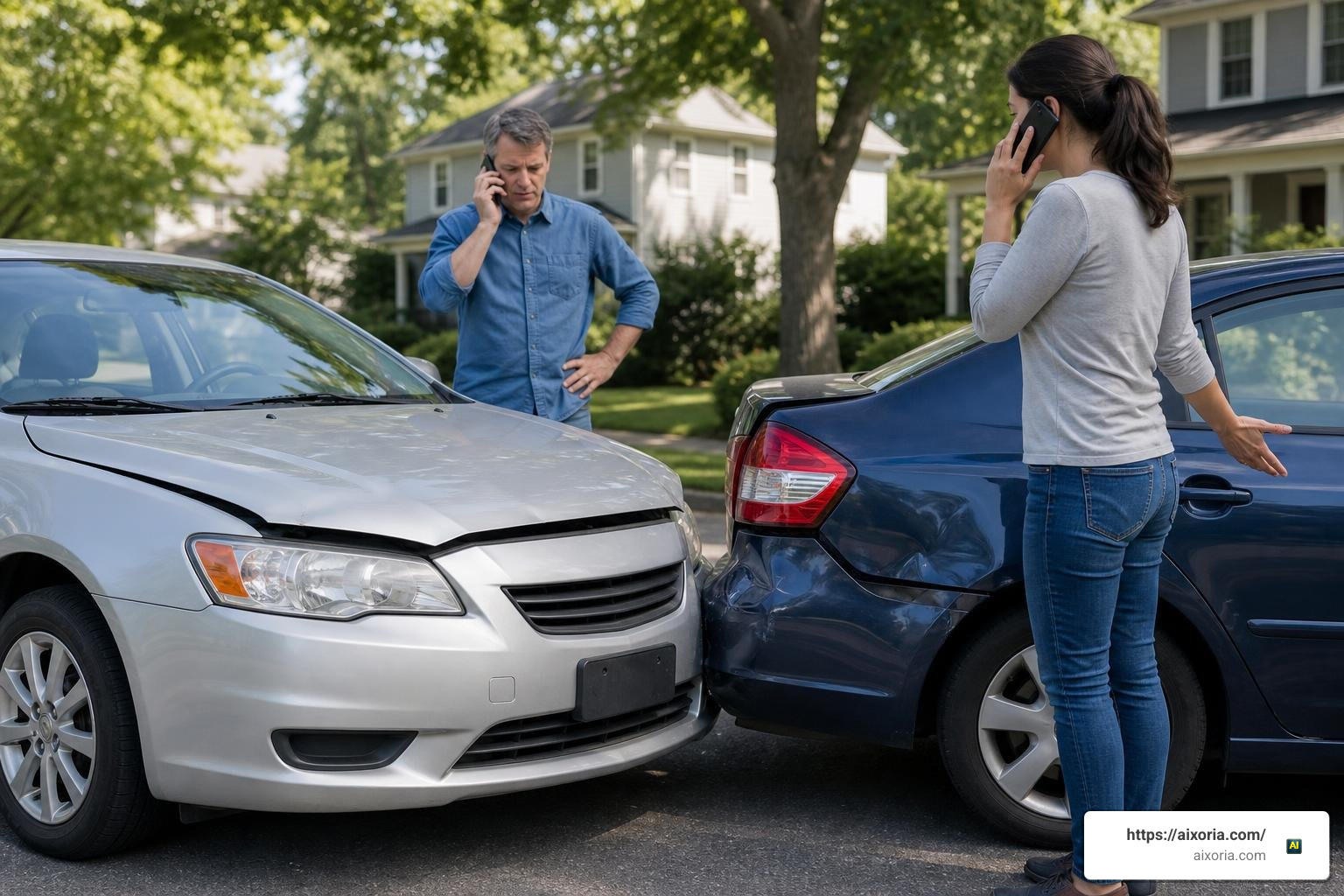
Let’s look at a real-world example. Imagine you rear-end another car. The driver of that car suffers a minor neck injury, and their passenger has a broken wrist. The driver’s medical bills come to $10,000, and the passenger’s bills total $15,000.
Because both individual claims are under the $25,000 per-person limit, and the combined total ($25,000) is well under the $50,000 per-accident limit, your bodily injury liability covers the costs entirely. If the repairs to their car cost $8,000, your property damage liability easily covers that as well, since it is under your $25,000 limit.
However, if you cause a severe accident where medical bills exceed your limits, you are personally responsible for the remaining balance. This is why relying solely on state-mandated minimum limits can be incredibly risky.
Another important feature to look for in your policy is out-of-state coverage. If you drive your vehicle into a neighboring state that requires higher minimum liability limits than your home state, a standard auto policy will automatically scale up your coverage limits to match that state’s legal minimums while you are driving there. For a look at how these legal obligations are structured on paper, you can review this sample Arkansas Personal Automobile Policy to see how state-specific guidelines are formally written into a policy.
Liability-Only vs. Full Coverage Auto Insurance
One of the biggest decisions you will make when setting up your policy is choosing between a “liability-only” policy and a “full coverage” policy.
First, let’s bust an industry myth: there is actually no official insurance product called “full coverage.” In the insurance world, full coverage is simply a colloquial term used to describe a policy that bundles state-required liability insurance with physical damage coverages—specifically collision and comprehensive.
- Collision Coverage: Pays to repair or replace your own vehicle if it is damaged in an accident with another car or an object (like a tree or guardrail), regardless of who is at fault.
- Comprehensive Coverage: Pays for damage to your vehicle caused by events outside of your control. This includes theft, vandalism, fire, animal strikes, hail, or windshield damage from road debris.
Deciding whether to go with liability-only or full coverage usually comes down to three main factors:
- Vehicle Value: If you drive an older car with a low market value, paying for collision and comprehensive coverage might not make financial sense. If your annual premium for physical damage coverage plus your deductible is close to the actual cash value of your car, a liability-only policy is often the smartest financial choice.
- Financing and Leasing Requirements: If you lease or finance your vehicle, your lender will almost certainly require you to carry physical damage coverage (collision and comprehensive) with a maximum deductible (usually $500 or $1,000) to protect their financial investment.
- Out-of-Pocket Risk Tolerance: If your car is totaled tomorrow, do you have enough money saved to buy a replacement vehicle out-of-pocket? If the answer is no, carrying full coverage is highly recommended.
For high-risk drivers, the price difference between liability-only and full coverage can be substantial. Because non-standard insurers take on more risk, their physical damage premiums are higher. Balancing your budget while ensuring you have enough protection to avoid catastrophic out-of-pocket expenses is a key part of smart risk management.
Frequently Asked Questions About Auto and General Liability
Navigating the intersection of auto insurance and general business liability can raise a lot of questions. Here are some of the most common queries answered.
Who needs commercial general liability vs. commercial auto insurance?
If you operate a business, the rule of thumb is simple: you need both if you use vehicles for work.
Commercial General Liability (CGL) is necessary for any business that interacts with clients, has physical premises, or performs physical labor. It protects you if a client trips over a power cord in your office or if an employee accidentally damages a client’s hardwood floors while carrying equipment.
Commercial Auto Insurance is required if your business owns vehicles, or if your employees regularly drive their personal vehicles for business purposes (which requires Hired and Non-Owned Auto coverage). Standard personal auto policies explicitly exclude commercial use, meaning a personal policy will not cover an accident that occurs while an employee is making deliveries or driving to a client meeting.
How much does auto liability insurance typically cost?
The cost of auto liability insurance varies widely based on several key premium factors:
- Driving Record: A clean driving record with no accidents or tickets results in the lowest rates. Violations like DUIs or multiple speeding tickets can double or triple your premiums.
- Credit History: In most states, insurers use credit-based insurance scores to help evaluate risk. Safe drivers with excellent credit typically pay much lower rates than those with poor credit (though this practice is banned in states like California, Hawaii, and Massachusetts).
- Location: ZIP codes with high accident rates, dense traffic, or high litigation rates face higher average premiums.
- Coverage Limits: Opting for higher liability limits (such as 100/300/100) will increase your premium slightly, but it offers vastly superior protection compared to state minimums.
On average, a basic personal liability-only policy can range from $50 to $150 per month depending on these factors, while commercial policies with higher limits will naturally cost more.
Can you bundle general liability with auto insurance?
Yes! For small business owners, bundling coverages is one of the most effective ways to save money and simplify policy management.
Many insurance companies allow you to package Commercial General Liability with Commercial Property insurance into a single, discounted policy called a Business Owner’s Policy (BOP). While a BOP does not automatically include commercial auto liability, most carriers allow you to add it as a companion policy to your commercial insurance package, earning you a multi-policy bundle discount.
Conclusion
Understanding the difference between personal auto liability and commercial general liability is crucial for protecting your personal and professional assets. While the term what is direct general liability auto insurance often stems from a mix-up between the Direct General insurance brand and commercial liability concepts, keeping these paths separate ensures you purchase the right coverage for your specific needs.
Whether you are an individual driver looking for an affordable direct policy to stay legal on the road, or a business owner building a robust commercial risk management plan, taking the time to understand your policy limits and exclusions is always a smart investment.
At Aixoria, we believe that staying informed is the best way to navigate a rapidly changing world. To explore more helpful guides on business strategies, emerging technologies, and modern industry trends, check out our latest resources on AI Updates and Tech Trends. Protect your assets, manage your risks wisely, and keep moving forward with confidence!
2 thoughts on “What Is Direct General Liability Auto Insurance? Complete Guide (2026)”