What Is Direct Auto Insurance and How Does It Work?
Scr0ll d0wn to D0VVNL0AD
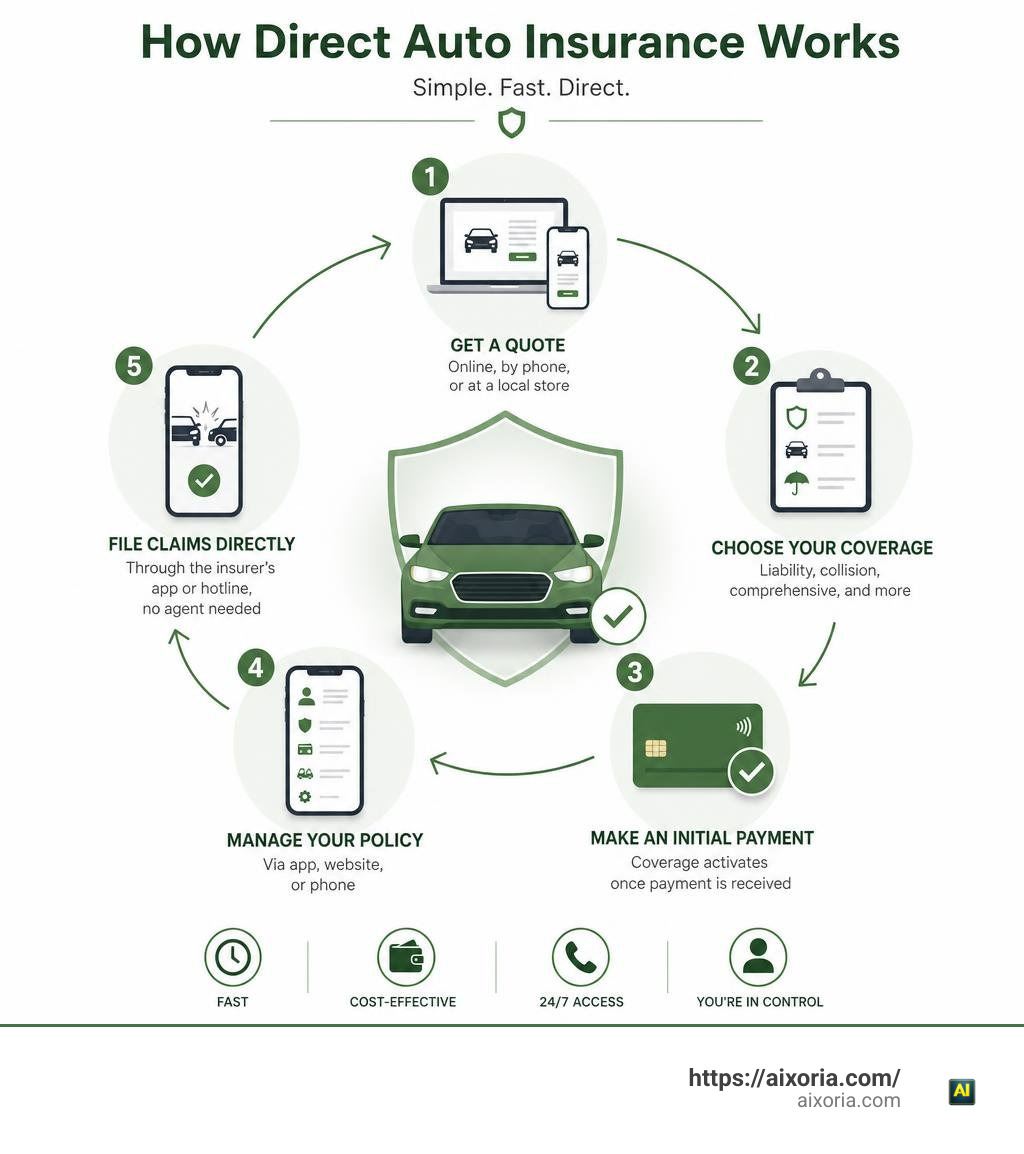
How does direct auto insurance work? Simply put, you buy a policy straight from the insurance company — no broker, no middleman, no commission fees. You get a quote online or by phone, choose your coverage, make a payment, and your policy is active.
Here’s a quick breakdown:
- Get a quote — online, by phone, or at a local store
- Choose your coverage — liability, collision, comprehensive, and more
- Make an initial payment — coverage activates once payment is received
- Manage your policy yourself — via app, website, or phone
- File claims directly — through the insurer’s app or hotline, no agent needed
The “direct” part means the insurance company handles everything. There’s no independent agent sitting in the middle earning a commission on your policy. That’s the core difference from traditional insurance.
This model has grown popular because it’s faster, often cheaper, and available 24/7. You can pull up your digital ID card, request roadside assistance, or file a claim — all from your phone.
That said, direct insurance isn’t for everyone. Without a dedicated agent, you’re responsible for understanding your own coverage. That trade-off is worth knowing before you buy.
This guide breaks down everything you need to know — from how quotes and payments work to claims, cancellations, and discounts.
How Does Direct Auto Insurance Work?
To understand how the direct model operates, we have to look at how the insurance industry has evolved. Traditionally, if you wanted car insurance, you had to visit or call an insurance broker or an independent agent. This intermediary would shop around, present you with options, and take a commission fee for setting up and managing your policy.
Direct auto insurance completely bypasses this middleman. By leveraging digital platforms, direct insurers allow us to interact with them straight from our smartphones, tablets, or computers. When we eliminate the intermediary, the entire transaction becomes a direct relationship between the driver and the underwriter.
For a deeper dive into this ecosystem, you can read Everything You Need to Know About Direct Auto Insurance.
The Mechanics: How Does Direct Auto Insurance Work for Policyholders?
The entire journey of a direct insurance policyholder is built around tech-driven self-service. Here is exactly how the process unfolds:
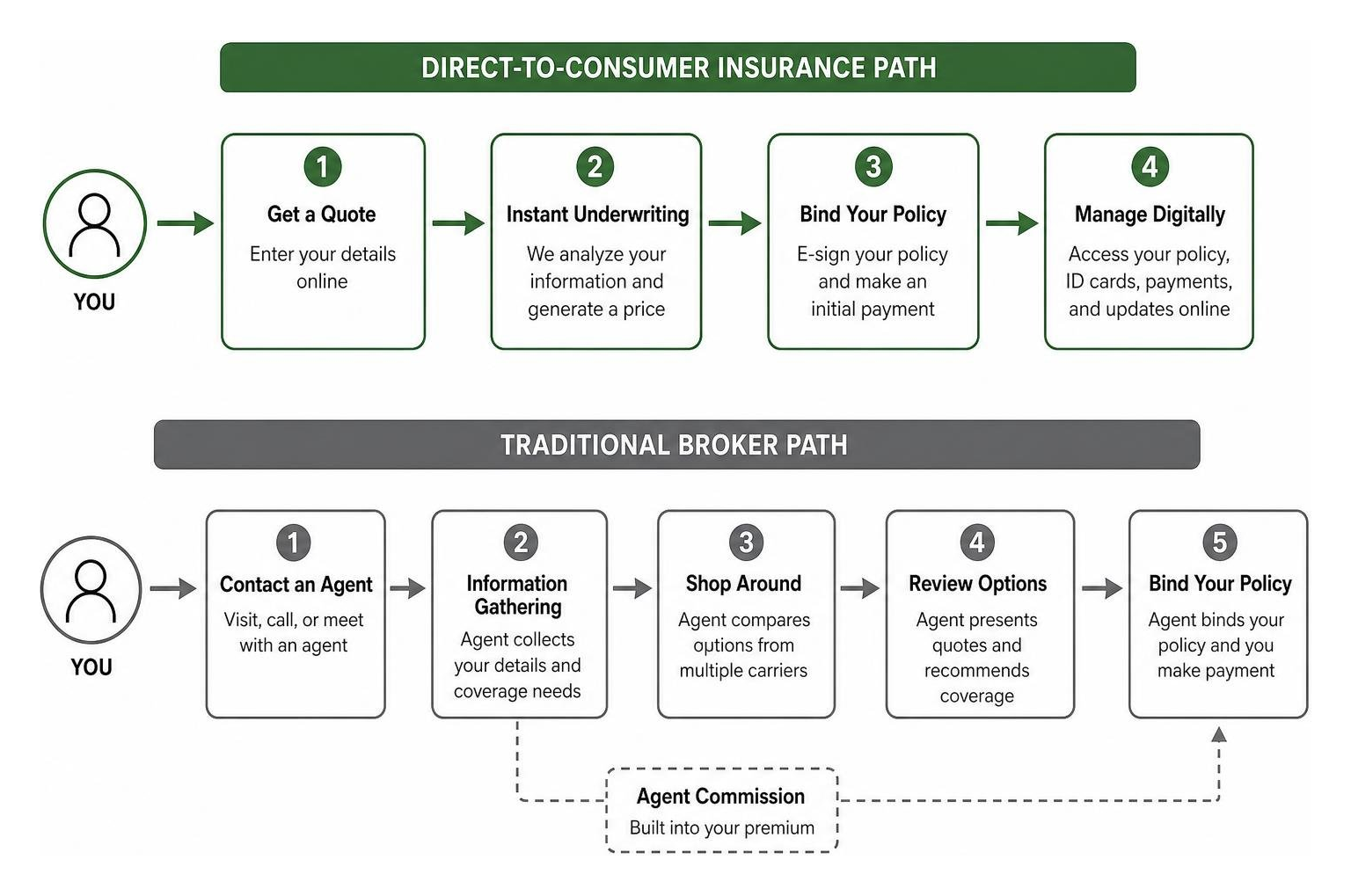
- The Online Quote: You input your personal details, vehicle identification number (VIN), driving history, and coverage needs into an online portal.
- Instant Underwriting: Algorithms analyze your risk profile in seconds and generate a personalized premium quote.
- Policy Binding: If you accept the price, you sign your policy documents electronically (E-Sign) and make an initial payment.
- Digital Management: Once bound, your policy lives inside a mobile app or online customer portal.
For example, high-quality direct insurance apps (such as the Direct Auto mobile app, which boasts a stellar 4.8 out of 5 rating from 40,000 reviews on the App Store) allow you to view digital ID cards, track payment histories, make instant updates, and even request roadside assistance without ever speaking to a human being.
Direct vs. Traditional Auto Insurance
While direct auto insurance relies heavily on digital self-service, traditional auto insurance relies on personal relationships with agents.
Traditional models typically feature two types of agents:
- Independent Agents: Brokers who represent multiple insurance carriers and shop around to find you the best rate, earning a commission on the sale.
- Captive Agents: Agents who work exclusively for one insurance company but still act as local, face-to-face intermediaries.
To help visualize the structural differences, we have mapped out how these two paths compare:
Here is a quick reference table comparing the key elements of both models:
| Feature | Direct Auto Insurance | Traditional Broker Model |
|---|---|---|
| Primary Sales Channel | Website, mobile app, or direct hotline | Local offices, independent brokers, or captive agents |
| Middleman Commission | None | Yes (typically built into the premium) |
| Policy Management | Self-service via digital portals and apps | Handled by your dedicated agent |
| Customer Support | 24/7 digital tools, chatbots, and centralized call centers | Personalized support from a specific local agent |
| Target Audience | Tech-savvy drivers and those seeking fast, budget-friendly plans | Drivers with complex asset portfolios who want expert guidance |
Key Benefits of Going Direct
Choosing a direct auto insurer comes with a distinct set of advantages, particularly for drivers who appreciate speed, autonomy, and clear pricing structures.
- 24/7 Convenience: You do not have to wait for business hours to make changes to your policy. Whether it is 2:00 AM on a Sunday or peak rush hour, you can add a vehicle, download insurance binders, or pay bills instantly.
- Complete Transparency: Because you select the coverages yourself, you see exactly how much each option costs. Adjusting your comprehensive deductible from $250 to $500 instantly updates your premium on the screen, putting you in total control.
- Speed: You can research, customize, and purchase a policy in under 15 minutes.
For a clearer understanding of what these policies cover, see this resource on Auto Insurance Coverage Explained.
Is Direct Auto Insurance Cheaper Than Using a Broker?
In many cases, yes. Brokers and independent agents survive on commissions, which are often factored into the cost of traditional policies. Furthermore, maintaining thousands of physical, franchised branch offices is incredibly expensive.
Direct insurers bypass these massive overhead costs by centralizing their operations. These operational savings are frequently passed down to us in the form of lower base premiums.
However, “direct” does not always mean cheapest for every single driver. If you have an incredibly complex driving record or unique insurance needs, a broker might occasionally find a niche carrier with a better rate than a standard direct writer. But for the vast majority of drivers with straightforward coverage needs, cutting out the middleman yields immediate savings.
Bundling and Ancillary Products
Just because you are buying directly does not mean you are limited to basic car insurance. Most direct carriers allow you to bundle multiple insurance products to unlock steep multi-policy discounts.
Common products you can bundle with your direct auto policy include:
- Renters insurance
- Homeowners insurance
- Motorcycle or RV coverage
- Term life insurance
- Ancillary coverages (like roadside assistance or emergency medical protection)
Typical Coverage Options Offered by Direct Insurers
Direct auto insurance companies offer the exact same robust coverage options as traditional agencies. When building your direct policy online, you will typically choose from the following standard coverages:
- Liability Coverage (Required by Law): Split into Bodily Injury and Property Damage, this pays for injuries and damage you cause to others in an at-fault accident.
- Collision Coverage: Pays to repair or replace your vehicle if you collide with another car or an object (like a tree or guardrail), regardless of fault.
- Comprehensive Coverage: Protects your car against non-collision incidents, such as theft, vandalism, windshield cracks, animal strikes, or severe weather.
- Uninsured/Underinsured Motorist Coverage: Steps in to pay for your medical bills and property damage if you are hit by a driver who has no insurance or insufficient policy limits.
- Personal Injury Protection (PIP) or Medical Payments (MedPay): Covers medical expenses for you and your passengers after an accident, regardless of who caused it.
How to Get the Best Deal on Your Policy

Getting a great deal on direct auto insurance requires a strategic approach. Because you are the one pulling the levers in the customer portal, you need to know which factors influence your rates and how to trigger the best discounts.
Factors That Affect Your Premium Cost
Direct insurers use sophisticated algorithms to calculate your exact risk profile. The primary factors that determine your premium include:
- Your Driving Record: A clean record free of speeding tickets and at-fault accidents keeps your rates low.
- Your Location: Insurers look at ZIP-code-level data for accident rates, vehicle theft statistics, and weather risks.
- Your Vehicle: Safer cars with high crash-test ratings and built-in security features cost less to insure, while expensive sports cars or vehicles that are costly to repair will drive premiums up.
- Your Insurance History: Maintaining continuous auto insurance coverage without lapses signals to underwriters that you are a responsible policyholder.
- Your Down Payment and Payment Structure: How you choose to pay your initial premium also plays a role. To understand how these upfront costs affect your overall policy structure, read about What’s a Car Insurance Down Payment?.
Maximizing Your Discounts
Direct insurers are famous for offering a wide array of stackable discounts. In fact, some direct carriers offer total potential savings of up to 40% when you combine multiple discounts.
To secure the lowest rate, always look out for these opportunities:
- Multi-Car Discount: Insuring more than one vehicle on the same direct policy can save you up to 30%.
- Telematics Programs (e.g., DynamicDrive): By allowing a mobile app to monitor your safe driving habits (like gentle braking, safe speeds, and low phone usage), you can secure an automatic discount of around 8% just for signing up, with deeper savings applied at renewal.
- Paperless and Auto-Pay Discounts: Opting out of paper mailings and setting up automatic monthly payments can shave up to 12% off your premium.
- Affinity and Group Discounts: Many direct writers offer specialized discounts based on your employer, military service, or membership in certain organizations.
Potential Drawbacks and Risks of Direct Insurance
While we love the speed and cost savings of the direct model, it is crucial to remain objective. Bypassing an insurance professional carries real trade-offs that might not suit every driver.
- The Burden of Choice: When you buy directly, you are your own agent. If you accidentally select state-minimum liability limits because they are cheap, you might find yourself personally liable for tens of thousands of dollars after a major accident.
- Lack of Personal Advocacy: In a traditional model, your local agent is your advocate. If you have a complex claims dispute, your agent can pick up the phone and fight for you. With a direct insurer, you are dealing with a rotating staff of customer service reps.
- Underwriting Adjustments: Direct insurers typically have a 60-day underwriting review window after you sign up. If they discover an undisclosed speeding ticket or an unlisted driver living in your household during this time, they can suddenly adjust your premium upward or cancel your policy altogether.
For an in-depth analysis of these trade-offs, check out Direct Auto Insurance: Pros, Cons, and Key Considerations.
Step-by-Step: How Does Direct Auto Insurance Work During a Claim?
Filing a claim with a direct insurer is designed to be a highly streamlined, tech-first experience. Here is how it works:
- Report the Incident: Open your insurer’s mobile app or call their 24/7 claims hotline immediately after an accident.
- Upload Digital Evidence: Use your smartphone to take photos of the vehicle damage, the accident scene, and the other driver’s insurance card, uploading them directly into the app.
- Virtual Adjustment: For minor accidents, direct adjusters often review your uploaded photos and estimate repair costs virtually, sometimes issuing a digital payout to your bank account within 24 to 48 hours.
- Physical Inspection: For more severe damage, the direct insurer will coordinate with a local network repair shop to have an adjuster inspect the vehicle in person.
Managing, Changing, or Cancelling Your Policy

Because direct auto insurance places the management reins firmly in your hands, making changes to your policy is incredibly straightforward.
If you buy a new car or need to add your teenager to your policy, you do not need to call an office. You simply log into your portal, input the new driver or vehicle details, and the system will process a policy endorsement (an official amendment to your contract) instantly.
However, keep these important operational rules in mind:
- Grace Periods: If you miss a monthly payment, most direct insurers provide a grace period of at least 11 days (depending on state law) to pay your balance before your policy is officially cancelled for non-payment.
- Cancellations: If you decide to cancel your policy early—perhaps because you sold your car or found a better rate elsewhere—you can do so at any time. You will need to submit a signed cancellation request. Depending on your state and insurer, you may be subject to a small cancellation fee or a short-rate refund penalty.
Frequently Asked Questions About Direct Auto Insurance
To help you fully master the basics, we have answered some of the most common administrative questions policyholders ask about managing their direct accounts.
What is a No Loss Statement and when is it required?
A No Loss Statement (sometimes called a Statement of No Losses) is a legal document you must sign when you want to reinstate a cancelled insurance policy.
If your policy lapsed because of a missed payment and you want to turn it back on, the insurer needs proof that you did not get into an accident during the days you were uninsured. By signing this statement, you officially certify that no losses or accidents occurred during the lapse period. Falsifying this document is considered insurance fraud and will completely void your coverage.
How does a car insurance down payment work?
There is no such thing as “no down payment” car insurance. To activate any reputable auto policy, you must make an initial upfront payment.
This down payment acts as your first premium installment. You can choose to pay your entire 6-month or 1-year premium upfront (which usually earns you a solid discount), or you can pay a smaller down payment followed by structured monthly installments. The larger your initial down payment, the lower your subsequent monthly bills will be.
For more detailed answers on coverage and policy structures, visit the Frequently Asked Questions | Direct Auto Insurance page.
What is the difference between pro-rate and short-rate cancellation?
When you cancel your policy before the term ends, the insurer calculates your refund using one of two methods:
- Pro-Rate Cancellation: This is the non-penalty method. The insurer refunds you 100% of the unused premium. For example, if you paid for a 6-month policy and cancel exactly halfway through, you get exactly 50% of your money back.
- Short-Rate Cancellation: This is a penalty-based method. The insurer keeps a small percentage (often around 10%) of your remaining unearned premium to cover administrative costs before refunding you the rest.https://www.mediafire.com/file/q8qyfw5g52ycvpe/Vanilla_Vehicles_BY_MCPEUDAY.mcaddon/file“;
Conclusion
Direct auto insurance has fundamentally changed how we protect our vehicles. By removing intermediate brokers, direct-to-consumer models put us in the driver’s seat—giving us the tools to customize coverage, unlock discounts, and manage policies entirely on our own terms. It offers unmatched speed, 24/7 digital convenience, and significant cost savings for drivers who are comfortable navigating the insurance landscape independently.
As we move through 2026, the technology behind direct insurance continues to evolve, making virtual claims and telematics programs more precise than ever. If you love staying ahead of the curve on technology, artificial intelligence, and digital trends, be sure to explore our latest AI Updates and Tech Trends to see how digital innovation is reshaping our everyday lives.
1 thought on “How Does Direct Auto Insurance Work in 2026? Complete Beginner’s Guide”