Is BlueFire an Insurance Company? Here’s What You Need to Know
Scr0ll d0wn to D0VVNL0AD
Is BlueFire an insurance company? — it’s a fair question, and the short answer is: not exactly.
Here’s the quick breakdown:
- What BlueFire is: A Managing General Agent (MGA) — not a direct insurance carrier
- What that means: BlueFire manages and underwrites policies on behalf of licensed insurance companies, rather than issuing policies under its own insurance license
- Who owns it: BlueFire is part of the Confie family of insurance companies, one of the top five insurance brokers in the United States
- Where it operates: California, Texas, Arizona, Louisiana, Mississippi, and Alabama
- What it sells: Primarily non-standard auto insurance and SR-22 coverage, distributed through independent agents
- Founded: 2007 (BBB records), with current operations headquartered in Irving, Texas

So BlueFire is a real, legitimate company in the insurance industry — but it works differently from a traditional insurer like State Farm or Allstate. Understanding that difference matters a lot, especially when it comes to claims, coverage, and who is ultimately responsible for your policy.
Let’s break it all down clearly.
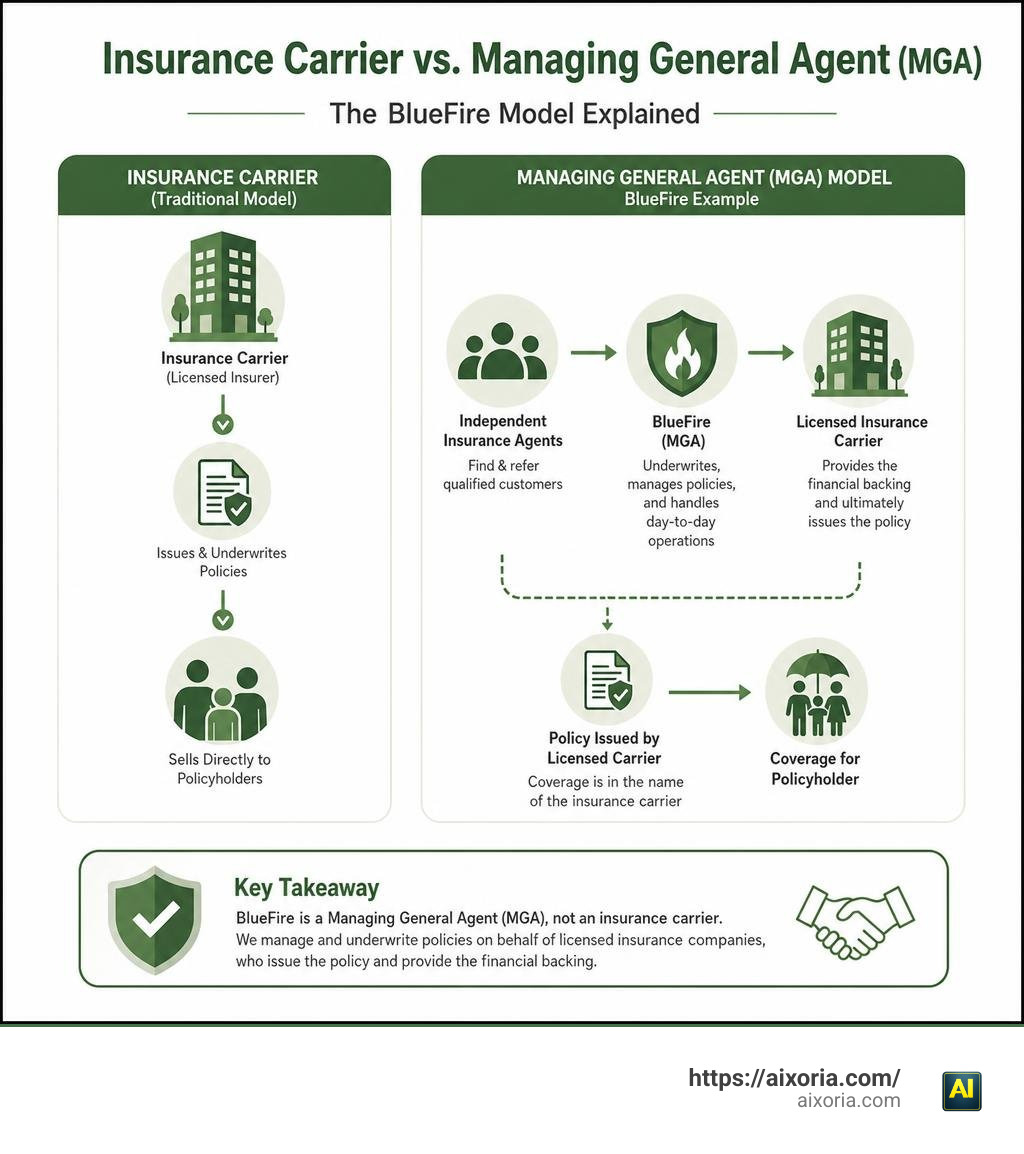
Is BlueFire an Insurance Company? Understanding the MGA Model
To fully answer the question, Is BlueFire an insurance company?, we have to look at how the insurance industry is structured behind the scenes.
When you buy a standard policy from a major household name, that company acts as the “carrier.” They hold the financial reserves, issue the policy directly under their license, and bear the ultimate financial risk if you get into an accident.
BlueFire Insurance operates under a different structure known as a Managing General Agent (MGA).
What is a Managing General Agent (MGA)?
An MGA is a specialized type of insurance agent or broker that has been granted underwriting authority by an insurance carrier. Think of them as a highly empowered administrator. Instead of just selling policies like a local agent, an MGA can perform functions typically reserved for carriers, such as:
- Underwriting and pricing policies
- Binding coverage
- Managing marketing and distribution networks
- Administering policies and handling billing
- Processing and settling claims
However, the key distinction is that the MGA does not actually carry the financial risk of the policy on its own balance sheet. If a major disaster occurs, the financial backing comes from the licensed insurance carriers that partner with the MGA.
As noted in the Bluefire Insurance – 2026 Company Profile & Competitors – Tracxn data, BlueFire operates as a privately held entity within this space. By acting as an MGA, they can design innovative, flexible insurance packages and quickly bring them to market without having to navigate the massive regulatory hurdles required to establish a brand-new, multi-state insurance carrier.
Is BlueFire an Insurance Company or an Agency?
Technically, BlueFire is classified as a specialized insurance agency with underwriting authority. In official business registries, you will often see them listed as “Bluefire Insurance Services Inc.” or classified under the category of “Insurance Agency.”
They sit in the middle of a three-tier relationship:
- The Carrier: The financial backbone that holds the insurance license and pays out large-scale capital for claims.
- The MGA (BlueFire): The administrative brain that designs the auto insurance programs, manages the technology, and handles day-to-day operations.
- The Independent Agent: The local professional who sits down with you to sell you the policy.
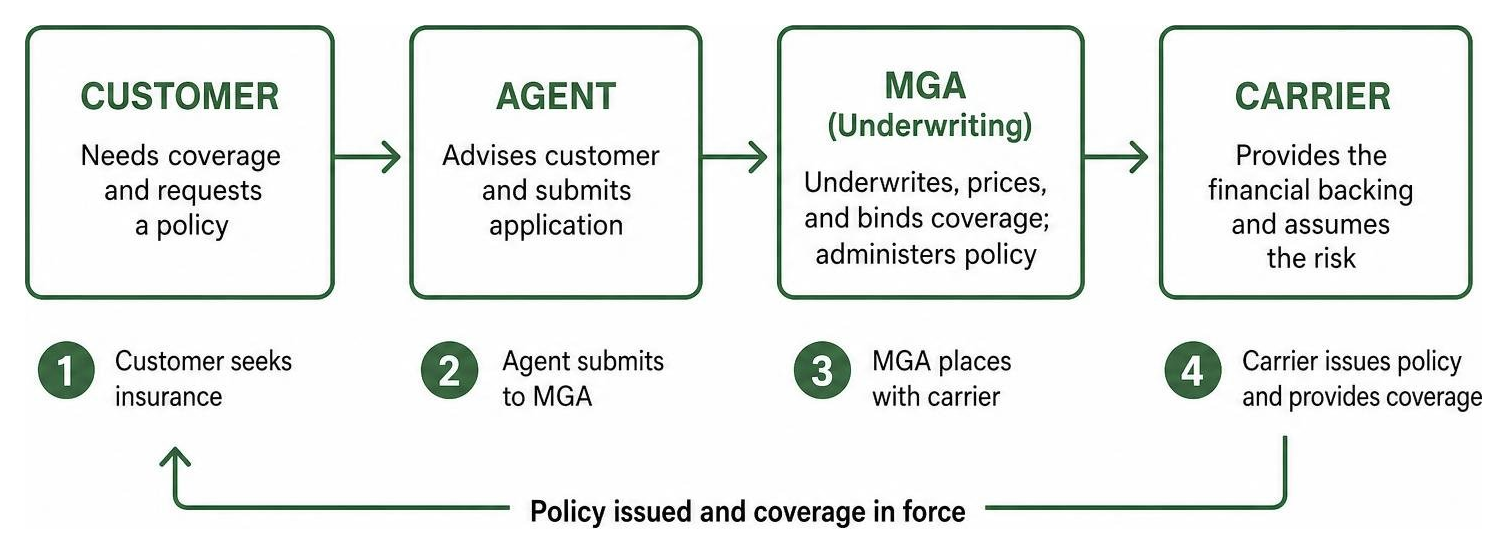
This structure is highly efficient, which is why BlueFire has grown steadily. According to industry profiles on Bluefire Insurance | The Org, BlueFire operates with a dedicated workforce of around 148 employees as of April 2026, managing a complex network of independent retail agencies. They are also backed by their parent organization, Confie, which is one of the largest and most prominent personal lines insurance brokers in the United States. This backing gives BlueFire substantial industry leverage and resources.
Why People Ask: Is BlueFire an Insurance Company?
It is incredibly common for policyholders to feel confused about whether BlueFire is their actual insurance company. This confusion usually stems from how BlueFire distributes and bills its products:
- No Direct-to-Consumer Sales: You cannot simply go to the BlueFire website and buy a policy directly from them. Instead, they partner with independent agencies. If you walk into a local neighborhood agency looking for cheap car insurance, the agent might compare several rates and print out a policy that has “BlueFire Insurance” stamped across the top.
- Billing and Claims Branding: When you pay your monthly premium, the charge on your bank statement says “BlueFire.” When you need to file a claim, you call BlueFire’s customer service line. For all practical purposes, they feel like your insurance company because they handle every customer-facing interaction.
- The Fine Print: If you look closely at your actual policy declarations page, you will see the name of the actual insurance carrier that is underwriting the risk (such as a regional carrier partner).
This B2B2C (Business-to-Business-to-Consumer) model is designed to support independent agents. As highlighted on the official page for Car Insurance for Independent Agencies | Bluefire Insurance, the company positions itself as a specialized partner for agencies that need competitive, customizable auto insurance solutions for clients who don’t fit into the “standard” driver box.
BlueFire Insurance Products and State Availability
Now that we have clarified BlueFire’s status as an MGA, let’s look at what they actually offer and where they operate.

BlueFire specializes in non-standard auto insurance. In the insurance world, “non-standard” is a polite term for drivers who may have a hard time getting coverage from traditional carriers. This includes:
- Drivers with a history of accidents or multiple traffic violations
- Individuals requiring an SR-22 filing (often required after a DUI or driving without insurance)
- Drivers with no prior insurance history or lapses in coverage
- Drivers holding out-of-country or international driver’s licenses
- Young or inexperienced drivers
By focusing on this niche, BlueFire helps independent agents find affordable options for clients who might otherwise be turned away. In addition to standard passenger car insurance, they also provide coverage options for trucks and commercial use vehicles.
Where Does BlueFire Operate?
BlueFire does not operate nationwide. They focus their programs on specific regional markets where there is a high demand for non-standard auto coverage. Their primary states of operation include:
- California
- Texas (where their headquarters in Irving is located)
- Arizona
- Louisiana
- Mississippi
- Alabama
Comparing the Models: BlueFire MGA vs. Traditional Carrier
To help you visualize how BlueFire’s business model compares to a standard insurance company, we have put together this comparison table:
| Feature | BlueFire Insurance (MGA) | Traditional Insurance Carrier (e.g., State Farm) |
|---|---|---|
| Primary Role | Manages, underwrites, and administers policies on behalf of others | Directly issues policies and holds the financial risk |
| How to Buy | Exclusively through partner independent agents | Directly online, via phone, or through captive agents |
| Target Market | Non-standard, high-risk, SR-22, international licenses | Standard and preferred drivers with clean records |
| Claims Handling | Handled by BlueFire’s in-house adjusters | Handled directly by the carrier’s claims department |
| Financial Backing | Provided by partner carrier companies | Provided by the carrier’s own cash reserves |
Customer Reviews, Ratings, and Common Complaints
When considering any insurance provider, looking at customer feedback is essential. Because non-standard auto insurance caters to high-risk drivers and often features strict policy terms, customer reviews for companies in this space tend to skew negative. BlueFire is no exception to this trend.

A look at major review aggregation platforms reveals significant customer dissatisfaction, primarily centered around claims processing and communication:
- WalletHub: BlueFire Insurance has an average rating of 1.0 out of 5 stars across 72 user reviews.
- Yelp: On Yelp, the company holds a 1.1 out of 5 stars rating based on 60 reviews.
- Better Business Bureau (BBB): BlueFire is not a BBB-accredited business. According to the Bluefire Insurance | BBB Business Profile | Better Business Bureau, they currently hold a B rating from the bureau itself, but they have accumulated over 233 customer complaints.
Common Customer Complaints
When analyzing the complaints filed by consumers, several recurring themes emerge:
- Claims Delays and Communication Failures: Many reviewers complain about the extreme difficulty of reaching their assigned claims adjuster. Policyholders report leaving multiple voicemails and emails without receiving a response for weeks, and in some cases, months.
- Denied Claims: A significant portion of 1-star reviews come from third-party claimants (people who were hit by a BlueFire policyholder) who claim that BlueFire dragged out the investigation or unfairly denied their claims.
- Out-of-Pocket Expenses: Some users reported having to pay thousands of dollars out-of-pocket for vehicle storage fees or repairs because of delays in BlueFire’s claims settlement process.
- Billing and Grace Periods: Customers have expressed frustration over strict payment guidelines, sudden policy cancellations, and a lack of transparency regarding state-specific billing grace periods.
While these ratings are undeniably low, it is worth noting that policyholders rarely leave reviews for their insurance company when things go perfectly. However, the sheer volume of complaints regarding communication delays suggests that customers should be prepared to be proactive if they ever need to navigate a claims process with them.
Frequently Asked Questions About BlueFire Insurance
We have compiled some of the most common questions people ask when trying to verify BlueFire’s status and services.
How do I contact BlueFire Insurance for claims or payments?
If you are an active policyholder or need to file a claim against a BlueFire customer, you can reach them through several channels:
- By Phone (Customer Service & Payments): You can call BlueFire directly at (866) 424-9511. This number handles policy services, phone payments, and general claims inquiries.
- Online Portal: For 24/7 self-service, you can log into the “My Policy” portal on the BlueFire website to view documents, check your status, or make a payment.
- By Mail (Payments): If you prefer to send physical checks or money orders, payments can be mailed to:
PO Box 143249, Irving, TX 75014 - Claims Inquiries: If you are already working with an adjuster, you should use the direct contact information provided during your initial claim setup. If you cannot reach your adjuster, calling the main support number is your best alternative.
Who owns BlueFire Insurance?
BlueFire Insurance is owned by Confie (specifically under the corporate name Confie Seguros Holding II, Co.).
Confie is a massive force in the personal lines insurance sector, known for acquiring and managing regional insurance agencies and brand programs across the United States. BlueFire’s executive leadership team operates out of their main corporate offices located in Irving, Texas, which serves as the hub for their business analysis, product management, marketing, and claims operations. You can learn more about their corporate updates and professional footprint by visiting the official Bluefire Insurance page on LinkedIn.
Does BlueFire Insurance offer SR-22 coverage?
Yes, BlueFire specializes in helping drivers secure SR-22 coverage.
An SR-22 is not actually an insurance policy; rather, it is a certificate of financial responsibility that your state’s DMV may require your insurance provider to file on your behalf. This is most commonly required after:
- A DUI or DWI conviction
- Getting caught driving without insurance
- Accumulating too many points on your driving record within a short period
- Being involved in an accident while uninsured
Because BlueFire’s programs are specifically tailored for non-standard drivers, their independent agent partners can quickly issue policies that include the necessary state SR-22 filings to help you get your driving privileges reinstated.
Conclusion
So, let’s return to our original question: Is BlueFire an insurance company?
While they handle everything you would expect an insurance company to handle — from underwriting your policy to collecting your monthly payments and processing your claims — they are technically a Managing General Agent (MGA). They act as the administrative front-end, while partner insurance carriers provide the heavy financial backing behind the scenes.
For the everyday driver, this distinction doesn’t change how you use your insurance, but it does explain why you must purchase their policies through independent local agents rather than directly online. If you are a driver with a less-than-perfect record, an international license, or an SR-22 requirement in states like Texas or California, BlueFire remains a highly accessible, legitimate option—though you should keep their customer service reviews in mind and stay on top of your communication if you ever have to file a claim.
If you want to stay ahead of the curve on the latest industry shifts, tech tools, and corporate updates, Discover the Latest AI Updates and Tech News with us to see how modern technology is reshaping the financial and insurance landscapes.
2 thoughts on “Is BlueFire an Insurance Company? Everything You Need to Know (2026)”