Why Travel Insurance Comparison Can Save You Thousands
Scr0ll d0wn to D0VVNL0AD

Doing a proper travel insurance comparison before your next trip is one of the smartest financial moves you can make as a traveler. Yet most people skip it — treating insurance as a throwaway checkbox at checkout rather than a real safety net.
Here’s a quick look at what you need to know right away:
| Question | Quick Answer |
|---|---|
| What does travel insurance cover? | Trip cancellation, medical emergencies, baggage loss, emergency evacuation, and travel delays |
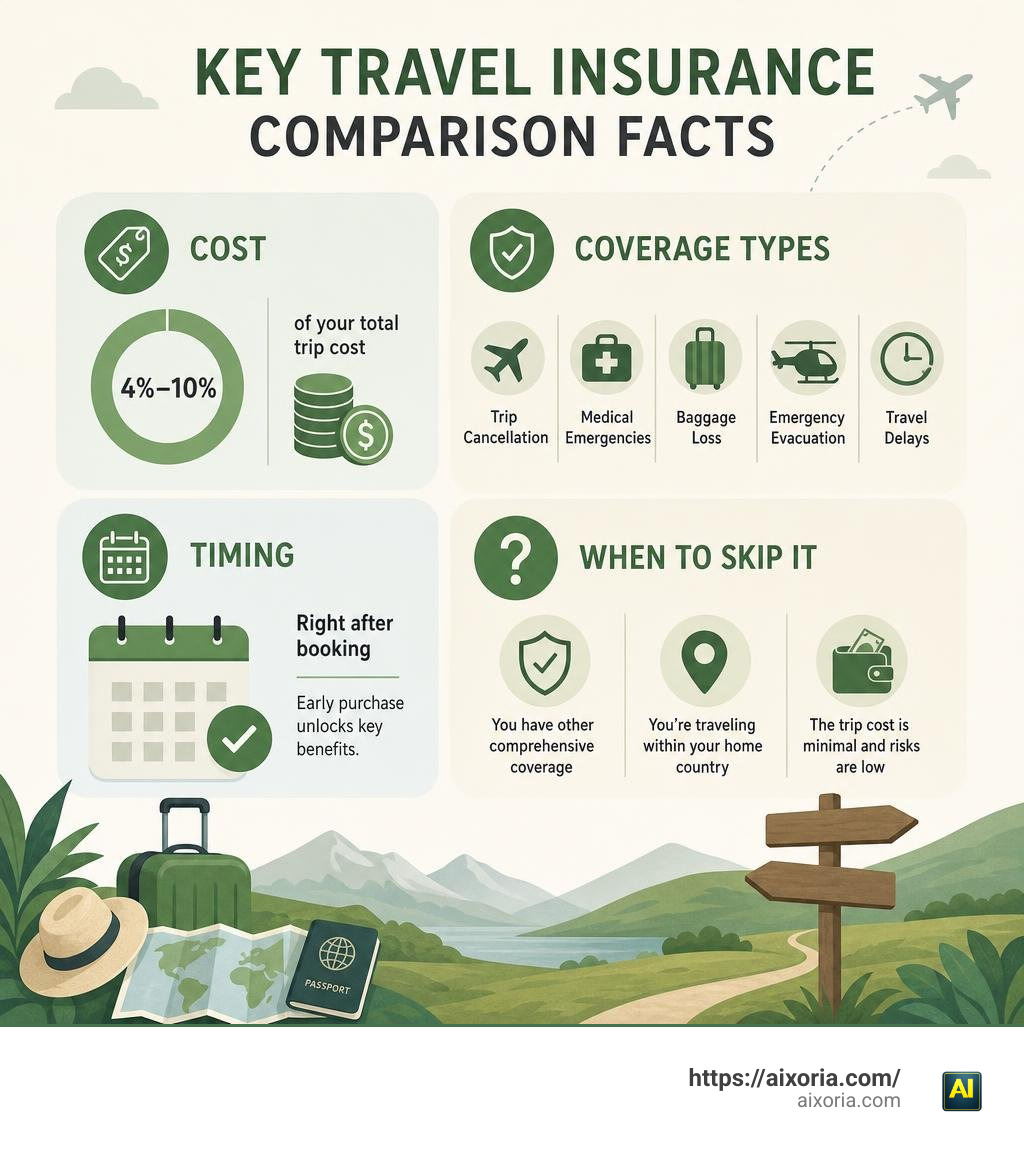
| How much does it cost? | Roughly 4%–10% of your total trip cost; average comprehensive plan runs about $414 |
| When should you buy? | Right after booking — early purchase unlocks key benefits |
| Do you always need it? | Not always, but strongly recommended for international trips |
| How do you compare plans? | Use an online comparison tool to view coverage limits, exclusions, and prices side by side |
Think about what’s at stake. A medical emergency abroad can cost hundreds of thousands of dollars. An emergency evacuation flight alone can run tens of thousands. Meanwhile, a solid comprehensive policy might cost less than 10% of your total trip budget.
The problem isn’t that travel insurance is hard to get. It’s that most travelers don’t know how to compare policies effectively — so they either overpay for coverage they don’t need, or underbuy and get burned when something goes wrong.
This guide walks you through everything you need to make a smart, confident decision.
What Does Travel Insurance Cover and What Are the Main Policy Types?
When we start looking into travel protection, it is easy to get overwhelmed by the sheer volume of choices. At its core, travel insurance is designed to protect your financial investment and your physical well-being while you are away from home.

A standard comprehensive travel insurance policy typically protects against four major categories of risk:
- Trip Cancellations and Interruptions: If you have to cancel your trip before departure or cut it short due to a covered reason (such as illness, injury, or severe weather), this coverage reimburses your non-refundable, prepaid trip costs.
- Emergency Medical Expenses: If you get sick or injured while traveling, this covers your hospital bills, doctor visits, and emergency dental work.
- Emergency Evacuation and Repatriation: If you suffer a severe medical crisis in a remote area, this pays to transport you to the nearest adequate medical facility—or back home.
- Baggage and Personal Belongings: This reimburses you if your luggage is lost, stolen, or damaged during your journey, or provides a small budget for essentials if your bags are delayed for several hours.
To find the right balance of these coverages for your next adventure, you can explore and Compare Travel Insurance Plans and Coverage Options to match your specific itinerary.
Single-Trip vs. Annual Multi-Trip Policies
One of the first decisions we must make when comparing plans is whether to purchase a single-trip policy or an annual (multi-trip) policy.
- Single-Trip Policies are tailored to one specific vacation. You enter your exact departure and return dates, and the policy covers you only for that window. These are ideal for travelers who take one or two big trips a year.
- Annual Multi-Trip Policies cover you for an unlimited number of trips within a 365-day period. Each individual trip usually has a duration limit (such as 30, 45, or 90 days). These are highly cost-effective for frequent flyers, digital nomads, and business travelers.
| Feature | Single-Trip Policy | Annual Multi-Trip Policy |
|---|---|---|
| Best For | One-off vacations or massive, expensive trips | Frequent travelers (3+ trips per year) |
| Coverage Period | Exact dates of a single trip | Entire 12-month calendar year |
| Trip Cancellation Limit | Tied directly to the declared cost of that specific trip | Often capped at a lower, flat annual limit (e.g., $5,000 total) |
| Medical Coverage | Resets with each policy | Active for every trip taken during the year |
Pre-Existing Conditions and Adventure Sports Coverage
If you have a chronic medical condition or plan on doing anything more active than lounging on a beach, you must pay extra attention to policy exclusions.
- Pre-Existing Conditions: Most standard policies exclude coverage for chronic or recurring illnesses (like asthma, diabetes, or heart conditions) if you have had a change in treatment or symptoms recently. To get around this, you must look for a policy that offers a Pre-Existing Medical Condition Exclusion Waiver. This waiver forces the insurer to cover these conditions, but it is almost always time-sensitive.
- Adventure Sports Coverage: Standard policies often exclude “high-risk” activities. If you plan to go skiing, scuba diving, zip-lining, or mountain climbing, you will likely need to purchase an adventure sports rider. Without this add-on, a broken leg on a ski slope could leave you with a massive medical bill that your insurer will decline to pay.
The Cost of Peace of Mind: Average Prices and Cost Factors
How much should you expect to pay for this safety net? On average, travelers spend about $414 for a comprehensive travel insurance policy, while a medical-only policy averages around $92.
As a general rule of thumb, a comprehensive travel insurance plan with trip cancellation coverage will cost between 4% and 10% of your total prepaid, non-refundable trip costs. If you are looking for basic, budget-friendly options, you can Compare Cheap Travel Insurance From 69p Per Day to find highly competitive rates, particularly for simpler European or domestic getaways.
Key Factors Influencing Your Premium
Insurers do not pull premiums out of a hat. When you run a travel insurance comparison, you will find that prices fluctuate based on several key variables:
- Your Age: This is one of the most significant cost drivers. Because older travelers are statistically more likely to require medical attention, premiums rise gradually once you pass age 50, and can climb steeply for travelers over 70 or 80.
- Trip Duration: A three-month backpacking journey across Asia will naturally cost more to insure than a quick four-day weekend trip to Cabo.
- Destination Healthcare Costs: Traveling to countries with notoriously expensive healthcare systems (such as the United States, Switzerland, or Australia) will drive up the cost of your medical coverage.
- Coverage Limits and Deductibles: Choosing higher policy limits (e.g., $150,000 in medical coverage vs. $15,000) or opting for zero-deductible plans will increase your upfront premium.
How to Perform an Effective Travel Insurance Comparison
The secret to a successful travel insurance comparison is looking past the monthly premium and focusing on the actual value of the policy. The cheapest plan is rarely the best plan, as it may leave you severely underinsured when you need help the most.
To get started, we recommend using a dedicated, independent comparison engine. To see how different plans measure up, you can Travel Insurance – Compare and Buy Trip Insurance Online to quickly view trusted insurers side by side.
Key Features to Evaluate During a Travel Insurance Comparison
When comparing two or more policies, keep these crucial metrics in mind:
- Emergency Medical Limits: For international travel, we strongly advise choosing a policy with at least $100,000 in emergency medical coverage. If you are traveling to remote areas or cruise destinations, look for even higher limits.
- Medical Evacuation Caps: An air ambulance back to your home country can easily cost six figures. Aim for at least $250,000 in medical evacuation and repatriation coverage (and up to $500,000 or $1,000,000 if you are heading to highly isolated regions).
- Cancellation Terms: Ensure the policy covers 100% of your non-refundable trip costs and clearly defines what qualifies as a “covered reason” for cancellation (e.g., severe illness, jury duty, or job loss).
- Baggage Limits: Look not only at the overall baggage limit (e.g., $1,500) but also at the “per-item” cap. Many plans limit payouts for high-value items like laptops, smartphones, or cameras to just $250 or $500 unless you buy a specific gadget rider.
Using Digital Tools for Travel Insurance Comparison
Gone are the days of calling multiple insurance agents or opening twenty different browser tabs to read policy brochures. Modern comparison platforms allow you to input your trip details once and instantly filter through dozens of plans.
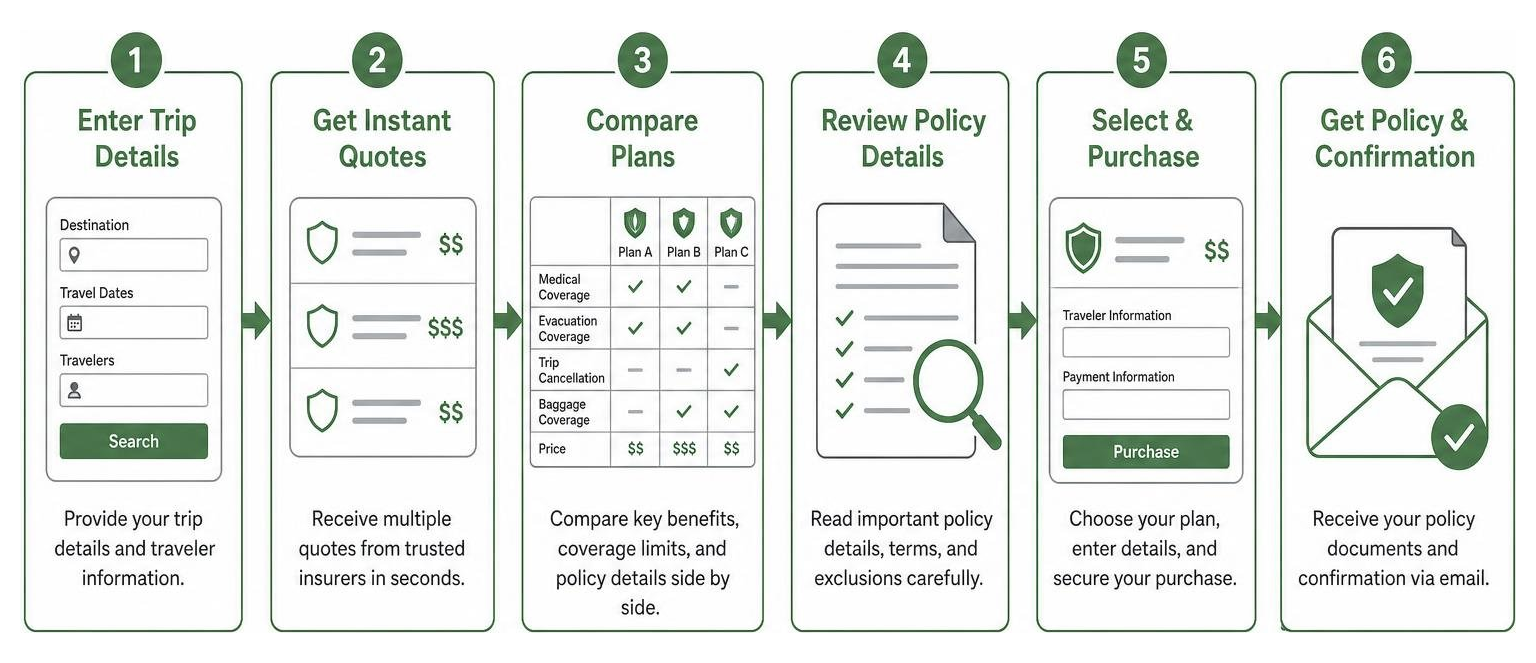
To save time and get a comprehensive look at what is available, you can use CoverTrip | Compare 100+ Travel Insurance Plans in Seconds to get instant quotes and evaluate real customer reviews side-by-side.
Timing and Claims: When to Buy and How to Avoid Denials
When it comes to travel insurance, timing is everything. Many travelers make the mistake of waiting until the week of their departure to buy a policy. While this will still cover you for medical emergencies on the trip, you miss out on some of the most powerful benefits travel insurance has to offer.
To explore how timing affects plan pricing and coverage availability for your specific destination, you can Compare International Travel Insurance Plans & Prices (2026) to see how early purchase options alter your quotes.
Why Buying Early Secures Time-Sensitive Benefits
The absolute best time to buy travel insurance is within 10 to 21 days of making your very first trip deposit (such as booking your flights or putting down a deposit on a cruise). Buying during this early window unlocks time-sensitive benefits:
- Pre-Existing Medical Condition Waivers: As mentioned earlier, this is the only way to ensure your chronic health conditions are covered if they flare up while you are away.
- Cancel For Any Reason (CFAR) Coverage: This optional upgrade allows you to call off your trip for literally any reason—even if you just decide you don’t want to go anymore—and recover 50% to 75% of your non-refundable expenses. You cannot buy CFAR coverage outside of the initial booking window.
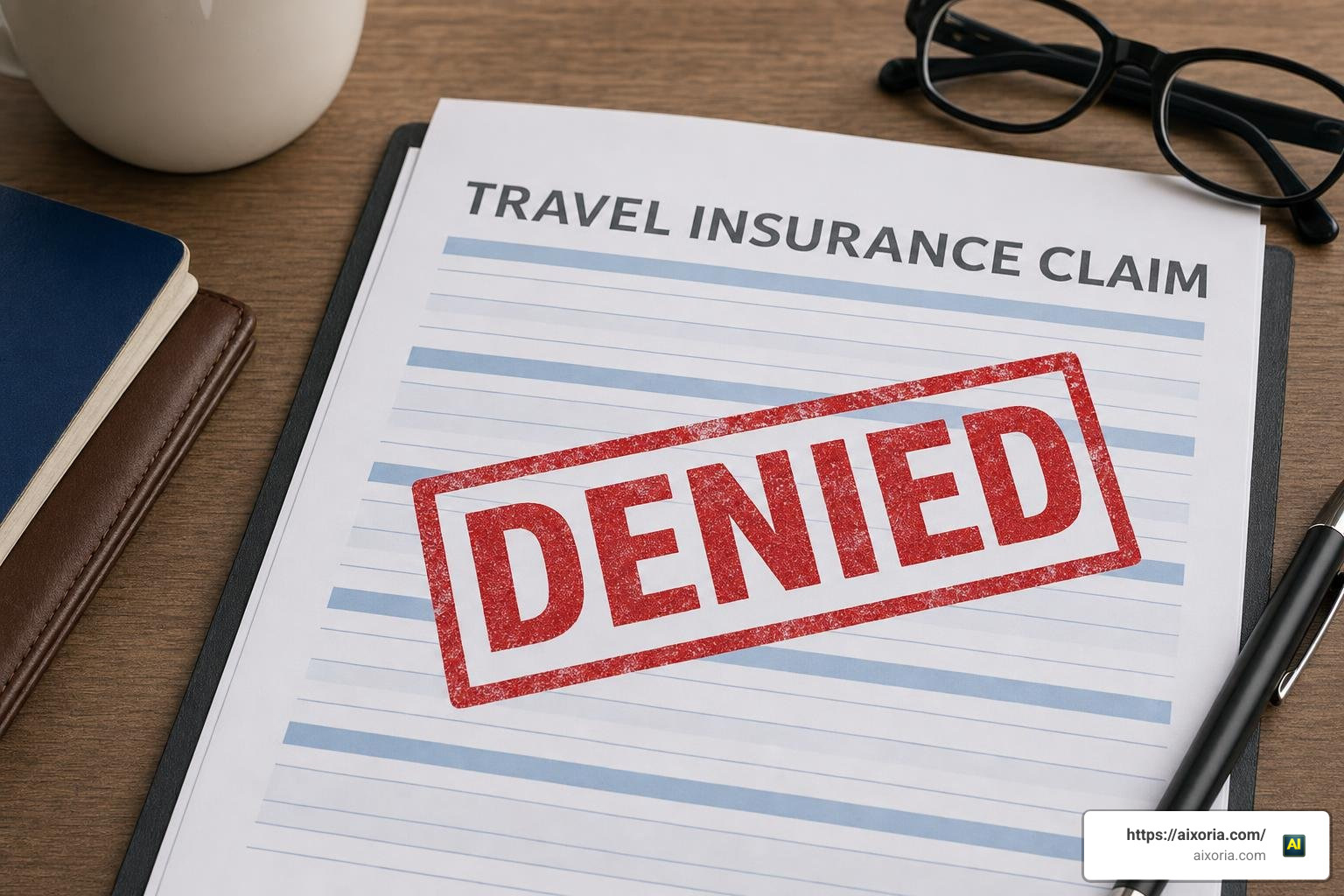
Common Reasons Claims Are Denied and How to Avoid Them
Filing a claim and having it denied is incredibly frustrating. Fortunately, most denials are completely preventable if you understand how the system works.
- Undeclared Medical Conditions: If you fail to declare a pre-existing condition when buying your policy, and then file a claim related to that condition, the insurer will deny it. Be 100% honest about your medical history.
- Lack of Documentation: Insurers do not take your word for it. If your flight is delayed, you need a written statement from the airline. If you are hospitalized, you need itemized medical bills and admitting records. Keep every single receipt, email, and report.
- Policy Exclusions: Standard policies do not cover events related to extreme sports, war zones, or self-inflicted injuries (including accidents that occur while you are legally intoxicated). Always read the policy’s “Exclusions” section during your 10-day “free look” period.
- Late Filing: Most policies have a strict window (often 20 to 90 days) within which you must notify the insurer of a claim. Do not wait until months after you return home to start the paperwork.
Do You Really Need Travel Insurance?
Is travel insurance a strict necessity, or can you get away without it? The answer depends entirely on your personal risk tolerance, where you are going, and how much money you stand to lose if things go wrong.
If you are traveling internationally, the answer is almost always a resounding yes. For a detailed, independent look at how different international destinations handle tourist healthcare and safety, we recommend reviewing the Compare International Travel Insurance 2026 | CHOICE guide, which highlights the unexpected costs of relying solely on local public healthcare systems.
Credit Card Coverage vs. Standalone Policies
Many travelers assume they don’t need independent insurance because their premium travel credit card offers built-in trip protection. While credit card coverage is a fantastic perk, it usually comes with significant limitations:
- Secondary Coverage: Many credit card travel benefits are “secondary,” meaning they only kick in after you have exhausted your primary health or home insurance policies. Standalone travel insurance is often “primary,” meaning they handle the bills directly from day one.
- Lower Limits: Credit card medical coverage limits are often very low (sometimes capped at just a few thousand dollars) or non-existent, focusing instead purely on trip cancellation or baggage delay.
- Strict Covered Reasons: Credit cards have very narrow definitions of what constitutes a valid cancellation. If you have to cancel because your pet gets sick or your work schedule changes, your credit card will likely not reimburse you.
When It Makes Sense to Skip Coverage Entirely
We are big fans of travel protection, but we are also realistic. There are times when skipping travel insurance makes perfect sense:
- Fully Refundable Travel: If you booked refundable flights, hotels with free cancellation up to the day of arrival, and did not prepay for any tours, you have very little financial risk to protect.
- Low-Cost Domestic Trips: If you are taking a quick road trip to a neighboring state, your regular car insurance covers your vehicle, your domestic health insurance covers medical emergencies, and you do not have expensive flights to worry about.
- You Can Easily Absorb the Loss: If your trip costs $300 and you are perfectly comfortable losing that money if plans change, buying a $50 insurance policy does not make financial sense.
Frequently Asked Questions about Travel Insurance
Does my domestic health insurance cover me abroad?
Generally, no. Most domestic health insurance plans (including Medicare) offer little to no coverage once you cross international borders. Even if your plan offers limited emergency out-of-network coverage, you will likely have to pay the foreign hospital upfront out-of-pocket and fight for partial reimbursement when you return home.
What is a Cancel For Any Reason (CFAR) waiver?
A CFAR waiver is an optional upgrade that gives you ultimate flexibility. Unlike standard trip cancellation coverage—which only pays out for specific, documented emergencies—CFAR allows you to cancel your trip for any reason whatsoever (even fear of travel or a change of mind) and receive 50% to 75% of your prepaid expenses back. It must be purchased shortly after your initial trip deposit.
How do I file a travel insurance claim?
To file a claim, log into your insurer’s online portal or mobile app. You will need to fill out a claim form detailing what happened and upload supporting documentation, such as medical bills, airline delay statements, police reports (for stolen items), and original receipts for any unexpected expenses you incurred.link – https://www.mediafire.com/file/8xsfo15nb705lfy/BOSSES_BY_MCMPDL.mcaddon/file“;
Conclusion
At the end of the day, a travel insurance comparison is not just about finding the lowest price—it is about finding the right balance of protection for your unique trip. By taking a few minutes to compare policy limits, understand key exclusions, and buy your policy early, you can step onto your flight with the peace of mind that you are covered no matter what the world throws your way.
Stay updated with the latest travel and tech trends on Aixoria to ensure you are always traveling smarter, safer, and with the best digital tools at your disposal. Safe travels!
4 thoughts on “Travel Insurance Comparison 2026: Compare Plans & Save Money”