Why Shepherd Veterinary Software Is Changing How Clinics Operate
Scr0ll d0wn to D0VVNL0AD
How can Shepherd help a veterinary practice? Here’s a quick answer:
- Automates charge capture — treatments added to a SOAP note are automatically added to the invoice, reducing missed revenue
- Speeds up documentation — AI tools like TranscribeAI generate SOAP notes in real time during the exam
- Simplifies client communication — a built-in pet portal lets clients book appointments, request refills, and view records 24/7
- Manages inventory — stock levels update automatically when a treatment is recorded
- Supports clinical decisions — DiagnoseAI surfaces evidence-backed treatment suggestions directly inside the patient record
- Works anywhere — fully cloud-based, so staff can access records from any device
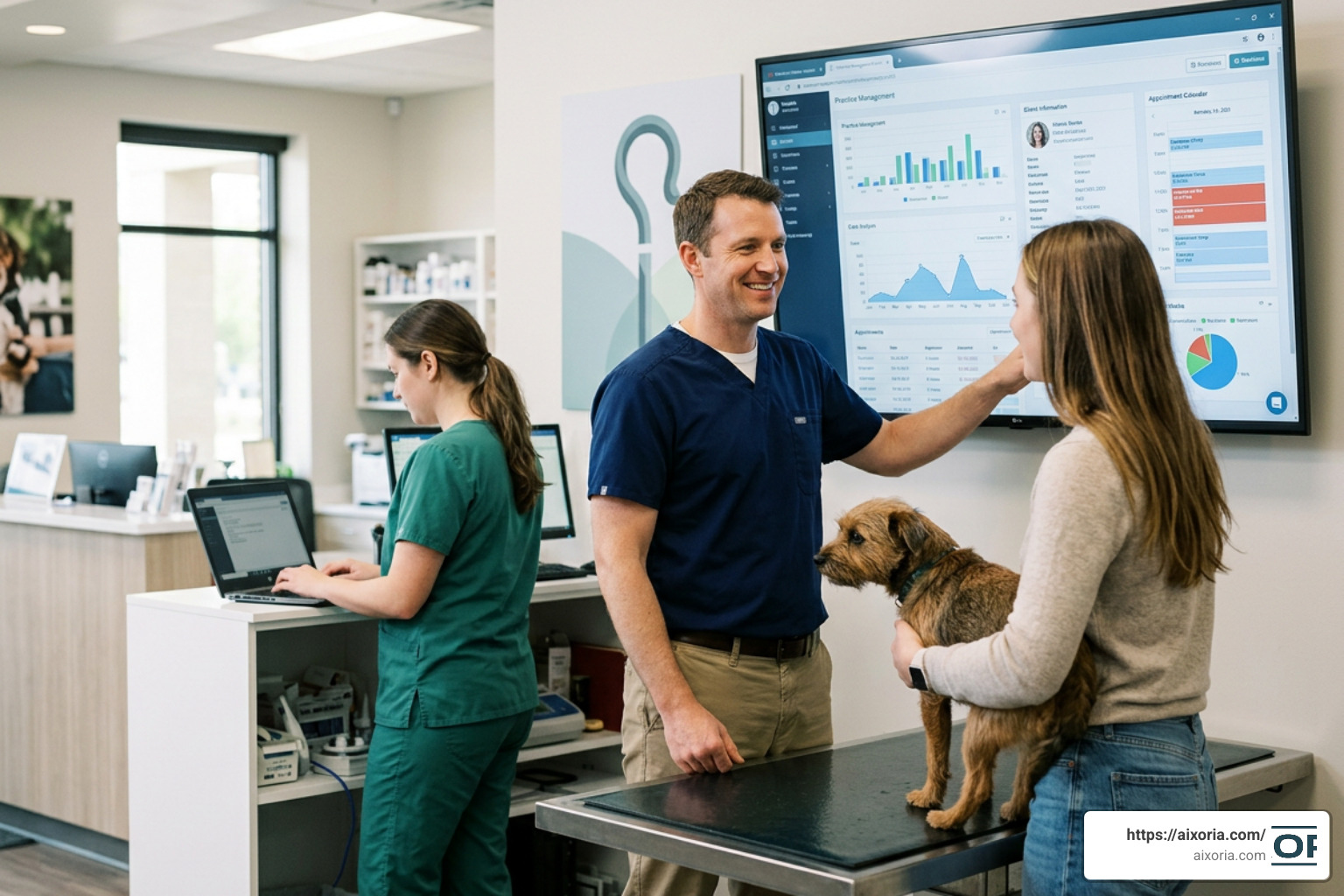
Running a veterinary practice is hard. Between back-to-back appointments, paper-heavy records, missed charges, and clients who need answers after hours, the administrative load can feel relentless.
Veterinary practices lose up to $60,000 per full-time doctor per year due to missed charges alone. And with 40% of appointments booked outside of business hours, clinics that rely on phone-only scheduling are leaving real money on the table.
Shepherd was built to fix exactly these problems — by veterinarians, for veterinarians. Unlike generic practice management systems adapted for clinics as an afterthought, Shepherd was designed from the ground up around real clinical workflows.
The result is software that feels less like a tool you have to fight with and more like a system that works the way you already think.
Understanding Shepherd: A Vet-Built Practice Management System
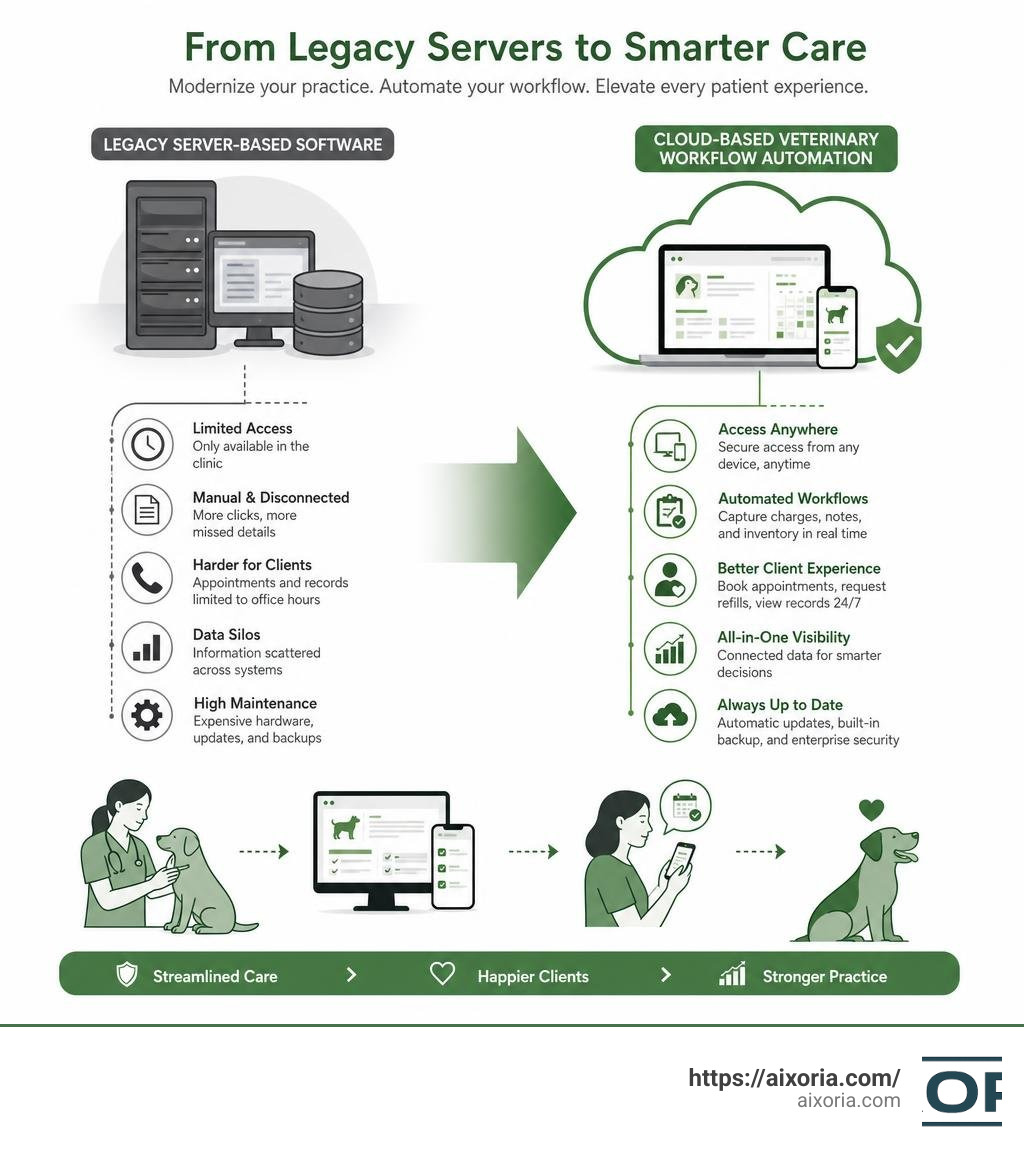
When we look at traditional veterinary practice management software (PIMS), we often find clunky interfaces designed by software engineers who have never stepped foot in a treatment room. These legacy systems require endless clicking, open multiple disconnected windows, and force veterinary teams to adapt their physical movements to the software’s limitations.
Shepherd Veterinary Software takes a fundamentally different approach. Founded by a practicing veterinarian, its core philosophy centers on matching the natural, physical rhythm of a veterinary clinic. Instead of forcing you to jump between a medical records screen, an invoicing screen, and an inventory screen, Shepherd unifies these elements into a single, cohesive workflow.
At the heart of this design is the SOAP (Subjective, Objective, Assessment, Plan) medical record. Because veterinarians think and work in the SOAP format, Shepherd uses this structure as the operational hub of the entire application. When you enter a treatment or prescribe a medication within the SOAP note, the software automatically triggers downstream actions. It updates the patient’s medical history, adjusts the inventory count in real time, and adds the correct itemized charge to the client’s invoice.
Being a fully cloud-based platform, Shepherd enables your team to break free from the desktop computers anchored to the front desk or pharmacy. Whether you are running a multi-doctor hospital, working curbside, or accessing records from home during an after-hours emergency, you can log in securely from any internet-connected tablet, laptop, or desktop. To understand how this foundational design translates to long-term practice value, we recommend reviewing Shepherd Veterinary Software: The Essential Vet Buying Guide.
How Can Shepherd Help a Veterinary Practice Streamline Operations?

Operational efficiency is the cornerstone of a low-stress, profitable clinic. When we ask How Can Shepherd Help a Veterinary Practice in its day-to-day operations, the answer lies in its ability to eliminate redundant manual data entry.
In many clinics, a single patient visit requires the veterinary technician or assistant to write down treatments on a paper travel sheet, type those same treatments into a digital medical record, and then manually input them a third time into a billing screen. This triple-entry system is a recipe for administrative fatigue and human error.
Shepherd streamlines this entire journey using several key features:
- The Digital Whiteboard: This tool acts as the central nervous system of your treatment floor. It allows your entire team to visualize which patients are in the building, where they are located, and what treatments are currently pending. You can sort, search, and filter active cases with ease, ensuring no patient is overlooked during a busy morning rush.
- Task Lists and Custom Templates: Instead of writing out repetitive treatment plans for common conditions like canine otitis or feline dental cleanings, you can deploy pre-configured templates. With a single click, the system populates the necessary medical notes, required medications, and client discharge instructions.
- Automated Workflows: When a service is completed on the whiteboard or checked off in the SOAP note, Shepherd automatically updates the client’s bill and triggers any linked tasks, such as room sterilization prompts or follow-up phone call reminders.
To explore the full suite of operational features that keep your medical team focused on patient care rather than paperwork, you can read about their Robust Veterinary Practice Management Software | Simplify Your Workflow.
How Can Shepherd Help a Veterinary Practice Save Time on Medical Records?
Writing medical records is often cited as the number one cause of veterinary burnout. Many doctors find themselves staying at the clinic hours after closing just to finish their charts. Shepherd tackles this head-on by integrating advanced, native artificial intelligence tools directly into the SOAP workflow.
Rather than typing out long exam findings, veterinarians can utilize TranscribeAI. This tool allows you to record your verbal exam findings directly within the PIMS. The AI transcribes the audio and organizes it into the correct sections of your SOAP note, eliminating the need to copy and paste from external dictation apps. If you want to see how this fits into the broader landscape of modern veterinary technology, take a look at our guide on the 7 Best Veterinary Dictation Software In 2026.
Additionally, Shepherd features DiagnoseAI, which acts as a virtual clinical assistant. By analyzing the subjective history and clinical signs documented in your SOAP note, DiagnoseAI can instantly surface peer-reviewed, evidence-backed treatment protocols, dosage calculations, and diagnostic recommendations.
For example, if you are treating a complex foreign body case or calculating a precise propofol induction protocol for a high-risk patient, you can query the AI assistant directly inside the active record to verify safe parameters. You can learn more about how these virtual assistants improve patient outcomes by reading Meet ShepherdAI: Your Virtual Aide in Diagnosing and Treating Patients.
How Can Shepherd Help a Veterinary Practice Prevent Missed Charges?
Financial leakage is a silent killer for independent veterinary clinics. Busy veterinary teams are naturally focused on saving lives, not accounting. In the rush of a critical emergency, it is incredibly easy to forget to charge for a catheter, a dose of pain medication, or extra rolls of vet wrap. Over time, these small omissions add up to tens of thousands of dollars in lost revenue.
As noted in industry statistics, veterinary practices lose an average of $60,000 in revenue per year per full-time doctor due to missed charges.
Shepherd solves this problem through automatic charge capture. Because the medical record and the invoice are built on the same unified database, any item, service, or medication administered within the patient’s SOAP note is instantly applied to the bill. If a technician checks off a dose of buprenorphine in the treatment plan, that dose is immediately billed to the client.
This automation protects your bottom line without requiring your clinical staff to act as cashiers. In a tough economic environment where operational costs are rising, securing this lost revenue is vital to keeping your business healthy. For more strategies on maintaining profitability during economic downturns, check out Staying Afloat in A Difficult Economy: How the Right Veterinary Practice Management Software Can Help.
Enhancing Client Engagement and Practice Growth

Modern pet owners expect the same digital convenience from their veterinarian that they get from their human healthcare providers or favorite online retailers. They want to book appointments on their phones late at night, view their pet’s vaccination records instantly, and request prescription refills without waiting on hold.
Shepherd helps practices meet these expectations through its integrated Pet Portal and automated communication tools. By moving these administrative tasks online, you not only improve the client experience but also dramatically reduce the volume of phone calls flooding your front desk.
Consider these key benefits of utilizing a fully integrated pet portal:
- Empowered Clients: Pet owners can access up-to-date Rabies certificates and vaccination histories directly from their phones. This is incredibly helpful when they are checking into a boarding facility or grooming salon last-minute on a weekend.
- Fewer Phone Interruptions: Instead of calling the clinic to request a refill on a chronic medication, clients can submit a request through the portal. Your staff can review, approve, and fill the prescription via dashboard alerts during natural breaks in the day.
- Automated Reminders: Shepherd can send automated text and email reminders for upcoming booster vaccines, wellness exams, and scheduled appointments, helping to maintain a high rate of compliance.
To discover how a native portal can transform your client relationships and boost practice efficiency, read about the Top 5 Perks of Having a Pet Portal Directly in your Practice Management Software.
Implementation, Pricing, and Real-World Considerations
Switching to a new practice management system is a major decision for any veterinary practice. It requires careful planning, team training, and a clear understanding of the financial commitment.
To help you evaluate if Shepherd is the right fit for your budget and operations, we have outlined its pricing structure and core administrative features below:
| Feature/Cost Category | Pricing & Details | Key Operational Considerations |
|---|---|---|
| Base Subscription | $299 / month | Covers a single-doctor practice; includes all core PIMS features. |
| Additional Doctor Fee | +$99 / month per additional vet | Scales predictably as your practice grows. |
| Data Migration | Varies based on previous PIMS | Migration may exclude older invoices and legacy reporting data. |
| Integrated Payments | Shepherd Pay processing fees | Offers seamless checkout and direct integration with Scratchpay. |
| System Reliability | Cloud-dependent | Over 6 multi-hour system outages were reported in February 2026. |
When preparing to transition, we recommend auditing your current inventory database and conducting team-wide training simulations prior to your official go-live date. Practice managers who have successfully made the switch emphasize that involving senior veterinarians early in the decision-making process is critical to a smooth onboarding experience. You can read a account of this transition process in More Than Software: A Shepherd Success Story.
Frequently Asked Questions About Shepherd Veterinary Software
Is Shepherd suitable for mobile or solo veterinary practices?
Yes, Shepherd is highly suitable for mobile and solo practitioners. Because the software is entirely cloud-based, mobile vets can easily access schedules, update patient records, and send digital invoices from a tablet while working in the field. Additionally, Shepherd offers multi-tax ZIP code support, which is a crucial feature for mobile clinics that cross municipal tax boundaries throughout the day.
What are the main pros and cons of using Shepherd?
Like any software, Shepherd has its strengths and weaknesses:
- Pros:
- An exceptionally clean, intuitive user interface that is easy for new staff to learn.
- Excellent native AI charting tools (TranscribeAI) that save doctors hours of typing.
- SOAP-to-invoice automation that virtually eliminates missed charges.
- Cons:
- System stability can occasionally be an issue, as evidenced by multiple system outages reported in early 2026.
- Some users report that the checkout and prescription-writing workflows can feel click-heavy and rigid.
- Data migration limitations mean you may lose access to detailed historical financial reporting from your legacy system.
Does Shepherd integrate with external laboratory equipment?
Yes. Shepherd integrates with major veterinary laboratory and diagnostic providers, including Ellie Diagnostics. This integration allows diagnostic orders to be placed directly within the patient’s medical record. Once the lab results are ready, they flow automatically back into the patient’s file, updating the clinical dashboard in real time and notifying the veterinarian.
Conclusion
In 2026, running a successful veterinary practice requires finding ways to work smarter, not harder. By leveraging a modern, vet-built platform like Shepherd, clinics can reclaim hours of lost time, eliminate thousands of dollars in missed charges, and provide the seamless digital experience that modern pet owners expect.
From automated invoicing to native AI dictation, the right tools can make the difference between a thriving clinic with high staff morale and a team suffering from administrative burnout. If you are interested in exploring how artificial intelligence is reshaping business productivity and workflow automation across various industries, we invite you to read our guide on the Best Ai Tools For Business Productivity or dive deep into our Ai Tools For Business In 2026 Autonomous Agents Roi Formula Enterprise Guide.
Ready to take your practice to the next level? Explore AI Tutorials and Guides on Aixoria to discover how to seamlessly integrate cutting-edge automation into your daily business workflows.
1 thought on “Shepherd Veterinary Software Review 2026: AI, Automation & Cloud PIMS”